
There are few fruits that evoke the vibrant spirit of summer and tropical escapes quite like the pineapple. With its distinctive crown of spiky leaves and rough, golden-brown exterior, this majestic fruit holds a treasure trove of sweet, tangy, and juicy flesh within. A perfectly ripe pineapple is an absolute delight, whether enjoyed on its own, blended into a refreshing smoothie, or as a star ingredient in a decadent dessert. However, knowing how to choose a ripe pineapple can be a bit of an art, as its exterior doesn’t always give away the full story. This comprehensive guide will equip you with all the knowledge you need to confidently select a sweet, flavorful, and perfectly ripe pineapple every single time you shop.
Pineapples are at their peak harvest season from March through July. During these months, you’re most likely to find the sweetest, juiciest, and most flavorful specimens, often at better prices. While global trade allows us to enjoy pineapples year-round, opting for them during their natural season can significantly enhance your culinary experience. Regardless of the time of year, applying these expert tips will help you pinpoint that ideal fruit.
Why Choosing a Ripe Pineapple Matters
The difference between an unripe, overly sour pineapple and a perfectly ripe, sweet one is night and day. An unripe pineapple can be tough, starchy, and lacking in flavor, sometimes even causing an unpleasant tingling sensation in the mouth due to high enzyme levels. An overripe pineapple, on the other hand, can be mushy, fermented, and have an off-putting taste. The goal is to find that sweet spot in the middle – a fruit bursting with natural sugars and aromatic juices that will elevate any dish or snack.
Once you master the art of selecting a prime pineapple, you’ll be ready to transform it into delectable treats. Here are some fantastic pineapple-flavored dessert ideas to inspire your kitchen adventures:
- No-Bake Pineapple Pie Recipe: A cool and creamy delight perfect for warm weather.
- The Easiest Pineapple Upside-Down Cake Recipe: A classic dessert that’s simple to make and always impresses.
- Soft Pineapple Cookies Recipe: Chewy, sweet, and tropical, these cookies are a unique treat.
- Peach Cake with Pineapple Surprise: A delightful combination of fruits for a truly surprising flavor profile.
How to Tell If a Pineapple Is Ripe: The Ultimate Checklist
Choosing a ripe pineapple isn’t about relying on a single indicator, but rather a combination of sensory clues. By engaging your sight, smell, and touch, you’ll be able to confidently identify the perfect fruit.
1. Examine the Labels and Source
While not a direct ripeness indicator, understanding a pineapple’s origin can offer valuable insight into its freshness and potential ripeness. If you’re not purchasing pineapples directly from tropical regions like Hawaii or Costa Rica, look for labels or tags that identify them as “jet fresh” or “flown in.” Pineapples, unlike some other fruits, do not continue to ripen significantly after they are harvested. They begin to deteriorate once picked. Freshness is key, and fruits transported quickly by air (jet) are less likely to have suffered extensive bruising or spoilage during transit compared to those shipped by sea. This method ensures you’re starting with the freshest possible option, which is a foundational step to finding a truly ripe one.
2. Observe the Color of the Skin and “Eyes”
Color is one of the most common, yet sometimes misleading, indicators. While many people look for a fully yellow pineapple, it’s important to understand the nuances:
- The Base is Key: Focus your attention on the base of the pineapple, near where it was detached from the plant. This area is typically the first to ripen. A ripe pineapple should display a bright gold or golden-yellow color around the base. This golden hue should ideally extend upwards, covering at least a third to two-thirds of the fruit.
- Green Can Be Ripe: Don’t automatically dismiss a pineapple just because it’s largely green. Some varieties can be perfectly ripe even with a significant green exterior, especially if the golden color is evident at the base. What you want to avoid is a pineapple that is uniformly dark green with no hint of yellow or gold, as this usually indicates it’s underripe.
- Avoid Reddish-Bronze: If the pineapple’s skin has taken on a reddish-bronze or dark orange hue, it often signals that the fruit is over-ripe and beginning to ferment. Similarly, dark brown patches can be an indicator of spoilage.
- Consistent Coloration: The more consistently the golden color travels up the fruit from the base, the more evenly distributed and sweeter the flavor will be throughout the entire pineapple.
3. Check the Appearance and Texture of the Skin
Beyond color, the overall appearance of the pineapple’s skin offers valuable clues:
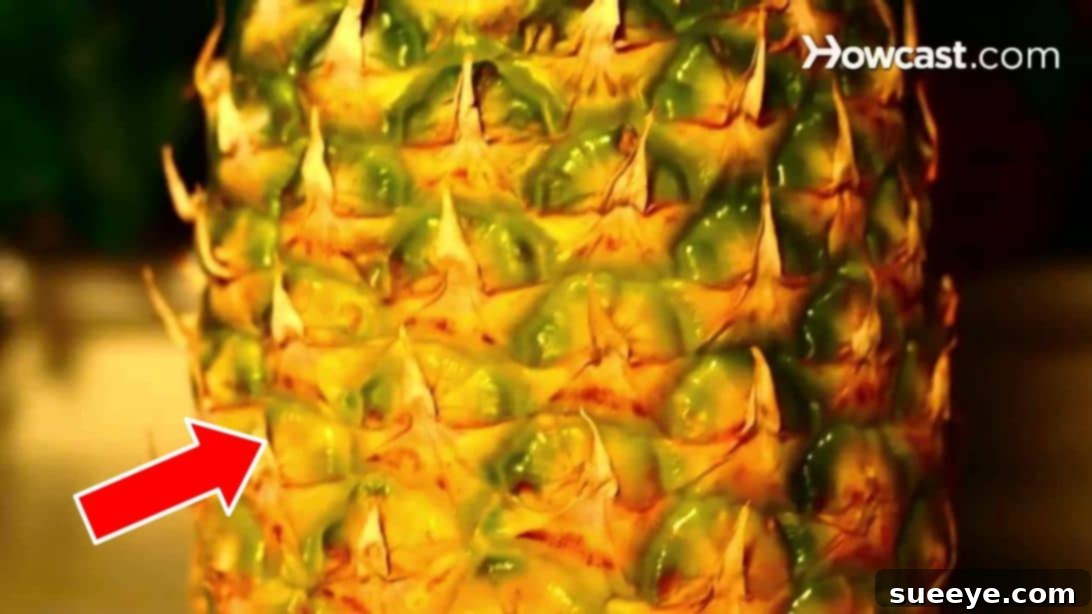
- Firm and Plump Scales: A ripe pineapple should have firm, plump “eyes” or scales that feel robust and slightly raised. They shouldn’t be shriveled or sunken.
- Avoid Wrinkles: If the skin appears wrinkled, loose, or shriveled, it’s a strong indicator that the pineapple is past its prime, has lost moisture, and is likely overripe or deteriorating.
- Healthy Crown: The crown of leaves at the top should look fresh, green, and vibrant, not dry, brown, or moldy.
4. The Pull Test (A Classic Indicator)
This is one of the most popular and often reliable tests. Gently grasp one of the innermost leaves from the crown of the pineapple. If it pulls out with relative ease, the pineapple is likely ripe and ready to eat. If the leaf is firmly stuck, the pineapple is probably underripe. If the leaves come out too easily or are already falling off, it could be overripe.
5. Use Your Sense of Smell
The aroma of a pineapple is arguably the most dependable indicator of its ripeness. This test requires you to be discerning:
- Sweet at the Base: Hold the pineapple to your nose and smell its base (the bottom where it was cut from the stem). A ripe pineapple will emit a distinct, sweet, and tropical aroma. It should smell like what you want to eat!
- Avoid Overly Strong or Sour Smells: If the smell is very strong, pungent, or has a sour, vinegary, or even alcoholic (acetone-like) scent, it indicates that the fruit has begun to ferment and is overripe.
- No Smell, No Taste: If there’s no scent at all, or only a faint grassy smell, the pineapple is likely underripe and won’t have much flavor.
6. Feel the Pineapple for Firmness and Weight
Touch can tell you a lot about the fruit’s internal condition:
- Firm Yet Slightly Yielding: Gently squeeze the pineapple. A ripe pineapple should feel firm, but with a slight give, much like a ripe peach or avocado. It shouldn’t be rock-hard (underripe) nor squishy (overripe).
- Heavy for its Size: Lift the pineapple. A ripe pineapple should feel heavy for its size. This weight indicates that it’s full of juicy goodness. A lightweight pineapple often suggests it’s dry or underripe.
- Avoid Soft Spots: Be sure to check for any soft spots, which are clear signs of bruising or deterioration.
7. Look for Signs of Deterioration
Always inspect the pineapple for any visible signs of spoilage. Avoid pineapples that exhibit any of the following:
- Leakage or Sticky Patches: These indicate internal breakdown and fermentation.
- Mold: Any fuzzy growth, especially around the base or eyes, means it’s spoiled.
- Cracks or Gaps: Breaks in the skin can allow bacteria to enter and accelerate spoilage.
- Brown, Withered Leaves: The crown should be fresh and green, not dry or discolored.
The Most Reliable Way to Choose a Ripe Pineapple
While each of these tips provides valuable insight, the absolute best way to ensure you’re taking home a perfectly ripe pineapple is to use a combination of these sensory tests. Start by observing the color and overall appearance, then lift it to feel its weight and firmness, and finally, give it a good sniff at the base. If it looks healthy, feels heavy and slightly yielding, and smells distinctly sweet and tropical, you’ve found yourself a winner!
What to Do With Your Perfectly Ripe Pineapple
Once you’ve selected your ideal pineapple, it’s best to enjoy it soon. If you’re not planning to eat it immediately, a whole, ripe pineapple can be stored at room temperature for a day or two, but refrigerate it if you need more time (up to 3-5 days). Once cut, store pineapple chunks in an airtight container in the refrigerator for up to 3 days. Its versatility in both sweet and savory dishes is incredible. From tropical fruit salads to marinades for grilled meats, and, of course, the delightful desserts mentioned earlier, a ripe pineapple promises a burst of sunshine in every bite.
Armed with these expert tips, you’re now ready to confidently navigate the produce aisle and select the sweetest, juiciest, and most flavorful pineapples. Happy pineapple picking!