
Have you ever reached for a towel only to find it rough, stiff, and surprisingly less absorbent than it once was? It’s a common frustration, turning what should be a comforting post-shower experience into a scratchy ordeal. Many believe this loss of softness is an inevitable sign of age, or simply the nature of cheaper towels, but the truth might surprise you: you’re probably washing your towels wrong! Believe it or not, achieving that luxurious, fluffy feel isn’t just about buying premium towels; it’s about mastering the art of proper towel care. With the right techniques and a few simple adjustments to your laundry routine, you can enjoy incredibly soft, fresh, and highly absorbent towels every single day, just like they were when they were brand new.
The allure of newly bought towels, with their irresistible fluffiness and pristine softness, is undeniable. Yet, as you use and wash them over time, they can inexplicably lose their initial charm, becoming coarse, stiff, and considerably less effective at drying. This doesn’t have to be your reality. The key to preserving their plush texture and maximizing their absorbency lies in understanding the specific needs of towel fabrics. Simply tossing them into your washing machine with your everyday laundry and relying on a standard washing setting may not give you the best, long-lasting results. Towels, much like our most delicate garments, require a little extra attention and a tailored approach to maintain their quality, extend their lifespan, and keep that fresh-from-the-store feel.
RELATED: How to Roll Face Towels Like in Hotels
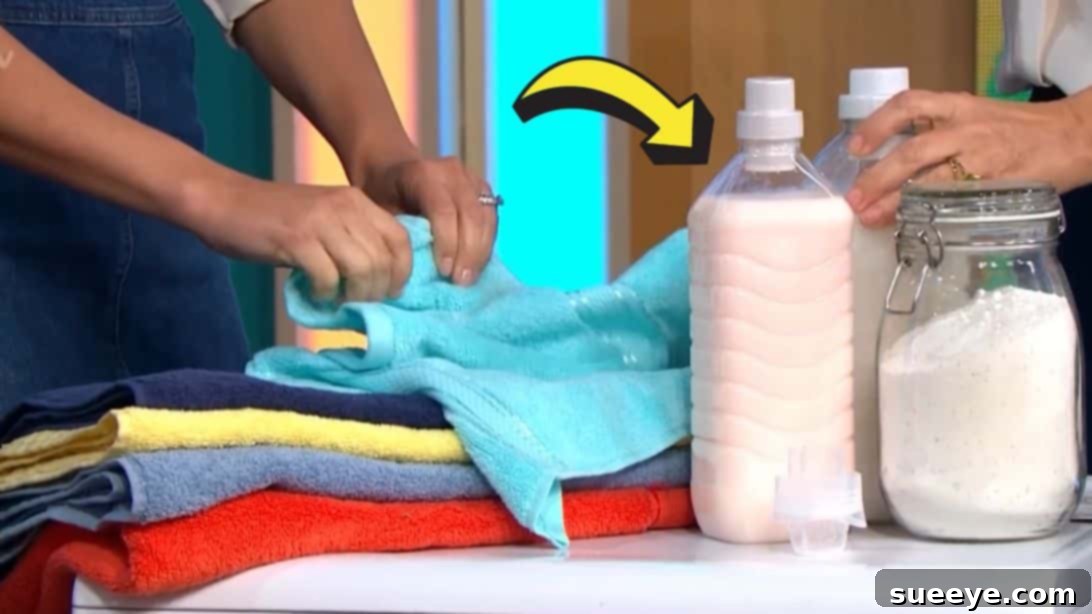
Understanding that each fabric type has a different washing method is fundamental to effective laundry care. You can often see detailed care labels stitched into your clothes, providing essential instructions: some garments should be washed with cold water and tumbled dry on a low setting, while others may require delicate cycles or specific detergents. The same meticulous care philosophy applies directly to your towels. If your goal is to keep them in the best possible condition – soft, fluffy, and reliably absorbent – then adopting proper washing and drying techniques is non-negotiable. Don’t let your towels succumb to stiffness and diminished performance. Learn the transformative secrets to getting consistently fluffy towels with this insightful tutorial by This Morning, which brilliantly unpacks the pathway to laundry perfection and lasting towel comfort.
Perhaps you’ve already resigned yourself to the fate of stiff towels and are planning to get new ones. Before you make that purchase, consider this: your old towels still have plenty of life left and can be repurposed in numerous creative and practical ways around your home. Giving them a second life is not only environmentally friendly but also incredibly resourceful. Discover innovative ideas and sustainable solutions for your textile waste, turning what might seem like worn-out rags into valuable household assets: 10 Ways To Reuse Old Towels. Now, let’s unlock the ultimate guide to washing your towels for unparalleled softness and lasting luxury, ensuring every single towel feels like a warm, comforting embrace.
Simple Laundry Hacks for Achieving and Maintaining Fluffy, Absorbent Towels
Transforming your ordinary, rough towels into luxuriously fluffy ones doesn’t require complex machinery, expensive chemicals, or time-consuming rituals. Instead, it relies on a few simple yet crucial adjustments to your regular laundry routine. These powerful hacks are designed to prevent the common pitfalls that lead to stiff, scratchy, and less absorbent towels, ensuring they remain soft, fresh, and ready to pamper you after every wash. By understanding the science behind soft towel care, you can make informed decisions that will revolutionize your laundry day.
-
Master Detergent Usage: Less is Often More for Lasting Softness
One of the most widespread and detrimental mistakes people make when washing towels is using an excessive amount of detergent. While it might seem logical to add extra soap for deeper cleaning, particularly with soiled towels, an overwhelming quantity of detergent can actually be counterproductive and significantly compromise your towels’ texture and performance. When too much detergent is used, the washing machine struggles to rinse it all away completely from the fabric fibers during the wash and rinse cycles. This un-rinsed residue, over time, builds up as a sticky, invisible coating on the towel fibers. This coating doesn’t just make towels feel incredibly stiff and rough to the touch; it also drastically reduces their absorbency, essentially turning your once-fluffy towel into a moisture-repellent barrier. For optimal results and to maintain natural softness and absorbency, use only half to three-quarters of the recommended amount of detergent, especially if you have a high-efficiency (HE) washing machine, which is designed to use far less water and therefore requires even less soap. Opt for high-quality liquid detergents over powder forms, as liquids tend to dissolve more effectively in water, minimizing the risk of leaving behind residue on your precious towels. -
Reconsider Fabric Softener: The Truth Behind Softness and Absorbency
Many instinctively reach for fabric softener with the intention of making their towels feel softer and smell delightful. However, for towels, fabric softeners are often profoundly counterproductive and detrimental in the long run. While they might initially provide a superficial, slick, soft feel, they work by depositing a thin, waxy layer of chemicals onto the individual fabric fibers. Over time, this chemical buildup creates an undesirable barrier that drastically reduces the towel’s absorbency – its primary and most crucial function! This coating can also trap odors and bacteria, making towels smell less fresh or even musty, even immediately after a wash. If you truly desire genuinely soft and highly absorbent towels, you simply don’t need conventional fabric softeners. Instead, consider natural, effective, and fiber-friendly alternatives. For an excellent replacement, add about half a cup of white distilled vinegar to your washer’s fabric softener dispenser during the rinse cycle. White vinegar is a natural fabric softener, a powerful deodorizer, and an acid that helps to strip away detergent residue and mineral buildup from hard water, leaving your towels genuinely soft, fresh, and highly absorbent without leaving any lingering vinegar scent once dried. Use this method once a month for maintenance, or more frequently if your towels feel particularly stiff or show signs of buildup.
-
Choose the Right Water Temperature: Cool is Key for Fiber Integrity
The temperature of your wash water plays a far more crucial role in maintaining towel integrity and softness than many realize. While hot water might seem ideal for sanitization and deep cleaning, especially for heavily soiled items, it can be quite harsh and damaging to delicate towel fibers, particularly cotton. High temperatures cause the cotton fibers to break down, shrink, and become brittle over time, leading to that undesirable rougher texture and a significantly reduced lifespan for your towels. For the vast majority of towel washes, especially everyday ones, it is best to opt for cool or warm water. Cold water is excellent for preventing fading in colored towels and is generally the gentlest option for all fabrics, preserving their structure and color. If you do find it necessary to sanitize towels (e.g., after an illness or significant contamination), use hot water sparingly and always follow up with an extra thorough rinse cycle to ensure all detergent and potential contaminants are completely removed. For regular washing, cool water helps preserve the fiber composition, maintaining elasticity and preventing shrinkage, which ultimately keeps your towels soft and fluffy for much longer. -
Perfect Your Drying Technique: Avoid Over-Drying and Excessive Heat
Just as excessive heat during the washing cycle can damage towel fibers, so too can improper drying techniques. Over-drying towels, or drying them on a high heat setting for extended periods, is an incredibly common culprit behind stiff, scratchy, and uninviting results. High heat has a tendency to essentially “bake” the cotton fibers, stripping them of their natural moisture and pliability, making them rigid, brittle, and significantly diminishing their inherent softness and absorbency. Instead, to achieve optimal fluffiness and extend towel life, tumble dry your towels on a low or medium heat setting. The absolute key is to remove them from the dryer just before they are completely dry – when they are still ever so slightly damp to the touch. Then, you can either allow them to air-dry for the last few minutes, or give them a vigorous shake before folding. This practice helps to prevent fiber damage and maintains the towels feeling soft, supple, and inviting. For an added boost of fluffiness and to naturally reduce drying time, consider adding two or three wool dryer balls to the dryer drum. These chemical-free balls help to separate the towels, allowing air to circulate more effectively, and naturally fluff the fibers as they tumble, all without the need for artificial chemical softeners.
Additional Tips for Optimal Towel Care and Long-Lasting Fluffiness:
-
Don’t Overload the Machine: Allow Room to Breathe
For both washing and drying, it’s crucial to give your towels ample space to move freely within the machine. Overloading the washing machine prevents proper cleaning and rinsing, leading to a higher likelihood of detergent residue accumulating on the fibers. Similarly, an overloaded dryer hinders adequate air circulation, resulting in uneven drying, extended drying times, and increased stiffness. A proper load size ensures thorough cleaning, efficient rinsing, and optimal fluffiness. -
Wash Towels Separately: Prevent Damage and Lint Transfer
To preserve the integrity of your towels, it’s highly recommended to wash them in their own dedicated load, separate from other household items. Avoid washing towels with clothing that contains zippers, hooks, or heavy dyes, or items that are known to produce a lot of lint (like fleece blankets). Zippers and hooks can snag and damage the delicate loops of towel fabric, while lint from other fabrics can easily transfer onto your towels, affecting their texture, absorbency, and overall appearance. Washing towels separately ensures they receive the specific care they need without external interference. -
The First Wash Matters: Prepping New Towels for Performance
Always make it a point to wash new towels before their first use. Many new towels come treated with a silicone or chemical finish from the factory. While this finish makes them feel incredibly soft and appealing in the store, it actually creates a barrier that significantly hinders their absorbency. A preliminary wash helps to remove these manufacturing finishes, allowing the cotton fibers to open up and become much more absorbent and naturally fluffy, preparing them for optimal performance. -
Combat Hard Water: Solutions for Mineral Buildup
If you reside in an area with hard water, the mineral deposits (primarily calcium and magnesium) present in the water can accumulate on towel fibers over time. This buildup is a major culprit behind towels feeling stiff, rough, and even discolored. To mitigate this, consider adding a water softener to your wash cycle or regularly incorporating white distilled vinegar into the rinse cycle, as previously mentioned. Vinegar’s acidic properties effectively help to dissolve these mineral buildups, restoring softness and brightness. -
The Deep Clean (Towel Stripping): Rejuvenate Heavily Coated Towels
For towels that have accumulated significant residue over time, feeling particularly stiff, less absorbent, or smelling persistently musty despite regular washing, a deep cleaning method known as “towel stripping” can work wonders. This intensive process involves soaking your already clean towels in a bathtub or large basin filled with very hot water, combined with a powerful mixture of borax, washing soda (sodium carbonate), and a small amount of liquid detergent, for several hours (often 4-6 hours or overnight). You will likely be amazed and perhaps appalled by the dirty, discolored water that results, indicating all the deeply embedded grime, detergent residue, and mineral buildup being released from the fibers. Following this soak, drain the water, and then run the towels through a hot wash cycle in your machine without any additional detergent. Finally, dry them as usual. This stripping process can significantly restore their original softness, absorbency, and freshness, giving them a new lease on life.
The Ultimate Secret to Getting Fluffy Towels That Last
The true, enduring secret to consistently soft, supremely fluffy, and highly absorbent towels isn’t found in a single magical product or a one-time trick; rather, it’s a commitment to integrating a few simple, mindful laundry practices into your regular routine. By gaining a deeper understanding of how detergent residue, conventional fabric softeners, and excessive heat affect the delicate fibers of your towels, you empower yourself to actively prevent stiffness and maintain that coveted luxurious feel for many years to come. It’s about being deliberate with your detergent usage, choosing natural and effective softening alternatives like white distilled vinegar, consistently opting for cooler wash temperatures, and perfecting your drying technique by avoiding the common pitfall of over-drying.
Embracing these straightforward yet incredibly effective laundry hacks will not only save your beloved towels from premature wear, stiffness, and diminished performance but will also significantly enhance your daily routine with the simple, unparalleled pleasure of wrapping yourself in pure comfort. Imagine stepping out of the shower or bath every single time to a plush, inviting, and wonderfully soft towel – a small yet significant luxury that makes a profound difference in your day. So, confidently ditch the harsh chemicals that do more harm than good, scale back on the soap, and commit to giving your towels the gentle, thoughtful care they genuinely deserve. Your skin will undoubtedly thank you for the improved softness, and your linen closet will be home to a beautifully organized stack of perfectly fluffy towels, always ready to deliver a spa-like experience. Start implementing these expert tips today and rediscover the true joy of luxuriously soft towels!