
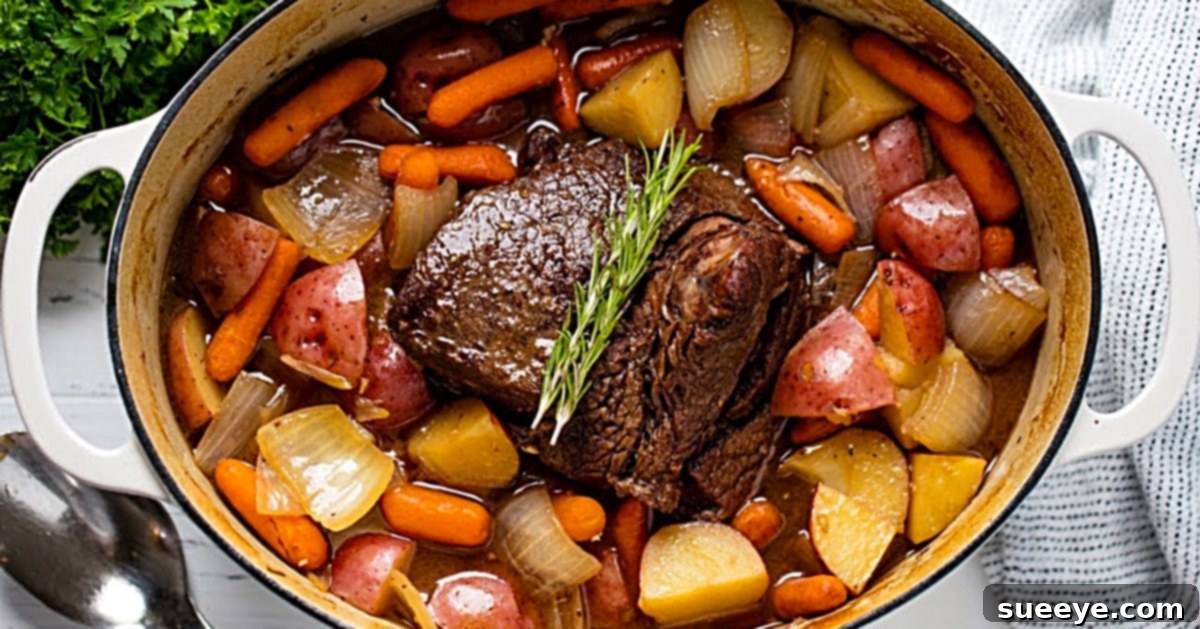
There are few dishes that evoke such a powerful sense of warmth, nostalgia, and pure comfort as the classic Sunday Pot Roast. It’s more than just a meal; it’s a tradition, a centerpiece of family gatherings, and a testament to the transformative power of slow cooking. While many believe it’s a simple dish, there’s indeed an art to crafting a truly unforgettable pot roast – one that boasts fork-tender meat, rich gravy, and perfectly cooked vegetables, all imbued with deep, savory flavors. This comprehensive guide will walk you through the journey of creating the ultimate classic pot roast, focusing particularly on the time-honored Dutch Oven method, while also touching upon other popular techniques.
The Enduring Appeal of Classic Pot Roast
For generations, the pot roast has held a cherished place at dinner tables, especially on Sundays. Its magic lies in its simplicity and the incredible depth of flavor that develops from humble ingredients cooked slowly together. A robust cut of beef, aromatic vegetables, and a flavorful liquid are simmered until the meat is incredibly tender, practically falling apart with a gentle touch. It’s a dish that feeds the soul as much as the stomach, bringing people together and creating lasting memories around the table.
Choosing the Perfect Cut: The Foundation of a Great Roast
The success of your pot roast begins with selecting the right cut of beef. These cuts are often tougher to begin with, but their high collagen content breaks down during long, slow cooking, resulting in succulent, tender meat and a wonderfully rich sauce. Here are the top contenders:
- Beef Chuck Roast: This is arguably the most popular and highly recommended cut for pot roast. Taken from the shoulder, it’s well-marbled with fat and connective tissue, which renders down beautifully to keep the meat moist and add incredible flavor. Look for a chuck roast that’s at least 3-4 pounds for a substantial meal.
- Bottom Round Roast: A leaner cut from the hind leg, the bottom round roast can also be used, but benefits from careful cooking to prevent it from drying out. It’s best cooked until very tender.
- Beef Brisket: While famously used for BBQ, brisket (especially the flat cut) can make an excellent pot roast. It has a distinctive grain and can be incredibly tender when slow-cooked.
Regardless of the cut you choose, aim for a piece of meat that’s relatively uniform in thickness to ensure even cooking.
The Essential Ingredients for a Timeless Flavor
Beyond the beef, a classic pot roast relies on a carefully selected ensemble of ingredients that contribute to its iconic taste profile:
- Red Wine: A dry red wine, like Cabernet Sauvignon or Merlot, adds incredible depth and complexity, deglazing the pot and forming the base of a rich sauce. If you prefer not to use wine, additional beef stock is a suitable substitute.
- Worcestershire Sauce: This umami-rich condiment provides a subtle tang and boosts the savory notes of the beef.
- Oil: A high-smoke-point oil like vegetable oil, canola oil, or even clarified butter (which I personally love for its rich flavor) is essential for searing.
- Aromatics: Garlic and large onions are non-negotiable, forming the aromatic foundation of the dish.
- Hearty Vegetables: Carrots and potatoes are traditional additions, absorbing the flavors of the roast and contributing to a wholesome meal. You can also add celery, parsnips, or even mushrooms.
- Beef Stock: This provides the necessary liquid for slow simmering and enriches the final gravy.
- Herbs: Fresh rosemary is a classic choice, lending an earthy, aromatic note. Thyme or bay leaves are also wonderful additions.
- Salt and Freshly Ground Black Pepper: Generous seasoning is key for developing flavor.
The Classic Dutch Oven Method: A Time-Honored Tradition
My preferred method, and arguably the most traditional, involves a sturdy Dutch Oven. There’s something truly special about cooking in cast iron, especially a vintage piece. I recently acquired a beautiful vintage cast iron Dutch Oven from an antique market in Taylor, Texas, and couldn’t wait to christen it with a classic pot roast. The even heat distribution and ability to go from stovetop to oven make it an ideal vessel for this dish.
Step-by-Step Guide to Dutch Oven Pot Roast
1. Prepare and Sear the Roast: Building the Flavor Foundation
Begin by patting your beef chuck roast thoroughly dry with paper towels. This crucial step ensures a good sear, as moisture on the surface will steam the meat rather than brown it. Season generously on all sides with salt and freshly ground black pepper. In your Dutch Oven, heat 2 tablespoons of oil (clarified butter works wonderfully) over medium-high heat until shimmering. Carefully place the seasoned roast into the hot oil. Sear on all sides until a deep, rich brown crust forms – this takes about 3-5 minutes per side. The Maillard reaction created during searing is paramount; it develops complex, savory flavors that will permeate the entire dish.
2. Sauté Aromatics and Deglaze the Pot: Unlocking Hidden Flavors
Once seared, remove the roast from the Dutch Oven and set it aside. Reduce the heat to medium. Add your minced garlic to the pot, sautéing for about 30 seconds until fragrant, being careful not to burn it. Then, pour in one cup of red wine. Use a wooden spoon to scrape up all the delicious browned bits (the ‘fond’) from the bottom of the pot. These bits are pure flavor gold and will contribute immensely to your sauce. Return the seared roast to the pot, nestled amongst the aromatic wine mixture. Add your large, roughly chopped onions around the roast.
3. Add Vegetables and Simmer: A Symphony of Textures and Tastes
Now it’s time to introduce the vegetables. Add your chopped potatoes and carrots around the roast. Pour in 2 tablespoons of Worcestershire sauce and half a cup of beef stock. Ensure the liquid comes about halfway up the sides of the roast. Add a sprig of fresh rosemary and any other desired herbs like thyme or a bay leaf. Bring the liquid to a gentle simmer on the stovetop, then cover the Dutch Oven tightly with its lid.
4. Slow Roast to Perfection: The Heart of the Process
Transfer the covered Dutch Oven to a preheated oven at 300°F (150°C). Bake for 2 1/2 to 3 hours, or until the beef is incredibly fork-tender. The exact time will depend on the size and thickness of your roast. To check for doneness, gently insert a fork; if it slides in and out with very little resistance, your pot roast is ready. The long, slow cooking allows the connective tissues to break down, resulting in that desirable melt-in-your-mouth texture.
5. Rest and Serve: The Final Flourish
Once cooked, carefully remove the Dutch Oven from the oven. Let the pot roast rest, covered, for at least 15-20 minutes before serving. This resting period allows the juices to redistribute throughout the meat, ensuring maximum tenderness and flavor. You can then shred the meat directly in the pot, or slice it against the grain if it holds together well. The vegetables will be perfectly cooked, and the pan juices will form a rich, delicious sauce. You can thicken these juices into a gravy by straining them, then simmering with a cornstarch slurry if desired.
Other Popular Pot Roast Methods
Slow Cooker Pot Roast: The “Set It and Forget It” Approach
For those who prefer minimal fuss, the slow cooker is an excellent choice. While you can skip searing, doing so on the stovetop beforehand will significantly enhance the final flavor. Place seared meat, vegetables, and liquids into the slow cooker. Cook on low for 6-8 hours or on high for 3-4 hours, or until the meat is falling apart. The slow cooker method is perfect for busy weeknights, allowing you to come home to a delicious, ready-made meal.
Instant Pot Pot Roast: Speed and Tenderness Under Pressure
If time is of the essence, the Instant Pot (or any electric pressure cooker) can deliver a tender pot roast in a fraction of the time. Use the sauté function to sear the meat and brown aromatics directly in the pot. Add liquids and vegetables (though some prefer to add softer vegetables halfway through the pressure cooking cycle). Cook on high pressure for about 60-70 minutes for a 3-4 lb roast, followed by a natural pressure release for at least 15 minutes before opening the lid. This method retains moisture wonderfully and infuses flavors quickly.
Tips for the Perfect Pot Roast Every Time
- Don’t Skip Searing: This step is non-negotiable for depth of flavor. A deep brown crust is essential.
- Season Generously: Don’t be shy with salt and pepper on the beef itself. Layered seasoning makes a difference.
- Don’t Overcrowd the Pot: If you’re doubling the recipe or using many vegetables, consider using a larger pot or splitting it into two to ensure even cooking and browning.
- Use Quality Ingredients: Good quality beef, fresh vegetables, and decent wine (if using) will elevate your dish.
- Rest the Meat: Just like with steaks, resting the pot roast allows juices to redistribute, leading to a more tender and flavorful result.
- Make Gravy: Don’t let those delicious pan drippings go to waste! Strain them, skim off excess fat, and thicken with a cornstarch or flour slurry for an irresistible homemade gravy.
Serving Suggestions and Variations
A classic pot roast is a meal in itself, but it pairs beautifully with:
- Creamy mashed potatoes (perfect for soaking up the gravy).
- Crusty bread or dinner rolls.
- A simple green salad with a vinaigrette to cut through the richness.
Feel free to experiment with variations:
- Different Herbs: Add fresh thyme, bay leaves, or even a hint of sage.
- Root Vegetables: Include parsnips, celery root, or sweet potatoes.
- Mushrooms: Sauté cremini or button mushrooms and add them in with the other vegetables.
- Global Flavors: Try a splash of soy sauce and ginger for an Asian twist, or cumin and chili powder for a Mexican-inspired version.
Ingredients:
- One (3-4 lb) Beef Chuck Roast, Bottom Round Roast, or Beef Brisket
- 1 cup dry red wine (Cabernet Sauvignon or Merlot recommended), or additional beef stock
- 2 tbsp. Worcestershire sauce
- 2 tbsp. oil (such as vegetable, canola, or clarified butter)
- 1 lb. carrots, peeled and roughly chopped
- 1 lb. potatoes (Yukon Gold or red potatoes work well), scrubbed and quartered
- 1 large onion, roughly chopped
- 1/2 cup beef stock, plus more if needed
- 4-5 cloves garlic, minced
- 1 sprig fresh rosemary (or 1 tsp dried rosemary)
- Salt and freshly ground black pepper to taste
The Ultimate Classic Pot Roast Recipe: A Sunday Tradition Reimagined
This is, without a doubt, the most delicious pot roast I have ever created, and I’ve made countless versions throughout my life. Serving this to my in-laws last Sunday was a triumph; they absolutely raved about it! Even my mother-in-law, who can often be quite discerning, went on and on about my culinary talents. While I’m delighted she enjoyed it, I do remain playfully cautious when it comes to her praise – after all, a good cook always keeps their secrets close, and a dash of humble confidence never hurts! 😉 This recipe promises to deliver a heartwarming, satisfying meal that will impress even the toughest critics and become a cherished tradition in your home.