
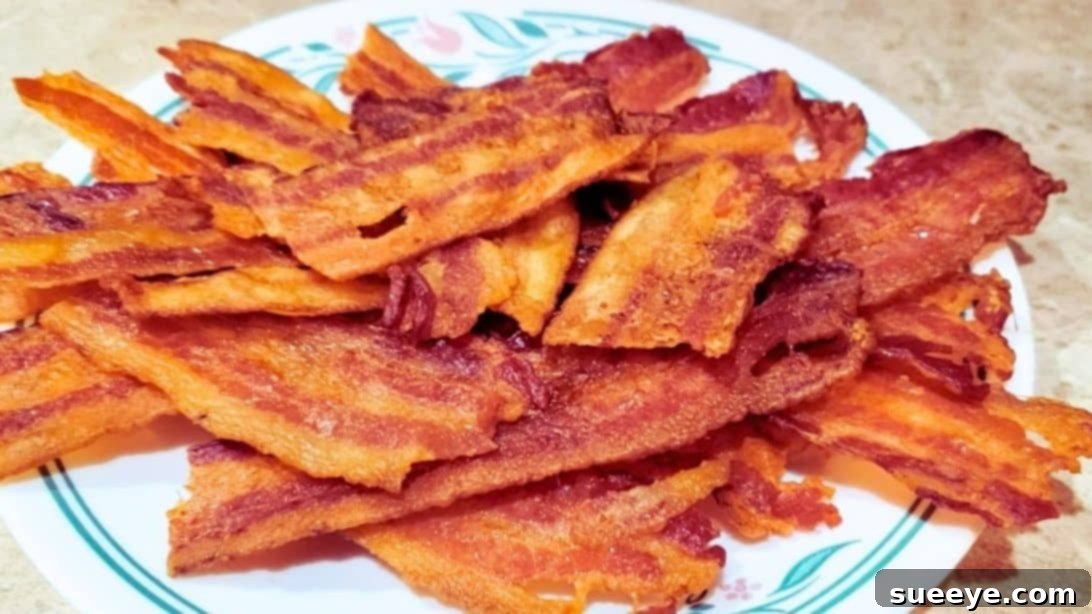
For many, bacon is more than just a breakfast side – it’s a culinary staple, capable of elevating almost any dish with its savory crunch and rich flavor. Achieving that perfect balance of crispiness without burning or creating a greasy mess can often feel like a challenge. Over the years, I’ve experimented with countless methods, from the sizzling stovetop fry to various oven techniques. Through all these trials, one method has consistently stood out as the undisputed champion: baking bacon in the oven. It’s not just about convenience; it’s about consistently delivering flawlessly crispy, evenly cooked bacon with minimal effort. This approach frees you from constant monitoring and messy splatters, allowing you to prepare other components of your meal while your bacon cooks itself to perfection. You won’t need to stand guard, flipping strips every few minutes. Simply set it and forget it until golden and crisp. If you’re ready to transform your bacon-cooking experience, join me in exploring why the oven method is a game-changer. For a visual guide, you can also check out this helpful video tutorial by Nutritious & Delicious on YouTube.
Why Oven-Baked Bacon Reigns Supreme
Before we dive into the how-to, let’s explore why oven-baked bacon is superior to other cooking methods, solidifying its reputation as the best way to cook this beloved breakfast item:
- Unmatched Crispiness and Even Cooking: The consistent, circulating heat of the oven cooks bacon strips evenly from all sides, ensuring every piece achieves a uniform crispiness. Unlike stovetop frying, where hot spots can lead to uneven cooking, the oven provides a controlled environment for perfect results.
- Hands-Off Convenience: This is arguably the biggest advantage. Once the bacon is in the oven, your work is largely done. There’s no need for constant flipping or monitoring, freeing up your time to prepare eggs, pancakes, or simply enjoy your morning coffee.
- Minimal Mess and Easy Cleanup: Say goodbye to grease splatters all over your stovetop and kitchen. When baked on a wire rack over a foil-lined baking sheet, the grease drips neatly below, containing the mess. Cleanup becomes significantly less daunting.
- Capacity for Large Batches: Whether you’re feeding a family or preparing for a brunch gathering, the oven allows you to cook a much larger quantity of bacon simultaneously compared to a frying pan. Fill up multiple baking sheets if needed!
- Consistent Results Every Time: With a reliable oven temperature and understanding of your bacon’s thickness, you can consistently reproduce perfectly cooked bacon, taking the guesswork out of your morning routine.
What You Need for Perfect Oven Bacon
Gathering the right tools and ingredients is the first step toward achieving bacon perfection. Here’s everything you’ll need:
- 1 (12-ounce) package of bacon strips: Choose your preferred cut – center-cut, thick-cut, or thin-cut all work beautifully. Keep in mind that the thickness will significantly impact cooking time and final texture. Thick-cut bacon yields a meatier, chewier crisp, while thin-cut gets very crispy, very quickly.
- Half-sheet baking pan: A sturdy, rimmed baking sheet is essential to catch all the rendered bacon grease and prevent it from spilling into your oven. A standard half-sheet size (approximately 13×18 inches) is ideal for cooking a full package of bacon without overcrowding.
- Wire rack: This is the secret weapon for truly crispy bacon. A cooling rack that fits inside your baking pan allows air to circulate around all sides of the bacon strips, preventing them from stewing in their own grease and ensuring maximum crispiness. Look for oven-safe racks made of stainless steel.
- Aluminum foil or parchment paper (optional, but highly recommended): Lining your baking pan with foil or parchment paper before placing the wire rack makes cleanup incredibly easy. The rendered grease will collect on the lining, which you can simply discard afterward.
- Paper towels: Essential for blotting excess grease from the cooked bacon, ensuring it remains crispy, and also for safely handling and absorbing the hot grease after cooking.
- Tongs: Useful for carefully transferring the hot bacon from the rack to a paper towel-lined plate.
Directions for Flawlessly Crispy Oven-Baked Bacon
Step 1: Preheat Your Oven
Begin by preheating your oven to 400°F (204°C). Accurate preheating is crucial for consistent cooking. Ensure your oven has reached the target temperature before placing the bacon inside; a cold oven will result in chewier, less crispy bacon.
Step 2: Prepare Your Baking Setup
Get a half-sheet baking pan and line it with aluminum foil or parchment paper. This step is optional but highly recommended for effortless cleanup. Next, place a wire rack directly over the lined baking pan. The rack ensures air circulation around the bacon, which is key to its crispy texture.
Step 3: Arrange the Bacon Strips
Carefully lay the bacon strips on the wire rack in a single layer. It’s imperative that the strips do not overlap. Overlapping bacon will steam instead of crisp, leading to unevenly cooked and potentially soggy results. If you have a large package of bacon, you may need to use two baking sheets to accommodate all the strips without crowding.
Step 4: Bake to Perfection
Once your oven is fully preheated, carefully place the baking pan with the bacon into the hot oven. Allow them to bake for approximately 18 to 28 minutes, or until they reach your desired level of crispiness and a beautiful golden-brown color. The exact cooking time will vary depending on several factors:
- Bacon Thickness: Thin-cut bacon might be ready in 15-20 minutes, while thick-cut bacon can take 25-35 minutes.
- Desired Crispiness: Some prefer slightly chewy bacon, while others want it glass-shattering crisp. Adjust time accordingly.
- Oven Calibration: Ovens can vary, so it’s always good to observe your bacon closely, especially during your first attempt with this method.
Remember, there’s no need to flip the bacon halfway through! The circulating heat will cook both sides evenly.
Step 5: Blot and Serve
Once the bacon is perfectly cooked, carefully remove the baking sheet from the oven. Using tongs, transfer the crispy bacon strips to a plate lined with several layers of paper towels. Gently blot the excess grease from both sides of the bacon. This step is crucial for maintaining maximum crispiness and reducing the greasiness. Let the bacon rest for a minute or two on the paper towels; it will continue to crisp up as it cools.
Step 6: Save the Rendered Bacon Grease
Don’t discard that flavorful rendered bacon grease! It’s a culinary treasure. Once it has cooled slightly (but is still liquid), carefully pour the grease from the baking sheet into a heat-proof jar or container. Strain it through a fine-mesh sieve or cheesecloth if you want to remove any small bacon bits. Store the rendered bacon grease in the refrigerator for future cooking endeavors. It adds incredible depth of flavor to fried eggs, sautéed vegetables, cornbread, and much more.
Troubleshooting and Tips for Oven Bacon
My bacon isn’t crispy enough, what went wrong?
Several factors can lead to less-than-crispy bacon:
- Not using a wire rack: Bacon sitting directly on a baking sheet will cook in its own grease, preventing crispiness. The rack is essential for air circulation.
- Overcrowding the pan: If bacon strips overlap, they’ll steam rather than fry. Ensure a single layer with space between each strip.
- Oven temperature too low or cooking time too short: Make sure your oven is accurately preheated to 400°F (204°C) and allow enough time for the fat to render and crisp up.
- Too much moisture: Patting down bacon strips with a paper towel before baking can help remove excess moisture, leading to crispier results.
How to store cooked bacon?
Once cooled, cooked bacon can be stored in an airtight container in the refrigerator for up to 5 days. For longer storage, freeze it for up to 3 months. Reheat gently in the microwave or oven until warm and re-crisped.
Can I use parchment paper instead of foil?
Yes, parchment paper works equally well for lining the baking sheet for easy cleanup. Some prefer it as it’s less likely to stick than foil for certain foods, although with a wire rack, this isn’t usually an issue for bacon.
What about different temperatures?
While 400°F (204°C) is ideal for maximum crispiness in a reasonable timeframe, you can experiment. A slightly lower temperature (e.g., 375°F/190°C) might yield slightly chewier bacon with less risk of burning, but it will take longer. Higher temperatures risk burning the bacon before it’s fully rendered.
Ultimate Cleanup Hack: The Foil Lining
The best way to minimize cleanup is to always line your baking sheet with heavy-duty aluminum foil before placing the wire rack. After cooking and cooling the grease, you can simply lift the foil with the solidified grease and dispose of it. Your baking sheet will remain virtually spotless!
Creative Uses for Your Oven-Baked Bacon
Once you’ve mastered oven-baked bacon, the possibilities extend far beyond breakfast plates:
- Classic Breakfast & Brunch: Serve alongside scrambled eggs, pancakes, waffles, or a hearty breakfast sandwich.
- Salad Topping: Crumble crispy bacon over salads for a burst of salty flavor and texture. It’s a game-changer for Caesar salads or a simple garden salad.
- Sandwiches & Burgers: A strip or two of crispy bacon elevates any sandwich, from a classic BLT to a gourmet burger.
- Baked Potatoes & Soups: Bacon bits are a perfect topping for loaded baked potatoes, creamy soups like potato or clam chowder, and even chili.
- Appetizers: Wrap bacon around dates or scallops, or use it in dips and spreads for an irresistible savory kick.
Maximizing Flavor with Saved Bacon Grease
Don’t let that precious rendered bacon fat go to waste! It’s a culinary goldmine:
- Frying Eggs: For the ultimate breakfast, fry your eggs in a tablespoon of bacon grease.
- Sautéing Vegetables: Use it to sauté onions, garlic, greens (like collards or spinach), or Brussels sprouts for incredible depth of flavor.
- Roasting Potatoes: Toss cubed potatoes in bacon grease before roasting for perfectly crispy, savory spuds.
- Cornbread & Biscuits: Incorporate a spoonful into your cornbread batter or biscuit dough for a rich, savory twist.
- Gravies & Sauces: Use it as the fat base for a roux in gravies or pan sauces.
Always store cooled, rendered bacon grease in an airtight container in the refrigerator to keep it fresh for future use.
Final Thoughts on Your Bacon Journey
Mastering oven-baked bacon is more than just a cooking technique; it’s an upgrade to your entire culinary routine. The simplicity, the consistency, the sheer deliciousness—it all adds up to a method you’ll wonder how you ever lived without. No more dodging grease splatters, no more unevenly cooked strips, just perfect, crispy bacon, every single time. So go ahead, preheat that oven, lay out those strips, and prepare to enjoy bacon as it was truly meant to be. This hassle-free approach guarantees that your bacon will be perfectly crispy and tasty, making it a joy to incorporate into almost every meal.
*Thanks to Nutritious & Delicious via YouTube for all the images used here. If you love this cooking tip and want to explore more amazing recipes and culinary advice, then you’ll surely love her other videos too, so give her channel a visit and subscribe!