
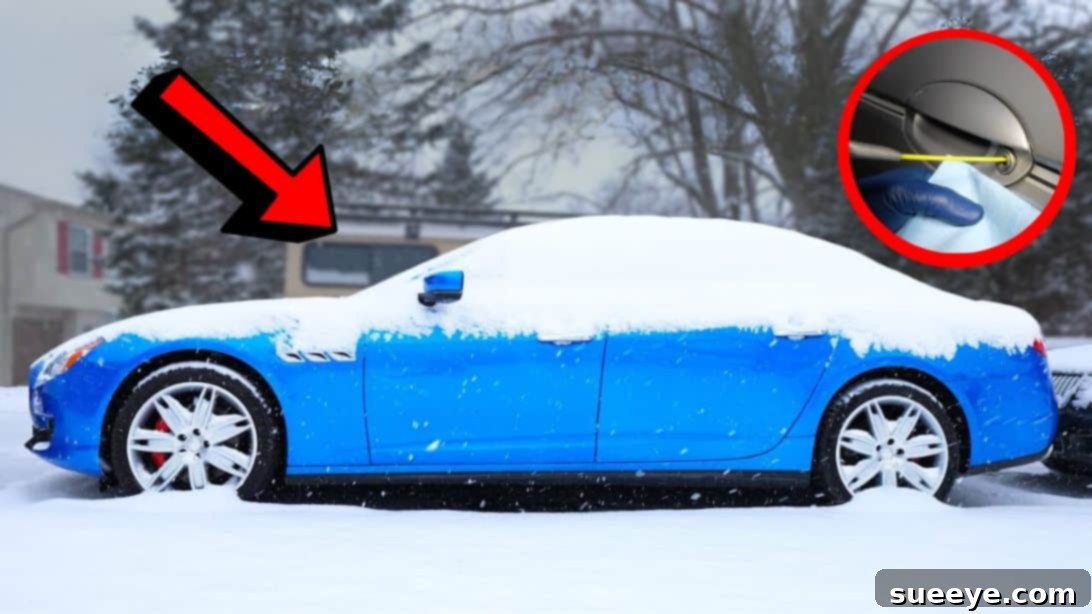
The winter season brings with it a unique set of challenges for drivers, especially in regions prone to heavy snowfall and frequent snowstorms. Preparing your vehicle for these conditions is not merely a recommendation; it’s a critical step to ensure your safety, save valuable time, and prevent costly repairs. Fortunately, automotive expert ChrisFix has compiled 10 indispensable winter car tips and tricks that every driver should know. By adopting these proactive measures, you can navigate the harshest winter weather with confidence, keeping you and your loved ones safe. These ingenious hacks are designed to simplify your winter routine, reduce stress, and protect your vehicle from the elements. Whether you’re an experienced winter driver or new to snowy climates, these insights will prove invaluable.
RELATED: Budget-Friendly Hack To Winter-Proof Windows
Many of these highly effective tips leverage clever, old-school techniques and budget-friendly solutions that have been proven over generations. For instance, a simple trick like covering your side mirrors with zip-lock bags can prevent them from freezing solid overnight, saving you precious minutes during your morning commute. All of the methods ChrisFix shares are not only incredibly effective but also easy to implement, making winter car preparation accessible to everyone. You’ll also learn essential techniques for safely removing snow from your car without risking damage to its paint finish, a common mistake that can lead to expensive detailing work. Don’t let winter catch you off guard; be sure to incorporate these car hacks into your routine this winter!
These practical solutions address common winter frustrations, from frozen locks and stuck doors to icy windshields and slippery driveways. By understanding the underlying principles behind these hacks, you can apply them intelligently to your specific situation, enhancing your overall winter driving experience. Prepare to transform your approach to winter car care, making it less of a chore and more of a streamlined process.
1 – Ensure a Full Tank of Fuel for Winter Driving Safety
One of the most crucial yet often overlooked winter car tips is to maintain a consistently full or near-full tank of fuel. This practice offers multiple benefits that are vital for cold weather driving. Firstly, a full tank significantly reduces the amount of air space within the fuel tank, thereby minimizing condensation. In sub-freezing temperatures, this condensation can turn into water droplets, which can then freeze in your fuel lines, potentially blocking fuel flow and leaving you stranded. A full tank helps prevent this scenario, ensuring your engine receives a steady supply of fuel.
Secondly, the added weight of a full fuel tank can provide much-needed traction, especially for rear-wheel-drive vehicles. While it won’t magically turn your car into an all-wheel-drive beast, the extra weight over the rear axle can improve grip on icy or snow-covered roads, offering greater stability and control. This slight improvement in traction can make a noticeable difference when accelerating from a stop or navigating slippery turns.
Finally, and perhaps most importantly, a full tank serves as a critical safety net in emergency situations. If you get stuck in a snowdrift, encounter heavy traffic delays due to winter weather, or your car breaks down, having plenty of fuel allows you to run your engine intermittently to stay warm. This can be a life-saving measure in extreme cold, providing essential heat until help arrives. Running out of gas in severe winter conditions is not only inconvenient but can also be extremely dangerous. Always prioritize keeping your tank topped off during the winter months.
2 – Combat Park Your Car for Effortless Winter Exits
Combat parking, or backing into your parking spot, is a technique that proves incredibly beneficial during the winter season. While it might take a few extra moments to maneuver initially, the advantages when departing far outweigh the slight effort. In winter, driveways and parking lots are often covered in snow, ice, or slush, and visibility can be severely reduced due to frost, fog, or falling snow.
When you combat park, your vehicle is already facing forward, allowing you to pull straight out of your spot. This eliminates the need to back out into potentially obscured views, making your exit significantly safer and quicker. You gain a clear line of sight to any approaching vehicles, pedestrians, or children playing in the snow, which might otherwise be hidden behind snowbanks or other parked cars. Trying to back out of a spot when your rear window is covered in snow or ice, or when the ground is extremely slippery, is a recipe for frustration and potential accidents.
By simply backing in, you set yourself up for a stress-free departure, allowing you to see obstacles and navigate slippery surfaces more effectively. This small change in your parking habit can greatly enhance your safety and convenience throughout the snowy months.
3 – Ensure You Have Ample Winter-Specific Wiper Fluid
Maintaining a full reservoir of the correct wiper fluid is absolutely essential for safe winter driving. During winter, your windshield isn’t just dealing with snow; it’s constantly bombarded with road salt, grime, slush, and freezing rain. Standard wiper fluid can freeze in cold temperatures, rendering it useless or even damaging your system.
The key here is to use a winter-specific wiper fluid, which contains antifreeze agents designed to withstand extremely low temperatures (often rated down to -20°F or -30°F). This specialized fluid effectively cuts through ice, melts light frost, and washes away the greasy, salty film that accumulates on your windshield. Without it, your visibility can quickly become compromised, turning a short drive into a perilous journey. Poor visibility is a major contributor to winter accidents.
Regularly check and top off your wiper fluid reservoir. It’s also a good idea to keep an extra bottle in your trunk, as you’ll likely use it much more frequently than in warmer months. Don’t underestimate the importance of a clean and clear windshield for maintaining optimal road visibility and ensuring your safety.
4 – Prevent Doors and Locks from Freezing Shut
Waking up to a car door frozen shut or a key lock that won’t turn is a common and frustrating winter occurrence. The solution lies in using a silicone lubricant, which is a fantastic product due to its hydrophobic properties—meaning it actively repels water. Where there’s no water, there’s no ice.
To prevent your car locks from freezing, take a paper towel and apply a small amount of silicone spray directly into the keyhole. Then, gently wipe away any excess. The silicone will coat the internal mechanisms, creating a barrier against moisture and preventing ice formation. This simple step can save you the struggle of trying to de-ice a stubborn lock with a lighter or other potentially damaging methods.
For car doors, the main culprit for freezing shut is the weather stripping—the rubber seals around the door frame that keep out wind and water. Get a clean towel, spray it generously with the silicone lubricant, and then thoroughly wipe down all the weather stripping on both your car door and the corresponding frame opening. The silicone will condition the rubber, preventing it from sticking to itself or the metal frame when moisture freezes between the surfaces. A crucial warning: be extremely careful not to get any silicone lubricant on your interior trim or fabric, as it can leave a greasy residue that is difficult to remove.
By applying silicone lubricant to both your locks and weather stripping, you can confidently open your car doors even on the coldest mornings, avoiding the hassle and potential damage caused by frozen seals.
5 – Lubricate Your Hood Latches to Avoid Winter Woes
Just like your car doors and locks, your hood latches are susceptible to freezing in cold, wet weather. This can be a major inconvenience, especially during winter when battery issues are more common. A dead battery often necessitates a jump-start, and if your hood latch is frozen solid, accessing your battery becomes an impossible task. Similarly, if you need to check your fluid levels or perform any under-the-hood maintenance, a frozen latch will hinder your efforts.
To prevent this, apply a generous amount of silicone lubricant to your hood latches. Ensure you spray enough to coat the moving parts thoroughly. The silicone will create a protective, water-repellent layer, preventing moisture from freezing the mechanism. This simple preventive measure ensures that you can easily open your hood whenever necessary, avoiding frustration and potential delays when you least need them. It’s a small but critical step in your overall winter car preparation.
6 – Prevent Your Windshield and Side Mirrors from Becoming a Sheet of Ice
Dealing with an ice-covered windshield and side mirrors every winter morning is tedious and time-consuming. Fortunately, there are effective strategies to prevent this from happening in the first place.
For your side mirrors, a simple yet incredibly effective trick is to cover them tightly with zip-lock bags. Secure the bags with rubber bands or by tucking them firmly around the mirror housing. This prevents moisture from accumulating on the mirror surface and freezing, leaving them clear and ready for use when you depart. It’s a cheap, easy, and highly efficient solution.
For your windshield, investing in a good quality canvas windshield cover specifically designed to keep snow and ice off the glass is highly recommended. These covers typically attach with straps that close inside your car doors, ensuring they stay put even in windy conditions. When you’re ready to leave, simply remove the cover, and your windshield will be clear. As a budget-friendly alternative, you can also use large garbage bags or even a flattened cardboard box, secured with painter’s tape or by tucking the edges under your wipers and doors. Lifting your wiper blades off the windshield before placing the cover is also crucial, as it prevents them from freezing to the glass and extends their lifespan. These methods save you precious time and effort by eliminating the need for scraping and de-icing, and they also protect your windshield from potential scratches.
7 – How to Prevent Snow from Sticking to Your Shovel
Shoveling snow is already hard work, but it becomes even more arduous when wet, heavy snow constantly sticks to your shovel blade. This creates extra weight and friction, making each scoop more challenging. The good news is there’s a simple hack to make your snow shoveling experience much more efficient: waxing your shovel.
First, ensure your shovel blade is completely dry and clean. Any moisture or dirt will prevent the wax from adhering properly. Once dry, apply a layer of car wax, paraffin wax, or even a silicone spray to both sides of the shovel blade. Spread it evenly, ensuring full coverage. After application, let the wax sit for about 5 to 10 minutes to cure or dry slightly, creating a slick, non-stick surface. This waxed surface will dramatically reduce friction, allowing snow to slide off the shovel effortlessly, rather than clinging to it. You’ll find yourself moving snow faster and with less effort, making the dreaded task of shoveling a bit more bearable.
8 – How to Safely Remove Snow from Your Car Without Scratches
Removing snow from your car can be a delicate task. Improper techniques can easily lead to unsightly scratches and swirl marks on your vehicle’s paint, diminishing its finish and resale value. The key is to be gentle and use the right tools for the job.
For fresh, powdery snow, a leaf blower is an excellent and surprisingly effective tool. It can quickly clear large amounts of light snow from your car’s roof, hood, and trunk without any physical contact, thus eliminating the risk of scratches. Just be careful not to direct the hot exhaust too close to painted surfaces for extended periods.
If you don’t have a leaf blower or if the snow is heavier and more compacted, you can still remove it safely with a brush, but with a crucial modification. Cover the bristles of your snow brush with a soft microfiber towel. The microfiber acts as a barrier, cushioning the brush and preventing any abrasive contact with your car’s paint. When brushing, use a light, sweeping motion and avoid applying any downward pressure. The goal is to lift the snow off the surface, not to scrub or push it into the paint. Always brush in one direction, not back and forth, to minimize the chance of dragging abrasive particles across the finish. Starting from the roof and working your way down will prevent cleared snow from falling onto already cleaned areas. Remember, patience and a gentle touch are paramount to protecting your car’s paint during winter snow removal.
9 – How to Safely Remove Snow and Ice from Car Glass
When it comes to removing stubborn ice and compacted snow from your car’s glass surfaces, it’s critical to use the right tools and techniques to avoid damage. A common mistake many drivers make is using an ice scraper on painted surfaces or plastic side view mirrors. This is a surefire way to cause permanent scratches and gouges. Remember this golden rule: **only use your plastic scraper on glass!**
The hard plastic edge of an ice scraper is designed to chip away at ice on robust glass surfaces like your windshield and rear window. However, automotive paint, clear coats, and the delicate plastics of side mirrors are much softer and easily susceptible to damage from even a seemingly dull scraper edge. If you don’t have a dedicated ice scraper on hand, don’t panic. A credit card, gift card, or even an old loyalty card can serve as an effective makeshift scraper. Simply use one of the long edges of the card to scrape away the ice, applying steady but not excessive pressure. The plastic composition of these cards is generally softer than your car’s paint, making them a safer alternative for quick ice removal from small areas of glass. Always aim to use the edge of the card, not the corner, to distribute pressure and reduce the risk of scratching the glass itself. Prioritize your vision by ensuring all glass surfaces are completely clear before driving.
10 – De-ice Car Windows the Safe and Effective Way
When faced with frozen car windows, the temptation to use boiling water to quickly melt the ice can be strong. However, this is one of the most dangerous things you can do to your car glass. The sudden and extreme temperature change can cause thermal shock, leading to cracks or even shattering of your windshield or windows. Glass is not designed to withstand such rapid temperature fluctuations, especially when it’s already compromised by cold.
Instead, a much safer and equally effective method involves using warm (not boiling) water in a sealed ziplock bag. Fill a sturdy ziplock bag with warm tap water—water that’s comfortable to touch, not scalding hot. Then, slowly and gently slide this warm bag across the icy surfaces of your windshield, side view mirrors, and even your headlights. The warmth from the water will transfer through the bag to the ice, melting it without directly exposing the glass to a drastic temperature change. The bag acts as a buffer, making the process controlled and safe. This technique works wonders, quickly clearing ice without any risk of damage to your vehicle.
Additionally, you can always rely on your car’s defroster system. Start your car, turn on the defroster to full heat, and direct the airflow to your windshield and side windows. While this takes longer, it’s a completely safe and passive way to de-ice your glass. Coupling this with the warm water bag trick can significantly speed up the de-icing process, ensuring you have clear visibility for a safe journey.
Master Your Winter Commute: 10 Essential Car Tips and Tricks You Need to Know
Preparing your vehicle for the winter season is an investment in your safety, peace of mind, and financial well-being. By implementing these 10 practical and effective car tips from ChrisFix, you can confidently face whatever challenges the cold weather brings. From ensuring adequate fuel and proper parking to safeguarding against frozen doors and safely clearing snow, each tip plays a crucial role in preventing common winter frustrations and potential hazards.
Embrace these preventative measures to protect your car’s integrity, extend its lifespan, and most importantly, ensure a safer driving experience for yourself and everyone on the road. Don’t let winter weather dictate your travel plans; instead, empower yourself with the knowledge and tools to master the elements. Stay prepared, stay safe, and enjoy a worry-free winter behind the wheel.