
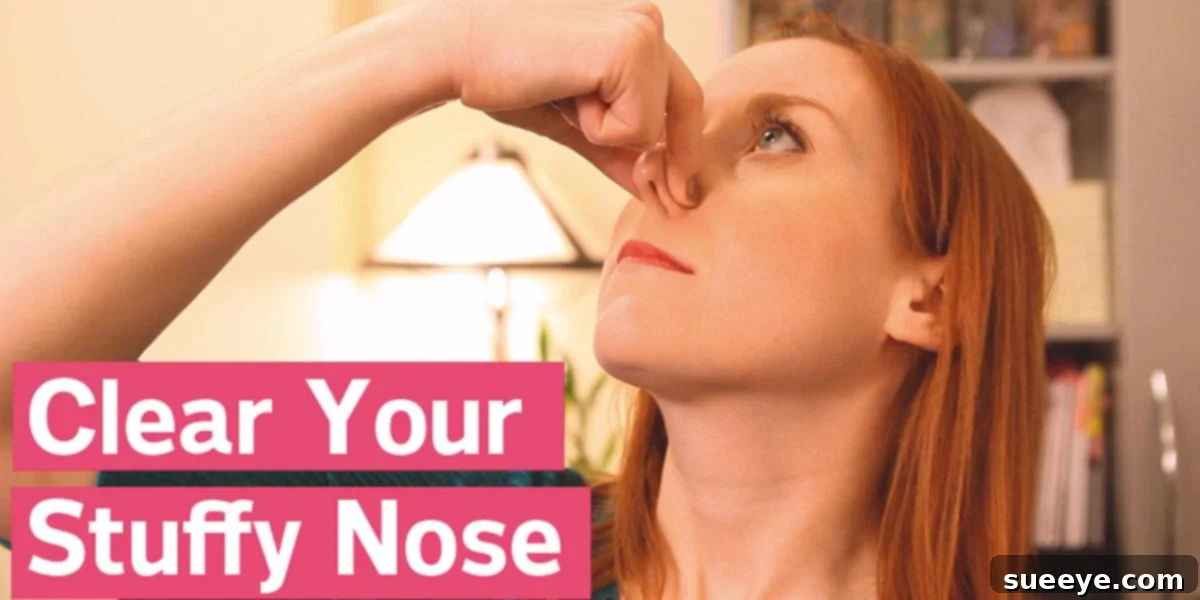
Breathe Easy: Your Ultimate Guide to Natural Stuffy Nose Relief Without Drugs
Few things are as universally irritating as a stuffy nose. The inability to breathe freely, the constant discomfort, and the relentless struggle to find a restful night’s sleep are experiences many of us dread. Whether it’s due to allergies, a common cold, or sinus issues, a blocked nose can significantly disrupt our daily lives and overall well-being. The desperate search for quick relief often leads us down the path of over-the-counter remedies, but what if there was a simpler, more natural, and equally effective way to clear your nasal passages?
This article delves into the powerful, non-invasive method of acupressure—an ancient technique gaining modern recognition for its ability to alleviate nasal congestion rapidly. Forget the cycle of chemical nasal sprays and their potential side effects; we’re about to uncover a solution that empowers you to take control of your breathing, often in less than a minute.
The Stuffy Nose Dilemma: More Than Just Annoyance
A congested nose isn’t just an inconvenience; it’s a genuine impediment to quality of life. Imagine trying to fall asleep when every breath feels like an uphill battle. The forced mouth breathing leads to dry throat, restless sleep, and often leaves you feeling more exhausted than when you went to bed. Beyond sleep, a stuffy nose can cause headaches, facial pressure, reduced sense of smell and taste, and difficulty concentrating during the day. It can make exercise uncomfortable and social interactions awkward. For many, this persistent blockage always seems to worsen when lying down, transforming bedtime into a frustrating ordeal.
The impact extends beyond mere physical discomfort. Chronic nasal congestion can lead to deeper sinus issues, ear infections, and even affect your mood and productivity. Finding a reliable, safe, and swift method for relief is not just about comfort; it’s about reclaiming your peace, your rest, and your ability to function optimally.
Traditional Solutions: Weighing the Pros and Cons
When confronted with a stuffy nose, the immediate inclination for most is to reach for conventional treatments. Over-the-counter nasal sprays are a popular choice, promising instant relief. While they can indeed provide a temporary reprieve, they come with a significant set of drawbacks that are often overlooked:
- Chemical Substances: Most nasal sprays contain decongestant chemicals that can constrict blood vessels in your nose. While this reduces swelling, it’s essentially introducing a drug into your system.
- Side Effects: Users may experience burning, stinging, dryness, or even nosebleeds. More serious side effects can include elevated blood pressure or heart rate for some individuals.
- Addiction and Rebound Congestion: Perhaps the most insidious disadvantage is the risk of addiction, or more accurately, “rebound congestion” (rhinitis medicamentosa). Prolonged use (typically beyond 3-5 days) can lead to your nasal passages becoming even more swollen once the spray wears off, forcing you to use it more frequently. This creates a vicious cycle, making it harder to stop using the spray and prolonging your congestion.
- Limited Long-Term Solution: These sprays only address the symptom, not the underlying cause of congestion, making them a temporary fix rather than a lasting solution.
Oral decongestants also carry their own risks, including jitteriness, insomnia, and potential interactions with other medications or existing health conditions like high blood pressure. Given these considerations, it becomes clear why many are actively seeking safer, more natural alternatives that offer effective relief without the accompanying concerns of chemical dependency or adverse reactions.
Discovering a Better Way: The Power of Acupressure
Enter acupressure, a time-honored healing art rooted in traditional Chinese medicine. Similar to acupuncture, but without the needles, acupressure involves applying gentle yet firm pressure to specific points on the body to stimulate the body’s natural healing processes. These points, known as acupoints, lie along meridians or energy pathways, and stimulating them can help to clear blockages, promote energy flow (Qi), and restore balance.
For nasal congestion, acupressure offers an incredibly appealing alternative to drugs. It’s non-invasive, completely natural, and remarkably effective for a vast majority of users. The technique works by stimulating nerve endings, increasing blood flow to the affected areas, and encouraging the release of natural chemicals that can reduce inflammation and open up air passages. Many testimonials, including those from widely circulated health tutorials, suggest that over 85% of people can achieve clear nasal passages in less than one minute when following instructions correctly. This rapid response, coupled with the absence of side effects, makes acupressure an ideal first line of defense against a stuffy nose.
Your Step-by-Step Guide to Clearing a Stuffy Nose with Acupressure
While the original content points to a video tutorial, we can outline a commonly recommended acupressure routine for nasal congestion. These techniques focus on stimulating points around your nose and face to encourage drainage and improve airflow. Remember to use gentle but firm pressure, and breathe deeply throughout the process.
Point 1: LI20 (Welcome Fragrance)
- Location: These points are located on either side of your nose, right in the crease where your nostrils meet your cheeks. You’ll often feel a slight indentation there.
- How to Apply Pressure: Use your index fingers to apply gentle, upward and outward pressure on these two points simultaneously.
- Duration: Press firmly for 30 seconds to 1 minute, moving your fingers in small circles or simply holding steady pressure. You might feel a tingling sensation or a slight opening of your nasal passages.
Point 2: Yintang (Hall of Impression)
- Location: This point is situated directly between your eyebrows, just above the bridge of your nose.
- How to Apply Pressure: Place your thumb or index finger on this point and apply firm, steady pressure.
- Duration: Hold for 30 seconds to 1 minute. This point is excellent for relieving sinus pressure and headaches often associated with congestion.
Point 3: BL2 (Bright Light)
- Location: These two points are found at the inner ends of your eyebrows, directly above the inner corner of each eye.
- How to Apply Pressure: Use your thumbs or index fingers to apply upward pressure into the bony notch beneath the eyebrow ridge.
- Duration: Press for 30 seconds to 1 minute, using small circular motions. This can help relieve frontal sinus pressure and eye strain related to congestion.
Point 4: ST3 (Facial Beauty)
- Location: Locate these points directly below your pupil, aligning with the bottom edge of your cheekbone. You’ll feel a small dip there.
- How to Apply Pressure: Use your index and middle fingers to apply gentle, upward pressure on these points.
- Duration: Hold for 30 seconds to 1 minute. This can help clear congestion in the maxillary sinuses.
Point 5: GV26 (Water Trough)
- Location: This point is centrally located on your upper lip, in the philtrum (the groove between your nose and upper lip), about one-third of the way down from your nose.
- How to Apply Pressure: Use your index finger or thumb to apply firm, steady pressure directly into the groove.
- Duration: Hold for 15-30 seconds. While less commonly known for nasal relief, stimulating this point can sometimes help open up the nasal passages reflexively.
Important Tips for Best Results
- Consistency: If your nose doesn’t clear immediately, repeat the sequence a few times. Sometimes, a few rounds are needed.
- Deep Breathing: Focus on slow, deep breaths through your mouth while applying pressure. This can enhance the effect.
- Hydration: Staying well-hydrated helps thin mucus, making it easier to clear.
- Gentle Pressure: You shouldn’t feel pain, just firm pressure. If it hurts, ease up.
- Patience: While many find immediate relief, others may need a bit more time or repetition.
Beyond Acupressure: Complementary Natural Strategies
While acupressure is a powerful tool, combining it with other natural remedies can offer even more comprehensive relief and prevent future congestion. Consider incorporating these simple habits into your routine:
- Humidifiers: Adding moisture to the air, especially in your bedroom, can help soothe irritated nasal passages and thin mucus.
- Saline Rinses (Neti Pot): Gently flushing your nasal passages with a saline solution can wash away irritants, allergens, and excess mucus, providing significant relief. Ensure to use distilled or previously boiled water to prevent infections.
- Steam Inhalation: A warm shower or inhaling steam from a bowl of hot water (with a towel over your head) can help loosen mucus and open airways. Adding a few drops of eucalyptus or peppermint essential oil can enhance the effect.
- Stay Hydrated: Drinking plenty of water, herbal teas, and clear broths keeps mucus thin and flowing, rather than thick and sticky.
- Elevate Your Head: Sleeping with an extra pillow or two can help gravity drain mucus and reduce nighttime congestion.
- Avoid Irritants: Identify and avoid triggers like cigarette smoke, strong perfumes, pet dander, or dust that can worsen nasal congestion.
- Warm Compresses: Applying a warm, moist cloth to your face can ease sinus pressure and promote drainage.
Why This Natural Approach Deserves Your Attention
The beauty of the acupressure technique, coupled with these complementary natural strategies, lies in its simplicity, accessibility, and safety. There are no chemicals, no potential for addiction, and virtually no side effects. It’s a cost-free method you can perform anywhere, anytime, giving you an immediate sense of empowerment over your own health. Mastering this approach means you can effectively address nasal congestion at its onset, prevent it from escalating, and enjoy better breathing and improved sleep without relying on external substances.
This isn’t just about clearing a stuffy nose; it’s about embracing a holistic approach to wellness. By understanding and utilizing your body’s innate capabilities, you can achieve profound relief and foster a greater connection to your physical well-being. It’s truly amazing what our bodies are capable of when given the right cues.
Conclusion: Breathe Freely, Live Fully
A stuffy nose doesn’t have to be a persistent nuisance. With the simple yet powerful techniques of acupressure, combined with other practical natural remedies, you can find rapid, effective relief without the drawbacks of conventional medications. This gentle pressure technique has proven effective for countless individuals, helping them breathe easier, sleep soundly, and reclaim their comfort.
So, the next time you find yourself struggling with a blocked nose, resist the urge to reach for a chemical spray. Instead, try these natural methods. You might be surprised at how quickly you can experience the profound relief of truly clear nasal passages. Give it a try—your nose, and your whole body, will thank you!
Disclaimer: This article provides general information and is not a substitute for professional medical advice. If your congestion is severe, persistent, or accompanied by other concerning symptoms, please consult a healthcare professional.