
Ultimate DIY Fruit Fly Trap: How to Naturally Get Rid of Pesky Kitchen Pests
Every summer, my kitchen transforms into a vibrant hub of fresh produce, abundantly stocked with nature’s finest. From succulent berries and juicy peaches to year-round staples like bananas, apples, and mangoes, I relish having a fruit bowl brimming with healthy delights. However, this past summer, the relentless Texas heat, which often soared past an astonishing 107 degrees Fahrenheit, brought an unwelcome complication to my fruit-loving routine. It became painfully clear that I wasn’t the only one in the house eager to feast on those perfectly ripe bananas; a burgeoning population of tiny, buzzing intruders – fruit flies – had decided to join the culinary celebration.
The sudden onslaught of fruit flies was not just an annoyance; it quickly escalated into a full-blown infestation. I initially tried every conventional method to banish these persistent pests. My cleaning regimen became more meticulous than ever, I experimented with various kitchen sprays, and I even resorted to meticulously storing all my cherished fruit in the refrigerator. Yet, despite my best efforts, the fruit flies stubbornly lingered, swarming around any visible produce and, most disturbingly, congregating around the kitchen sink drain every night. It was evident that a more targeted, potent, and sustainable solution was desperately needed.
Driven by frustration but also a desire for a natural approach, I embarked on a mission to research effective fruit fly elimination strategies. While I approached some suggestions with a healthy dose of skepticism, I was ultimately thrilled to discover that an incredibly simple and eco-friendly fruit fly trap could be fashioned from basic household supplies I already had readily available. With nothing more than a humble mason jar or a small bowl, some everyday cling wrap, and a splash of vinegar, I was able to successfully construct a powerful trap that systematically captured and eliminated every single one of those irritating fruit flies, restoring peace and hygiene to my kitchen.
Allow me to share the remarkably straightforward steps to create your own highly effective DIY fruit fly trap, enabling you to reclaim your kitchen from these tiny, but incredibly annoying, invaders.
The Persistent Problem of Fruit Flies in Your Home
Fruit flies, scientifically known as Drosophila melanogaster, are more than just a minor inconvenience; they are resilient, prolific, and can quickly become a major household pest. These tiny insects are irresistibly drawn to the fermentation process of ripening fruits and vegetables, spilled sugary liquids, and any moist, organic matter. They not only contaminate food but can also reproduce at an alarming rate, turning a pleasant kitchen environment into a buzzing, unhygienic battleground in a matter of days. Understanding their attraction and life cycle is the first step towards effective elimination.
Why Fruit Flies Are So Stubborn and Hard to Eliminate:
Fruit flies thrive on moist, decomposing organic material. They lay their eggs on the surface of fermenting fruits and vegetables, and their entire life cycle – from egg to adult – can be completed in as little as 8-10 days under ideal conditions. This rapid reproduction, combined with their small size and ability to squeeze through tiny openings, makes them incredibly challenging to eradicate once an infestation takes hold. Common cleaning methods often only address the symptoms, not the source, allowing the cycle to continue unchecked.
Discovering the Simple Solution: A DIY Fruit Fly Trap
My quest for a practical solution led me down many rabbit holes, but the concept of a vinegar-based trap consistently emerged as a highly recommended and natural method. The idea of using common kitchen items rather than harsh chemicals immediately appealed to me. The simplicity of the approach initially sparked skepticism – could something so basic really be that effective? However, the promise of a chemical-free, budget-friendly, and highly effective solution was too good to pass up. And to my absolute delight, it worked wonders!
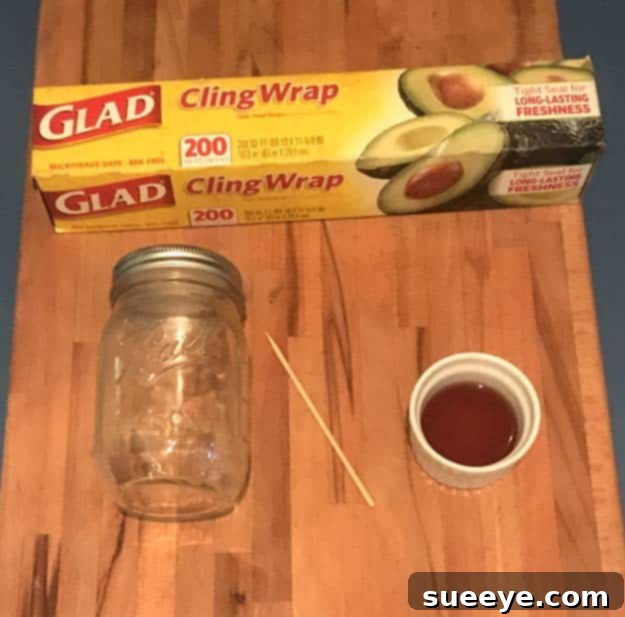
Essential Supplies Needed for Your Effective Fruit Fly Trap:
- Jar or Small Bowl: A versatile container will serve as the core of your trap. A standard mason jar is ideal due to its neck and lid ring, but any glass, cup, or small kitchen bowl will work perfectly.
- Apple Cider Vinegar (ACV): This is the crucial attractant. Its distinct sweet, fermented aroma, rich in acetic acid, is almost universally irresistible to fruit flies. If ACV isn’t available, other options like balsamic vinegar, red wine, or even a mixture of fruit juice with a drop of dish soap can be used as effective alternatives.
- Toothpick or Skewer: This small, sharp tool is indispensable for carefully creating the vital entry points into your trap.
- Cling Wrap (Saran Wrap): This everyday kitchen essential forms the critical one-way barrier, allowing fruit flies to enter but effectively preventing their escape.
- Optional: Rubber Band or Jar Lid Ring: For securing the cling wrap tightly over a bowl or other containers that don’t have a built-in sealing mechanism.
Step-by-Step: How to Build Your Homemade Fruit Fly Trap for Maximum Effectiveness
The beauty of this natural solution is its incredible simplicity and speed of assembly. I vividly recall the moment of desperation that led me to construct my first trap at 1 AM. Unable to tolerate the sight of those awful bugs hosting a veritable dance party around my kitchen sink, I sprang into action. In less than five minutes, my homemade fruit fly trap was assembled and strategically placed. The next morning, I awoke to the satisfying sight of a significant number of my uninvited guests peacefully resting at the bottom of the jar. Determined to achieve a complete eradication, I swiftly prepared a second trap, and within a mere 24 hours, the remaining tiny invaders had joined their companions in a vinegar lake. My fruit fly problem was, quite literally, vanquished!
1. Prepare Your Chosen Container:
Begin by selecting your preferred container. A classic mason jar often works best due to its distinct neck and ability to securely fasten the cling wrap with its lid ring. However, any clean glass, a sturdy mug, or a small kitchen bowl will serve the purpose effectively. While the exact size isn’t critical, a container with a slightly wider opening can sometimes allow the vinegar’s enticing aroma to diffuse more broadly, thus enhancing its attractive power. Ensure your chosen vessel is thoroughly clean and dry before proceeding to the next step.
2. Add the Irresistible Bait: Apple Cider Vinegar:
Pour approximately 1 to 2 inches of apple cider vinegar into the bottom of your prepared container. The highly distinctive pungent, sweet, and fermented aroma of apple cider vinegar acts as an incredibly potent attractant for fruit flies, closely mimicking the scent of the overripe fruit they actively seek out for both feeding and breeding. If apple cider vinegar is not readily available, a small quantity of red wine, beer, or even a mixture of fruit juice combined with a single drop of dish soap can function as alternative effective baits. The dish soap is particularly important as it serves to break the surface tension of the liquid, ensuring that any fruit flies that land on the surface will sink and drown rather than simply landing and flying away.
3. Create the Crucial Trap Door with Cling Wrap:
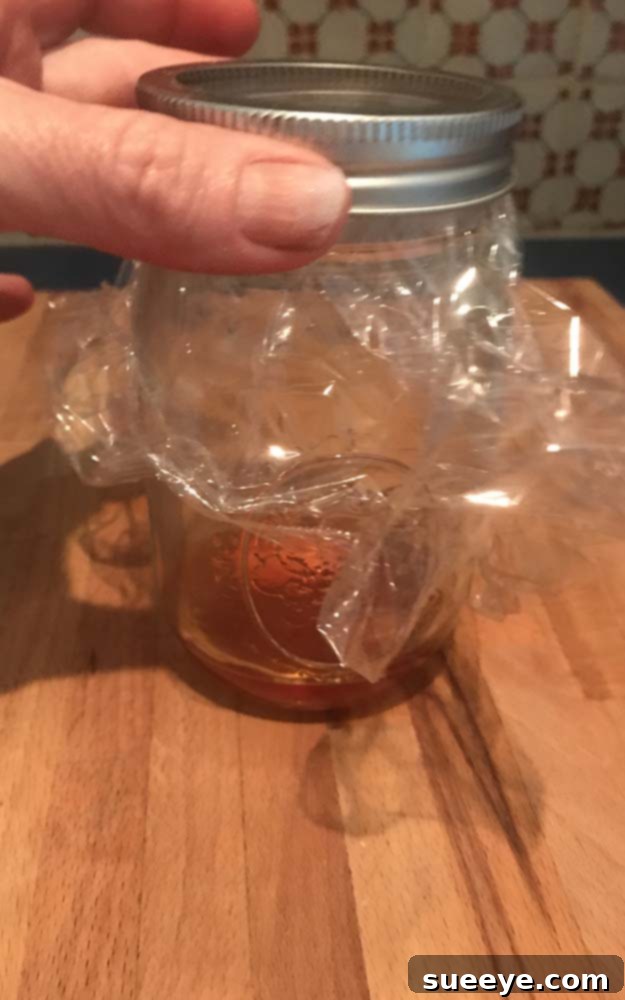
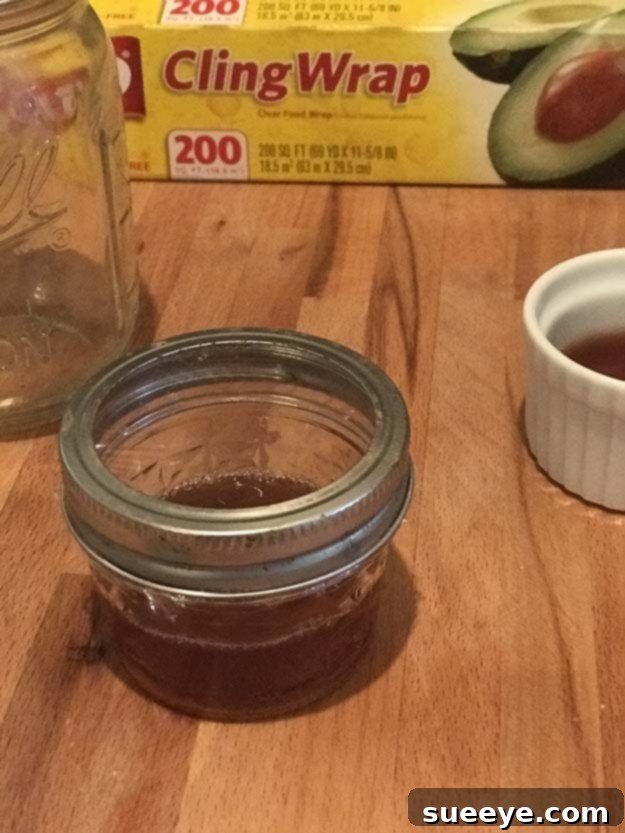
Carefully stretch a piece of cling wrap (often known as Saran Wrap) tightly over the entire opening of your jar or bowl. It is absolutely essential that the wrap is pulled taut and secured without any gaps or slack. If you are utilizing a mason jar, screw on the outer ring of the lid tightly over the cling wrap to hold it firmly in place. For a bowl or any other container lacking a screw-on lid, a durable rubber band stretched securely around the rim will work perfectly to create an airtight seal, effectively eliminating any potential escape routes for the tiny invaders.
4. Poke the Strategic Entry Points:
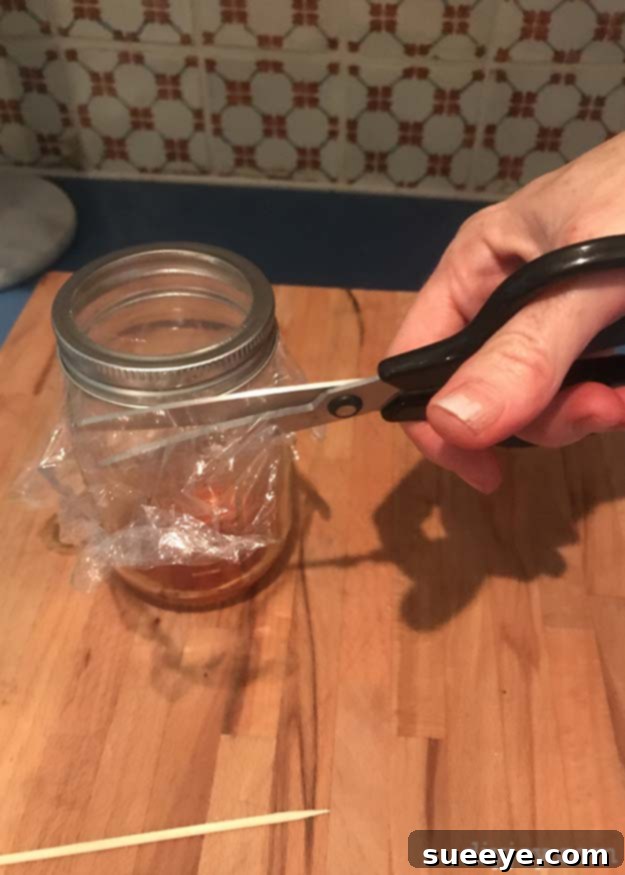
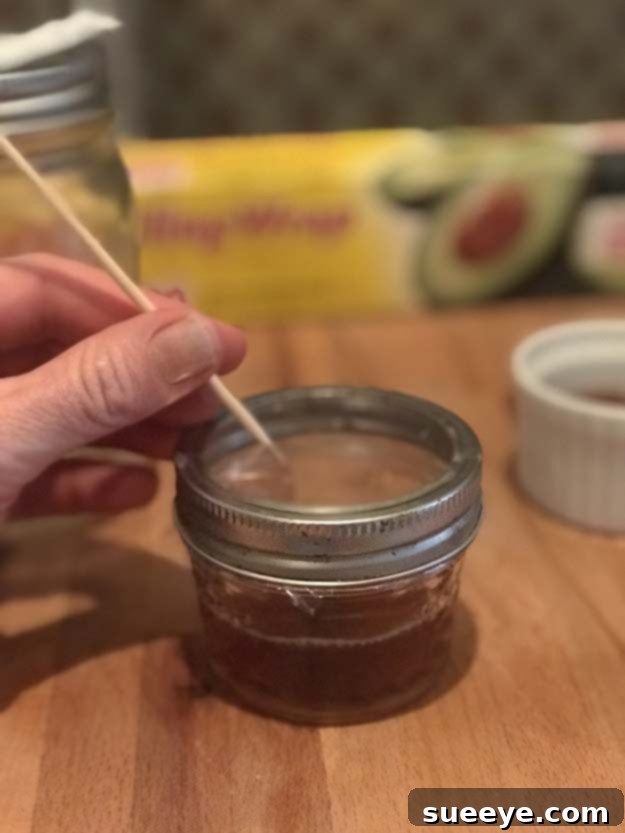
Using a toothpick or a sharp skewer, carefully poke several small holes – typically around 5 to 7 holes should be sufficient – into the cling wrap. These holes must be precisely sized: just large enough for a fruit fly to comfortably crawl through, but not so big that they can easily fly back out. The primary objective here is to create a clever one-way entrance: the flies are irresistibly drawn in by the potent scent of the vinegar bait, enter through these small holes, but then face significant difficulty locating their way back out of the enclosed, disorienting space. Ensure these holes are evenly distributed across the surface of the wrap to maximize attraction.
5. Strategic Placement for Maximum Effectiveness:
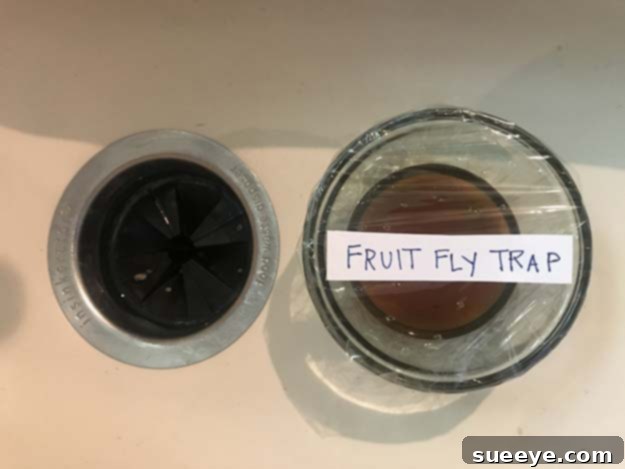
Once your DIY fruit fly trap is fully assembled, strategically place it in areas where you observe the most significant fruit fly activity. Common hotspots for these pests include directly next to your fruit bowl, adjacent to the kitchen sink, near indoor trash cans, or any area where food particles, spills, or moisture might accumulate. For situations involving severe infestations, consider setting up multiple traps in various problem zones throughout your kitchen or dining area. This intelligent and strategic placement ensures that the traps are optimally positioned to attract, capture, and eliminate the largest possible number of pests, leading to quicker and more complete relief.
The Science Behind This Effective DIY Fruit Fly Trap
The success of this homemade trap lies in a clever exploitation of fruit fly biology and behavior. Fruit flies possess an extremely keen sense of smell, and they are overwhelmingly attracted to the sweet, fermented aroma of vinegar, particularly apple cider vinegar. This scent perfectly mimics that of overripe and decaying fruit, which is their primary food source and the ideal site for laying their eggs. Their olfactory system perceives this potent aroma as a clear signal of an abundant food source, compelling them to investigate.
Once these curious insects crawl through the precisely sized holes you’ve created in the cling wrap, they enter the enclosed environment of the jar. Inside, they are completely enveloped by the intoxicating scent of vinegar, which further disorients them. The ingenious design of the trap – tiny entry holes contrasted with the expansive open space within the container – makes it incredibly challenging for the flies to locate those minuscule exit points they used to enter. They become confused and trapped, buzzing aimlessly within the confines of the jar. Eventually, exhausted from their futile attempts to escape and continuously drawn to the liquid, they inevitably fall into the vinegar and drown. This method provides a highly effective, natural, and remarkably humane way to eliminate these persistent pests without the need for harmful chemicals or complicated mechanisms.
Benefits of Using This Natural Fruit Fly Solution: Why It’s Superior
Whether fruit flies are causing havoc around your beloved fruit bowl, mysteriously congregating near the kitchen sink drain, or seemingly multiplying across your entire kitchen, this incredibly inexpensive and effortless solution offers immediate and substantial relief from any fruit fly infestation. You will be genuinely amazed by the speed and efficiency with which this trap operates; in my own experience, my kitchen was entirely clear of flies within just 24 hours, utilizing merely two small traps!
Chemical-Free and Safe for Your Entire Home:
One of the most compelling advantages of this DIY fruit fly trap is its absolute reliance on completely natural, non-toxic ingredients. Unlike commercial aerosol sprays, sticky fly papers, or chemical pesticides, which introduce potentially harmful toxins and unpleasant odors into your living environment, this method uses only vinegar – a common and entirely safe household staple. This makes it an ideal and worry-free solution for homes with curious children, beloved pets, or individuals who possess sensitivities to harsh chemicals. You can confidently place these traps in any area of your kitchen, including near food preparation surfaces, knowing they pose absolutely no risk to your family’s health or your fresh produce.
Cost-Effective and Utilizes Everyday Household Items:
Forget about recurring expenses on specialized insect traps or costly pest control services! This ingenious solution demands only a few fundamental items that you most likely already have readily available in your pantry, cupboard, or even your recycling bin. The minimal financial investment involved makes it an exceptionally accessible, economical, and sustainable option for anyone struggling to combat persistent fruit fly problems. You won’t need to make an extra trip to the grocery store or invest in expensive, dedicated pest control products.
Highly Effective with Rapid and Visible Results:
My personal triumph over fruit flies, corroborated by the success stories of countless others who have tried this method, unequivocally confirms the superior efficacy of this homemade trap. The powerful allure of vinegar, combined with the brilliantly simple one-way entry system, guarantees that fruit flies are not only attracted but also successfully trapped. The speed at which this trap yields results is genuinely astounding; you can realistically expect to observe significant reductions in the fruit fly population, if not a complete elimination of the problem, within a remarkably short period of 24 to 48 hours. This makes it the ultimate go-to solution for immediate and noticeable relief.
Discreet and Seamlessly Blends into Kitchen Decor:
For those residing in perpetually warm climates where fruit flies are a persistent, year-round menace, the need to maintain a continuous trap might arise. The mason jar iteration of this trap is particularly commendable for its aesthetic acceptability, allowing it to remain on your countertop without becoming an eyesore. It is considerably less obtrusive and far more visually appealing than traditional sticky fly papers, unsightly bug zappers, or other commercial insect control devices. While this might not be featured in a home decor magazine as a “designer mason jar idea,” it undeniably presents a much more pleasant sight than a relentless swarm of fruit flies buzzing around your pristine produce. This makes it a perfectly reasonable and surprisingly harmonious addition to your kitchen’s overall aesthetic.
Beyond the Trap: Preventing Future Fruit Fly Infestations for a Pest-Free Home
While this DIY fruit fly trap stands as an incredibly potent weapon for clearing out existing infestations, it’s crucial to remember that prevention remains the most effective long-term strategy. By seamlessly integrating a few simple, proactive habits into your daily kitchen routine, you can dramatically reduce the likelihood of fruit flies ever making an unwelcome return and maintain a consistently pest-free environment.
- Proper Fruit Storage: Always refrigerate ripe fruits and most vegetables. For produce that prefers room temperature, such as bananas or tomatoes, store them in sealed containers or paper bags to prevent attracting flies.
- Immediate Spill Cleanup: Make it a habit to thoroughly wipe down all counters, stovetops, tables, and cutting boards immediately after every meal or food preparation session. Even minute crumbs or sticky residues can serve as powerful attractants for fruit flies.
- Regular Trash Disposal: Fruit flies are strongly drawn to decaying organic matter. Ensure your kitchen trash can is emptied daily, especially if it contains any food scraps or fruit peels. Consider using a trash can with a tight-fitting lid.
- Clean Drains and Sinks: Regularly clean your sink drains using a mixture of hot water, baking soda, and vinegar. Food particles, grime, and other organic matter can easily accumulate in drains, transforming them into prime breeding grounds not just for fruit flies, but also for drain flies.
- Rinse New Produce: As soon as you bring fresh produce home from the market, give it a thorough rinse under running water. This helps to wash away any potential fruit fly eggs or larvae that might have been invisibly hitchhiking on the surface.
- Avoid Overwatering Houseplants: Excessively moist soil in houseplants can attract various common household pests, including certain types of fruit flies. Allow the topsoil of your houseplants to dry out completely between waterings to deter these unwanted visitors.
My Personal Triumph Over Pesky Pests and Your Opportunity for a Cleaner Kitchen
I cannot sufficiently emphasize the profound sense of relief and satisfaction this simple, natural solution brought to my home. The battle against those tenacious fruit flies felt like an endless, losing war until I implemented these remarkably effective traps. Waking up to a wonderfully clear, fruit-fly-free kitchen after just a single night of deployment was genuinely a revelation. Those tiny, persistent bugs that had so comfortably established themselves around my fresh fruit and near my sink were utterly no match for the ingenious design of a basic mason jar and common vinegar. It is incredibly gratifying to know that I tackled this pervasive problem not only efficiently and effectively but also safely and entirely without the use of any harsh, potentially harmful chemicals.
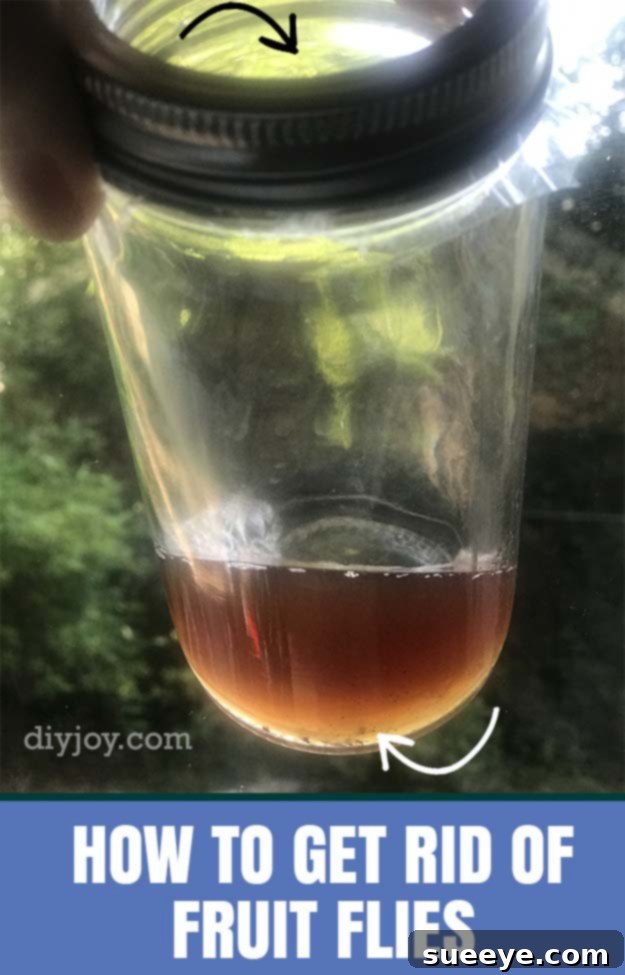
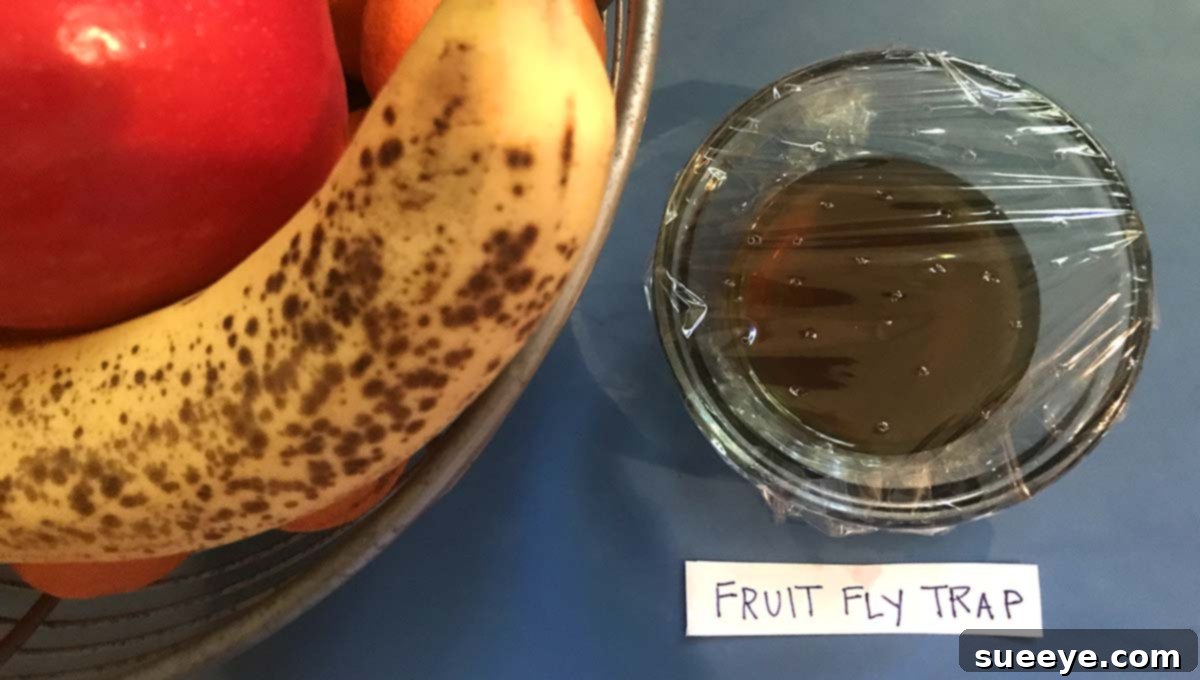
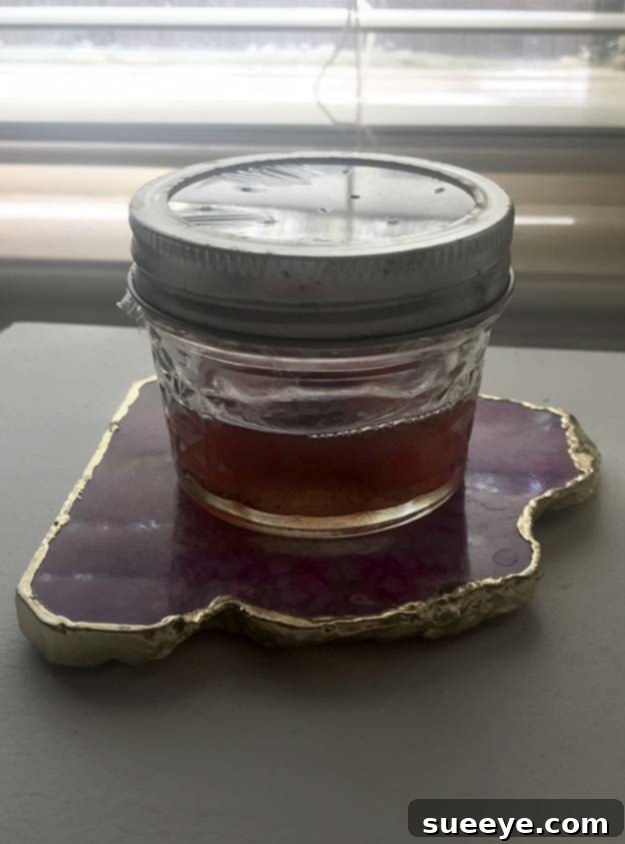
Observe this dramatic visual evidence of the trap’s undeniable success: the flies are undeniably drawn in by the bait, enter through the strategically placed small holes at the top, and are then rendered unable to escape, eventually succumbing to the vinegar at the bottom. The image above serves as a powerful testament, vividly illustrating the sheer number of fruit flies I managed to capture – these are my former unwanted house guests, now permanently settled in their vinegar grave, a clear and undeniable demonstration of this trap’s formidable effectiveness. Before you even contemplate reaching for that can of bug spray or investing in expensive commercial solutions, I wholeheartedly encourage you to try this incredibly easy, natural, and highly efficient solution. I am confident that you already possess all the necessary supplies right in your kitchen, making immediate action both simple and convenient.
This homemade fruit fly trap, while perhaps not destined for the pages of a high-end interior design magazine, is unequivocally a far more appealing and welcome sight than a relentless, buzzing fruit fly infestation. When faced with the stark choice between reluctantly sharing my precious food and pristine kitchen space with these annoying, unhygienic bugs, or gracefully accommodating a discreet yet highly effective trap on my countertop, the decision is abundantly clear. Opt for the clean, serene, and pest-free kitchen environment – it is a decision that you will undoubtedly never regret.