How to Pick a Sweet Watermelon: Your Ultimate Guide to Juiciness and Flavor
There’s nothing quite like biting into a perfectly sweet, crisp, and refreshing watermelon on a hot summer day. It’s the quintessential taste of sunshine and leisure, a natural hydrator that instantly elevates any picnic, barbecue, or casual snack time. However, the journey from grocery store aisle to that ultimate bite can sometimes be fraught with uncertainty. Many of us have experienced the disappointment of slicing into a watermelon only to find it bland, dry, or underripe. The truth is, selecting a truly magnificent watermelon isn’t a matter of luck; it’s an art backed by simple, observable science.
For those who rush through the produce section, grabbing the first melon they see, this guide is about to revolutionize your shopping habits. Unlike other fruits where ripeness is more apparent, watermelons present a bit of a challenge due to their thick rinds. Yet, with a few expert tricks, you can consistently identify a gem among the sea of green orbs. I recall my childhood days accompanying my parents to the market, a seemingly mundane chore that, in hindsight, was an invaluable apprenticeship in fruit selection. They instilled in me a discerning eye for quality produce, especially when it came to watermelons. This early training gifted me with a confidence that many shoppers lack, saving me from countless dry oranges and unripe melons over the years. This foundational knowledge is something I truly cherish.
To help everyone achieve this level of grocery store prowess, we’ve compiled the most effective strategies for picking a sweet watermelon. These insights are inspired by seasoned farmers and experts like those at Daisy Creek Farms with Jag Singh, who offer invaluable advice on ensuring your next watermelon is a sweet triumph. By focusing on four key indicators, you’ll transform from a hopeful guesser into a confident watermelon connoisseur. Let’s dive into these essential tips to guarantee a juicy, flavorful experience every single time.
Why Does Picking a Ripe Watermelon Matter So Much?
Before we delve into the ‘how-to,’ it’s worth understanding the ‘why.’ A ripe watermelon is more than just sweet; it’s a symphony of flavor, texture, and nutritional goodness. When a watermelon fully ripens on the vine, its natural sugars develop to their peak, resulting in that irresistible sweetness. The flesh becomes tender yet firm, bursting with hydrating juice. An unripe watermelon, on the other hand, will be watery but flavorless, sometimes even bitter, with a pale and hard interior. An overripe one might be mushy and fermented. Learning to distinguish between these stages prevents food waste, saves you money, and most importantly, ensures that every slice you enjoy is a pure delight. It’s about maximizing your enjoyment and making the most of this wonderful summer fruit.
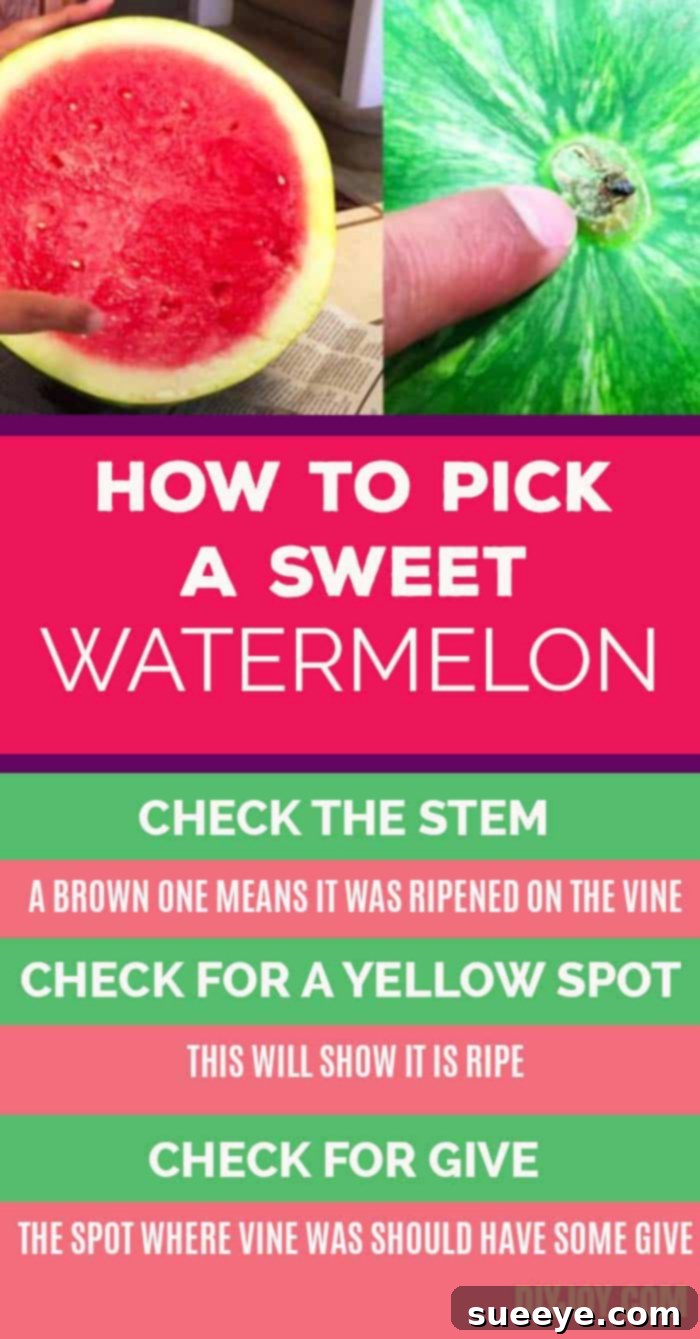
1. Check the Stem: The Vital Connection to Ripeness
The stem, often overlooked, is one of the most crucial indicators of a watermelon’s journey from vine to store. Think of it as the umbilical cord that nourishes the fruit. Its appearance tells a vivid story about when the watermelon was separated from its life source.
- Brown or Dry Stem: The Golden Sign
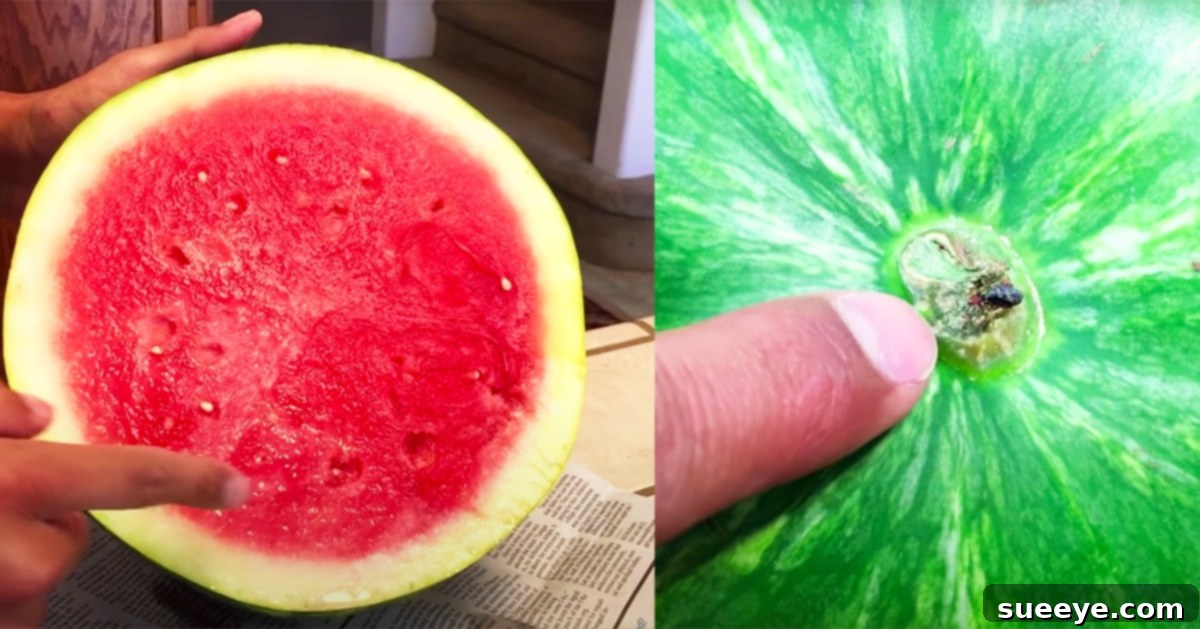
If the stem is brown, shriveled, or completely dry, this is an excellent sign. A dry stem indicates that the watermelon naturally detached from the vine, or was picked exactly at the right moment after it had fully ripened. When a watermelon ripens on the vine, it absorbs maximum nutrients and sugars, leading to superior flavor and sweetness. This natural maturation process ensures the fruit has reached its peak potential before making its way to your home.
- Green Stem: A Warning Sign
Conversely, a thick, green, and fresh-looking stem suggests that the watermelon was likely picked prematurely. This often happens because farmers need to harvest an entire crop quickly, or due to logistical considerations. A watermelon with a green stem hasn’t had enough time to fully develop its sugars and flavors on the vine, meaning it will probably taste less sweet and potentially a bit bland. While some fruits ripen off the vine, watermelons are generally not among them; they don’t significantly improve in sweetness after being harvested. Therefore, always lean towards a melon with a noticeably dry or brown stem.
2. Look for the “Field Spot”: Nature’s Ripeness Sticker
The field spot, also known as the ground spot or belly spot, is a distinct area on the watermelon that provides an unmistakable clue to its ripeness. This is the part of the watermelon that rested on the ground as it matured under the sun, and its color holds the secret to its sweetness.
- Deep, Creamy Yellow: The Ideal Indicator
A sweet, ripe watermelon will have a prominent field spot that is a deep, creamy yellow, sometimes even approaching an orange-yellow hue. This rich color signifies that the watermelon spent ample time basking in the sun on the vine, absorbing warmth and developing its natural sugars. The longer it rested and ripened, the darker and more pronounced this yellow spot becomes, directly correlating with its sweetness and flavor profile. It’s essentially the watermelon’s sun-tan, indicating it’s perfectly cooked by nature.
- White or Pale Spot: A Sign of Premature Picking
If the field spot is white, very pale, or barely visible, it generally means the watermelon was picked before it had a chance to fully ripen. A pale spot suggests insufficient sun exposure and development time on the vine. These watermelons are often less sweet, lack the vibrant flavor you expect, and may have a tougher texture. While a very faint, almost invisible spot can sometimes be overlooked if other indicators are strong, a distinctly white patch is usually a clear sign to move on to the next one. Always aim for that warm, buttery yellow tone.
3. Gently Press on the Watermelon: Assessing Firmness
While the visual cues are excellent starting points, a hands-on approach can confirm your suspicions. The firmness of a watermelon is another tactile indicator that helps gauge its ripeness and internal quality. You’re looking for a specific kind of give, not too hard, and definitely not too soft.
- Slight Give: The Sweet Spot
A perfectly ripe watermelon should have a very slight “give” when you apply gentle pressure with your palm or thumb. This subtle yielding indicates that the flesh inside has softened just enough to be juicy and tender, but not so much that it’s overripe or mushy. It suggests the internal structure of the fruit has developed to its optimal stage, full of sweet liquid and ready to eat. This doesn’t mean it should feel soft like an overripe avocado; rather, it should feel firm but yield minimally under pressure.
- Too Hard or Too Soft: What to Avoid
If the watermelon feels rock hard with absolutely no give, it’s likely underripe. The flesh will be tough, pale, and lack the characteristic sweetness and juiciness. On the other end of the spectrum, if it feels overly soft or spongy in any area, especially near the field spot or stem, it’s a strong sign of overripeness or spoilage. Such melons will often have a mealy texture and a fermented, unpleasant taste. The ideal melon is consistently firm around its entire surface, with that very subtle hint of softness that whispers “ready.”
4. Tap the Watermelon: Listening for the Hollow Echo
This is perhaps the most iconic and widely known tip for selecting a watermelon, and for good reason: it’s surprisingly effective. Tapping a watermelon and listening to its reverberation can tell you a great deal about its internal structure and water content, which are directly related to ripeness and juiciness.
- Deep, Hollow Thump: The Sound of Sweetness
The goal is to hear a deep, hollow, resonant thump when you gently rap on the watermelon with your knuckles. Imagine the sound of tapping on a full drum, or an echo chamber. This hollow sound indicates that the watermelon is brimming with water and its flesh is dense and intact, a hallmark of ripeness. A high water content means a juicy melon, and the resonant sound confirms the integrity of its internal structure, suggesting it’s perfectly ripe and ready to burst with flavor. It’s a sound that promises refreshment.
- Dull, Flat, or Muted Sound: Signs of Trouble
If the tap produces a dull, flat, or muted sound, it’s best to pass. A flat sound can indicate an overripe watermelon where the flesh has begun to break down, becoming mushy and possibly fermented. Conversely, a very tight, higher-pitched sound might signal an underripe melon, where the internal structure is still too dense and hasn’t developed its full water content or sweetness. Learning the difference between these sounds might take a little practice, but once you get the hang of it by comparing a few melons, you’ll find it an invaluable tool. Don’t be shy; give a few melons a good tap!
Additional Expert Tips for Choosing the Sweetest Watermelon
Beyond the four fundamental methods, a few other characteristics can fine-tune your watermelon selection, ensuring you consistently pick the best of the bunch.
Weight for Its Size
Always pick up the watermelon. A ripe watermelon should feel surprisingly heavy for its size. This heft is a strong indicator of high water content, which directly translates to juiciness. If two watermelons are of similar size, always choose the heavier one. It means it’s packed with hydrating liquid.
Look for “Webbing” or Sugar Spots
Many people mistake these for blemishes, but brown, rough, web-like spots or streaks on the watermelon’s surface are actually a good sign! These “sugar spots” or “pollination scars” indicate where bees frequently touched the flower during pollination. More pollination leads to more sugar development inside the fruit. Consider them a natural sweetness indicator; the more webbing, the sweeter the melon is likely to be.
Consider the Shape
While not a definitive test, shape can offer some clues. Look for watermelons that are relatively symmetrical, either round or oval. Avoid melons with irregular lumps or flat sides (other than the field spot), as this can suggest inconsistent growth or uneven ripening, potentially leading to areas of the fruit that are less sweet or developed.
Dull vs. Shiny Rind
Contrary to popular belief, a super shiny watermelon is often a sign of immaturity. A ripe watermelon tends to have a dull or matte appearance. The shininess typically fades as the fruit matures, so a less lustrous rind can signal a more ripe and flavorful melon.
Storing Your Perfectly Picked Watermelon
Once you’ve successfully chosen your sweet, ripe watermelon, proper storage is key to maintaining its freshness and flavor. An uncut whole watermelon can be stored at room temperature for about 1-2 weeks. However, for optimal freshness, especially in warmer climates, refrigerate it. Once cut, always store watermelon in an airtight container in the refrigerator. This helps prevent cross-contamination and keeps it fresh for 3-5 days. Always bring it out of the fridge a little before serving to allow the flavors to truly sing.
Conclusion: Enjoy the Sweet Rewards of Smart Shopping
Armed with these comprehensive tips, you are now well-equipped to navigate the produce aisle with confidence and precision. No more guesswork, no more disappointing, bland melons. By paying attention to the stem, the vibrant yellow field spot, the subtle give of its firmness, and the reassuring hollow thump, along with considering its weight, webbing, shape, and sheen, you hold the power to select a truly exceptional watermelon every time.
The joy of a perfectly sweet, crisp, and juicy watermelon is one of summer’s simplest yet greatest pleasures. Make your next grocery trip an adventure in ripe fruit selection, and prepare to delight your taste buds and those of your family and friends. Embrace these expert strategies, and you’ll always be rewarded with the irresistible taste of summer’s finest bounty. Happy picking, and even happier eating!