
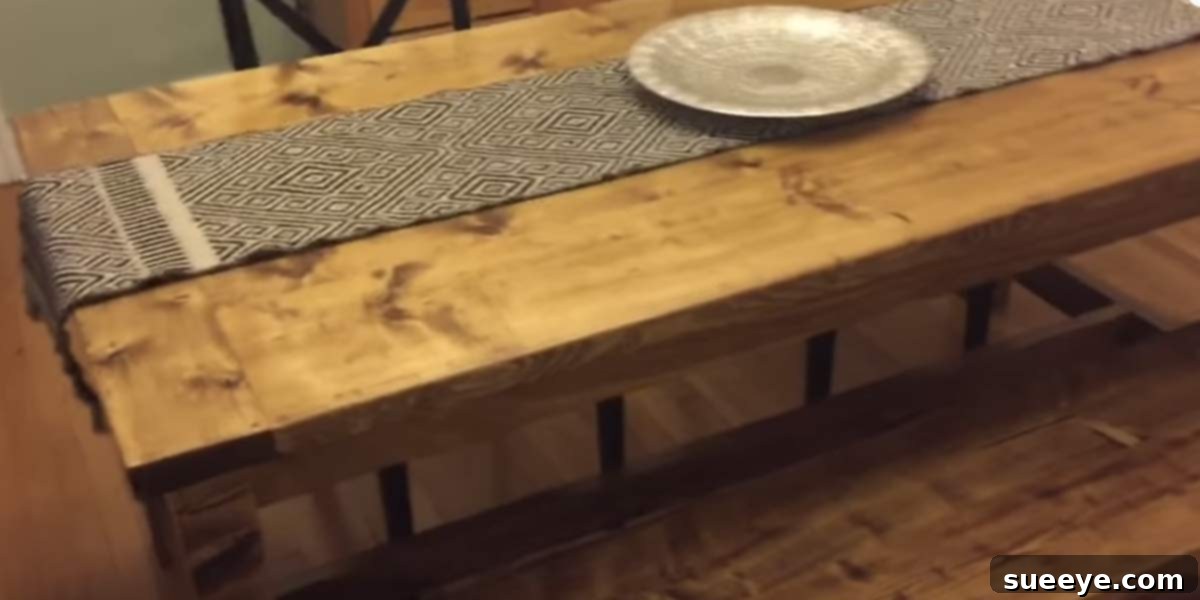
DIY Farmhouse Table: Crafting Memories and a Timeless Centerpiece for Your Home
The allure of a grand farmhouse table, often seen gracing the beautifully remodeled homes on HGTV by design icons like Chip and Joanna Gaines, is undeniable. These magnificent pieces of furniture serve not just as dining surfaces but as focal points, inviting connection and creating an atmosphere of warmth and hospitality. Like many, I’ve long harbored a dream of owning such a table – a sturdy, beautiful centerpiece around which countless family memories could be made, particularly for entertaining on my covered patio. The journey to build my own DIY farmhouse table, with the indispensable help of my husband, has been an incredibly rewarding experience, transforming a long-held wish into a cherished reality.
Since its completion, our farmhouse table has become the heart of our outdoor gatherings. Sunny afternoons now naturally call for family lunches, often enhanced by an array of homemade desserts and delicious goodies brought by loved ones. While the adults engage in lively conversation over grilled favorites, the younger cousins joyfully explore the backyard. As dusk settles, we often gather to make homemade ice cream or enjoy slices of fresh watermelon, capping off perfect days. The magic continues as twilight deepens, with children eagerly requesting jars to capture the fleeting glow of lightning bugs. It’s truly amazing to witness how a simple, handmade farmhouse table has become the catalyst for bringing our family closer, fostering cherished moments, and solidifying traditions.
This tutorial isn’t just about building a piece of furniture; it’s about building a legacy of togetherness. If you’re ready to create a similar hub for your own family, one that stands as a testament to your craft and commitment to connection, you’re in the right place. Let’s delve into the world of DIY woodworking and discover how you can craft your very own farmhouse masterpiece.
The Irresistible Charm of the Farmhouse Table
What is it about the farmhouse table that captures so many hearts? Its appeal goes beyond mere aesthetics. It’s a blend of rustic elegance, sturdy functionality, and an undeniable sense of history and homeliness. Rooted in tradition, these tables evoke images of simpler times, large family meals, and communal gatherings. Their design, often characterized by robust construction, thick tabletops, and distinctive leg styles, exudes a sense of permanence and warmth that mass-produced furniture often lacks.
A farmhouse table seamlessly integrates into a myriad of decor styles. While perfectly at home in a classic farmhouse setting, it also adds a charming contrast to modern interiors, brings a touch of warmth to industrial spaces, and complements bohemian aesthetics with its natural materials. Its versatility makes it a sought-after piece for kitchens, dining rooms, and even outdoor living spaces, always promising to be a focal point that draws people in.
Why Go DIY? The Unmatched Rewards of Building Your Own
In a world overflowing with mass-produced options, the decision to build your own furniture might seem daunting, but the benefits of a DIY farmhouse table project are truly profound and far-reaching:
- Unbeatable Customization: Unlike off-the-shelf options, building your own table means complete control over every detail. You can precisely tailor its dimensions to fit your specific space – whether it’s a cozy kitchen nook or a sprawling outdoor patio. Choose the exact wood species, leg style (trestle, turned, straight, X-base), and finish that perfectly complements your home’s aesthetic.
- Significant Cost Savings: While the initial outlay for quality materials might seem substantial, it’s almost always more economical than purchasing a comparable custom-built or high-end retail farmhouse table. The savings can be redirected towards quality tools that will serve you for future projects or invested in premium materials for a truly exceptional piece.
- A Deep Sense of Personal Achievement: There’s immense satisfaction in creating something beautiful and functional with your own hands. Every meal shared around your handmade table, every family gathering it hosts, will carry a story – the story of your effort, skill, and dedication. It transforms a piece of furniture into a personal heirloom.
- Superior Quality and Durability: When you build it yourself, you control the quality of the materials and the craftsmanship. You can choose solid hardwoods, use robust joinery techniques, and apply durable finishes, ensuring your table is built to last for generations, far surpassing the longevity of many commercially made alternatives.
- Skill Development and Empowerment: A woodworking project like this is an incredible opportunity to learn new skills or hone existing ones. From mastering power tools to understanding wood properties and finishing techniques, you’ll gain confidence and practical knowledge that can be applied to countless other home improvement endeavors.
Planning Your Dream Farmhouse Table Project: The Foundation for Success
Successful DIY projects are built on thorough planning. Before you even touch a piece of wood, careful consideration of your design, space, and materials will save you time, frustration, and money.
Finding Your Inspiration and Design Style
Start by gathering inspiration. Websites like Pinterest, Instagram, and of course, HGTV shows, are treasure troves of farmhouse table designs. Pay attention to:
- Tabletop style: Solid planks, breadboard ends, herringbone patterns.
- Leg design: Classic turned legs, sturdy trestle bases, modern square legs, or distinctive X-base designs.
- Overall aesthetic: Do you prefer a very rustic, distressed look, or something more refined and smoothly finished?
Sketch out a few ideas. Don’t worry about being an artist; simple diagrams illustrating your vision for the tabletop, legs, and apron will be incredibly helpful.
Sizing It Right: Dimensions Are Key
One of the biggest advantages of DIY is creating a table that perfectly fits your space. Grab a tape measure and consider the following:
- Room Dimensions: Measure your dining room, kitchen area, or patio. Remember to leave ample space around the table for chairs to be pulled out comfortably and for people to walk around without feeling cramped. A good rule of thumb is to allow at least 36-48 inches (90-120 cm) from the edge of the table to the nearest wall or furniture.
- Seating Capacity: How many people do you typically want to seat? Allow approximately 24-30 inches (60-75 cm) of table length per person. This will help you determine the ideal length and width of your table.
- Height: Standard dining table height is around 29-30 inches (74-76 cm). Ensure this height will be comfortable with your chosen chairs.
Material Selection: Choosing the Right Wood and Finish
The type of wood you choose will significantly impact the table’s appearance, durability, and cost.
- Pine: An economical and widely available choice, pine is easy to work with and takes stain well. It’s softer, so it will show dings and dents more easily, which can actually contribute to a charming, distressed farmhouse look over time.
- Oak: A classic choice for furniture, oak is very durable, strong, and has a beautiful, prominent grain pattern. It’s more expensive and harder to work with than pine but offers superior longevity.
- Maple: Harder than oak with a finer, less pronounced grain. It’s very durable and takes stain evenly.
- Reclaimed Wood: For unparalleled character and history, consider reclaimed lumber. Barn wood or old timbers offer unique imperfections and a story, but sourcing and working with them can be more challenging.
- Finishes:
- Stains: Enhance the natural wood grain and allow you to achieve various color tones, from light natural to rich dark hues.
- Paints: Offer a solid color finish, often used for bases and legs, or for a distressed, chipped paint look.
- Sealants: Essential for protection. Polyurethane (water-based or oil-based) offers excellent durability, especially for tabletops. Wax finishes provide a softer, more natural look but offer less protection. For outdoor tables, always choose exterior-grade sealants and paints that can withstand the elements.
Essential Tools for Your Farmhouse Table Project
While a fully equipped woodworking shop is a luxury, you can build a fantastic farmhouse table with a surprisingly modest set of tools. Here’s a list of essentials:
- Measuring & Marking: Tape measure, straightedge, pencil, combination square.
- Cutting:
- Circular Saw: Versatile for breaking down large sheets or planks.
- Miter Saw (Chop Saw): Excellent for accurate crosscuts, especially for legs and aprons.
- Table Saw (Optional but Recommended): For ripping boards to precise widths and creating strong joints.
- Drilling: Cordless drill/driver with various drill bits and driver bits.
- Sanding: Orbital sander (a must for smooth finishes) and various grits of sandpaper.
- Clamping: Essential for holding pieces together securely during gluing and assembly. Invest in several bar clamps or pipe clamps of various lengths.
- Safety Gear: Eye protection, hearing protection, dust mask, gloves.
- Assembly Aids: Wood glue, screws or lag bolts, pocket hole jig (highly recommended for strong, concealed joints).
Budgeting for Your DIY Farmhouse Table
Create a detailed budget covering:
- Wood: This will be your largest expense. Factor in waste.
- Hardware: Screws, bolts, pocket hole screws.
- Finishes: Stain, paint, sealant, brushes, rags.
- Tools: If you need to buy or rent any tools.
- Miscellaneous: Sandpaper, wood glue, clamps.
Safety First: Protecting Yourself
Woodworking can be dangerous if proper precautions aren’t taken. Always:
- Wear eye protection and hearing protection when operating power tools.
- Use a dust mask, especially when sanding, to protect your lungs.
- Understand how to properly and safely operate each tool before you use it.
- Work in a well-ventilated area.
- Keep your workspace clean and free of clutter.
A Glimpse into the Building Process
While a detailed step-by-step guide is beyond the scope of this overview, understanding the general flow of building your farmhouse table can help you visualize the project:
- Cut All Components to Size: Based on your plans, accurately cut all pieces for the tabletop, legs, and apron.
- Prepare for Joinery: If using pocket holes, drill them in the appropriate pieces. If using traditional joinery, prepare those connections.
- Assemble the Base: Attach the apron pieces to the legs, ensuring everything is square and sturdy. Use wood glue and screws/bolts for robust construction.
- Assemble the Tabletop: If your tabletop consists of multiple planks, join them together using wood glue and clamps. Biscuit joiners or doweling jigs can help with alignment and strength.
- Sanding: This is a crucial step for a professional finish. Start with a coarser grit (e.g., 80 or 100) to remove imperfections, then move progressively to finer grits (120, 150, 180, 220) until the wood feels smooth to the touch.
- Attach the Tabletop to the Base: Use cleats, Z-clips, or expansion fasteners that allow for wood movement (wood naturally expands and contracts with changes in humidity).
- Apply Finish: Carefully apply your chosen stain, paint, and sealant according to the manufacturer’s instructions. This usually involves multiple thin coats with light sanding between coats for a truly smooth and durable finish.
The Farmhouse Table: More Than Just Furniture – A Catalyst for Connection
The true magic of a farmhouse table lies not just in its construction or aesthetic appeal, but in its ability to transform a space into a vibrant hub of activity and connection. Our own table quickly became the epicenter of family life, an anchor around which our best moments seem to naturally gravitate. It’s where the everyday blends seamlessly with the extraordinary, creating a tapestry of cherished memories.
Imagine the scene: a sprawling tabletop laden with a festive spread for a holiday dinner, surrounded by generations of family. The clinking of cutlery, the warm glow of candlelight, the eruption of laughter as stories are shared – these are the moments a farmhouse table is built for. It’s equally perfect for a casual Sunday brunch, where the aroma of freshly brewed coffee mingles with the scent of pancakes, and sleepy chatter slowly turns into lively conversation. Birthday parties find their home here, with cakes adorned with flickering candles and the joyous sound of “Happy Birthday” echoing through the air.
For us, especially in our outdoor setting, it’s a constant invitation to celebrate life’s simple pleasures. The grill sizzling nearby, the kids’ excited shouts from the backyard games, the shared task of churning homemade ice cream, or the simple joy of sharing a juicy watermelon on a hot summer evening – these experiences are elevated when everyone can gather comfortably around a single, beautiful surface. As the sun dips below the horizon and the fireflies begin their enchanting dance, our table becomes a front-row seat to nature’s magic, as young cousins eagerly collect lightning bugs in jars, their faces alight with wonder.
It’s the place where homework gets done (sometimes reluctantly!), where board games ignite friendly competition, where craft projects sprawl in organized chaos, and where heartfelt conversations unfold late into the night. This table doesn’t just hold food; it holds stories, laughter, tears, and dreams. It’s a silent witness to the growth of a family, a constant reminder of togetherness, and a physical manifestation of love poured into every shared moment. It’s living proof that a piece of handmade furniture can be the beginning of countless new family traditions, weaving a richer, more connected life for everyone who gathers around it.
Beyond Dining: The Versatility of Your Farmhouse Masterpiece
While its primary role is often dining, the inherent versatility of a farmhouse table allows it to serve many purposes throughout your home, truly maximizing its value and presence.
- A Dynamic Workstation: Beyond meals, your table can transform into a spacious and inspiring work or craft station. Whether it’s spreading out blueprints, tackling school projects, indulging in intricate puzzles, or embarking on an ambitious sewing venture, the generous surface provides ample room for creativity and productivity.
- Showcasing Seasonal Decor: The expansive tabletop is an ideal canvas for seasonal displays. From a vibrant spring floral arrangement to a bountiful autumn harvest centerpiece or a festive winter wonderland vignette, it offers endless opportunities to express your personal style and celebrate the changing seasons.
- An Outdoor Oasis: When constructed with weather-resistant wood and finishes, a farmhouse table is perfectly suited for covered patios, decks, or even open-air garden spaces. It becomes the quintessential spot for al fresco dining, barbecues, and outdoor entertaining, blending seamlessly with the natural surroundings.
- An Impressive Entryway or Console Table: For those with smaller spaces, a downsized version of a farmhouse table can serve as an incredibly welcoming and stylish entryway table or a console in a living area. It provides a focal point, a place for decorative accents, and a spot to drop keys or mail.
Personalizing Your Farmhouse Masterpiece
Once your table is built, the final finishing touches are what truly make it yours. This is where you infuse it with your unique style and ensure it perfectly complements your home.
- The Perfect Stain: Experiment with different wood stains on scrap pieces to find the ideal hue. Do you envision a light, airy natural wood, a rich honey tone, or a deep, dark walnut finish? The right stain will highlight the wood grain beautifully.
- Embrace Distressing: For an authentic, aged farmhouse look, consider distressing techniques. This could involve gently sanding down edges, creating subtle “wormholes” with a nail, or adding minor scuffs and dents before applying your finish. Each imperfection tells a story.
- Paint and Two-Tone Finishes: Don’t shy away from paint! A common farmhouse style is a two-tone finish, often with painted legs and base (e.g., white, cream, or a soft gray) paired with a stained natural wood top. This creates beautiful contrast and visual interest.
- Hardware and Accents: While many farmhouse tables are minimalistic, you can add subtle hardware details to the apron or legs, such as decorative bolts or metal straps, to enhance its rustic appeal.
- Pairing with Seating: Consider a mix-and-match approach with your seating. Traditional dining chairs can be paired with one or two long benches for a classic farmhouse look, maximizing seating and adding to the communal feel.
Start Your Own Family Tradition Today!
Embarking on the journey to build your own DIY farmhouse table is more than just a woodworking project; it’s an investment in your home, your family, and countless future memories. From the initial inspiration drawn from HGTV’s beloved designers to the satisfaction of applying the final coat of sealant, every step is an opportunity to create something truly special. This isn’t just about constructing a table; it’s about building a centerpiece that will witness laughter, support conversations, and serve as the foundation for new family traditions.
The pride of gathering around a table you’ve crafted with your own hands, knowing the effort and love poured into it, is unparalleled. It becomes a living testament to your creativity and dedication, a place where mundane meals transform into cherished rituals, and everyday moments blossom into unforgettable experiences. So, gather your tools, ignite your imagination, and start crafting not just a beautiful piece of furniture, but a legacy of togetherness for generations to come. Your very own DIY farmhouse table awaits to bring your family together.
I watch a lot of HGTV and Joanna and Chip Gaines are always giving their carpenter the task to build fabulous farmhouse tables for the decor in their client’s homes they have remodeled. This table isn’t quite as large as some of the ones you see on the show, but this is a great tutorial to use to make your own down sized version! I’ve always wanted a farmhouse table for entertaining on my covered patio and I’m so excited to finally have one! Since making my DIY farmhouse table (along with my husband’s assistance) I am always inviting family over for a lunch on a beautiful day. My family always show up with desserts and all kinds of goodies for the occasion! The cousins have a grand time playing in the back yard while we’re grilling and then we usually make homemade ice cream or eat watermelon! At dusk the kids are asking for jars so they can catch lightening bugs. A great time is had by all and memories are made. It’s amazing how a simple farmhouse table was the beginning of bringing our family together to enjoy each others company.
Watch this step by step tutorial and you can start a new family tradition!