
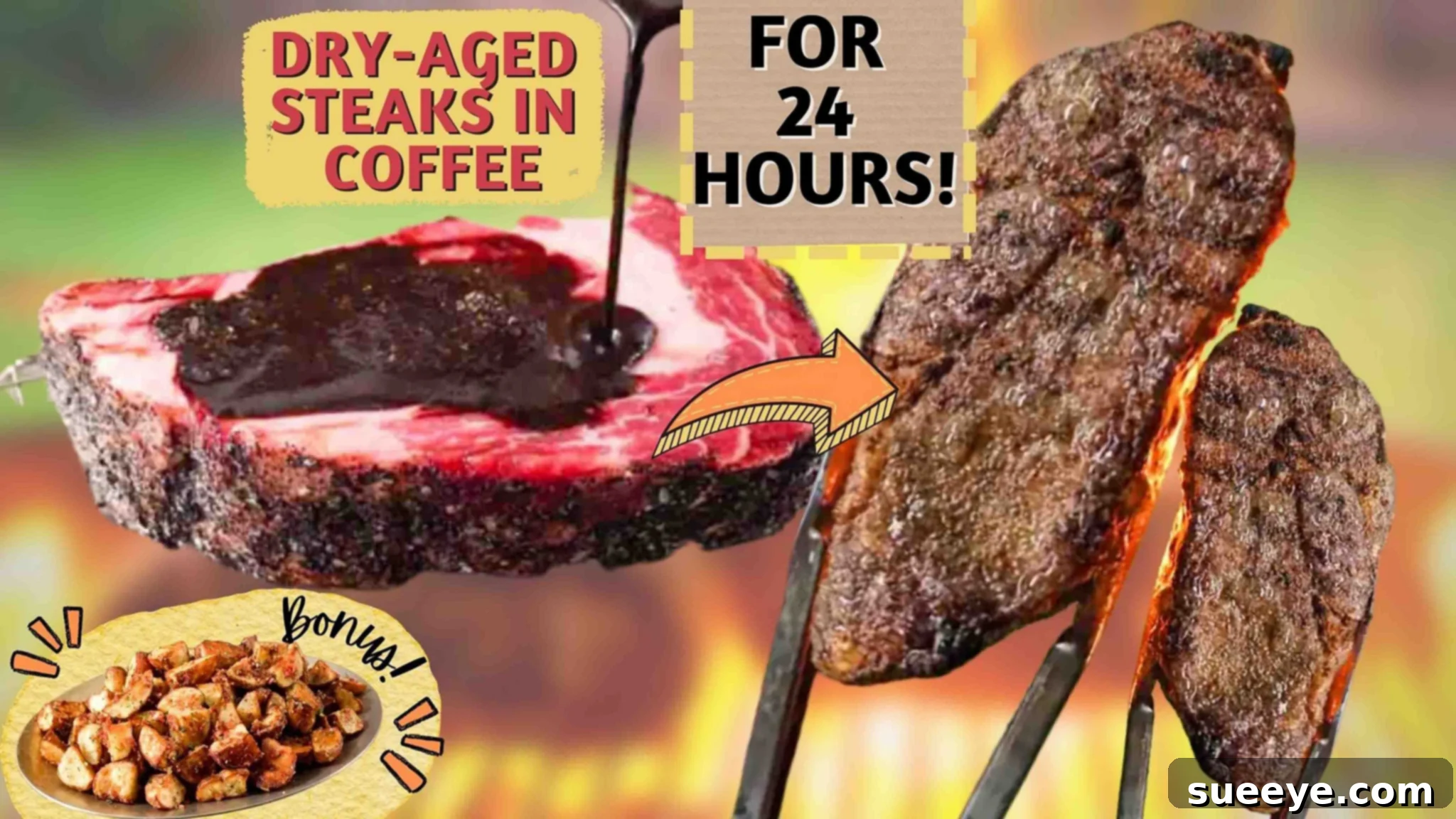
Elevate Your Steak Game: The Ultimate Dry-Aged Coffee-Infused Ribeye Recipe with Red Potatoes
Are you ready to transform your regular steak night into an extraordinary culinary adventure? Prepare to challenge your palate and ignite your passion for gourmet cooking with a truly unique method: dry-aging steak with coffee! Inspired by the innovative techniques of Guga Foods on YouTube, this recipe promises an exotic flavor profile that is both intriguing and incredibly delicious. Many find the combination surprisingly delightful, creating a depth of flavor you simply won’t experience with traditional methods. And to complete this remarkable meal, Guga Foods also shares an irresistible red potato side dish recipe that perfectly complements the rich flavors of the steak. Dive into this detailed guide and discover how to master these recipes, turning every bite into a memorable experience.
Why Dry-Age with Coffee? Exploring Unique Flavors and Textures
Dry-aging steak is a time-honored tradition known for enhancing flavor and tenderness. The process involves exposing meat to controlled temperatures and humidity, allowing enzymes to break down muscle fibers, which results in a more tender texture, and evaporating moisture, which concentrates the beef’s natural flavor. But why add coffee to this already exquisite process? The concept, while unconventional, offers several compelling benefits.
Firstly, coffee grounds, when applied to steak, act as a protective crust during the dry-aging period, potentially slowing down surface oxidation and contributing to moisture retention in the interior. More importantly, the coffee imparts a subtle, earthy, and sometimes smoky aroma and flavor to the meat. As the steak dry-ages, the complex notes of the coffee begin to infuse the surface layers, creating a sophisticated nuance that pairs surprisingly well with the robust taste of beef. Think of it as a natural marinade and a tenderizer, all rolled into one. The coffee also contributes to the formation of an incredible, dark crust during searing, known as the Maillard reaction, which is crucial for achieving that perfect restaurant-quality finish. This method allows for an exciting exploration of how different ingredients can interact to elevate a classic dish, offering a unique twist that seasoned steak lovers will truly appreciate.
Ingredients You’ll Need for Your Culinary Experiment
To embark on this exciting cooking journey, gathering the right ingredients is the first step. Quality ingredients will undoubtedly enhance the final outcome of your dry-aged coffee-infused ribeye and the accompanying red potato side dish. Always opt for fresh, high-quality products to ensure the best flavor and texture.
For the Dry-Aged Coffee Steaks:
- 4 pieces of thick-cut ribeye steak (approximately 1.5-2 inches thick for optimal dry-aging)
- Freshly ground regular coffee (not instant, and avoid flavored coffees initially to appreciate the pure coffee essence)
- Coarse sea salt or kosher salt
- Freshly ground black pepper (for seasoning before cooking)
- Garlic powder (for seasoning before cooking)
- Onion powder (for the coffee rub variation)
- Smoked paprika (for the coffee rub variation)
For the Irresistible Red Potatoes Side Dish:
- 1.5 – 2 pounds red potatoes, uniform in size
- 6-8 strips crispy bacon (preferably thick-cut for more flavor)
- 2-3 tablespoons extra virgin olive oil
- Salt, to taste
- 1-2 tablespoons Italian seasoning blend
- 1 tablespoon garlic powder
- 1/2 cup grated Parmesan cheese
- Homemade garlic butter sauce (recipe below)
For the Aromatic Garlic Butter Sauce:
- 1/2 cup unsalted butter, melted
- 1-2 tablespoons garlic paste (or 3-4 cloves minced fresh garlic)
- 1 teaspoon dried parsley flakes
Step-by-Step Directions: Crafting Your Coffee-Infused Masterpiece
Precision and patience are key when venturing into dry-aging and creating such a nuanced meal. Follow these detailed steps carefully to achieve a steak and side dish that will tantalize your taste buds and impress your guests.
Step 1: Preparing and Dry-Aging the Steaks with Coffee
This initial phase is where the magic of coffee infusion begins. You’ll prepare four distinct steaks to compare the effects of different coffee applications. First, ensure your ribeye steaks are patted thoroughly dry with paper towels; this helps the coffee adhere and promotes better dry-aging. For the first ribeye steak, generously cover it with a layer of regular coffee grind. Make sure every surface, including the edges, is perfectly coated. The goal here is a thick, even layer that completely encases the meat. For the second steak, create a coffee slurry: in a small bowl, combine a good amount of coffee grind with just a bit of water (start with a teaspoon and add more as needed) to form a thick paste. Incorporate a pinch of salt into this slurry and mix it thoroughly. Apply this slurry to the second steak, ensuring full coverage, just like the first. The slurry provides a different texture and potentially a more intense infusion. For the remaining two steaks, we’ll go the traditional route for comparison: simply cover them generously with coarse salt. This acts as a control, allowing you to appreciate the unique coffee influence. Once coated, place each steak on a cooling rack set over a baking sheet. This setup ensures air circulation around the entire steak, which is essential for proper dry-aging. Place them uncovered in the refrigerator for a minimum of 24 hours. This period allows the coffee flavors to meld and the dry-aging process to begin its work, concentrating the beef’s natural goodness.
Step 2: Crafting the Perfect Red Potatoes Side Dish
While your steaks are dry-aging, you can prepare the components for your delightful red potato side dish. Begin by preheating your oven to 350 degrees F (175 degrees C). Lay your bacon strips flat in a single layer on a baking tray. Bake them for approximately 15-20 minutes, or until they reach your desired level of crispiness – golden brown and crunchy is ideal. Once cooked, remove the bacon, let it cool slightly on paper towels to drain excess fat, then chop it into small, crispy bits. Set these aside; they’ll add a fantastic textural contrast and salty bite. Next, thoroughly wash your red potatoes to remove any dirt. There’s no need to peel them; the skin adds texture and nutrients. Cut each potato into four uniform pieces, ensuring they are roughly the same size for even cooking. Place the cut potatoes in a large bowl and drizzle them generously with olive oil, ensuring every piece is lightly coated. Season them liberally with salt, Italian seasoning, and garlic powder. Toss everything together vigorously until the potatoes are evenly seasoned. Spread the seasoned potatoes in a single layer on one or two large baking trays. It’s crucial they are not overcrowded or overlapping; this allows them to roast rather than steam, leading to a much crispier exterior. Increase your oven temperature to 400 degrees F (200 degrees C) and roast the potatoes for 30 minutes, or until they are tender on the inside and beautifully golden and slightly crispy on the outside. After roasting, transfer the hot potatoes back to a large bowl. Add a generous amount of your freshly prepared garlic butter sauce, followed by the grated Parmesan cheese and the crispy bacon bits. Gently toss everything together until the potatoes are thoroughly coated and the ingredients are well distributed. Serve immediately for the best experience.
Step 3: Finishing the Steaks – Seasoning, Searing, and Indirect Cooking
After 24 hours, retrieve your dry-aged steaks from the refrigerator. Now it’s time to prepare them for cooking. For the first steak (coated in dry coffee grind), carefully scrape off as much of the coffee grind as possible using the back of a knife or a firm brush. Don’t worry about removing every speck; a little residue will contribute to the flavor. Season this steak generously with salt, freshly ground black pepper, and garlic powder. For the second steak (coated in coffee slurry), thoroughly scrape the coffee slurry off completely. This version will be seasoned simply with black pepper and garlic powder to highlight the subtle coffee notes absorbed during aging. For the third steak (one of the traditionally salted ones), prepare a special coffee rub: combine an equal part of fresh coffee grounds with garlic powder, onion powder, smoked paprika, and black pepper. Mix well and apply this rub generously to the steak, pressing it firmly to create a crust. The fourth steak, our final control, should have its salt wiped off, then be seasoned only with ground black pepper and garlic powder. Heat a heavy-bottomed pan, ideally cast iron, over high heat until it’s smoking hot. Add a high smoke point oil like grapeseed or avocado oil. Sear each steak for 2-3 minutes per side until a deep, dark crust forms. Then, transfer the seared steaks to an oven preheated to a lower temperature (around 275-300 degrees F or 135-150 degrees C) or to an indirect heat zone on a grill. Cook them until the internal temperature reaches your desired doneness. For a perfect medium-rare, aim for about 130-135 degrees F (54-57 degrees C). Use a reliable meat thermometer inserted into the thickest part of the steak. Remove the steaks from the heat a few degrees before your target temperature, as they will continue to cook while resting.
Crafting the Delightful Garlic Butter Sauce
A simple yet incredibly flavorful garlic butter sauce can elevate many dishes, especially roasted potatoes. To prepare it, simply melt your unsalted butter in a small saucepan or microwave-safe bowl. Once completely liquid, stir in the garlic paste (or freshly minced garlic for a stronger aroma) and the dried parsley flakes. Mix until well combined. The warmth of the butter will help infuse the garlic flavor. Keep it warm until you are ready to toss it with your roasted potatoes. This sauce adds a rich, aromatic, and savory layer that brings the entire side dish together.
Resting, Slicing, and Serving Your Gourmet Meal
Once your steaks have reached their desired internal temperature, remove them from the heat and transfer them to a cutting board. It is absolutely crucial to let the steaks rest for at least 5-10 minutes, tented loosely with foil. This allows the juices to redistribute throughout the meat, ensuring a tender and flavorful bite every time. Skipping this step often results in dry steak, as all the flavorful juices will run out when you cut into it. After resting, slice the steaks against the grain into desired portions. Present your beautifully cooked coffee-infused ribeye alongside a generous helping of the warm, garlic-butter-coated red potatoes. Garnish with a sprinkle of fresh parsley or chives, if desired, for a touch of color and freshness. The contrast in textures and the complementary flavors of the coffee-aged steak and the savory potatoes create a truly unforgettable dining experience.
Tips for Success in Your Coffee Dry-Aging Adventure
- Quality Meat Matters: Always start with good quality, thick-cut ribeye steaks. The better the initial quality, the better the final result.
- Even Coating: Ensure the coffee or salt is applied evenly and thoroughly to the steak for consistent results during dry-aging.
- Proper Air Circulation: Using a cooling rack over a baking sheet is vital for dry-aging. It prevents moisture from accumulating on the bottom of the steak, which can lead to spoilage.
- Meat Thermometer is Your Best Friend: For perfectly cooked steak, a reliable instant-read meat thermometer is indispensable. Don’t guess; measure.
- High Heat Sear: Achieving a proper crust requires a very hot pan. Don’t be afraid to let your cast iron pan get smoking hot before adding the steak.
- Don’t Overcrowd the Pan: When searing, cook steaks in batches if necessary to maintain high pan temperature and achieve a good sear. Overcrowding will steam the meat instead of searing it.
- Roast Potatoes in a Single Layer: For crispy potatoes, ensure they have plenty of space on the baking sheet. If crowded, they will steam and become soft.
- Experiment with Coffee: Different roasts and types of coffee will impart slightly different flavors. Feel free to experiment with your favorite blend after your first attempt.
- Patience During Dry-Aging: While 24 hours is the minimum for this recipe, you can experiment with slightly longer periods (e.g., 48 hours) if you’re feeling adventurous and comfortable with dry-aging techniques.
The Flavor Profile: What to Expect from Your Coffee-Infused Steak
The beauty of this dry-aged coffee steak lies in its intriguing and complex flavor profile. You might initially expect an overwhelming coffee taste, but the reality is much more subtle and harmonious. The coffee contributes a deep, earthy undertone, often described as having notes of dark chocolate, roasted nuts, or even a hint of smokiness, especially in the coffee-rubbed version. This depth perfectly complements the rich, beefy flavor of the ribeye, enhancing it without overpowering. The dry-aging process itself ensures a concentrated, intensely beefy flavor and a remarkably tender texture that melts in your mouth. When paired with the crispy, savory red potatoes, infused with garlic butter and bacon, the meal achieves a beautiful balance of flavors and textures. Each bite offers a satisfying crunch from the potato skin and bacon, followed by the succulent tenderness of the steak, creating a truly gourmet experience that will leave a lasting impression.
Ready to Try This Culinary Masterpiece?
Embarking on this dry-aged coffee-infused ribeye journey, complete with a delightful red potato side, is more than just cooking; it’s an exploration of flavor and technique. It’s a chance to step outside your culinary comfort zone and discover new depths of taste that you might never have imagined. This recipe, inspired by the adventurous spirit of Guga Foods, proves that sometimes the most unexpected combinations yield the most extraordinary results. Whether you’re a seasoned chef or a home cook looking to impress, this guide provides all the necessary details to create a meal that is both unique and incredibly delicious. So, gather your ingredients, follow these steps with care, and prepare to elevate your next steak night into an unforgettable gastronomic event. Happy cooking, and enjoy the incredible flavors!