
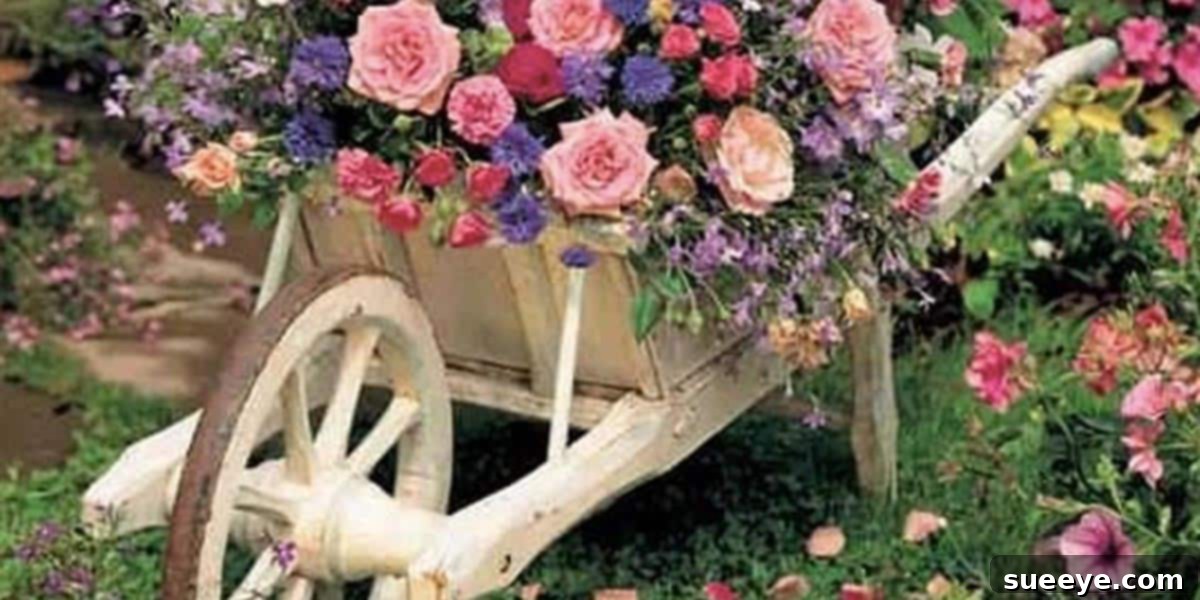
Create Your Own Charming DIY Rustic Wheelbarrow Garden Planter
Transforming your garden into a picturesque sanctuary often begins with unique decorative elements that reflect your personal style. Among the most enchanting additions you can introduce is a DIY rustic wheelbarrow garden planter. This delightful project offers a creative way to adorn your outdoor space with a touch of timeless charm and a focal point that will capture attention. Far more than just a container for plants, a handmade wheelbarrow planter becomes a statement piece, evoking a sense of nostalgia and rustic elegance.
Imagine a beautifully crafted wooden wheelbarrow, brimming with vibrant blooms or fragrant herbs, nestled gracefully in your garden, on your front porch, or alongside a quaint pathway. This isn’t just about planting flowers; it’s about crafting a narrative for your garden, a story of handmade beauty and sustainable design. Whether you opt for sturdy wooden wheels, industrial steel accents, or antique iron for a truly vintage aesthetic, the customizability of this project ensures your planter will be as unique as your garden itself.
Why Choose a DIY Rustic Wheelbarrow Planter?
The allure of a wheelbarrow planter goes beyond its visual appeal. It represents a blend of functionality, creativity, and personal expression. Here’s why this DIY project stands out:
Aesthetics and Undeniable Charm
There’s an inherent warmth and inviting feel that rustic decor brings to any setting. A wooden wheelbarrow planter, especially one you’ve crafted yourself, exudes an unparalleled charm that store-bought planters often lack. It harks back to simpler times, creating a cozy and welcoming atmosphere that enhances the natural beauty of your plants.
Uniqueness and Personalization
Unlike mass-produced garden items, a DIY project allows for complete personalization. You decide on the size, the type of wood, the finish, and the style of wheels. This ensures that your planter is truly one-of-a-kind, perfectly tailored to your garden’s aesthetic and your creative vision. It becomes a conversation starter, a testament to your craft and ingenuity.
Sustainability and Upcycling Potential
Embracing a DIY approach often means utilizing sustainable practices. You can opt for reclaimed wood or repurpose materials, giving new life to old resources. This eco-friendly aspect not only benefits the environment but also adds character and a unique story to your planter. It’s an excellent way to engage in upcycled garden projects that are both beautiful and responsible.
Versatility in Placement and Design
A wheelbarrow planter is incredibly versatile. Its movable nature (even if stationary for planting) suggests mobility, making it an ideal focal point for various garden zones. Place it near your entryway to welcome guests, as a centerpiece in a sprawling garden bed, or on your patio to add a splash of color to your outdoor living space. Its unique form provides an interesting alternative to traditional rectangular or circular planters.
Planning Your Wheelbarrow Planter Project
Before you dive into building, a little planning goes a long way. Careful consideration of your design, materials, and tools will ensure a smoother and more enjoyable construction process, leading to a stunning final product.
Design and Size Considerations
The ideal size of your wheelbarrow planter depends on your available space and the visual impact you wish to achieve. A smaller planter might be perfect for a cozy front porch, while a larger one could command attention in a spacious garden. Consider the dimensions of the planter box, the length of the handles, and the diameter of the wheels. Sketching out your design can help visualize the final look and ensure all components are proportionate.
Choosing Your Materials for Durability and Style
The materials you select will largely dictate the aesthetic and longevity of your custom garden planter:
- Wood Types: For the main body, weather-resistant woods like cedar or treated pine are excellent choices due to their durability against the elements. Reclaimed barn wood or pallet wood can offer an immediate rustic appeal, but ensure they are free from harmful chemicals.
- Wheels: This is where much of the character comes from.
- Wooden Wheels: Offer a classic, natural rustic look. These can be purchased or crafted.
- Industrial Steel Wheels: Provide a more robust, slightly industrial farmhouse feel.
- Antique Iron Wheels: Perfect for a truly vintage or steampunk aesthetic, these often become fascinating conversation pieces.
- Non-functional Wheels: If mobility isn’t crucial, simpler, decorative wheels can be used, fixed in place for stability.
- Hardware and Fasteners: Use exterior-grade screws, bolts, and wood glue to ensure the structure is sturdy and resistant to rust and decay.
- Drainage Solutions: Essential for plant health. Consider a plastic liner with drainage holes or drilling holes directly into the wooden base.
- Soil and Plants: High-quality potting mix and your chosen plants are the final, most vibrant components.
Essential Tools You’ll Need
Gathering the right tools before you begin will make the construction process much more efficient:
- Measuring tape and pencil
- Circular saw or miter saw for precise cuts
- Drill and drill bits (for pilot holes and fasteners)
- Sander or sandpaper (for smooth finishes)
- Wood glue
- Clamps (to hold pieces while glue dries or during assembly)
- Safety glasses and gloves
- Optional: Router for decorative edges, paint brushes or stain applicators.
A Conceptual Guide to Building Your Rustic Wheelbarrow Planter
While specific plans may vary, the general steps involved in creating your DIY wheelbarrow planter are straightforward and rewarding. This guide outlines the key stages of construction, helping you envision your project from raw materials to a finished garden masterpiece.
Step 1: Preparing Your Wood Components
Begin by cutting all your wooden pieces to the desired dimensions for the planter box, the frame, and the handles. Accurate measurements are crucial here. Once cut, sand all surfaces and edges smooth. This not only makes for a professional finish but also prevents splinters and prepares the wood for any protective treatments or stains.
Step 2: Assembling the Planter Box
Construct the rectangular or trapezoidal planter box. This will hold your soil and plants. Use wood glue and exterior-grade screws to securely join the side and bottom pieces. Ensure the joints are strong and stable. Crucially, drill several drainage holes in the bottom of the box to prevent waterlogging, which is vital for healthy plant roots.
Step 3: Crafting the Frame and Handles
The frame provides support for the planter box and forms the structure for the handles and wheel attachment. Cut two longer pieces for the main frame/handles and shorter cross-pieces for stability. Assemble these, ensuring the planter box fits snugly within or on top of the frame. The handles should extend comfortably for the desired aesthetic, even if the wheelbarrow is not meant to be moved frequently.
Step 4: Attaching the Wheels
This is where your chosen wheels come into play. Securely attach your wooden, steel, or iron wheels to the front portion of the frame using appropriate hardware such as axles, bolts, or sturdy brackets. Ensure the wheels are level and well-supported, giving your wheelbarrow its characteristic stance. If using decorative, non-functional wheels, simply fix them securely in place.
Step 5: Finishing Touches and Weatherproofing
Once assembled, apply a wood stain or exterior paint to protect your planter from the elements and enhance its rustic appeal. A good quality outdoor sealant will significantly extend its lifespan. Allow ample drying time according to the product instructions. This step is crucial for the longevity and enduring beauty of your outdoor garden planter.
Bringing Your Wheelbarrow Planter to Life: Planting and Styling
With your beautiful wheelbarrow constructed, the most exciting part begins: filling it with life and color! The right plant choices and thoughtful styling will truly make your creation sing.
Selecting the Perfect Plants for Your Wheelbarrow
The possibilities are endless, allowing you to create diverse and captivating displays:
- Colorful Annuals and Perennials: For a burst of continuous color, choose annuals like petunias, impatiens, marigolds, or vibrant geraniums. For longer-term displays, select compact perennials that thrive in containers.
- Fragrant Herbs: Create a charming herb garden with basil, rosemary, thyme, and mint. Their aromatic qualities will add another sensory dimension to your garden space.
- Succulents and Drought-Tolerant Varieties: For a low-maintenance yet striking display, a collection of succulents or sedum varieties can be incredibly impactful, offering unique textures and forms.
- Seasonal Displays: Change your plantings with the seasons – spring bulbs, summer annuals, autumn mums, or winter evergreens for year-round interest.
Soil Preparation and Planting Tips
Healthy plants start with healthy soil. Use a high-quality potting mix specifically formulated for containers. This mix provides good drainage while retaining essential moisture and nutrients. Consider adding a layer of gravel or broken pottery at the very bottom of the planter box (above the drainage holes) to further improve drainage, though this is debated by some horticulturists; good potting mix is often sufficient. Plant your chosen flora, ensuring adequate spacing for growth, and water thoroughly after planting.
Optimal Placement for Maximum Impact
Where you place your charming garden decor can significantly enhance its appeal. Consider:
- Front Porch Welcome: A smaller wheelbarrow planter bursting with flowers makes a warm and inviting statement at your home’s entrance.
- Garden Focal Point: Position a larger planter as a centerpiece in a flower bed, drawing the eye and creating a distinct area of interest.
- Patio or Deck Accent: Use it to define an outdoor seating area, bringing natural beauty closer to your living space.
- Pathway Edging: Line a garden path with one or more planters to guide visitors and add continuous visual interest.
Maintaining Your Beautiful Wheelbarrow Planter
To ensure your wheelbarrow planter remains a vibrant and attractive feature in your garden for years to come, regular maintenance is key.
Watering: Container plants typically dry out faster than in-ground plants. Check the soil moisture daily, especially during warm weather, and water as needed. Ensure water drains freely from the bottom.
Sunlight: Position your planter in a spot that provides the appropriate amount of sunlight for your chosen plants. Most flowering plants require at least 6 hours of direct sunlight per day.
Protection from Elements: While treated, wood will still benefit from occasional re-sealing or painting, especially if exposed to harsh weather. During extreme winter conditions, you might consider moving the planter to a sheltered location or covering it.
Seasonal Refreshing: As plants fade, don’t hesitate to remove them and replant with new seasonal beauties. This keeps your wheelbarrow planter looking fresh and exciting throughout the year.
Personalizing Your Planter: Beyond the Basics
The beauty of a DIY project lies in its endless possibilities for customization. Don’t be afraid to experiment and add unique touches that reflect your personality.
Paint and Patina: Beyond traditional wood stains, consider painting your wheelbarrow a vibrant color, or applying a distressed finish to enhance its vintage appeal. Chalk paint can create a beautiful matte, aged look.
Decorative Accents: Attach small decorative elements like antique license plates, vintage garden tools, or even fairy lights for an enchanting evening glow. Stenciling a design or a meaningful word onto the side can also add a unique touch.
Unique Wheel Choices: Reiterate the earlier point – searching for truly antique wheels from salvage yards or online marketplaces can transform your project from charming to extraordinary, giving it a rich history and character.
The Enduring Appeal of the Rustic Wheelbarrow Planter
Building your own wheelbarrow garden planter is more than just a home improvement project; it’s an act of creativity that enriches your outdoor living experience. It’s about crafting something with your hands, bringing a personal touch to your garden, and enjoying the satisfaction of watching your vision come to life. The enduring appeal of this rustic garden decor lies in its ability to combine practicality with profound aesthetic pleasure, making your garden truly your own.
Conclusion: Embark on Your Garden Transformation
Creating a DIY rustic wheelbarrow garden planter is a wonderfully fulfilling project that promises to elevate your outdoor space. It’s an accessible endeavor for most DIY enthusiasts, offering immense satisfaction and a stunning result. By following these guidelines, you can design, build, and plant a unique piece that not only holds your favorite flowers or herbs but also holds a special place in your heart and garden. So, gather your materials, unleash your creativity, and get ready to enjoy the timeless charm your new wheelbarrow planter will bring to your beautiful garden.