
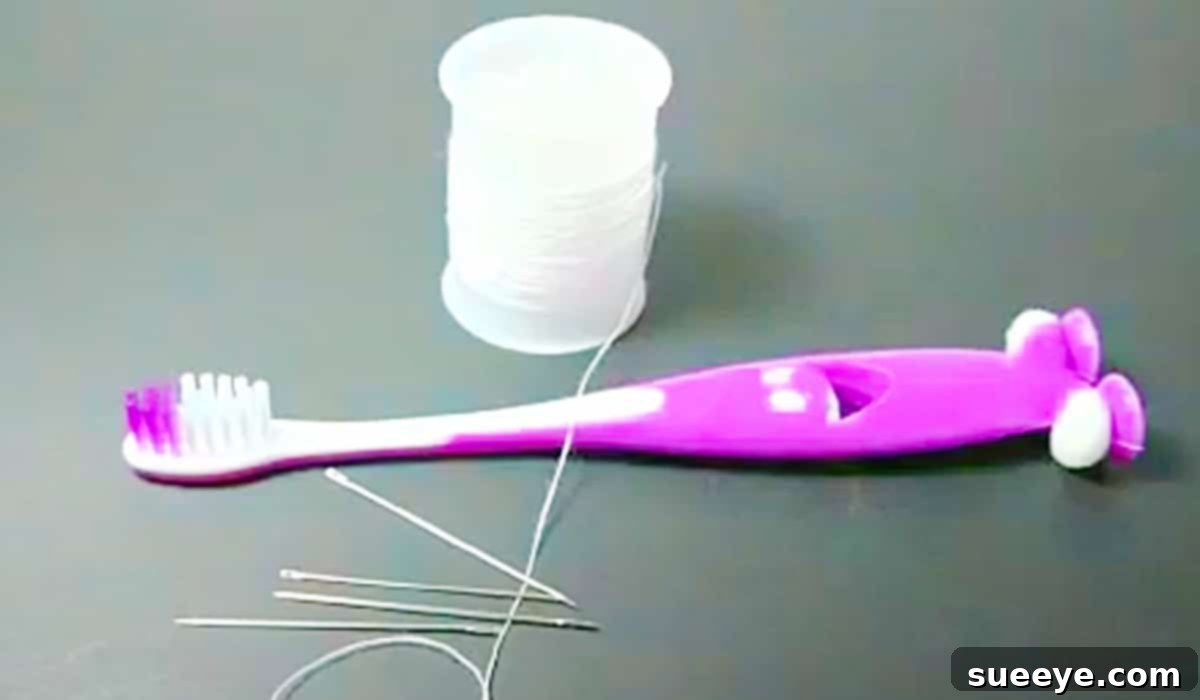
The seemingly simple act of threading a needle has, for generations, been a source of universal frustration for sewers of all skill levels. Whether you’re a seasoned tailor, a beginner crafter, or simply trying to mend a torn seam, the tiny eye of a needle can often feel like an insurmountable challenge. The struggle can involve squinting, steadying shaky hands, battling frayed thread ends, or just plain giving up in exasperation. However, a revolutionary technique has emerged that promises to banish this common sewing woe forever: threading a needle using nothing more than a simple toothbrush.
When I first discovered this ingenious method demonstrated in a video tutorial by DIY Daily on YouTube, I was genuinely astonished. It felt like uncovering a long-lost secret that should have been common knowledge all along. This hack transforms a once-tedious task into an incredibly quick and effortless process, making it particularly invaluable for individuals with visual impairments, dexterity challenges, or simply anyone who values efficiency in their crafting endeavors. No longer will you need a magnifying glass or an abundance of patience to conquer the needle’s eye; this innovative approach makes threading a breeze.
How to Effortlessly Thread a Needle Using a Toothbrush
This comprehensive guide will walk you through the simple steps of this groundbreaking needle-threading technique, explain why it works so effectively, and highlight the many benefits it brings to your sewing projects. Get ready to transform your approach to one of sewing’s most basic yet often most frustrating steps.
The Universal Challenge of Needle Threading
Before diving into the solution, it’s worth acknowledging why threading a needle is such a widespread challenge. The combination of a minuscule needle eye, often just a fraction of a millimeter wide, and a flexible, sometimes unruly strand of thread creates a perfect storm for frustration. Factors such as:
- Poor Eyesight: As we age, our near vision often diminishes, making small details like a needle’s eye increasingly difficult to discern.
- Frayed Thread Ends: The very act of cutting thread can leave it with a fuzzy, multi-stranded end that resists passage through the needle.
- Lack of Dexterity: Steady hands are crucial for precision, and conditions like arthritis or tremors can make holding both thread and needle still a significant hurdle.
- Inadequate Lighting: Trying to thread a needle in dim light only exacerbates all the above issues.
- Tiny Needle Eyes: Some projects, like intricate embroidery or fine garment construction, require needles with exceptionally small eyes, pushing patience to its limits.
For many, these challenges lead to wasted time, growing irritation, and sometimes even the abandonment of a sewing project before it even begins. This toothbrush hack directly addresses and alleviates these common pain points, offering a universally accessible solution.
Why a Toothbrush? Unveiling the Ingenious Mechanics
At first glance, the idea of using a toothbrush to thread a needle might seem unconventional, even absurd. However, the brilliance lies in the simple, yet effective, mechanics of its bristles. A toothbrush, particularly one with soft to medium bristles, possesses several properties that are perfectly suited for manipulating a strand of thread:
- Bristle Density: The dense arrangement of bristles creates a resilient, flexible surface.
- Individual Bristle Action: Each bristle acts as a tiny, flexible barrier. When the thread is pressed into the bristles, it’s not just a flat surface; the bristles gently separate and cradle the thread fibers.
- Friction and Grip: The material of the bristles, typically nylon, provides just enough friction to hold the thread in place without damaging it.
- Controlled Compression: When you press the needle into the thread resting on the bristles, the bristles compress. This compression forces the thread’s individual strands to align more closely and pushes them upwards, effectively “presenting” a consolidated thread end directly into the needle’s eye.
Essentially, the toothbrush acts as a miniature, flexible platform that consolidates and presents the thread in a way that makes it virtually impossible for the needle’s eye to miss. It’s an exercise in applied physics and ingenious simplicity.
Materials for This Sewing Game-Changer:
The beauty of this hack is its minimal material requirement. Chances are, you already have everything you need:
- Needles: Any sewing needle will work, from standard hand-sewing needles to embroidery needles. The method is particularly effective for needles with smaller eyes.
- Thread: All types of thread – cotton, polyester, silk, embroidery floss – can be threaded using this technique. Ensure the end of your thread is cut cleanly with sharp scissors for the best results.
- A Clean Toothbrush: An old, clean toothbrush with soft or medium bristles is ideal. Avoid toothbrushes with excessively stiff bristles, as they might make it harder to press the thread in.
- A Pair of Sharp Scissors: Essential for a clean, non-frayed cut on your thread. A cleanly cut thread end significantly increases your success rate.
Step-by-Step Directions: Mastering the Toothbrush Threading Hack:
This super-easy method, as demonstrated in the DIY Daily video on YouTube, can be broken down into a few simple and repeatable steps. Follow these instructions, and you’ll be threading needles with unprecedented speed and ease.
Step 1: Prepare Your Workspace
Find a well-lit, flat, and stable surface. Good lighting is crucial, especially when you’re first learning the technique, as it helps you see the fine details of the needle’s eye and the thread’s movement. A contrasting background, like a dark fabric if you’re using light thread, can also be helpful.
Step 2: Position Your Thread on the Toothbrush
Take your strand of thread and lay it horizontally across the bristles of your toothbrush. Ensure the thread is taut but not overly stretched. You want it to rest snugly within the bristles, perhaps just past the midpoint of the bristle head. The end of the thread you intend to thread through the needle should extend slightly beyond the bristles, creating a small “loop” or curve.
Step 3: Introduce the Needle
Hold your needle firmly between your thumb and forefinger. Position the eye of the needle directly over the thread that is resting on the toothbrush bristles. The key is to align the needle’s eye directly above where the thread is pressed into the bristles. You’ll be pushing the needle *down* into the thread.
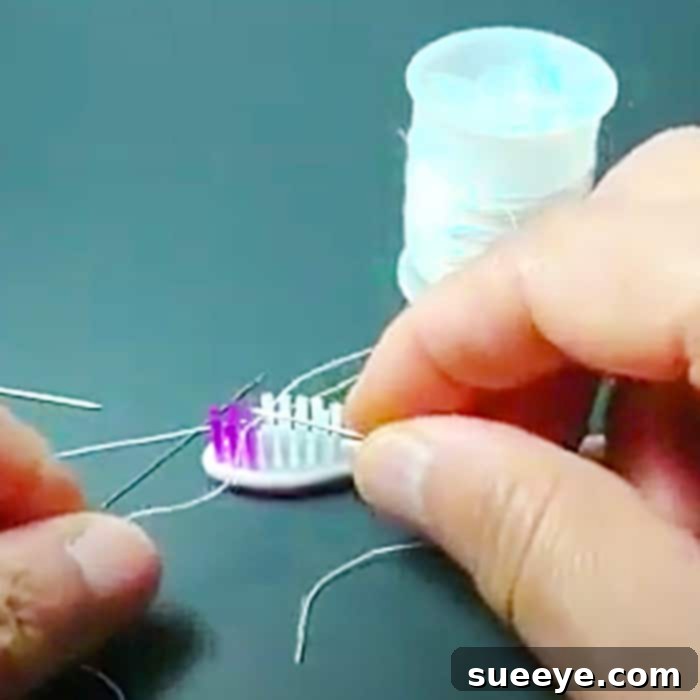
Step 4: The Wiggle and Catch
This is the magical step. While holding the thread taut and the needle positioned, gently wiggle the needle side-to-side, pressing it down into the bristles where the thread lies. The bristles will yield, allowing the thread to be pushed up and through the needle’s eye. You should feel a slight resistance as the thread is caught. Continue wiggling gently until you see the thread pop through the eye of the needle on the other side. You can precisely observe this motion in the video tutorial.
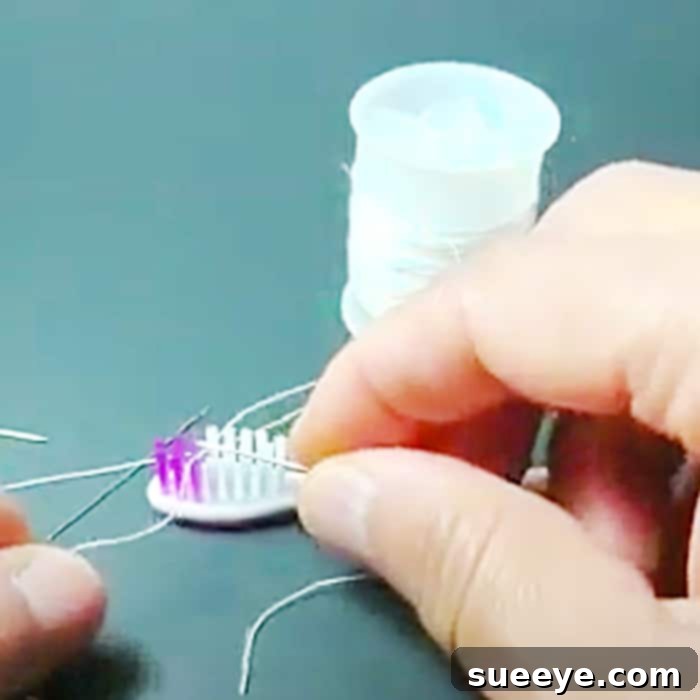
Step 5: Pulling Through
Once you see the thread emerge through the needle’s eye, carefully grab the looped end that has come through and pull it gently, but firmly, all the way through the needle. Adjust the length of the thread as needed, and you are ready to start sewing! It’s truly that simple and effective.
The Unforgettable Benefits of This Toothbrush Threading Technique
Adopting the toothbrush method for threading needles brings a multitude of advantages that go beyond mere convenience:
- Time-Saving: What used to take minutes of squinting and multiple attempts can now be accomplished in mere seconds.
- Frustration-Free Sewing: Eliminate the most common initial hurdle in any hand-sewing project, allowing you to start crafting with a positive mindset.
- Increased Accessibility: This method is a game-changer for individuals with visual impairments, arthritis, shaky hands, or limited dexterity, making sewing accessible to a wider audience.
- Enhanced Precision: The toothbrush bristles naturally align the thread, presenting a neat, consolidated end to the needle’s eye, reducing the chances of fraying or missing the target.
- Versatility: It works with a wide range of needle sizes and thread types, from fine embroidery thread to heavier quilting thread.
- No Special Tools Needed: Unlike dedicated needle threaders that can sometimes be flimsy or get lost, a toothbrush is a common household item.
Troubleshooting and Expert Tips for Success
While this hack is remarkably simple, a few pointers can ensure consistent success:
- Clean Cut is Key: Always use very sharp scissors to cut your thread. A clean, crisp end is far easier to thread than a frayed one. If your thread end does fray, snip it again before trying the toothbrush method.
- Mind the Bristle Type: Softer bristles tend to work best as they offer more flexibility and can gently cradle the thread without pushing it out of alignment.
- Gentle Pressure: Don’t press the needle too forcefully into the bristles. A gentle, wiggling motion is more effective than brute force. Let the bristles do their work.
- Angle Matters: Experiment slightly with the angle at which you press the needle into the thread on the toothbrush. Sometimes a very slight tilt can make a difference.
- Practice Makes Perfect: Like any new skill, a little practice will make you incredibly proficient. After a few tries, you’ll wonder how you ever threaded a needle any other way.
- Consider Thread Wax: For very fine or unruly threads, running the end through a bit of beeswax or even just moistening it slightly with saliva can help to stiffen and consolidate the fibers, making threading even easier.
Beyond the Basics: Related Sewing Hacks and Tools
While the toothbrush method is undeniably brilliant, it’s worth noting that other tools and tips can complement your sewing journey:
- Traditional Needle Threaders: These small, often wire-looped devices are specifically designed to aid in threading. While effective, they can sometimes be fiddly or break.
- Magnifying Glasses or Lights: For those with significant vision challenges, a magnifying lamp can provide the extra visual aid needed, even with the toothbrush method.
- Thimbles: Protecting your fingers is essential. A well-fitting thimble can prevent painful pricks and allow you to push needles through fabric more easily.
- Good Quality Thread: Invest in decent quality thread. Cheap thread is more prone to fraying, knotting, and breaking, adding unnecessary frustration to your projects.
This method truly is a great way to thread a needle, and its effectiveness is undeniable. It eliminates a common source of frustration and makes sewing more enjoyable and accessible for everyone. I am genuinely glad to have discovered this simple yet profoundly impactful method of threading a needle, and I hope it transforms your sewing experience as much as it has mine.