
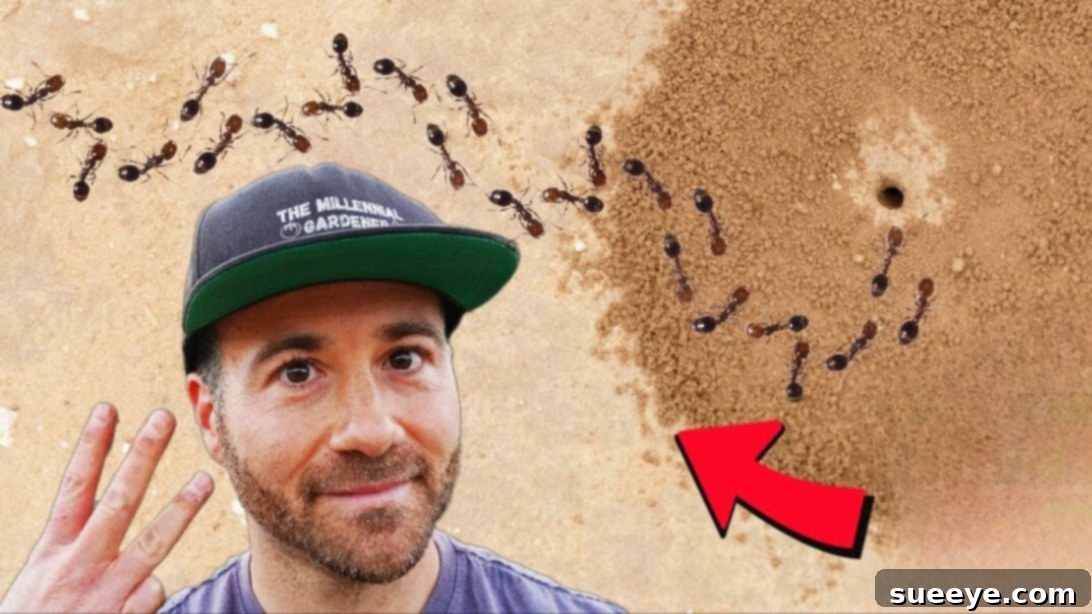
Achieve an Ant-Free Yard Forever: The Ultimate 3-Step Guide to Permanent Ant Control
Is your peaceful lawn under siege by persistent ants? Do you dream of an outdoor space where you can relax, entertain, and enjoy nature without the constant worry of these tiny, unwelcome invaders? You’re not alone. Ants can be a major nuisance, establishing intricate colonies, creating unsightly mounds that disrupt your lawn’s aesthetics, and in some cases, even damaging your plants or finding their way into your home. But what if there was a definitive solution to make your yard ant-free, not just for a season, but truly forever?
The good news is, achieving a permanently ant-free environment is not a pipe dream; it’s entirely possible with the right strategy and a bit of sustained effort. We’ve tapped into the expert advice of The Millennial Gardener, who offers a comprehensive, easy-to-follow, 3-step approach designed to banish ants from your property for good. This isn’t just about temporary fixes or chasing individual ants; it’s about implementing proven, effective methods that tackle ants from every conceivable angle: robust defense, targeted offense, and intelligent long-term prevention. Prepare to reclaim your yard and transform it into a serene, pest-free oasis that you and your family can enjoy year-round, without the constant threat of ant invasions.
Step 1: The Defensive Barrier – Protecting Your Lawn with Strategic Granules
Establishing an Impenetrable Perimeter with Insect-Killing Lawn Granules
The first and most crucial line of defense in our battle against ants is a robust defensive strategy, primarily involving the careful application of insect-killing lawn granules. These specialized granules are expertly engineered to create an impenetrable barrier around your entire lawn, effectively making it an unwelcome and hazardous environment for ants and a wide range of other common lawn pests. When applied correctly and consistently, this protective barrier can offer exceptional pest control, often lasting for an impressive duration of up to three months, significantly reducing the frequency of ant incursions.
To effectively deploy this vital defensive measure, you will need a granule spreader. This essential tool ensures an even and consistent application of the product across your lawn, which is paramount for maximizing the barrier’s effectiveness. As you walk across your yard, the spreader meticulously distributes the tiny granules. These granules then release their active ingredients upon contact with moisture, whether from a gentle rain shower or your regular irrigation system. The active compounds in these granules work by targeting insects directly, disrupting their nervous systems and eliminating them either on contact or shortly after exposure, preventing them from establishing a foothold in your green space.
Critical Application Zones: Why Your Lawn is Different from Your Garden
It is absolutely crucial to understand that while these insecticidal lawn granules are exceptionally effective for controlling pests within your turf areas, their use should be strictly limited to the lawn itself. They are generally not formulated or intended for application in vegetable gardens, herb beds, fruit tree areas, or any other space where edible plants are grown. The active ingredients, although often designed with low toxicity to humans when used precisely as directed, can potentially accumulate in edible plants. This accumulation could not only have detrimental long-term effects on the health and vitality of your garden plants but, more importantly, could pose significant safety concerns regarding the consumption of your homegrown produce. Always make it a priority to read the product label carefully and thoroughly for specific instructions, active ingredient details, and critical safety precautions regarding appropriate application zones.
Prioritizing Safety: Protecting Humans, Pets, and the Environment
When selecting and applying lawn granules, safety must always be your paramount concern. Most modern lawn granule products are formulated with a very low toxicity level to humans, especially once they have settled into the soil and been watered in. Nevertheless, it is always strongly recommended to wear protective gloves during application and to wash your hands thoroughly with soap and water afterward. To ensure the safety of your loved ones, keep children and all household pets off the treated area until the granules have been completely watered in and the lawn is entirely dry, a process that typically takes a few hours.
It is vital to recognize that while generally safe for humans under proper use, these granules are, by design, extremely toxic to insects – this is, after all, their intended purpose. Furthermore, certain active ingredients commonly found in these products can be highly toxic to domestic animals, particularly curious cats, who might inadvertently groom their paws after walking on a freshly treated lawn. Always prioritize products that provide clear and comprehensive safety guidelines specifically for pets and ensure that your furry friends are kept strictly away from the treated area according to the manufacturer’s precise instructions. Opting for products containing active ingredients like bifenthrin or permethrin, which are widely used in professional lawn pest control, necessitates strict adherence to these precautions to ensure the continued well-being of your family and pets while effectively managing ant populations and maintaining a healthy lawn.
Step 2: The Offensive Strike – Eliminating Ant Colonies at Their Core
Targeting the Source with Advanced Ant Baits for Colony Destruction
Once you’ve successfully established a robust defensive perimeter around your lawn, it’s time to shift gears and go on the offensive to eradicate any existing ant colonies. The most effective and enduring offensive strategy against established ant populations is the intelligent use of ant bait products. Unlike the granules that primarily kill ants on contact, ant baits are ingeniously designed to be ingested by foraging worker ants. These unsuspecting ants then carry the poisoned food back to the nest, sharing it diligently with the queen and all other members of the colony. This delayed-action mechanism is precisely what makes baits so devastatingly effective; it ensures the complete elimination of the entire colony, including the queen, who is solely responsible for reproduction and the colony’s future growth.
To effectively deploy an ant bait, begin by carefully locating active ant trails or the primary entrance to an ant hill. Place approximately one teaspoon of the bait a few inches away from these key activity locations. The worker ants, constantly foraging for food, will be irresistibly attracted to the bait’s enticing formulation. They will enthusiastically collect it, believing it to be a valuable and abundant food source, and diligently transport it back to the very heart of their colony. This remarkable process, scientifically known as trophallaxis (where ants share food through regurgitation), is absolutely critical for the bait’s widespread success. Within as little as 24 to 48 hours, the active ingredient in the bait will spread throughout the entire colony, leading to its complete and irreversible destruction.
Selecting the Right Ant Bait and Exploring Natural Alternatives
The market offers a diverse array of ant baits, including convenient gels, granular formulations, and self-contained bait stations. When selecting a product, it’s beneficial to consider the specific type of ants you are dealing with (if identifiable) and to always adhere to the product’s specific instructions for placement. For instance, sugary baits are often highly effective against sweet-loving ants like pavement ants or odorous house ants, while protein or grease-based baits are better suited for targeting species like fire ants or carpenter ants. Always follow the manufacturer’s directions meticulously for optimal results and to ensure safe application.
For individuals preferring a more environmentally conscious or natural approach, borax is a highly effective and readily available alternative for creating homemade ant baits. Borax acts as a slow-acting stomach poison, ingeniously disrupting the ants’ digestive systems and leading to fatal dehydration. You can easily find numerous reliable recipes online, often combining borax with a potent sweet attractant like sugar, honey, or maple syrup. A common and effective recipe involves mixing granular sugar and borax in a ratio of 3:1 or 2:1 with a small amount of water to create a thick paste or a liquid solution. Place small amounts of this mixture on cotton balls or tiny pieces of cardboard near active ant trails. As with commercial baits, the worker ants will carry this powerful mixture back to their nest, ensuring the demise of the entire colony without resorting to harsh chemical sprays. Other natural options like diatomaceous earth can kill ants on contact by dehydrating their exoskeletons, but it is not effective as a bait to destroy the entire colony, making it more suitable for direct application to active trails rather than as a colony eliminator.
Step 3: Permanent Prevention – Transforming Your Soil for Long-Term Ant Repellence
Understanding Ant Preferences: Why Soil Structure and Composition are Key
The ultimate goal in achieving an ant-free yard forever is prevention, and this comprehensive strategy largely hinges on fundamentally transforming your soil’s composition and structure. Ants are highly particular and discerning about where they choose to establish their intricate colonies. They exhibit a distinct preference for firm, sandy soils that offer both excellent drainage and maintain a stable structure. These specific soil conditions allow them to meticulously excavate vast and complex tunnel systems without the constant risk of collapse, providing secure, stable, and dry housing for their queen, larvae, and the entire colony. Conversely, soils that are rich in organic matter present an unstable, undesirable, and often excessively moist environment for ant nesting, causing their carefully constructed tunnels to collapse and making colony establishment exceedingly difficult, if not impossible.
Therefore, the key to achieving permanent ant prevention lies in fundamentally altering your soil’s composition. Your objective is to transform your existing sandy, ant-friendly ground into a rich, organic matter-filled loam. This comprehensive soil transformation makes your yard inherently unattractive and uninhabitable for ants, compelling them to seek more suitable nesting sites far away from your property.
Enriching Your Soil with Organic Matter: The Power of Compost and Mulch
Incorporating ample amounts of high-quality compost and organic mulch is the cornerstone of this highly effective preventative strategy:
Compost: Often revered as “black gold” by gardeners, compost is a powerhouse for enhancing overall soil health and structure. Adding compost dramatically improves soil aggregation, transforming compact, sandy soil into a loose, well-aerated medium that is far less conducive to ant tunneling. This increased organic content significantly helps the soil retain essential moisture while still draining effectively, creating an environment that ants find exceptionally difficult to tunnel through and establish stable nests. You can integrate compost by gently tilling it into your garden beds before planting or by applying a generous, even layer as a top dressing on your lawn and garden areas. For specialized garden areas, particularly vegetable patches, consider nutrient-rich options like “turkey compost,” which is especially beneficial due to its high nitrogen content, promoting robust plant growth while simultaneously deterring ants with its unfavorable texture.
Mulch: Beyond its widely recognized aesthetic appeal and its impressive weed-suppressing capabilities, organic mulch plays a truly vital role in long-term ant prevention. A thick, consistent layer of organic mulch (such as wood chips, shredded leaves, pine needles, or straw) applied directly on top of your soil creates an effective physical barrier that ants struggle to penetrate and navigate through. As this mulch slowly decomposes over time, it continuously adds valuable organic matter to the soil below, further enhancing the undesirable conditions for ant nesting. Mulch also critically helps regulate soil temperature and moisture levels, contributing significantly to overall soil health, which in turn supports a diverse and thriving ecosystem that can naturally keep ant populations in check and prevent outbreaks.
Protecting Walkways and Hardscaped Areas from Ant Activity
Ants aren’t just a problem confined to lawns and gardens; they frequently colonize beneath walkways, patios, and driveways, often causing pavers to shift, creating unsightly mounds of sand, and undermining the structural integrity of your hardscaped surfaces. For these particular areas, a durable weed barrier can serve a highly beneficial dual purpose. By meticulously installing a robust weed barrier fabric beneath your pavers or gravel, you create a formidable physical deterrent that prevents ants from easily burrowing and establishing hidden colonies. This barrier makes it considerably harder for them to move soil and construct their elaborate tunnels, adding an essential extra layer of protection to your hardscaped zones. Furthermore, utilizing polymeric sand between pavers, which hardens rigidly when wet, can effectively seal off crevices, making it virtually impossible for ants to burrow through and create new entry points.
Reclaim Your Outdoor Space: An Ant-Free Future Awaits You
Say goodbye to the persistent frustration and annoyance of ant infestations and enthusiastically embrace a beautiful, pest-free outdoor haven! By diligently following The Millennial Gardener’s comprehensive 3-step strategy – which includes establishing a robust defensive granule barrier, launching an effective offensive strike with targeted ant baits, and implementing permanent soil transformation for long-term prevention – you can achieve lasting freedom from ants. This integrated and holistic approach not only effectively eliminates existing colonies and active ant populations but also proactively creates an environment that actively deters future invasions, ensuring your peace of mind.
Embrace these proven techniques and make a wise investment in the long-term health and enjoyment of your lawn and garden. With a little consistent effort, careful planning, and dedicated application, you’ll be able to fully enjoy your yard to its absolute fullest potential, knowing with confidence that an ant-free future is not just a hopeful dream, but a tangible and achievable reality. Start implementing these strategies today and embark on the journey to transform your outdoor living space into the peaceful, beautiful, and truly pest-free sanctuary you and your family deserve!