
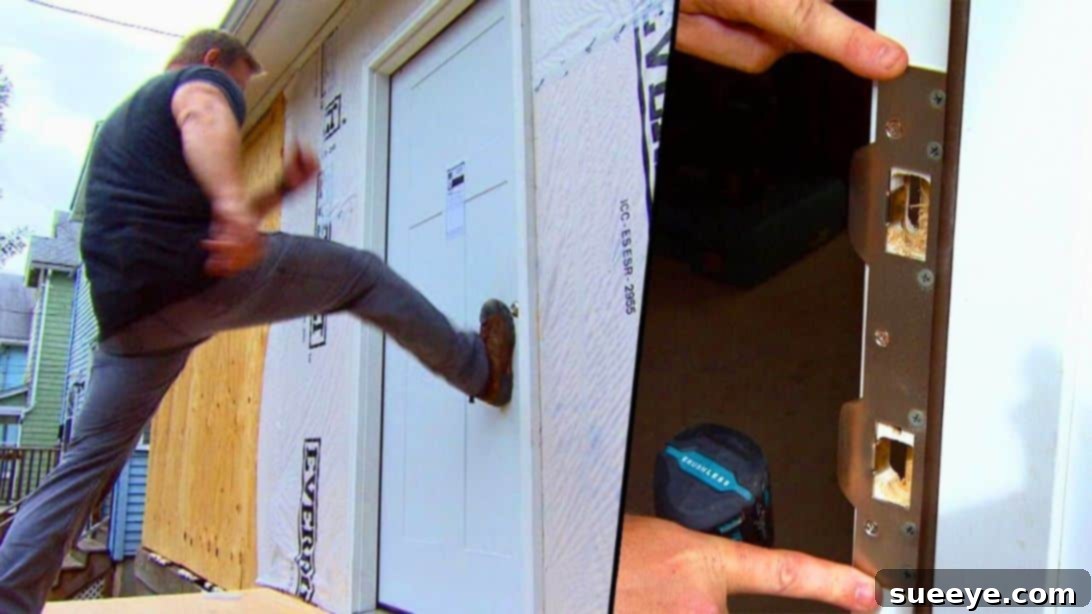
Ensuring the safety and security of your home and loved ones is a paramount concern for every homeowner. While we often focus on elaborate alarm systems or security cameras, the first line of defense against intruders is often the most overlooked: your entry doors. Surprisingly, a significant number of home invasions occur simply because a door wasn’t properly reinforced, allowing burglars to gain entry within mere seconds, often with a swift kick. This unsettling reality can manifest while you’re at work, picking up groceries, or even just running a quick errand, leaving your sanctuary vulnerable.
The thought of someone breaking into your home is distressing, and it’s a surprisingly common occurrence. You certainly wouldn’t want your family or cherished possessions to be exposed to such a risk. Proactive measures in home security are not just about deterring criminals; they’re about cultivating a profound sense of peace and tranquility within your own space, knowing you’ve taken every possible step to protect what matters most.
Beyond the physical fortification of your entry points, a fundamental aspect of home security involves mindful habits. It’s astonishing how many break-ins happen because a homeowner simply forgot to lock their doors, even for a moment. Reinforcing your door provides a robust physical barrier, but it must be coupled with vigilance and good practices, such as always ensuring your doors are properly locked when you leave or retire for the night.
While securing your home might seem like a daunting task, it can be approached with simple, effective DIY projects. This guide will walk you through essential steps to fortify your entry doors, transforming them into a formidable barrier against intruders. For visual learners, resources like Inside Edition’s tutorial on installing a fortress door can be incredibly helpful. Furthermore, consider other clever ways to protect your valuables, such as exploring these 13 Smart Ways To Hide Your Money Safely, or even enhancing your outdoor privacy with projects like the Easiest DIY Outdoor Privacy Wall.
Securing your home doesn’t require a complete overhaul; often, it’s the small, strategic enhancements that make the biggest difference. Let’s delve into practical tips for reinforcing your door entry, turning a potential weak point into a strong deterrent.
Fortifying Your Entry Door: Essential Reinforcement Tips
A standard residential door, while seemingly sturdy, often possesses inherent vulnerabilities that a determined burglar can exploit. The primary weak points are typically the door frame, the strike plate, and the hinges. By addressing these areas, you can significantly upgrade your door’s resistance to forced entry.
Tip 1 – Upgrade to 3-inch Screws for Enhanced Frame Security
One of the simplest yet most effective ways to reinforce your door involves a fundamental change in the screws used for your door hardware. Most standard door frames and hinge plates are installed with screws that are only about 3/4 inch to 1 inch long. These short screws penetrate only the door jamb, which is often a thin piece of wood, leaving the door highly susceptible to being kicked in. The jamb can splinter or break away from the wall’s stud frame with minimal force.
The solution is to replace these inadequate screws with longer, 3-inch screws. These longer screws are designed to extend through the door jamb and into the structural framing studs of your house. By anchoring the door frame directly to the solid wood studs, you create a much stronger connection that can withstand significantly more force. When installing, focus on the screws in the strike plate (where the latch enters the frame) and the hinges. For hinge plates, replace at least one screw in each hinge with a 3-inch screw. For the strike plate, replace all existing screws with 3-inch alternatives. This simple upgrade dramatically increases the door’s ability to resist brute force attacks, distributing impact across a more robust structural element rather than relying solely on the fragile door jamb.
Tip 2 – Install a Heavy-Duty Steel Strike Plate
Following the screw upgrade, the next critical component to reinforce is the strike plate. The strike plate is the metal plate installed on the door frame where the deadbolt and doorknob latches engage. Standard strike plates are often thin, flimsy pieces of metal secured by short screws, making them a prime point of failure during a kick-in attempt. When force is applied, the latch can rip right through the strike plate or splinter the surrounding door jamb.
A security strike plate, conversely, is a large, heavy-gauge steel plate designed for superior protection. These plates are typically much thicker and longer than standard ones, often extending several inches up and down the door frame. Critically, they are secured with multiple 3-inch screws, ensuring that they are firmly anchored into the structural studs behind the door jamb. This multi-screw, extended design disperses the force of an impact over a larger area of the door frame and into the robust studs, making it exceedingly difficult for the latch to break free. Some advanced security strike plates may even wrap around the edge of the door frame, providing even greater resistance against splintering. When choosing a strike plate, opt for one made of solid steel or brass, and ensure it accommodates both your doorknob latch and deadbolt for comprehensive reinforcement.
Tip 3 – Employ a Reinforcement Lock for Added Internal Security
While the previous tips focused on external resistance, a reinforcement lock provides an additional layer of security from the inside, essentially acting as a secondary barricade. These locks, such as door bar locks, flip locks, or specialized door reinforcement devices, are designed to prevent the door from being forced open even if the primary locks are compromised.
Many people mistakenly install these reinforcement locks at the very top of their doors. However, burglars rarely kick the top of a door. The point of impact for a forced entry attempt is almost always near the doorknob and deadbolt, where the door frame is weakest and provides the most leverage for a kick. Therefore, for maximum effectiveness, you want to place your reinforcement lock at this critical point of impact, typically within 12-18 inches of the main lockset. This strategic placement ensures that the reinforcement lock directly counters the force applied during a kick-in, preventing the door from opening inwards.
Consider heavy-duty options like a door barricade that extends from the door to the floor, or a flip lock that can withstand hundreds of pounds of force. These devices are relatively simple to install and provide a significant boost to your door’s security, offering peace of mind, especially when you are inside your home.
Beyond the Basics: Creating a True Fortress Door
While the initial three tips provide substantial improvements, achieving a “fortress door” level of security often involves considering a few more layers of protection. These additional measures address other common vulnerabilities and enhance overall resilience.
Upgrade Your Door Itself: Solid Core or Steel Doors
Many interior and even some exterior doors are hollow-core, meaning they consist of a thin veneer over a cardboard honeycomb interior. These doors offer minimal resistance to force and can be easily shattered or breached. For ultimate security, consider upgrading to a solid-core wood door, which is much heavier and more resistant to impacts. Even better, a steel-skinned door with a solid core provides superior protection against kicking, battering, and even some ballistic threats. While a more significant investment, a solid core or steel door significantly elevates your home’s security profile.
Secure the Hinges (Especially for Outward-Swinging Doors)
While we’ve discussed reinforcing hinge screws, outward-swinging doors present a unique vulnerability: exposed hinges. If the hinge pins are on the outside of the door, a burglar could potentially remove them, allowing the door to be lifted off its frame. To counter this, install security studs or non-removable hinge pins. Security studs are small metal pins that, when the door is closed, fit into corresponding holes in the door frame, effectively locking the door even if the hinge pins are removed. Non-removable pins have a design that prevents them from being punched out. For inward-swinging doors, ensuring all hinge screws are 3-inch long and penetrate into the wall studs is sufficient.
Install a High-Quality Deadbolt Lock
Your deadbolt is the primary mechanical lock keeping your door secured. A cheap or poorly installed deadbolt can be a weak link. Invest in a high-quality, Grade 1 or Grade 2 deadbolt. Look for features like a minimum 1-inch throw (the length the bolt extends into the frame), a hardened steel bolt, and a free-spinning collar to resist wrench attacks. Ensure the deadbolt is installed correctly, centered within the door’s thickness, and that its strike plate is also reinforced with 3-inch screws as previously mentioned.
Reinforce the Door Jamb
The door jamb is the frame into which the door closes, and it’s a critical component in resisting forced entry. While long screws and security strike plates help, you can further reinforce the entire jamb with specialized kits. These kits often include long metal plates that cover the entire length of the jamb, secured by numerous long screws into the studs. This creates a continuous, high-strength barrier along the edge of the door, preventing splintering or separation from the wall.
Install a Wide-Angle Peephole or Door Viewer
Before opening your door to anyone, it’s crucial to identify them. A wide-angle peephole provides a clear view of who is outside without compromising your safety. Ensure the peephole is installed at an appropriate height for all household members to use comfortably. For advanced security, consider a smart doorbell camera that allows you to see and communicate with visitors remotely, adding an extra layer of awareness.
Consider Smart Home Security Integration
Modern technology offers powerful tools to complement physical door reinforcement. Smart locks can be remotely monitored and controlled, providing alerts if the door is tampered with or left unlocked. Integrated with a home security system, these locks can trigger alarms, activate surveillance cameras, and even alert authorities. While not a direct physical reinforcement, smart security significantly enhances deterrence and rapid response capabilities.
Maintain Good Exterior Lighting and Landscaping
Don’t underestimate the power of external deterrence. Well-lit entryways make it harder for intruders to approach unnoticed. Install motion-sensor lights around your doors and dark corners of your property. Additionally, trim any shrubs or bushes near windows and doors that could provide cover for burglars. A clear line of sight from the street or neighbors can make your home a less appealing target.
Regular Security Audits and Routine Checks
Even the most reinforced door can be compromised if not used correctly. Make it a habit to regularly inspect your doors and locks for any signs of wear or damage. Teach all family members the importance of locking doors and windows, even when leaving for a short period. A well-secured home is a combination of robust physical barriers and consistent, diligent habits.
The Value of Peace of Mind
Ultimately, investing in door reinforcement and overall home security is an investment in your peace of mind. Knowing that you’ve taken proactive steps to protect your family and your possessions allows you to rest easier, whether you’re asleep in your bed or miles away from home. While no security system is absolutely foolproof, making your home a harder target significantly reduces the likelihood of it being chosen by intruders. Take these steps today to transform your entry doors into a formidable fortress and safeguard your sanctuary.