
Master Your Move: Essential Hacks for a Stress-Free House Relocation
Moving house is often cited as one of life’s most stressful events, a daunting task that can leave even the most organized individuals feeling overwhelmed. From the endless boxes to the logistical maze of transferring your life from one place to another, it’s easy to feel consumed by the process. However, what if there were simple, ingenious strategies to transform this arduous chore into a smooth, manageable, and even enjoyable experience? We recently stumbled upon an incredibly insightful video tutorial by the renowned organizational guru, Emily Norris on YouTube, where she unveils a treasure trove of practical advice and clever **moving hacks** designed to significantly ease the burden of **house relocation**. Inspired by her wisdom, and expanding upon her brilliant concepts, we’ve crafted this ultimate guide to help you **pack efficiently for a move** and ensure a truly **stress-free move** from start to finish.
Forget the common pitfalls and frustrations. With a strategic approach and a few smart tips, you can navigate your next move with confidence and ease. Let’s dive into the essential hacks that will revolutionize your moving experience and demonstrate how to move house easily.
Pre-Move Preparation: Setting the Foundation for Success
The secret to a successful move often lies in the planning and preparation that happens weeks, or even months, before moving day. Starting early allows you to tackle tasks methodically, reduce last-minute panic, and ensure everything is in order, leading to a much more organized and **efficient move**.
1. Don’t Pay for Boxes: Your Wallet’s Best Friend
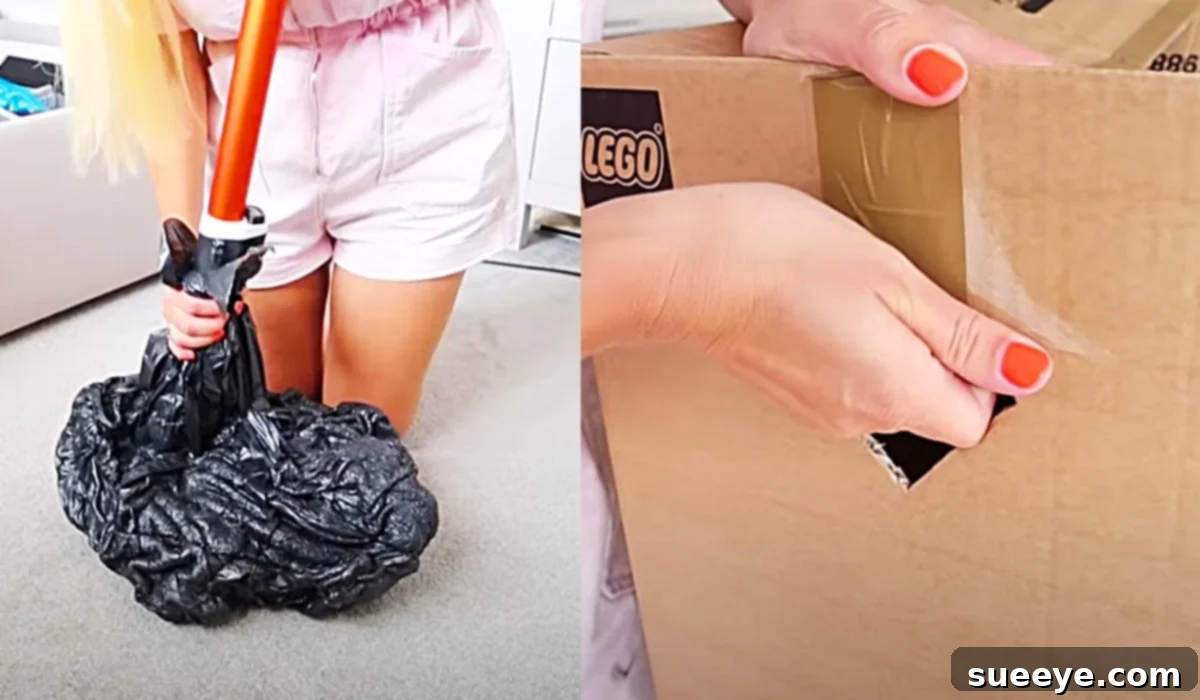
One of Emily Norris’s fundamental tips, and a brilliant way to save money, is to never purchase moving boxes. This might sound counterintuitive, but there are countless sources of free, sturdy boxes readily available. Supermarkets, liquor stores, and even office supply stores regularly discard large quantities of cardboard boxes. Many of these establishments receive daily deliveries, meaning they have a fresh supply almost every day. Simply ask a manager during off-peak hours, and they’ll often be happy to give you their surplus. Additionally, consider checking online community groups like Facebook Marketplace or Nextdoor, where people often offer their used moving boxes for free after their own relocation. Not only does this save you a significant amount of money, but it’s also an environmentally friendly choice, promoting reuse and reducing waste. Look for a variety of sizes; smaller boxes are ideal for heavy items like books, while larger ones are perfect for lighter, bulkier goods. Obtaining **free moving boxes** is truly a top **moving hack**.
2. The Decluttering Imperative: Lighten Your Load Weeks in Advance
Before you even think about packing, the most crucial step is to declutter. This process should ideally begin several weeks, if not a month or two, before your move date. The benefits are multifold: you’ll have less to pack, less to move, and ultimately, less to unpack. This saves time, energy, and potentially money if you’re paying movers by weight or volume. Start by going room by room, or even category by category, adopting the “keep, donate, sell, trash/recycle” method. Be ruthless but realistic. Ask yourself: “Have I used this in the last year? Do I truly need it? Does it bring me joy?” **Decluttering before moving** is arguably the most impactful step for a **stress-free move**.
- Old Clothing: Go through your wardrobe. Anything ill-fitting, worn out, or unworn for over a year should be considered for donation or disposal.
- Kitchen Items: Clear out expired food from the pantry, duplicate kitchen gadgets, and seldom-used appliances.
- Bathroom Accessories: Discard nearly empty bottles, old makeup, and unused toiletries.
- Papers and Documents: Shred old bills and statements, organize important documents in a dedicated folder.
- Decor and Linens: Consider what truly fits your aesthetic for the new home. Donate old towels or bedding.
By shedding these unwanted items, you prevent yourself from hauling useless clutter from your old place to your new home, allowing for a fresh start in a cleaner, more organized space.
3. Get a Dumpster for Driveway Decluttering
For those undertaking a substantial decluttering effort, especially if you’re downsizing or have accumulated a lot of unwanted furniture and large items, renting a dumpster for your driveway can be a game-changer. This provides a convenient on-site solution for disposing of all those items you decide to trash or recycle. It saves you countless trips to the local dump or recycling center, streamlining the entire **decluttering** process. Plan its arrival a week or two before serious packing begins, giving you ample time to fill it. Remember to check local regulations regarding dumpster placement and acceptable waste types to ensure a smooth operation.
4. Plan Your Inventory: Labeling for Sanity
While not explicitly mentioned as a primary tip in the original summary, a systematic labeling approach is vital for a smooth move. As you pack, label each box clearly with its intended room destination (e.g., “Kitchen,” “Master Bedroom,” “Living Room”). Beyond the room, a brief list of contents (e.g., “Plates, Glasses, Cutlery”) can be incredibly helpful. Consider color-coding by room or numbering your boxes and keeping a master inventory list on your phone or in a notebook. This simple step will save you immense frustration when unpacking, ensuring boxes go to the correct rooms and you can easily locate specific items without rummaging through everything. Effective labeling is key to **packing efficiently for a move**.
Smart Packing Strategies: Maximize Space and Protect Possessions
Once you’ve decluttered and gathered your packing supplies, it’s time to get clever with how you pack. These **packing tips** are designed to save space, protect your belongings, and make the unpacking process infinitely easier, contributing significantly to an **easy house move**.
5. The Vacuum-Seal Secret: Compress Bulky Clothing
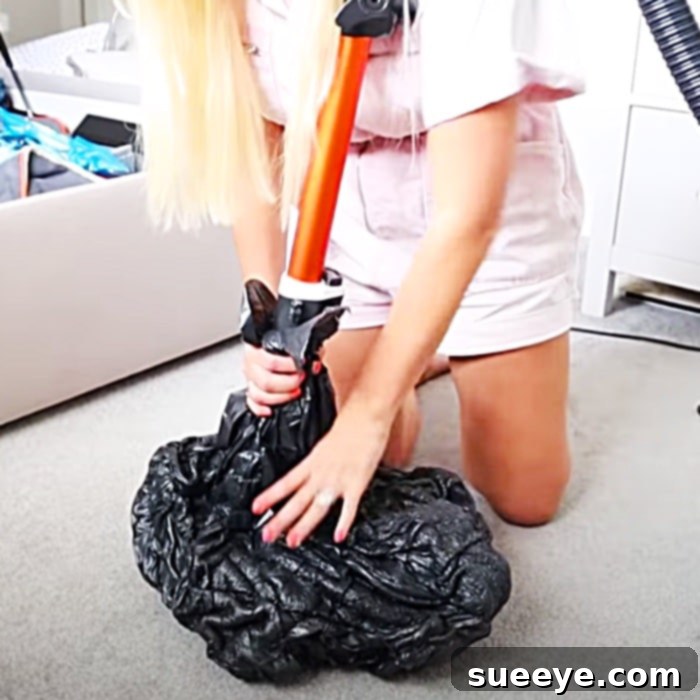
This brilliant hack, highlighted by Emily Norris as a personal favorite, is a game-changer for anyone moving bulky soft goods. You can significantly reduce the volume of items like sweaters, blankets, pillows, and seasonal clothing by using large trash bags and your vacuum cleaner. Simply place your clothes into strong trash bags, ensuring they are not overfilled. Then, create a small opening around the bag’s seal, insert your vacuum cleaner’s hose, and switch it to suction mode (not reverse blowing). As the air is sucked out, the bag will compress, shrinking bulky items to a fraction of their original size. This not only frees up valuable space in your moving truck or car but also protects your clothing from dust, dirt, and moisture during transit. It’s an incredibly effective way to pack winter coats, duvets, and other textile items, making **packing clothes** both efficient and protective.
6. Keep Hanging Clothes Wrinkle-Free with Trash Bags
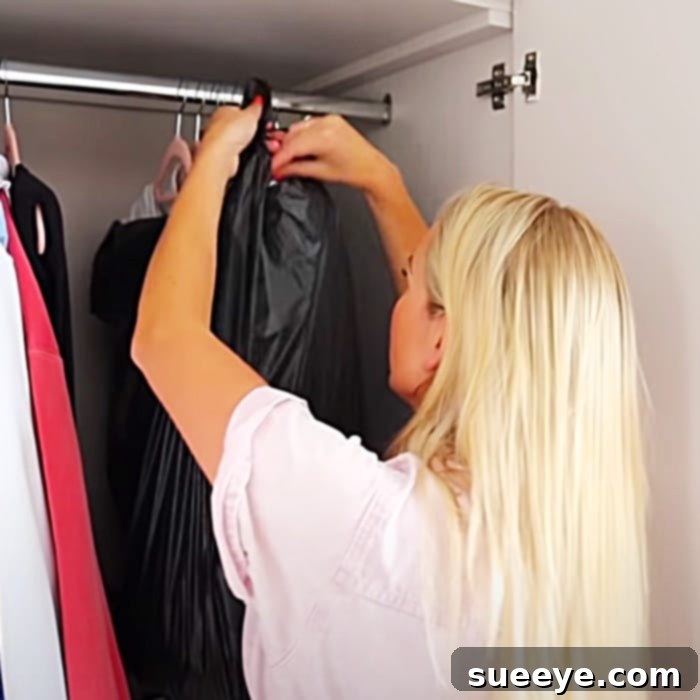
Another fantastic hack for clothes is to keep them on their hangers. Instead of taking all your clothes off hangers, folding them, and then re-hanging them at the new place, use large trash bags as garment covers. Gather groups of hanging clothes (around 10-15 items), pull a large trash bag over them from the bottom up, and then poke a small hole at the top of the bag for the hanger hooks to pass through. Secure the bag around the hangers with tape or a tie. This method allows you to quickly transfer clothes directly from your closet to the moving truck, and then straight into the closet of your new home, saving immense time and preventing wrinkles. For extra protection, especially for delicate items, consider using wardrobe boxes if you have many hanging garments. This **packing clothes** method is a lifesaver for speedy unpacking.
7. Photographic Memory: Recreating Your Space with Ease
Ever struggle to remember how you arranged your decor or connected all those complicated wires behind your TV? This simple yet effective tip solves that problem. Before you disassemble anything or pack up curated displays, take photos. Snap pictures of:
- Decor arrangements: Curated shelves, gallery walls, and bedside table setups. This will save you time and decision fatigue when styling your new home.
- Electronic wiring: Crucial for TVs, computers, and sound systems. A quick photo before unplugging will make reassembly a breeze, preventing headaches later.
- Pantry and cabinet organization: Especially helpful if you’ve developed an efficient system you want to replicate.
These visual aids act as your personal setup guide, ensuring that your new home feels familiar and organized much faster, making the **house relocation** smoother.
8. The “Essentials” Box: Your First-Night Lifesaver
This is arguably one of the most important **moving hacks** for day one in your new home. Pack a clearly labeled “Essentials” or “Open First” box that contains everything you’ll need immediately upon arrival and for your first night. This box should stay with you, not on the moving truck. Contents typically include:
- Basic Toiletries: Toothbrushes, toothpaste, soap, shampoo, toilet paper.
- Change of Clothes: For everyone in the family, including pajamas.
- Medications: Any daily prescriptions or over-the-counter pain relievers.
- Important Documents: Birth certificates, passports, financial papers, new home documents.
- Small Tool Kit: Screwdriver, pliers, utility knife for opening boxes, tape.
- Phone Chargers: Essential for staying connected.
- Snacks and Drinks: For a quick refuel without needing to unpack the kitchen.
- Pet Supplies: Food, bowls, leash, toys.
- Kid’s Comfort Items: Favorite toy, blanket, book.
- Coffee/Tea Supplies: Kettle, mugs, instant coffee or tea bags (because you’ll need it!).
Having this box readily accessible will prevent frantic searching and allow you to settle in much more comfortably, ensuring a truly **stress-free move** for your first night.
9. Packing Kitchenware and Fragile Items: Delicate Care
Packing fragile items requires extra attention. For plates, bowls, and saucers, instead of stacking them flat, pack them vertically (like records in a crate). This distributes pressure more evenly, making them less likely to break during transit. Wrap each item individually in packing paper, old towels, or bubble wrap. Use clean, soft cloths or even sweaters for extra cushioning within boxes. Fill any empty spaces with crumpled paper to prevent shifting. Clearly label these boxes “FRAGILE” on all sides to alert movers. Proper care here means less breakage and a happier new home experience.
10. Utilize Luggage and Laundry Baskets
Don’t let your suitcases sit empty! Your wheeled luggage can be incredibly useful for packing heavy items like books, heavy clothing, or even tools. They are designed to withstand weight and are easy to transport. Similarly, laundry baskets are perfect for bulky but lighter items such as blankets, pillows, or toys that you might need quick access to. These items can often be loaded last into the moving vehicle, making them easy to retrieve first at the new destination, demonstrating **efficient packing** techniques.
Moving Day and Beyond: Smooth Transitions
With all your careful preparation and smart packing, moving day itself can be significantly less chaotic. And once you arrive, a little strategy goes a long way in turning your new house into a home, making the entire **house relocation** process much smoother.
The Unpacking Blueprint: Prioritize and Progress
Upon arrival, your “Essentials” box will be your first port of call. After that, focus on unpacking room by room, starting with the most critical areas: bedrooms and bathrooms. Getting beds set up and bathrooms functional will provide a sense of comfort and normalcy. Resist the urge to unpack everything at once; it’s a marathon, not a sprint. Tackle one room or one box at a time, and don’t be afraid to live with some boxes for a few days or even weeks. The goal is to make your new space livable and functional quickly, then gradually work on organization and aesthetics. This approach to unpacking reinforces the idea of an **easy house move**.
Final Checks and New Beginnings
Before leaving your old home, do a final sweep to ensure nothing is left behind – check every closet, drawer, and appliance. Once in your new residence, double-check that all utilities are connected, and notify relevant parties of your change of address. Finally, take a moment to celebrate! You’ve accomplished a major feat. Order takeout, relax, and begin to enjoy your new surroundings. Acknowledge your hard work and enjoy the fresh start.
Conclusion: Embrace the Ease of a Well-Planned Move
Moving doesn’t have to be a nightmare scenario. By embracing these clever **moving hacks** and adopting a strategic, proactive approach, as brilliantly demonstrated and inspired by Emily Norris, you can significantly reduce stress and enjoy a more efficient **house relocation**. Remember to start early, declutter ruthlessly, pack smartly, and prioritize self-care throughout the process. Every tip, from securing **free moving boxes** to vacuum-sealing clothes, contributes to a smoother transition. Your future self, nestled comfortably in your new, beautifully organized home, will undoubtedly thank you for the effort and foresight. Here’s to a seamless and joyful new beginning, making your next move truly an **easy move**!