
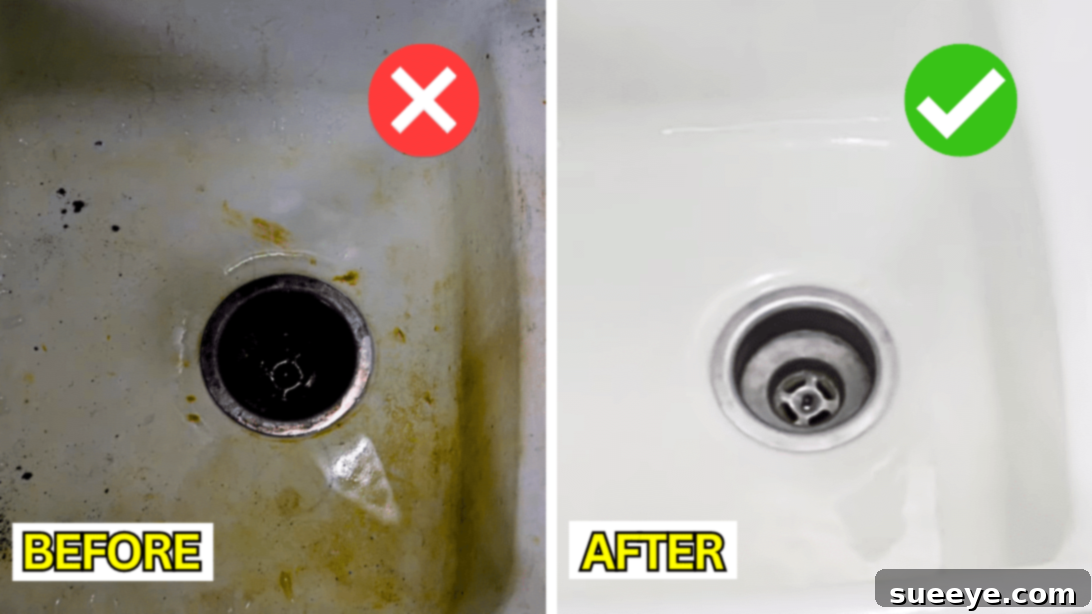
The Ultimate Guide to Cleaning a Porcelain Sink Properly: Remove Stains & Restore Shine
Porcelain sinks are a timeless and elegant addition to any kitchen or bathroom, known for their classic beauty and smooth, glossy finish. However, maintaining their pristine appearance requires a specific approach, distinct from cleaning materials like stainless steel. Over time, porcelain can accumulate stubborn stains from food, hard water, rust, and everyday grime, losing its bright luster. Many cleaning products promise results, but only a select few truly deliver without risking damage to the delicate porcelain enamel. After experimenting with various methods and products that often fell short, I discovered a highly effective cleaning technique that has since become my go-to for restoring my porcelain sink to its original glory.
This proven method, inspired by a brilliant video tutorial from Clean Freak & Germaphobe on YouTube, is not only incredibly powerful but also surprisingly simple and cost-effective. It requires minimal specialized cleaning solutions and tools, making it an ideal choice for anyone looking to achieve professional-level results at home. If you’re tired of battling unsightly stains and dullness, prepare to transform your porcelain sink with this comprehensive guide.
RELATED: How To Clean Deep & Hard Dirt From Porcelain Tiles
Why Porcelain Sinks Need Special Care
Porcelain sinks, typically made from ceramic clay fired at high temperatures and coated with a layer of enamel, offer a durable and non-porous surface. This smooth finish is resistant to bacteria and easy to wipe clean, which contributes to its enduring popularity. However, despite its hardiness, porcelain enamel can be susceptible to scratches, chipping, and staining if not cared for properly. Abrasive scrubbers or harsh chemical cleaners can dull the finish, wear down the enamel, or even cause discoloration over time. Hard water deposits, rust, and food dyes can etch into the surface or leave unsightly marks that seem impossible to remove with standard cleaning wipes. Understanding the unique characteristics of porcelain is the first step toward effective and safe cleaning.
Essential Tools and Cleaning Agents for a Sparkling Porcelain Sink
Achieving a truly clean porcelain sink doesn’t require a cabinet full of expensive, specialized products. The beauty of this method lies in its simplicity and the effectiveness of a few key items. Here’s what you’ll need:
- SOS Steel Wool Pads: These pre-soaped steel wool pads are designed to provide a gentle abrasive action while delivering cleaning agents, making them surprisingly effective and safe for porcelain when used correctly. The fine steel wool helps to lift grime and light stains without scratching the delicate surface.
- An Old Toothbrush: An essential tool for reaching into the tightest corners, crevices, and around fixtures where larger scrub pads simply cannot go. Its small bristles can dislodge buildup and ensure a thorough clean.
- CLR Calcium, Lime, and Rust Remover: This powerful cleaner is specifically formulated to dissolve tough mineral deposits, hard water stains, limescale, and rust stains that commonly plague porcelain sinks, especially in areas with hard water. It’s a game-changer for those stubborn, set-in marks.
- Magic Eraser (Melamine Foam Sponge): Known for its micro-abrasive properties, a Magic Eraser is excellent for removing scuff marks, crayon marks, and other superficial stains without the need for harsh chemicals. It works like a very fine sandpaper to gently lift marks.
- Warm Water: For rinsing and aiding the cleaning process.
- Microfiber Cloths: Ideal for drying and buffing the sink to a streak-free shine after cleaning.
- Rubber Gloves: Recommended for hand protection, especially when using CLR.
Step-by-Step Guide: How to Clean a Porcelain Sink
Follow these detailed steps to deep clean your porcelain sink and restore its brilliance:
Step 1: The Initial Scrub with SOS Pad
Begin by clearing your sink of any dishes, food particles, or debris. Give it a quick rinse with warm water to wet the surface. Now, take one of your SOS steel wool scrub pads. These pads come pre-loaded with soap, which activates when wet. Dampen the pad slightly and start scrubbing the entire surface of your porcelain sink. Use gentle, circular motions, ensuring you cover all areas, including the sides, bottom, and around the edges. The fine steel wool and soap work together to lift general grime, soap scum, and light discoloration without being overly abrasive. As you scrub, the soap from the pad will create a rich lather, effectively cleaning the surface. After scrubbing a significant portion of the sink, gently wet the SOS pad again and wring it lightly over your old toothbrush. This transfers some of the powerful cleaning product and soap from the pad onto the bristles of the toothbrush, preparing it for the next crucial step.
Step 2: Detail Cleaning with the Toothbrush
With the toothbrush now loaded with cleaning product, turn your attention to the hard-to-reach areas. Continue to brush the sink, focusing specifically on the nooks and crannies that the larger scrub pad couldn’t effectively reach. This includes the tight corners where the sink bowl meets the countertop, the overflow drain hole, and the seams around the faucet base. These are common spots where mildew, mineral deposits, and stubborn grime tend to accumulate. Don’t forget to brush the faucet itself, paying attention to any built-up residue or water spots. While you’re at it, give the main drain a thorough scrub, both inside the drain opening and around its edges. The small bristles of the toothbrush are perfect for dislodging trapped dirt and grime from these intricate areas, ensuring a comprehensive clean.
Step 3: Rinsing and Targeted Stain Removal
Once you’ve thoroughly scrubbed every inch of your sink with the SOS pad and toothbrush, it’s time for a good rinse. Use warm water to flush away all the soap and loosened grime from the sink surface, the faucet, and the drain. Observe your sink carefully. Most of the general dirt and light stains should be gone, revealing a much brighter surface. However, if you notice any particularly stubborn spots that still haven’t been removed – such as persistent hard water rings, rust marks, or deep discoloration – it’s time to bring in the targeted cleaners. For these resilient marks, reach for your CLR Calcium, Lime, and Rust Remover. Apply a small amount directly onto the remaining spots. Let it sit for a few minutes (check the product label for specific dwell times, usually no more than 2-5 minutes) to allow it to work its magic on the mineral deposits and rust. Then, gently scrub the area with your toothbrush or a damp cloth. If, after using CLR and rinsing again, a few faint marks or scuffs still persist, then try a Magic Eraser. Dampen the Magic Eraser slightly and gently rub it over the remaining blemishes. Its micro-abrasive properties are excellent for lifting scuffs and lighter, embedded stains. Always rinse thoroughly after using any chemical cleaner.
Tackling Common Porcelain Sink Stains
Understanding the common types of stains that plague porcelain sinks can help you choose the right approach for effective removal:
- Hard Water Stains & Limescale: These chalky white or grey deposits are caused by minerals in water drying on the sink surface. CLR is exceptionally effective here. For lighter deposits, a paste of baking soda and vinegar can also work as a gentler alternative.
- Rust Stains: Often caused by metal objects left in the sink (like cans or cast iron pans), rust leaves reddish-brown marks. CLR is specifically designed for this. Applying a paste of lemon juice and salt for a short period can also sometimes lift light rust.
- Food Stains: Coffee, tea, wine, or colorful food dyes can leave temporary stains. Often, the SOS pad method will handle these. For tougher ones, a diluted bleach solution (used with extreme caution and never mixed with CLR or other cleaners) or a Magic Eraser can be effective.
- Scuff Marks: Caused by pots, pans, or other objects scraping against the porcelain. Magic Erasers are the perfect tool for gently abrading these marks away.
Maintaining Your Porcelain Sink’s Luster Long-Term
Once your porcelain sink is sparkling clean, a little consistent maintenance goes a long way in keeping it that way. Prevention is key to avoiding the buildup of tough stains and grime.
- Daily Wipe-Down: After each use, quickly wipe down your sink with a soft cloth or sponge and a mild dish soap. This prevents water spots and minor food stains from setting in.
- Rinse Thoroughly: Always rinse your sink thoroughly after use, especially after pouring colored liquids like coffee or wine, to prevent staining.
- Avoid Metal Objects: Try to avoid leaving metal cans, pots, or anything that could rust in your sink, as these are primary culprits for rust stains.
- Use Sink Grids or Mats: Consider using a sink grid or rubber mat at the bottom of your sink to protect the surface from scratches and impacts from heavy dishes or pots.
- Gentle Cleaners for Regular Use: For weekly cleaning, stick to non-abrasive, pH-neutral cleaners specifically designed for porcelain or simply use baking soda paste (baking soda mixed with a little water) and a soft sponge.
- Prompt Stain Removal: The faster you address a stain, the easier it will be to remove. Don’t let spills sit for extended periods.
Important Safety Precautions
When using cleaning products, especially stronger ones like CLR, always prioritize safety:
- Read Labels: Always read and follow the instructions and safety warnings on all cleaning product labels.
- Ventilation: Ensure good ventilation in your cleaning area. Open windows or turn on exhaust fans, especially when using products with strong fumes.
- Wear Gloves: Protect your hands from chemical exposure by wearing rubber or nitrile gloves.
- Never Mix Chemicals: Do not mix different cleaning products, especially CLR or any acid-based cleaner with bleach. This can create dangerous, toxic fumes.
- Test in an Inconspicuous Area: If you are unsure about a product, test it on a small, hidden area of your sink first to ensure it doesn’t cause discoloration or damage.
- Keep Away from Children and Pets: Store all cleaning products securely out of reach of children and pets.
By following this detailed method and incorporating these preventative maintenance tips, your porcelain sink will not only be impeccably clean but also retain its beauty and functionality for years to come. Say goodbye to dull, stained surfaces and welcome back the pristine shine of your porcelain sink!
*Thanks to Clean Freak & Germaphobe via YouTube for all the images and inspiration for this incredibly effective cleaning method. If you found this cleaning hack useful, we highly recommend visiting her channel and subscribing for more brilliant home care tutorials!