
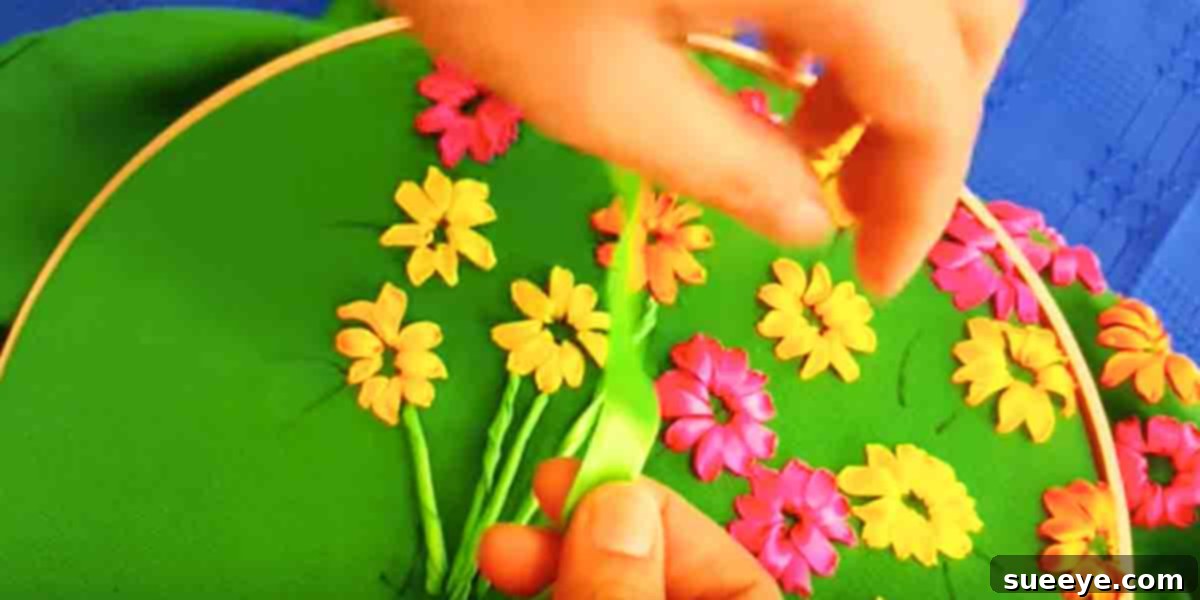
Mastering the Art of Silk Ribbon Embroidery: Crafting Breathtaking 3D Flowers
Are you searching for a creative outlet that blends artistry with tactile beauty? Look no further than silk ribbon embroidery. This enchanting craft allows you to transform delicate ribbons into exquisite, lifelike flowers and intricate designs, adding a unique three-dimensional charm to any project. Whether you’re a seasoned crafter or a complete beginner eager to explore a new hobby, silk ribbon embroidery offers a rewarding and surprisingly accessible path to creating stunning textile art.
Imagine adorning a handmade gift box with a velvety ribbon rose, embellishing a greeting card with a vibrant bouquet of daffodils, or adding a touch of elegant floral embroidery to a piece of clothing or home décor. With silk ribbon embroidery, these possibilities are not only within reach but are also incredibly fun and satisfying to achieve. Its distinct texture and natural sheen make it stand apart from traditional thread embroidery, offering a richer, more sculptural aesthetic that truly pops.
What is Silk Ribbon Embroidery and Why is it So Captivating?
Silk ribbon embroidery is a form of needlework where stitches are made using silk ribbons instead of conventional embroidery threads. The inherent width, sheen, and pliability of silk ribbons allow for the creation of stitches that mimic petals, leaves, and other organic shapes with remarkable realism and volume. This technique dates back centuries, evolving from elaborate embellishments on aristocratic garments to a beloved craft practiced worldwide today.
What sets this craft apart is its extraordinary ability to produce a striking 3D effect. Unlike flat thread embroidery, ribbon stitches naturally stand proud from the fabric surface, giving your creations depth and a tactile quality that invites touch. This dimensional aspect brings flowers to life, making them appear as if they’ve just bloomed right off your fabric. The luxurious feel and subtle shimmer of silk ribbon further enhance the elegance of the finished piece, making it a true work of art.
For many, silk ribbon embroidery is more than just a craft; it’s a therapeutic journey. The rhythmic motion of needle and ribbon, combined with the focus required, can be incredibly calming and meditative. It offers a wonderful escape from daily stresses, allowing you to immerse yourself in a world of color, texture, and creativity. The satisfaction of seeing a flat piece of fabric transform into a vibrant floral masterpiece is immensely gratifying and encourages continuous exploration.
Your Gateway to Floral Wonders: Types of Flowers You Can Create
One of the most exciting aspects of silk ribbon embroidery is the vast array of flowers you can bring to life. From the timeless elegance of a rose to the cheerful simplicity of a daisy, the possibilities are virtually endless. You’re only limited by your imagination and a few fundamental stitches. Here’s a glimpse into the floral garden you can cultivate with ribbon:
- Roses: Perhaps the most iconic ribbon flower, roses can be created in various forms, from tightly budded specimens to fully bloomed, intricate varieties, perfect for decorating gift boxes, cards, or clothing.
- Daffodils: Capture the essence of spring with bright yellow and white ribbons, forming cheerful daffodil clusters that add a burst of joy to any project.
- Hydrangeas: Recreate the lush, full heads of hydrangeas using small, delicate ribbon stitches in varying shades of blue, pink, and purple, perfect for adding volume and texture.
- Peonies: Known for their opulent, layered petals, peonies are stunning when rendered in silk ribbon, conveying a sense of luxury and abundance.
- Dahlias: Experiment with different ribbon widths and colors to create the intricate, geometric beauty of dahlias, showcasing their unique petal arrangements.
- Sunflowers: Bring warmth and cheer to your work with sunflowers, using golden ribbons for petals and French knots for their distinctive centers.
- Lavender: Delicate sprigs of lavender can be beautifully depicted using fine ribbons and simple stitches, adding a touch of rustic charm and fragrance (imaginatively speaking!).
- Poppies: Capture the delicate, crinkled texture of poppy petals with vibrant red and orange ribbons, often contrasted with dark centers.
- Cherry Blossoms: Create ethereal scenes with delicate pink and white ribbons, perfect for depicting the fleeting beauty of cherry blossoms on branches.
Beyond these popular choices, you can adapt basic stitches to create virtually any flower imaginable, including irises, lilies, forget-me-nots, and even fantasy blooms from your own creative mind. The key lies in understanding how to manipulate the ribbon to form petals and leaves, and then arranging them artfully.
Getting Started: Essential Techniques for Beginners
Embarking on your silk ribbon embroidery journey is simpler than you might think. While the results can be incredibly sophisticated, the foundational stitches are relatively easy to learn. Patience and practice are your best companions, but you’ll be amazed at how quickly you can achieve beautiful results. Here are some basic concepts to help you begin:
- Materials: You’ll need silk ribbons (various widths and colors), embroidery needles with large eyes (tapestry or chenille needles work well), a suitable fabric (like linen, cotton, or even silk), an embroidery hoop, and sharp scissors.
- Basic Stitches:
- Ribbon Stitch: This is fundamental for creating petals and leaves. The ribbon is brought up through the fabric, twisted, and then reinserted through the ribbon itself to create a tapered, dimensional petal.
- French Knot: Perfect for flower centers, buds, or textural accents, this stitch creates a small, raised knot.
- Straight Stitch (Ribbon Variation): Simply bringing the ribbon up and down over a short distance creates linear elements, great for stems or individual petals.
- Loop Stitch: Used to create small, open loops, ideal for tiny petals or developing textures.
- Gathering/Pleating: Sometimes ribbons are gathered or pleated before being stitched down to create fuller, more ruffled petals.
Many fantastic resources are available to guide you, from comprehensive books to online video tutorials. Watching an experienced artist demonstrate the stitches can be incredibly helpful. For instance, tutorials like those by Indrani Banerjee provide step-by-step instructions, allowing you to get a jump start on mastering this beautiful craft and seeing the techniques come to life.
Silk Ribbon vs. Thread Embroidery: A Comparative Beauty
While both silk ribbon embroidery and traditional thread embroidery fall under the umbrella of needlework, they offer distinct aesthetics and experiences. I’ve spent many years embroidering with thread, creating intricate and beautiful pieces. Now, I’m captivated by ribbon embroidery, and it’s quickly becoming a new passion.
Here’s a look at how they compare:
- Dimensionality: This is the most significant difference. Ribbon embroidery inherently creates a 3D effect due to the width and body of the ribbon, making elements like petals stand out. Thread embroidery, while it can achieve texture, generally lies flatter on the fabric surface.
- Texture and Sheen: Silk ribbons offer a luxurious, smooth, and often shimmering texture that thread cannot quite replicate. The way light catches the ribbon creates a unique luster.
- Speed: Because ribbons are wider, larger areas can be covered more quickly than with fine threads. This can make ribbon embroidery a faster craft for achieving significant impact.
- Realism: The pliable nature of ribbon allows it to be shaped and manipulated to mimic natural forms, especially floral petals, with a level of realism that is challenging to achieve with thread alone.
- Detail: Thread embroidery often excels in fine detail and intricate lines. While ribbon embroidery can also be detailed, its strength lies in broader, more volumetric elements.
Both mediums are undeniably beautiful and offer unique artistic expressions. However, for those seeking to add significant texture, depth, and a touch of opulent realism, especially in floral designs, silk ribbon embroidery truly shines. It’s a wonderful complement to thread embroidery, allowing artists to combine techniques for even richer textile creations.
Finding Inspiration and Nurturing Your Craft
One of the best ways to ignite your creativity and discover new possibilities in silk ribbon embroidery is to seek inspiration from others. The online world is a treasure trove of incredible artistry. Platforms like Pinterest, for example, host countless examples of stunning ribbon flower creations and intricate embroidered scenes. A quick search will reveal breathtaking pieces that showcase the astounding potential of this medium. I remember being completely blown away by the sheer beauty and artistry of some of the pieces I encountered there – they truly redefine what’s possible with ribbon.
Beyond digital inspiration, consider:
- Joining Online Communities: Engage with fellow crafters, share your progress, ask questions, and learn from experienced artists.
- Exploring Books and Magazines: Many dedicated resources offer patterns, historical context, and advanced techniques.
- Attending Workshops: If available locally or online, workshops provide hands-on guidance and direct interaction with instructors.
- Visiting Craft Fairs and Exhibitions: Seeing ribbon embroidery in person can provide a deeper appreciation for the texture and dimension.
Don’t be afraid to experiment with different ribbon types (satin, organza, silk), colors, and fabric backgrounds. Each variation can lead to entirely new and exciting results. Your unique artistic voice will emerge as you practice and play with the medium. Remember, every master began as a beginner, and every stitch is a step toward perfection.
Elevate Your Crafting Journey with Silk Ribbon Embroidery
Silk ribbon embroidery is more than just a technique; it’s an invitation to a world of beauty, creativity, and personal expression. From the simple joy of creating a basic rose to the intricate challenge of a full floral bouquet, this craft offers endless opportunities for growth and satisfaction. Its ability to create stunning three-dimensional effects, coupled with the luxurious feel of silk, makes it an exceptionally rewarding pursuit for anyone interested in textile art.
Whether you aim to decorate gifts, personalize garments, create unique artwork for your home, or simply indulge in a calming and enriching hobby, silk ribbon embroidery stands out as a remarkable choice. Embrace the learning process, draw inspiration from the vibrant community of artists, and allow your imagination to blossom. Start your journey today, and discover the sheer delight of bringing exquisite ribbon flowers to life, one beautiful stitch at a time. The results are truly mesmerizing, promising to add elegance and a touch of handmade luxury to every aspect of your life.