
The Ultimate Guide to Dicing a Mango: Fast, Easy, and Waste-Free
Mangoes are a true tropical delight, offering a burst of sweet flavor and vibrant color to any dish or snack. However, many people find the task of dicing a mango intimidating, often struggling with its large pit and slippery flesh, leading to wasted fruit or messy results. Fret no more! This comprehensive guide will walk you through an incredibly efficient and simple method to dice a mango, ensuring you get every delicious piece without the hassle. Inspired by the genius technique demonstrated by Andrea Jean Cleaning on YouTube, this approach is not only fast and easy but also guarantees that not an ounce of precious mango flesh goes to waste. Get ready to transform your mango preparation experience and enjoy perfectly diced mangoes every time!
Why Master Mango Dicing?
Beyond its irresistible taste, the mango is a nutritional powerhouse. Packed with vitamins A and C, fiber, and antioxidants, it’s a fantastic addition to a healthy diet. Learning to dice a mango quickly and efficiently opens up a world of culinary possibilities. Imagine effortlessly adding fresh mango cubes to your morning smoothie, vibrant salsas, refreshing salads, or decadent desserts. A well-diced mango elevates your dishes, making them more appealing and enjoyable. This method focuses on maximizing yield, minimizing mess, and making the process genuinely enjoyable, even for novice home cooks.
Choosing the Perfect Mango
Before you even pick up your knife, selecting a ripe mango is crucial for the best dicing experience and flavor. Here’s what to look for:
- Feel: A ripe mango should yield slightly to gentle pressure, similar to an avocado or peach. Avoid rock-hard mangoes (underripe) or excessively soft ones (overripe).
- Smell: A sweet, fruity aroma near the stem end is a good indicator of ripeness. If it smells sour or alcoholic, it might be overripe.
- Color: While color can be a hint, it’s not the most reliable indicator as different varieties have different colors when ripe. Don’t rely solely on red or yellow hues; focus more on the feel and smell.
- Skin: The skin should be smooth and free of major blemishes or wrinkles.
Once you have your perfect mangoes, you’re ready to begin the dicing process.
Materials You’ll Need
Gathering your tools beforehand ensures a smooth and safe dicing experience. You won’t need anything fancy, just a few kitchen essentials:
- A Sharp Knife: This is paramount for safety and efficiency. A sharp chef’s knife or a large utility knife will glide through the mango flesh cleanly, reducing the chance of slips.
- Chopping Board: A sturdy and stable cutting surface is essential.
- A Kitchen Towel or Non-Slip Mat: (Optional, but highly recommended) Placing a damp towel or a non-slip mat under your chopping board prevents it from sliding around, providing a much safer workspace.
- Ripe Mangoes: Of course, the star of our show!
Step-by-Step Guide to Dicing a Mango
Follow these steps carefully, and you’ll be dicing mangoes like a pro in no time.
Step 1: Preparing the Base and Slicing the Cheeks
The first crucial step is to create a stable foundation for your mango. This makes the entire dicing process safer and easier.
Begin by carefully slicing off a small portion from the very top of your mango. You only need to remove enough to create a flat, stable surface. This flat end will serve as your sturdy base. Now, stand the mango upright on your chopping board, with the newly cut flat end facing down. Remember, mangoes have an elongated, oval shape with a large, flat pit in the center. Imagine the mango has two wider “cheeks” on either side of this pit, and two narrower “sides.”
With the mango standing tall and stable, position your sharp knife about a quarter to half an inch (0.5 to 1 cm) away from the imaginary center line where the pit resides, cutting parallel to the pit. Carefully slice downwards, separating one of the mango “cheeks” from the pit. Repeat this process on the opposite side to remove the second cheek. The goal is to get as much of the succulent mango flesh off the pit as possible while avoiding cutting into the hard pit itself.
Step 2: Maximizing Flesh from the Pit and Dicing the Cheeks
Now that you have separated the two main cheeks, you’ll be left with the central pit, still covered with some delicious flesh. Don’t let this go to waste!
Extracting Flesh from the Pit:
Gently peel down the skin from the remaining flesh around the pit. Once peeled, carefully cut around the pit to remove any remaining edible pieces. These smaller bits can be enjoyed immediately as a chef’s treat, or you can dice them and add them to your main batch of mango cubes. If you’re making a mango salsa, these smaller pieces are perfect for adding extra texture and flavor.
Dicing the Mango Cheeks (The “Hedgehog” Method):
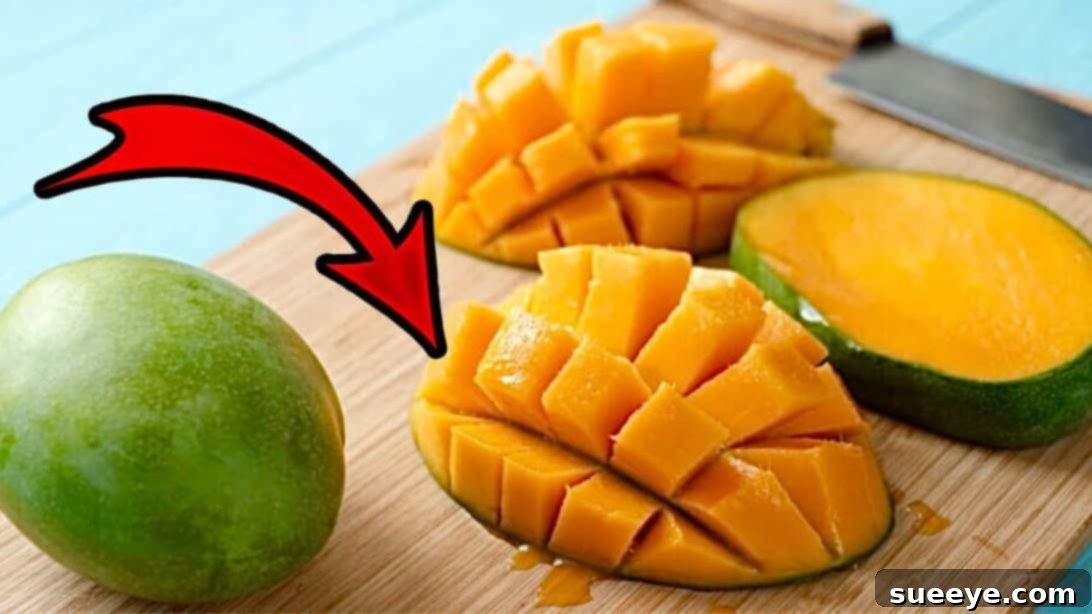
This is arguably the most popular and visually appealing method for dicing mangoes. Take one of the mango cheeks, flesh side up. Using your sharp knife, carefully score the flesh in a criss-cross pattern. Make parallel slices in one direction, then rotate the cheek 90 degrees and make another set of parallel slices. Ensure your cuts go almost all the way down to the skin, but do not pierce through it. The goal is to create a grid of cubes still attached to the skin. Once scored, gently push the skin side of the mango cheek outwards, turning it inside out. This will cause the diced flesh to pop up, resembling a hedgehog. You can then either use your knife to slice off the cubes directly into a bowl or simply pull them off with your fingers.
Alternative Dicing Method (Peel and Slice):
Another excellent way to prepare the mango cheeks, especially if you prefer larger slices or find the hedgehog method a bit tricky initially, is the peel and slice technique. For this method, simply take a mango cheek and carefully peel off the skin using a paring knife or a vegetable peeler. Once the skin is removed, you are left with a smooth, naked slab of mango flesh. From here, you can cut it however you desire: slice it lengthwise into strips, then dice those strips into cubes, or simply cut it into larger chunks. This method is particularly useful if you need uniform slices for garnishes or fruit platters.
Safety First: Tips for a Hazard-Free Experience
Working with sharp knives and slippery fruit requires attention and care. Always prioritize safety:
- Use a Sharp Knife: A dull knife is more dangerous than a sharp one because it requires more force, increasing the risk of slips.
- Stable Surface: Always place your chopping board on a stable surface, ideally with a damp towel or non-slip mat underneath to prevent movement.
- Proper Grip: Hold the mango firmly but gently. Keep your fingers curled inwards, away from the knife blade, using your knuckles as a guide.
- Focus: Avoid distractions while cutting.
- Slow and Steady: Don’t rush the process. Precision over speed.
Tips for Perfect Mango Cubes Every Time
- Chilled Mangoes: A slightly chilled mango can be easier to handle and cut as the flesh is firmer.
- Practice Makes Perfect: Don’t get discouraged if your first few attempts aren’t perfect. With a little practice, you’ll become a mango-dicing expert.
- Knife Maintenance: Keep your knives sharp and clean.
- Even Cuts: For the hedgehog method, try to make your cuts as even as possible to ensure uniform cubes.
Creative Ways to Enjoy Your Diced Mango
Once you’ve mastered the art of dicing a mango, the possibilities are endless. Here are just a few ideas to inspire you:
- Refreshing Snacks: Enjoy them plain as a healthy and delicious snack.
- Tropical Smoothies: Blend diced mango with yogurt, milk, or other fruits for a vibrant, nutritious drink.
- Zesty Salsas: Combine with red onion, cilantro, lime juice, and a touch of jalapeño for a fantastic topping for fish tacos, grilled chicken, or chips.
- Fruit Salads: Add to a medley of seasonal fruits for a colorful and flavorful fruit salad.
- Dessert Toppings: Spoon over ice cream, yogurt, puddings, or cheesecakes.
- Breakfast Bowls: Garnish your oatmeal, cereal, or smoothie bowls with fresh mango cubes.
- Main Dishes: Incorporate into savory dishes like curries or as a glaze for pork or poultry.
Storing Diced Mango
If you have leftover diced mango, you can easily store it to maintain freshness. Place the mango cubes in an airtight container and refrigerate. They will stay fresh for 3-5 days. For longer storage, you can freeze diced mangoes by spreading them in a single layer on a baking sheet until frozen solid, then transferring them to a freezer-safe bag. Frozen mango is perfect for smoothies!
Conclusion: Enjoy Your Perfectly Diced Mango!
Dicing a mango doesn’t have to be a daunting task. By following this simple, step-by-step guide, you can confidently prepare this delicious fruit with minimal waste and maximum enjoyment. The technique inspired by Andrea Jean Cleaning truly streamlines the process, making it accessible for everyone. So go ahead, pick up a ripe mango, gather your tools, and get ready to indulge in perfectly diced, juicy mangoes that will elevate your meals and snacks. Happy dicing!
*All amazing images in this guide are credited to Andrea Jean Cleaning via YouTube. Check her other content and follow for more fantastic tips!