
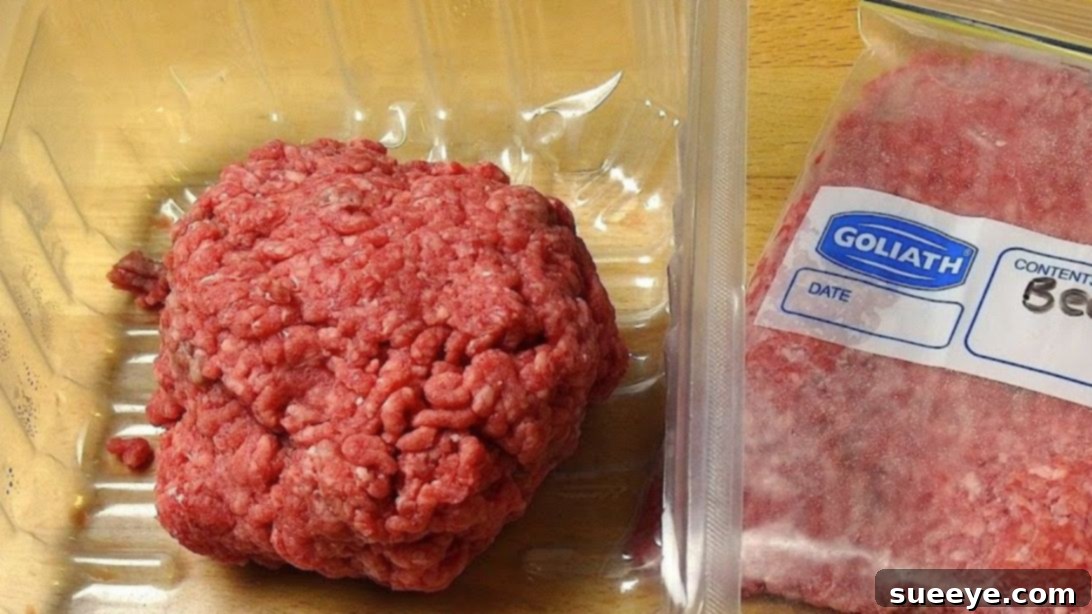
Do you frequently incorporate meat into your culinary creations? If so, this comprehensive guide to efficient meat freezing and storage is about to transform your kitchen routine and make meal prep a breeze.
Many of us fall into the habit of purchasing meat in pre-packed containers from the grocery store, often enough to last several days or even weeks. Our natural inclination is to simply transfer these bulky containers directly into the freezer. However, this common practice comes with significant drawbacks: these rigid, irregularly shaped packages consume excessive freezer space, making organization a nightmare, and thawing becomes an arduous, time-consuming task. Imagine needing just a quarter of a pound of ground beef for a quick weeknight dinner, only to face the dilemma of thawing a massive, frozen block, which then requires refreezing the unused portion – a process that can compromise both quality and safety.
Before we dive into the ultimate freezing hack, here are some incredibly delicious and easy dishes you can prepare with properly portioned ground beef or pork:
- One Pan Ground Beef Taco Skillet: A quick, flavorful meal perfect for busy evenings.
- Ground Beef and Mushroom Casserole Recipe: Comfort food at its finest, made even easier with pre-portioned meat.
- Easy Ground Beef Stacked Enchiladas Recipe: Layered with flavor, these enchiladas are a family favorite.
RELATED: Looking for more smart kitchen solutions? Check out How to Keep Ice Cream Soft in the Freezer for another clever tip.
If you’re looking for a smarter way to manage your freezer inventory and streamline your cooking process, especially when you know you won’t be using an entire package of meat all at once, this simple yet revolutionary meat-freezing tip, popularized by the brilliant OnePotChefShow, is exactly what you need. It offers the best way to freeze and store various types of meat, saving you time, space, and stress. Say goodbye to cumbersome, large portions and embrace this ingenious kitchen hack instead.
Explore more ingenious kitchen solutions with these 46 Cool Cooking Tips and DIY Kitchen Hacks.
Why Smart Meat Freezing is a Game-Changer for Every Kitchen
Adopting this method for freezing meat goes far beyond just neatness in the freezer. It’s a holistic approach to food management that impacts convenience, cost, and safety. Let’s delve into the myriad benefits:
Maximize Your Freezer Space
One of the most immediate and noticeable advantages of this technique is the incredible space efficiency it provides. By flattening and portioning your meat, you eliminate irregular shapes and air pockets, allowing you to stack your frozen items like files in a cabinet. This creates a highly organized freezer, making it easy to find what you need and preventing items from getting lost or forgotten at the bottom of a pile. You’ll be amazed at how much more you can fit into your freezer!
Dramatically Reduce Thawing Time
The flatter the meat, the faster it thaws. This simple principle is key to cutting down preparation time. A thin, flat package of ground beef can thaw in a fraction of the time it takes for a thick, bulky block. This means less waiting around, more spontaneous meal planning, and the ability to get dinner on the table much quicker, even if you forgot to take meat out the night before.
Minimize Food Waste and Save Money
By freezing meat in individual, usable portions, you only thaw what you need. This drastically reduces the likelihood of refreezing partially thawed meat, which can degrade its texture, flavor, and pose food safety risks. Less waste means more savings, making your grocery budget stretch further.
Boost Your Meal Prep Efficiency
For those who embrace meal prepping, this method is invaluable. Having pre-portioned meat ready to go allows for effortless assembly of meals throughout the week. Whether it’s a specific amount for tacos, chili, or stir-fry, your ingredients are ready for action, saving precious minutes during busy cooking sessions.
Enhance Food Safety
Properly sealed and flattened packages help minimize exposure to air, which is the primary cause of freezer burn. By removing as much air as possible, you protect the meat from dehydration and oxidation, preserving its quality, flavor, and nutritional value for longer periods. Additionally, faster thawing times reduce the duration meat spends in the “danger zone” temperature range (between 40°F and 140°F), where harmful bacteria can multiply rapidly.
What You Need to Store Meat Properly in the Freezer
The beauty of this method lies in its simplicity and minimal equipment requirements:
- Freezer-safe Ziplock Bags: Opt for high-quality, heavy-duty freezer bags specifically designed to withstand freezing temperatures and prevent freezer burn. These are more robust than standard sandwich bags.
- Meat of Choice: Ground beef, pork, chicken, turkey, steaks, chops, stew meat – this method works wonders for almost any type of raw meat.
While Ziplock bags are the most accessible option, for those looking for an even more robust solution, a vacuum sealer can provide superior air removal, extending freezer life and further preventing freezer burn. However, for everyday use, good quality Ziplock bags are perfectly sufficient.
How to Pack and Store Meat in the Freezer: A Step-by-Step Guide
Follow these simple steps to transform your meat freezing routine and unlock a world of kitchen convenience:
Step 1: Portion Your Meat for Perfect Convenience
Begin by ensuring your meat is fully thawed and soft enough to handle easily. This is crucial for accurate portioning. Divide the entire batch of meat into the specific portion sizes you typically use for your recipes. For instance, if you usually use 1 pound of ground beef for tacos, separate it into 1-pound portions. If you prefer smaller, half-pound portions for individual meals, divide it accordingly. This strategic pre-portioning eliminates guesswork and wasted effort later on.
Step 2: Bag Each Portion Individually
Take one pre-portioned amount of meat and carefully place it inside a single freezer-safe Ziplock bag. Ensure there’s enough space around the meat for it to be flattened without bursting the bag. Repeat this process for all remaining portions of meat, placing each into its own separate bag. Avoid overfilling the bags, as this will hinder the flattening process.
Step 3: Flatten and Remove Air for Optimal Storage and Thawing
This is arguably the most critical step. Once the meat is in the bag, gently seal it almost completely, leaving a small opening for air to escape. Lay the bag flat on a clean surface and use the palm of your hand or a rolling pin to press down firmly and evenly, spreading the meat into a nice, thin, flat layer. As you flatten, slowly push out any trapped air towards the small opening you left. Once the meat is evenly flattened and as much air as possible has been removed, seal the bag completely. The goal is to create a compact, uniform package that minimizes air exposure and maximizes surface area for rapid thawing.
Step 4: Label Your Packages Clearly
Before placing your meat in the freezer, grab a permanent marker and clearly label each bag. Include the type of meat (e.g., “Ground Beef”), the portion size (e.g., “1 lb”), and the date it was frozen. This simple step is vital for freezer organization, preventing mystery meats, and ensuring you use older items first, thereby adhering to the “first-in, first-out” rule for optimal freshness and safety.
This Freezing Method Works for All Types of Meat!
While we’ve highlighted ground meat, this ingenious freezing tip isn’t limited to just ground beef or pork. It applies beautifully to a variety of meat cuts and types:
- Steaks and Chops: Lay individual steaks or chops in a single layer inside a freezer bag. You can place parchment paper between them to prevent sticking if you’re layering a few. Flatten the bag to remove air. This dramatically reduces defrosting time compared to a frozen block of multiple steaks.
- Chicken Breasts or Thighs: Similar to steaks, freeze chicken pieces individually or in meal-sized portions, flattened in a single layer.
- Stew Meat or Diced Meat: Portion out the diced meat into recipe-ready amounts, then flatten the bag.
- Sausages: If freezing raw sausages, follow the same flattening technique.
By adopting this single-layer, flattened approach for all your meat, you’ll find that your freezer becomes a much more efficient and user-friendly space.
Beyond the Basics: Advanced Tips for Meat Freezer Storage
Preventing Freezer Burn
While removing air is crucial, you can take extra steps to prevent freezer burn. Consider wrapping meat tightly in plastic wrap or foil before placing it in the freezer bag for an added layer of protection. For long-term storage, a vacuum sealer is an excellent investment, as it removes nearly all air, significantly extending the life of your frozen goods.
Safe Thawing Practices
Always thaw meat safely to prevent bacterial growth. The safest methods include:
- Refrigerator Thawing: This is the best method. Plan ahead, as it can take 24 hours per 5 pounds of meat.
- Cold Water Thawing: Place the sealed bag of meat in a bowl of cold water, changing the water every 30 minutes. Cook immediately after thawing.
- Microwave Thawing: Use the defrost setting and cook the meat immediately after thawing, as some areas may begin to cook during the process.
Never thaw meat at room temperature, as this allows bacteria to multiply rapidly.
Freezer Organization and Inventory
To truly maximize your freezer’s potential, consider implementing a simple inventory system. A whiteboard on the freezer door or a simple spreadsheet can help you track what you have, when it was frozen, and when it needs to be used. Rotate your stock, always using the oldest items first.
Recommended Shelf Life for Frozen Meats
While freezing can preserve food indefinitely in terms of safety (provided it remains at 0°F / -18°C or below), quality can degrade over time. Here are general guidelines for optimal quality:
- Ground Meat: 3-4 months
- Steaks, Roasts, Chops: 6-12 months
- Poultry (whole): 12 months
- Poultry (pieces): 9 months
Always refer to USDA guidelines for specific recommendations.
The Best Way to Freeze and Store Meat: A Summary
In summary, the best way to freeze and store meat involves a combination of smart portioning, efficient flattening, thorough air removal, and clear labeling. This method not only drastically improves freezer organization and saves valuable space but also significantly cuts down on thawing time, reduces food waste, and enhances overall food safety. By adopting this simple yet powerful kitchen hack, you’ll enjoy a more streamlined cooking experience, easier meal preparation, and a perfectly organized freezer every time. Try it today and experience the difference!