
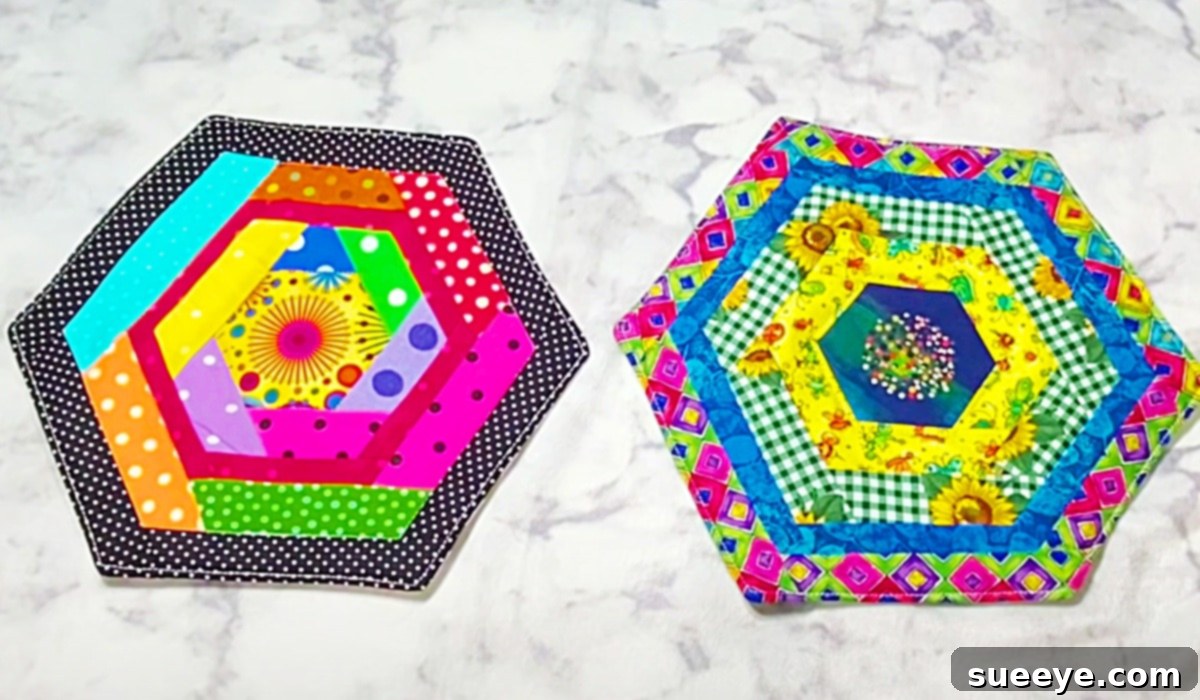
Hexagon Log Cabin Quilted Hot Pad: Your Ultimate Guide to Crafting Charm and Functionality
Embark on a delightful quilting journey with the Hexagon Log Cabin Quilted Hot Pad, a project that perfectly blends functionality with rustic charm. Discovered through the inspiring tutorials by RsIslandCrafts – Robin, on YouTube, this ingenious design immediately captivates with its simplicity and stunning visual appeal. It’s more than just a hot pad; it’s an opportunity to transform your forgotten fabric scraps into a beautiful, practical item for your kitchen. This guide will walk you through the process, emphasizing an easy-to-follow method that even beginner quilters will find approachable and rewarding. Prepare to create a piece that not only protects your surfaces but also adds a touch of cozy, farmhouse elegance to your home decor.
The Irresistible Appeal of the Hexagon Log Cabin Design
The Log Cabin quilt block is a timeless classic, celebrated for its versatility and the symbolic journey it represents, starting from a central hearth and expanding outwards. When adapted into a hexagon, this traditional pattern gains an extra layer of unique visual interest, making it stand out from typical square or round hot pads. This particular design offers a fantastic solution for managing your fabric stash, allowing you to breathe new life into small pieces of fabric that might otherwise go unused. The resulting hot pad serves as both a practical kitchen essential and a charming decorative accent, perfectly embodying a down-home quilting style that enhances any kitchen with its farmhouse cuteness.
Its robust construction makes it ideal for use as a reliable potholder, safeguarding your hands from hot pots and pans, or as a stylish trivet, protecting your countertops and tables from heat damage. The layered design, combined with thoughtful quilting, ensures excellent insulation and durability. Whether you’re an experienced quilter looking for a quick and satisfying project or a newcomer eager to try your hand at quilting, this hexagon log cabin hot pad promises a fulfilling crafting experience.
Essential Materials For Your Quilted Hot Pad Project
Gathering your materials is the first exciting step in any crafting endeavor. For this Hexagon Log Cabin Quilted Hot Pad, the beauty lies in its accessibility and the opportunity to utilize materials you likely already have on hand. Here’s a detailed list of what you’ll need to bring this charming project to life:
- Scrap Fabric: This is the star of the show! Dig into your stash for an assortment of cotton fabric scraps in varying sizes and patterns. A mix of colors and prints will create a vibrant, dynamic log cabin effect. You’ll need a central hexagon piece (around 3-4 inches wide) and numerous strips (typically 1-2 inches wide and varying lengths) for the “logs.” Consider a cohesive color palette for a sophisticated look or go wild with a scrappy, eclectic feel.
- Backing Fabric: A piece of cotton fabric for the back of your hot pad. Choose something sturdy and complementary to your front design, slightly larger than your intended finished hot pad size.
- Batting: Heat-resistant batting is crucial for a functional hot pad. Look for products specifically designed for hot pads and oven mitts, often made from cotton, wool, or a blend that includes Insul-Bright or similar heat-reflective material. This will provide the necessary thermal protection.
- Thread: High-quality polyester or cotton thread that matches or coordinates with your fabric choices. You’ll need thread for piecing the top and for quilting the layers together.
- A Sewing Machine: Essential for efficient and precise piecing and quilting. Ensure your machine is in good working order and you have a fresh needle suitable for quilting (e.g., a universal or quilting needle).
- A Rotary Cutter: This tool makes quick work of cutting straight, accurate fabric strips and shapes. It’s a game-changer for quilting efficiency.
- A Cutting Mat: Used in conjunction with your rotary cutter, a self-healing cutting mat protects your work surface and provides a grid for accurate measurements.
- A Pair of Scissors: Keep a sharp pair of fabric scissors handy for trimming threads and making small cuts.
- An Iron: Pressing seams flat and crisp is vital for achieving a professional-looking finish and ensuring your blocks lie flat.
- An Ironing Mat or Board: A stable surface for pressing your fabric pieces throughout the construction process.
- Quilting Ruler: A clear acrylic ruler with grid lines is indispensable for accurate measuring and cutting with your rotary cutter. (Highly recommended, though not explicitly listed in original, it’s implied by rotary cutter/mat).
Step-by-Step Guide: Crafting Your Hexagon Log Cabin Hot Pad
Crafting this gorgeous Hexagon Log Cabin Quilted Hot Pad is a rewarding process broken down into several easy steps, as expertly demonstrated by RsIslandCrafts – Robin, on YouTube. The core concept involves starting with a central hexagon and progressively building outward with fabric strips, creating a stunning concentric design.
Step 1: Preparing Your Fabrics and Central Hexagon
Begin by selecting your fabrics. For the central piece, choose a hexagon approximately 3 to 4 inches across. This will be the “hearth” of your log cabin. For the “logs,” cut a variety of fabric strips. A good starting point is strips that are 1.5 to 2 inches wide. The lengths will vary as you build, so it’s wise to have longer strips that you can trim as you go. Press all your fabric pieces thoroughly to ensure they are flat and free of wrinkles, which will lead to more accurate sewing.
Step 2: Attaching the First “Logs”
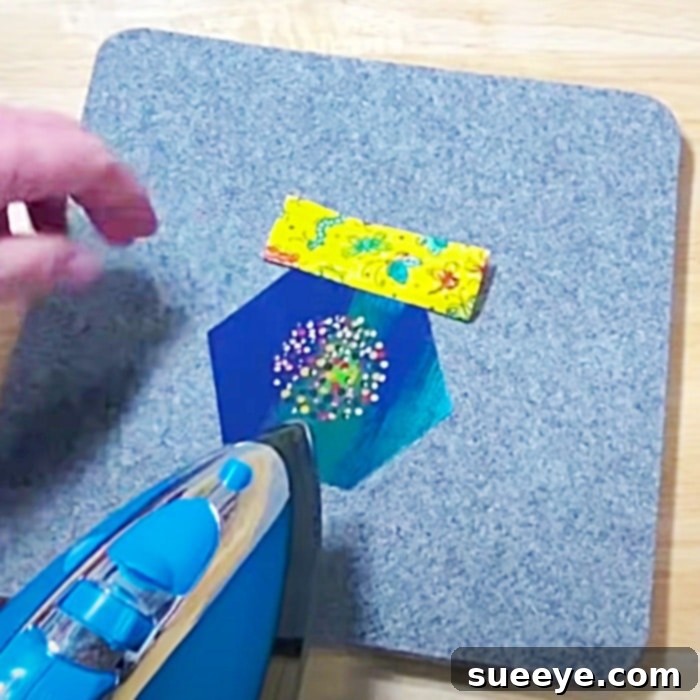
Take your central hexagon. Select one of your fabric strips, ensuring it is at least as long as one side of your hexagon. With right sides together, align the strip with one edge of your hexagon. Sew a 1/4-inch seam along this edge. Trim the excess fabric from the strip, leaving a 1/4-inch seam allowance. Press the newly sewn strip away from the hexagon, ensuring the seam is flat. Rotate your hexagon, and repeat this process, sewing a strip to the next side. Continue attaching strips to each side of the central hexagon, pressing after each attachment, to complete the first round of “logs.”
Step 3: Expanding the Log Cabin Pattern
Once you’ve completed the first round, you’ll begin the second. This time, instead of sewing to a single edge of the hexagon, you’ll be sewing to the *edges of the previous logs*. The key is to keep rotating your piece and always sew a strip to the current longest unsewn edge. This systematic rotation and addition of strips will allow your project to grow bigger and bigger, maintaining the hexagon shape. Continue adding strips in rounds, always pressing your seams open or to one side for a flat finish. You’ll notice the distinct log cabin pattern emerge, with strips spiraling outwards from the center.
Step 4: Achieving Your Desired Size
Keep adding rounds of fabric strips until your hexagon hot pad reaches the desired size. For a standard hot pad, a finished size of 8-10 inches across is typically suitable. Once you’re satisfied with the size, use a quilting ruler and rotary cutter to carefully trim your hexagon hot pad top, ensuring all edges are straight and the shape is perfectly hexagonal. This squaring-up process is crucial for a professional finish.
Step 5: Layering and Quilting Your Hot Pad
Now, you will prepare your hot pad for quilting. This involves creating a “quilt sandwich” with three layers: the backing fabric, the batting, and your pieced hexagon top. Lay your backing fabric right side down on a flat surface, then smooth your heat-resistant batting on top of it. Finally, center your pieced hexagon hot pad top right side up on the batting. Pin all three layers together securely with safety pins, ensuring there are no wrinkles or shifting. This is a critical step before quilting to keep your layers aligned.
With your layers basted, it’s time to quilt! You can choose a simple straight-line quilting pattern, following the lines of your log cabin blocks, or opt for a free-motion design. Quilting stitches not only add a decorative element but also hold the layers together, preventing the batting from shifting over time. Stitch evenly across the entire surface of the hot pad, ensuring the edges are also secured. This step adds durability and insulation.
Step 6: Finishing with Binding
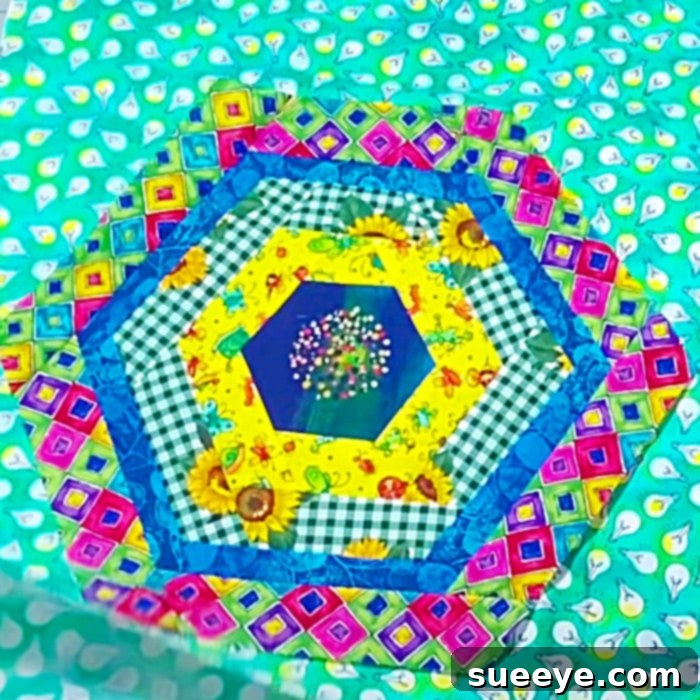
The final step is to bind the edges of your hot pad. This gives it a clean, professional finish and further secures all the layers. Cut 2.5-inch wide strips of fabric for your binding. Join them end-to-end to create one long strip, then press it in half lengthwise. Attach the raw edge of the binding to the raw edge of your hot pad, sewing with a 1/4-inch seam. Once sewn all around, fold the binding over to the back of the hot pad and hand-stitch or machine-stitch it in place. This will encase all raw edges beautifully, completing your Hexagon Log Cabin Quilted Hot Pad.
Tips for a Perfect Finish
- Pressing is Key: Pressing after every seam is crucial. It ensures your blocks lie flat, your seams are crisp, and your finished project looks professional.
- Accurate Cutting: Use a rotary cutter and ruler for precise cuts. Even slight inaccuracies can compound over many strips, leading to a distorted hexagon.
- Consistent Seam Allowance: Maintain a consistent 1/4-inch seam allowance. This is fundamental in quilting for blocks to fit together correctly.
- Choose Your Scraps Wisely: While it’s a scrap buster, think about color and contrast. A good mix of light and dark fabrics will make the log cabin design pop.
- Heat-Resistant Batting: Do not skimp on quality here. Regular cotton batting might not offer sufficient heat protection. Invest in specific heat-resistant batting for safety.
- Quilting for Durability: Don’t just stitch around the edges. Quilt through all layers across the entire hot pad to prevent batting migration and add strength.
- Consider a Hanging Loop: If you plan to hang your hot pad, incorporate a small fabric loop into the binding as you sew it.
Unleashing Creativity: Customization and Variations
The Hexagon Log Cabin Quilted Hot Pad is a canvas for your creativity. Experiment with different fabric choices to drastically change its look. For a modern aesthetic, try solids in a monochromatic palette or bold, geometric prints. For a truly rustic farmhouse feel, lean into homespun fabrics, ginghams, and florals. You can also play with the width of your “logs”; wider strips create a bolder, chunkier look, while narrower strips offer a more intricate, delicate pattern.
Consider making a set of these hot pads in various sizes – smaller ones for mugs or teapots, and larger ones for casseroles or serving dishes. They make exquisite, thoughtful gifts for housewarmings, holidays, or any occasion. Each hot pad, unique in its fabric composition, will tell its own story and add a personalized touch to any kitchen. This project is not just about making a hot pad; it’s about exploring your creativity through fabric, color, and design.
Caring for Your Quilted Hot Pad
To ensure your beautiful Hexagon Log Cabin Quilted Hot Pad lasts for years, proper care is essential. Most cotton hot pads can be machine washed on a gentle cycle with cold water and a mild detergent. Avoid using bleach, which can damage fabric and diminish colors. Tumble dry on low heat or, for best results, lay flat to air dry. If needed, a warm iron can be used to smooth out any wrinkles. Regular cleaning will keep your hot pad looking fresh and ready for all your culinary adventures.
Conclusion: A Project That Inspires and Delights
The Hexagon Log Cabin Quilted Hot Pad is truly a project that embodies the joy of handmade crafts. It offers a perfect blend of ease, creativity, and utility, making it an ideal choice for quilters of all skill levels. From its humble beginnings as a collection of fabric scraps to its final form as a charming and protective kitchen accessory, each step of the process is deeply satisfying. Thanks to the clear guidance from creators like RsIslandCrafts – Robin, on YouTube, you can confidently create a beautiful hot pad that not only serves a practical purpose but also adds warmth and character to your home. Dive into your fabric stash, unleash your inner quilter, and enjoy the immense satisfaction of crafting something truly unique and beautiful.