
Effective DIY Ant Nest Removal: Locate and Eliminate Colonies Naturally
Ants can be incredibly persistent pests, constantly invading your home or garden no matter how diligently you try to repel them. The truth is, surface treatments and scattered deterrents offer only temporary relief. For a truly lasting solution, you must get to the root of the problem: their nest. Discovering and effectively neutralizing the ant colony is the ultimate way to achieve complete ant control. You might think locating a hidden ant nest is a daunting task, but it’s surprisingly straightforward with the right strategy. This comprehensive guide, inspired by the clever techniques demonstrated by tsbrownie on YouTube, will equip you with the knowledge and tools to find and eradicate those pesky ant nests once and for all, using simple, everyday ingredients.
Understanding ant behavior is key to outsmarting them. Ants are social insects, living in highly organized colonies that can number from a few dozen to millions. Each colony typically has at least one queen whose sole purpose is to lay eggs, ensuring the colony’s growth and survival. The foraging ants you see are just a small fraction of the entire population, sent out to find food and bring it back to the nest. This is why merely killing the visible ants is futile; as long as the queen and the nest remain intact, new ants will continuously emerge to take their place. Our method focuses on exploiting their natural instincts to lead you directly to their hidden home.
Why Choose a DIY, Natural Ant Nest Removal Method?
Opting for a homemade ant killer offers numerous benefits over commercial chemical pesticides. Firstly, it provides a safer alternative for households with children and pets, reducing exposure to harsh chemicals. Secondly, it’s environmentally friendly, minimizing the ecological footprint often associated with synthetic pest control products. Thirdly, it’s incredibly cost-effective, utilizing ingredients you likely already have in your pantry. This approach empowers you to take control of your pest problem with confidence, knowing you’re using a solution that is both potent and responsible.
What You’ll Need for Your Ant Eradication Mission:
- Sugar: Acts as an irresistible bait to attract ants, revealing their foraging paths.
- Dish Soap: The active ingredient in your homemade repellent, effective at breaking down ant exoskeletons.
- Water: Used to dilute the dish soap, creating a sprayable solution.
- Spray Bottle: Essential for convenient and targeted application of the repellent.
Step-by-Step Directions: Locating and Eliminating Ant Nests
1. How to Strategically Locate the Ant Nest
Finding the ant nest is the most critical step in achieving long-term ant control. Without this, you’re merely treating symptoms rather than the root cause. Here’s how to employ a clever, two-phase strategy to pinpoint their exact location:
Phase 1: Initial Observation and Trail Following
Start by observing any existing ant trails you find. Ants are creatures of habit and will often follow established routes to and from their food sources. Look for lines of ants moving in a clear direction. Follow these trails as far as you can. Sometimes, the trail leads directly to a visible crack in a wall, a crevice in the foundation, or a small hole in the soil – these could be potential nest entrances. However, if the trail is faint, inconsistent, or if you only see a few scattered ants, you’ll need a more proactive approach.
Phase 2: The Sugar Bait and “Scurry” Method
This ingenious technique leverages ants’ strong foraging instincts to reveal their main colony. Ants are primarily attracted to sweet substances, making sugar the perfect lure.
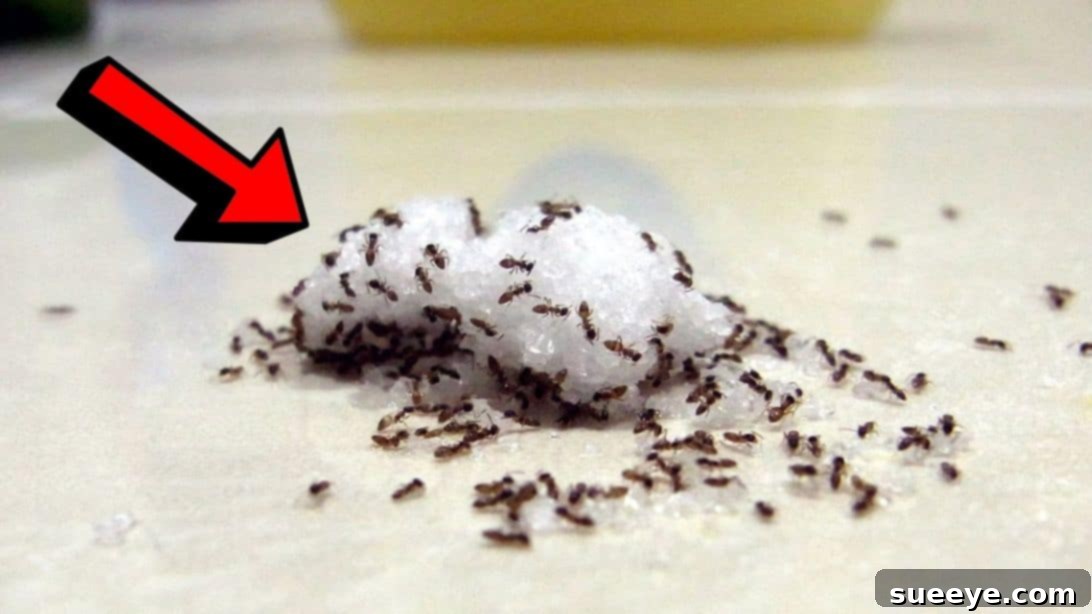
- Attract Them with Sugar: Place a generous block or pile of sugar in an area where you’ve seen ant activity or where they tend to congregate. White granulated sugar, powdered sugar, or even a sugar cube will work. The goal is to create an irresistible beacon for them.
- Allow for Recruitment: Be patient. Ants are excellent communicators. Once a few scout ants discover the sugar, they will return to their nest, laying down a pheromone trail to guide their nestmates. Soon, you’ll observe a rapidly growing number of ants converging on the sugar. This mass gathering is exactly what you want.
- Trigger the “Scurry”: Once a significant number of ants are gathered around the sugar, gently blow on them a little. A soft puff of air or even just exhaling slowly over them will create a sudden disturbance. This unexpected “threat” will trigger their natural instinct to retreat to the safety of their nest as quickly as possible.
- Follow the Retreating Line: As if on cue, you will notice the ants, now in a state of alarm, scurrying back in a solid, unified line directly towards their nest. This panicked retreat creates a clear, unmistakable pathway for you to follow. This is often far more effective than trying to follow a casual foraging trail.
- Pinpoint the Nest Entrance: Follow this distinct line of retreating ants. They will lead you directly to their nest entrance, which could be a small hole in the ground, a crack in concrete, a tiny opening in your home’s foundation, or even within decaying wood.
Confirming the Main Nest and Dealing with Satellite Colonies
Once you’ve located what appears to be the nest entrance, proceed with the treatment described in the next section. However, it’s important to understand that some ant species establish “satellite” nests, which are smaller extensions of a larger, main colony. If, after initial treatment, ants continue to reappear in the same area after a few days, it’s a strong indication that the nest you treated was a satellite, and the main colony is still active elsewhere. In this scenario, repeat the sugar bait and “scurry” method, leaving the sugar out a bit longer. Persistent observation will eventually lead you to the primary nest, which you can then treat directly.
2. How to Make and Apply a Potent Homemade Ant Repellent
Once the nest is located, it’s time to apply your homemade, yet highly effective, ant repellent. This simple solution uses common household dish soap to disrupt the ants’ biology.
The Science Behind Dish Soap
Dish soap is an excellent insecticide because it works on multiple fronts. Firstly, it breaks the surface tension of water, allowing the solution to penetrate the ants’ respiratory system, essentially suffocating them. Secondly, the soap dissolves the waxy outer layer (exoskeleton) of the ants, causing dehydration and making them vulnerable. This physical mechanism makes it difficult for ants to develop resistance, unlike some chemical pesticides.
Preparing Your Ant Repellent Solution
Making the solution is incredibly simple and requires no special equipment:
- Measure Ingredients: In a clean spray bottle, add one tablespoon of liquid dish soap for every four cups of water. The exact type of dish soap isn’t critical, but a standard liquid variety works best.
- Combine Thoroughly: Close the lid of the spray bottle securely. Give it a good, vigorous shake to ensure the dish soap is fully dissolved and evenly dispersed throughout the water. You want a consistent mixture for maximum effectiveness.
Applying the Solution to the Ant Nest
Once your repellent is ready, apply it directly to the identified ant nest entrance:
- Direct Spray: Generously spray the solution directly into the nest entrance. Aim to saturate the area thoroughly, ensuring the solution penetrates deep into the tunnels where the ants reside.
- Pouring for Deeper Penetration: For larger nests or those located in cracks or holes in the ground, consider pouring a more substantial amount of the solution directly into the opening. This ensures deeper penetration and better chances of reaching the queen and a significant portion of the colony.
- Consider Sealing (Optional): After application, you may choose to seal the entrance with caulk, plaster, or even just soil if it’s an outdoor nest. This can help prevent any surviving ants from emerging and deters new colonies from taking over the old site. However, ensure you’ve applied enough solution first.
Remember, consistency is key. If you observe any returning ants or new trails emerging from the same area, don’t hesitate to reapply the solution. Ants are resilient, but with persistent effort, you can overcome their tenacity.
Post-Treatment and Long-Term Ant Prevention
Eliminating an ant nest is a significant victory, but maintaining an ant-free environment requires ongoing vigilance and preventative measures. Here’s what you can do:
- Maintain Superior Cleanliness: Ants are constantly searching for food. Keep your kitchen and dining areas impeccably clean. Wipe up spills immediately, sweep crumbs regularly, and clean countertops after meals.
- Store Food Properly: Always store food, especially sugary items and open packages, in airtight containers. Don’t leave pet food out overnight.
- Seal Entry Points: Inspect your home for potential ant entry points. Seal cracks and crevices in foundations, around windows, and door frames with caulk. Repair any damaged screens or weather stripping.
- Address Moisture Issues: Many ant species are attracted to moisture. Fix leaky pipes, faucets, and drains. Ensure proper drainage around your home’s foundation.
- Trim Vegetation: Keep trees and shrubs trimmed away from your house. Overhanging branches or plants touching your home can provide a “bridge” for ants to access your roof or windows.
- Remove Outdoor Debris: Piles of wood, rocks, or garden debris near your home can serve as ideal nesting sites for ants. Keep your yard tidy and remove these potential habitats.
- Regular Monitoring: Even after successful eradication, regularly monitor areas where you previously found ants. Early detection of new activity can prevent a full-blown re-infestation.
Conclusion: Reclaim Your Space with Natural Ant Control
Conquering an ant infestation might seem like an endless battle, but by focusing on finding and eliminating the nest, you gain the upper hand. This DIY approach, utilizing simple sugar to bait and track, combined with a powerful yet non-toxic dish soap solution, offers an incredibly effective and eco-friendly way to reclaim your home and garden from these persistent pests. Not only is it gentle on your family and the environment, but it’s also empowering to solve the problem yourself with readily available materials. Say goodbye to endless ant trails and hello to a peaceful, ant-free living space. Give this method a try and experience the satisfaction of successful, natural ant control!
*All these amazing images are thanks to tsbrownie via YouTube. Do visit his channel to see more helpful videos like this!