
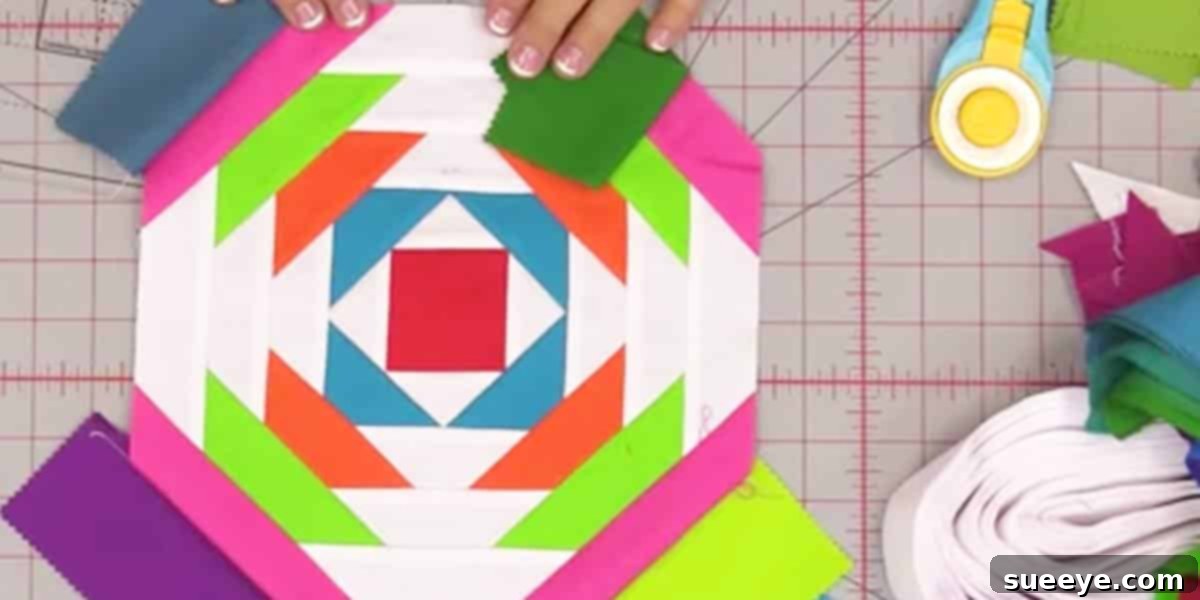
The Enduring Allure of Pineapple Quilt Blocks: Crafting Dynamic Designs
There are moments when a particular design in the world of textiles captivates you so profoundly that you simply must learn its secrets. For many quilters, the pineapple quilt block is one such revelation. When I first encountered its intricate beauty, I was absolutely mesmerized. It stood apart from any quilt I had ever seen my family members create, despite growing up in a household filled with seasoned quilters. The sheer visual impact and projected complexity of this pattern are truly unique, setting it apart from more traditional quilting motifs.
What truly elevates the pineapple quilt block to a league of its own is the incredible versatility it offers in design. Imagine the vast spectrum of color schemes you can explore – from vibrant, modern gradients that seem to swirl with movement, to classic, subdued palettes that evoke a sense of heritage and calm – each choice dramatically transforming the final masterpiece. This inherent adaptability makes the pineapple block a cherished favorite among quilters seeking both a delightful challenge and boundless creative freedom in their fabric artistry.
Unraveling the Pineapple Quilt Block: A Closer Look at its Construction
Despite their elaborate appearance, pineapple quilt blocks are remarkably approachable to construct. Often perceived as highly complex due to their distinct angles and precise lines, they share a foundational similarity with more familiar patterns like the courthouse steps block and are, in essence, a sophisticated variation of the beloved log cabin quilt block. This underlying simplicity makes them less daunting to tackle than their intricate look might suggest.
The characteristic appeal of pineapple blocks stems directly from their precise, angular construction. While they commence with a central square and radiating strips, much like a traditional log cabin, the key differentiator lies in the inclusion of triangular corner pieces added to each successive round of strips. These carefully placed triangles, methodically sewn onto the corners, are what create the signature “pineapple” motif. This innovative technique gives the block its unique, almost three-dimensional depth and dynamic visual movement, making each finished block a miniature work of art.
To achieve the crisp, sharp points and perfectly aligned strips that define the aesthetic of the pineapple block, quilters frequently turn to foundation paper piecing (FPP). This highly effective technique, where fabric pieces are sewn directly onto a printed paper pattern, ensures unparalleled accuracy and precision, resulting in immaculate edges and flawlessly sharp angles. Whether you opt for the exacting methods of foundation paper piecing or prefer more traditional strip quilting techniques, the adaptable pineapple block is an undeniably sweet and satisfying design that proves truly hard to resist once you embark on its creation. Its versatility allows for a broad range of creative interpretations.
My own journey with this captivating pattern began several months ago, working on the blocks intermittently as time allowed. The satisfaction of watching my quilt evolve with each added block is immense, a truly rewarding experience. It genuinely fulfills the anticipation I had, continuously improving and revealing new dimensions as more pieces come together. This progressive unfolding is, arguably, one of the most enjoyable aspects of quilting projects like this – seeing your vision materialize stitch by stitch and block by block. It’s the continuous progress and the joy of creation that fuels our passion and keeps us eagerly going, isn’t it?
Why Choose the Pineapple Quilt for Your Next Project? Exploring its Unique Appeal
The enduring popularity of the pineapple quilt pattern isn’t just about its striking aesthetic; it’s deeply rooted in the holistic quilting experience it offers. This versatile pattern appeals to both novice and experienced quilters for a multitude of compelling reasons, making it a stellar choice for almost any fabric artistry project, from small decor items to large bedspreads.
Unparalleled Versatility in Design and Personal Expression
One of the most compelling reasons to embrace the pineapple quilt block is its incredible design flexibility. You are the artist, and the block itself becomes your canvas, ready to be imbued with your personal style. Consider the vast spectrum of possibilities:
- Dynamic Color Schemes: From a vibrant, “scrappy” look bursting with a diverse array of prints and hues, to a sophisticated monochromatic design using varying shades of a single color, the choice is entirely yours. High-contrast fabrics can create a dizzying optical illusion that draws the eye, while carefully planned gradients of color can produce a mesmerizing swirling or radiating effect across the quilt surface. Batiks lend a rich, textured quality, while solid fabrics emphasize the geometric lines and angular precision of the design.
- Strategic Fabric Choices: The pineapple pattern can beautifully showcase fussy-cut prints in its central square, allowing you to highlight a specific motif or image. Conversely, it can also emphasize intricate fabric designs or textures within the radiating strips, creating subtle yet powerful visual interest. The thoughtful interplay between different textures, patterns, and scales of prints can add immense depth and narrative to your finished quilt.
- Infinite Personalization: Each fabric strip you carefully choose, and every color combination you meticulously select, contributes to a unique and personal narrative embedded within your quilt. Due to the myriad of individual fabric choices and artistic interpretations, no two pineapple quilts are ever exactly alike, even if they begin with the same underlying pattern. This ensures your creation is truly one-of-a-kind.
Crafting a Visually Dynamic Masterpiece
The unique angular construction of the pineapple block generates a powerful and captivating visual impact. When multiple blocks are expertly assembled, they organically form intricate secondary patterns that emerge from the collective arrangement, adding layers of complexity and visual interest. The distinct radiating strips and the strategically placed corner triangles combine to create a compelling sense of movement, guiding the eye inward and outward across the quilt. This dynamic quality imbues the quilt with an almost three-dimensional presence, a characteristic that truly sets it apart from many other traditional quilt block patterns.
Skill Enhancement and Precision Practice
While the basic construction of a pineapple block is straightforward and accessible, the pattern offers an excellent, practical opportunity to hone and refine your precision piecing skills. Whether you’re meticulously cutting strips for traditional piecing methods or carefully aligning fabrics for foundation paper piecing, the block inherently encourages and rewards accuracy. This focused attention to precision not only results in a more visually stunning and beautifully executed finished product but also significantly builds confidence in your overall quilting abilities, effectively setting you up for success in future, potentially more complex, quilting projects.
Mastering the Craft: Essential Techniques for Making Pineapple Quilt Blocks
Creating a stunning pineapple quilt block involves a few key techniques, each offering its own unique advantages and challenges. Understanding these methods will empower you to choose the best approach tailored to your current skill level, your preferences for precision, and your desired outcome for the finished quilt.
Traditional Strip Piecing: A Solid Foundation
This method is a fantastic starting point, particularly for beginners or those who prefer a less structured approach than paper piecing. It involves a systematic buildup around a central point:
- Beginning with the Central Square: You initiate the block by selecting a focal square of fabric, which will form the very heart of your pineapple design.
- First Round of Strips: Next, you add strips of fabric to opposite sides of the central square. These are sewn on with a consistent seam allowance, and then carefully pressed open or to one side, setting the foundation for the block’s growth.
- Second Round of Strips: Following this, you add strips to the remaining two sides of the central square, effectively enclosing it and forming a larger square. Again, precise pressing is vital.
- Incorporating Triangular Corners: This is the crucial step where the pineapple block diverges distinctly from a simple log cabin. After each subsequent set of rectangular strips is added, small triangles are meticulously sewn onto the corners of the newly formed square. These triangles are often cut slightly oversized to allow for precise trimming later, ensuring perfectly sharp points.
- Repetition for Growth: You continue this process, adding radiating strips and then carefully placing corner triangles, alternating between adding strips on two opposite sides and then the other two, working outwards until the block achieves its desired final size.
Accuracy in cutting all strips and maintaining a consistent 1/4-inch seam allowance throughout are paramount for success with this method, ensuring your points meet precisely and your block remains square.
Foundation Paper Piecing (FPP): The Gold Standard for Precision
For those seeking absolute precision, immaculate corners, and sharp, crisp points, foundation paper piecing is unequivocally the gold standard for crafting pineapple blocks. FPP guarantees that every angle and every seam is perfectly aligned, even when working with very small or unusually shaped pieces.
- Understanding How FPP Works: The process begins by printing a specialized pineapple block pattern onto paper. This is often lightweight foundation paper, but even simple newsprint can work. Fabric pieces are then sewn directly onto the back of this paper, meticulously following the numbered sections and lines printed on the pattern. The paper acts as an unwavering guide, ensuring exact placement and accurate seam allowances for every stitch.
- Key Benefits for Pineapple Blocks: FPP is particularly beneficial for the pineapple block due to its numerous angles and the critical need for consistently sized triangular corners. It simplifies the process by eliminating the need for precise cutting of individual triangles beforehand, as you simply trim the excess fabric after each piece is sewn.
- Important Considerations: While FPP undoubtedly guarantees precision, it can sometimes be a bit more time-consuming initially, as it involves sewing through paper and then carefully tearing it away (though some modern techniques involve leaving the paper in). However, the impeccably precise results and the stunning geometric clarity achieved are almost always well worth the additional effort.
Essential Tools and Meticulous Preparation
Regardless of the specific technique you choose for your pineapple quilt blocks, having the right tools at your disposal and preparing your fabrics meticulously will significantly enhance your quilting experience and the quality of your finished project:
- Rotary Cutter and Self-Healing Mat: These are absolutely essential for precise, clean, and efficient fabric cutting, which is foundational to accurate piecing.
- Quilting Rulers: Invest in clear acrylic rulers with distinct markings. For pineapple blocks, specialized pineapple block rulers or templates can be incredibly helpful, as they often have pre-marked lines for cutting the specific strips and triangles needed, simplifying what can otherwise be a complex measuring process.
- Accurate Seam Allowance: A consistent 1/4-inch seam allowance is paramount for ensuring your blocks finish at the correct size and remain square. Utilize a seam guide on your machine, or even a walking foot if your machine tends to struggle with multiple layers of fabric.
- Methodical Fabric Pressing: Correct and consistent pressing of seams after each addition is vital for creating flat, crisp blocks that lay smoothly. Decide whether you will press seams open to reduce bulk or press them to one side, and then adhere to that decision consistently throughout your entire project for uniform and professional results.
- Good Quality Fabric: Investing in high-quality quilting cotton is a wise decision. It not only drapes beautifully but also prevents stretching, fraying, and color bleeding, leading to a more durable, long-lasting, and beautiful quilt that stands the test of time.
Designing Your Pineapple Quilt: Unleashing Creative Potential
The profound beauty of the pineapple block extends far beyond its precise construction and delves deeply into the captivating realm of design. Here’s how to craft a truly unique and visually stunning pineapple quilt, transforming individual blocks into a cohesive masterpiece.
Mastering Color Theory and Fabric Selection
Color is perhaps the most powerful and transformative tool in your pineapple quilt design arsenal. Strategic color choices can dramatically alter the perception and emotional impact of your quilt:
- High Contrast Dramatics: Utilizing fabrics with strong light and dark contrasts can dramatically emphasize the “pineapple” points and the geometric angles, creating a vibrant, energetic, and almost pulsating feel within the quilt.
- Ethereal Gradients: Seamlessly transitioning from light to dark shades, or from one color to another across individual blocks or the entire quilt top, can create a mesmerizing swirling, radiating, or cascading effect, adding depth and sophisticated movement.
- The Joy of Scrappy Fun: A truly scrappy pineapple quilt, which joyfully utilizes a wide array of diverse fabric scraps, can yield a wonderfully eclectic, vibrant, and often surprisingly cohesive and harmonious result, telling a story with every piece.
- Defining a Focal Point: Consider using a particularly captivating print or a bold solid fabric in the central square of each block to immediately draw the eye, then build outwards with complementing or contrasting strips that enhance the focal element.
- The ‘Ring’ Effect: Deliberately planning your fabric placement to create distinct “rings” of color or pattern that radiate outwards from the center of each block can significantly enhance the block’s unique structural definition and visual intrigue.
Exploring Dynamic Layouts and Arrangements
Once you have meticulously crafted your individual pineapple blocks, the arrangement possibilities for assembling them into a quilt top are virtually endless, allowing for vast creative expression:
- Classic Straight Set: Blocks are meticulously sewn together in neat rows and columns, forming a traditional grid-like pattern. This straightforward layout allows the intricate secondary patterns that emerge from the collective blocks to shine through with exceptional clarity and emphasis.
- Elegant On Point Setting: By rotating your blocks 45 degrees and setting them diagonally, you can introduce entirely new visual dynamics. This “on point” setting often creates a sophisticated sense of movement and can make the quilt appear larger or more intricate.
- Alternating with Solids: Interspersing your detailed pineapple blocks with solid squares or squares of another simpler quilt pattern can create visual breathing room. This technique allows the eye to rest and further highlights the intricate details and geometric complexity of the pineapple blocks themselves.
- Thoughtful Sashing and Borders: Adding sashing (strips of fabric between blocks) or carefully chosen borders around the perimeter of your quilt can beautifully frame your entire design. This not only adds definition and structure but also allows for additional creative embellishment and color play, enhancing the quilt’s overall aesthetic.
Calculating Quilt Size and Planning Ahead
Before you even begin cutting your fabric, it is crucial to determine the desired finished size of your quilt (e.g., baby, throw, twin, queen, king). Once you have a target size, you can then accurately calculate how many blocks of a particular finished size you’ll need to achieve your goal. Don’t forget to factor in any sashing or borders you plan to include, as these additions will significantly impact the final dimensions of your magnificent pineapple quilt.
Essential Tips for a Successful Pineapple Quilting Journey
Embarking on a pineapple quilt project can be an incredibly rewarding and deeply satisfying creative endeavor. Here are some invaluable tips to ensure your quilting journey is as smooth, enjoyable, and successful as possible, leading to a finished piece you’ll cherish:
- Start Small and Build Confidence: If you’re relatively new to the intricate pineapple block pattern or to the technique of foundation paper piecing, consider beginning with a few practice blocks first. A cushion cover, a placemat, or a charming table runner can serve as excellent smaller projects. These allow you to build confidence, refine your technique, and work out any kinks before committing to a full-sized quilt.
- Maintain Meticulous Organization: With numerous small strips and triangles involved, it’s remarkably easy for fabric pieces to get mixed up. Implement an organizational system: keep your pieces grouped by color, by the specific round they belong to, or by using labeled storage containers. Labeling your fabric piles or sections on your design wall can be an absolute lifesaver.
- Accurate Cutting is Your Foundation: Precision in quilting truly begins with accurate cutting. Always use a sharp rotary cutter and a reliable, non-slip quilting ruler. Taking the extra time to cut precisely will save you frustration and ensure your blocks fit together beautifully.
- Pressing Matters Significantly: Consistent and correct pressing after each seam is absolutely crucial for creating flat, crisp blocks that lie smoothly and assemble without distortion. Decide early on whether you will press seams open to reduce bulk or press them to one side, and then stick with that decision consistently throughout your entire project for uniform and professional-looking results.
- Patience is a Quilter’s Virtue: Remember that quilting is a journey of creation, not a race to the finish line. Take your time, savor the process, and don’t be afraid to unpick stitches if something isn’t quite right. Learning and achieving perfection, or at least exceptional quality, often comes with patient practice and iteration.
- Embrace the Handmade Charm: While precision is highly encouraged and yields stunning results, remember that handmade items inherently possess unique character. A tiny, almost imperceptible imperfection here or there will not detract from the overall beauty, warmth, and personal touch of your finished quilt. It simply adds to its story and charm.
Abundant Resources and Inspiration for Your Pineapple Quilt Project
The vibrant and generous quilting community is a veritable treasure trove of knowledge, encouragement, and creative inspiration. If you’re feeling ready to dive into the delightful challenge of making your very own pineapple quilt, you’ll find an abundance of fantastic resources available to guide and support you every step of the way:
- Engaging Video Tutorials: Online platforms like YouTube are absolutely fantastic for visual learners. For instance, the renowned Missouri Star Quilt Company offers exceptionally clear and comprehensive step-by-step video tutorials that expertly break down the intricate pineapple block construction into easy-to-follow segments. Watching someone visually demonstrate the process can clarify steps that might seem confusing in written instructions, making learning much more accessible.
- Myriad Free Patterns Online: Websites like Pinterest are bursting at the seams with an endless array of free pineapple quilt patterns, printable templates, and a wealth of design inspiration. A simple search will yield countless variations in block size, imaginative color schemes, and diverse layout ideas, ensuring you’ll find something that perfectly sparks your creative interest.
- Informative Quilting Blogs and Forums: Many dedicated quilting blogs offer detailed guides, practical tips, and personal experiences from seasoned quilters, providing invaluable insights. Online forums and social media groups allow you to connect directly with other passionate quilters, ask questions, share your progress, and receive supportive feedback.
- Local Quilt Shops and Guilds: Never underestimate the immense value and supportive environment offered by your local quilting community. Quilt shops often host workshops, offer classes specifically on patterns like the pineapple block, and provide expert advice. Quilting guilds foster a wonderful, supportive environment for learning, sharing techniques, and building camaraderie among fellow enthusiasts.
- Classic Books and Magazines: Traditional resources such as quilting books and specialized magazines frequently feature both classic and contemporary pineapple quilt patterns. These often come complete with detailed written instructions, inspiring photography, and occasionally include full-size templates, offering a tangible and enduring source of inspiration.
Remember, there’s no single “right” or “perfect” way to create a pineapple quilt. The true joy of this pattern lies in its flexibility. Explore different patterns, experiment with various techniques, and play around with diverse color palettes until you discover what truly resonates most with your personal artistic style and vision. The profound joy of quilting lies not just in the beautiful finished product, but deeply within the journey of creation itself – the satisfaction of making something exquisite with your own hands, and the warmth, comfort, and unique character it ultimately brings to your home and heart.