
Bananas, a global favorite, are celebrated for their natural sweetness, nutritional value, and unparalleled convenience. Whether you enjoy them as a quick snack, a versatile ingredient in smoothies, or the star of countless dessert recipes, keeping them fresh and perfectly ripe can often be a challenge. How many times have you found your bananas turning from perfectly yellow to spotted brown seemingly overnight? Or perhaps you’re left waiting days for green bananas to become edible?
Understanding how to properly store bananas is key to enjoying them at their best and reducing food waste. The good news is that you have more control over their ripening process than you might think. This comprehensive guide will delve into effective strategies, from smart shopping tips to advanced preservation methods, ensuring you always have bananas ready for whatever your culinary desires demand.
RELATED: How to Tell If an Avocado Is Ripe and Good to Eat
Why Bananas Are a Kitchen Staple
Before diving into storage techniques, let’s appreciate why bananas hold such a special place in our diets. They are one of the most famous fruits worldwide, readily available in grocery stores and markets throughout the year. People adore them not only for their delightful taste but also for their portability and rich nutritional profile. Packed with essential vitamins like Vitamin B6 and Vitamin C, and minerals such as potassium and manganese, bananas offer a healthy energy boost. They are a fantastic source of dietary fiber, aiding digestion and promoting gut health. From a simple grab-and-go snack to a foundational ingredient in various dishes, their versatility is unmatched. Consider these delicious banana-based treats: Easy No-Bake Banana Pudding Pie Recipe, Microwave Banana Cake Recipe, 3-Ingredient Strawberry Banana Ice Cream.
Understanding Banana Ripening: The Role of Ethylene Gas
The secret to controlling banana ripeness lies in understanding a natural plant hormone called ethylene gas. Bananas, like many other fruits, produce ethylene gas as they ripen. This gas, in turn, signals the fruit to convert starch into sugar, soften its texture, and change its color from green to yellow and eventually to brown. The more ethylene gas present, the faster the ripening process. Conversely, limiting exposure to ethylene gas can slow it down. Temperature also plays a significant role; warmer temperatures accelerate the production and effect of ethylene, while cooler temperatures decelerate it. By manipulating these factors, you can effectively manage the lifespan and ripeness of your bananas.
The Ultimate Guide to Storing Bananas: Keep Them Fresh Longer
Whether you want to speed up ripening for immediate use or extend their shelf life for days or weeks, these expert tips will help you master banana storage and ensure you always have this delicious fruit on hand exactly when you need it.
1. Strategic Shopping: Choosing Bananas at Various Stages of Ripeness
One of the simplest yet most effective strategies for a continuous supply of fresh bananas is to purchase them at different stages of ripeness. When you visit the grocery store, don’t just grab a single bunch of perfectly yellow bananas. Instead, select a mix: some still green, some bright yellow, and perhaps a few with a scattering of brown spots. This approach ensures you’ll have bananas ready to eat immediately, others that will ripen in a day or two, and some that will take several days to mature. This staggered ripening provides a steady supply, preventing you from having a surplus of overripe bananas all at once and ensuring you’re never without a perfect banana.
2. Optimize Storage Temperatures: Harnessing the Power of Room Environments
Temperature is a critical factor in banana ripening. Upon returning from the grocery store, consider separating your banana bunches and storing them in different rooms or areas of your home. Place some in a cooler room, where the lower temperature will naturally slow down the ethylene production and enzymatic activity responsible for ripening. Other bananas can be stored in a warmer area, where the increased heat will accelerate their maturation. For instance, a countertop in a cool pantry might be ideal for slowing down ripening, while a warmer kitchen counter could speed it up. Remember, bananas should generally be stored out of the refrigerator until they reach your desired level of ripeness, as cold temperatures can halt the ripening process prematurely and affect their flavor and texture if introduced too early.
3. Leverage Other Fruits: Controlling Ripening with Ethylene Gas
The ethylene gas produced by ripening fruits isn’t exclusive to bananas. Many other ripe fruits, such as apples, avocados, and tomatoes, also emit this gas. You can use this natural phenomenon to your advantage. If you want to speed up the ripening of unripe bananas, place them in close proximity to these ethylene-producing fruits. The concentrated ethylene gas from the ripe fruits will encourage the green bananas to ripen much quicker. Conversely, if your goal is to slow down ripening, keep unripe bananas isolated from other ripe produce to prevent premature maturation.
4. Detach from the Bunch: Slowing Down Ripening Naturally
Bananas naturally ripen more quickly when they remain connected in a bunch. This is because the stems of the bananas collectively release ethylene gas. When they are together, this gas becomes concentrated around the entire bunch, accelerating the ripening of all bananas. To significantly slow down this process, simply separate the individual bananas from the main bunch as soon as you bring them home. Breaking the bunch isolates each banana, reducing the overall concentration of ethylene gas around them and thus extending their freshness for several extra days.
5. Seal the Stems: Minimizing Ethylene Release
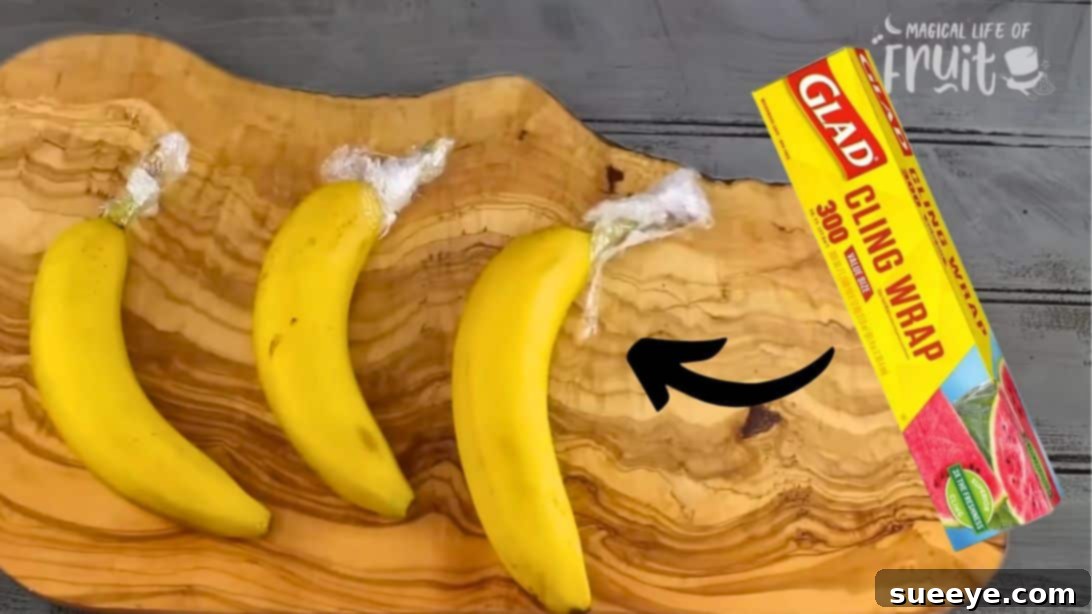
Building on the principle of ethylene control, wrapping the stems of individual bananas in plastic wrap is an incredibly effective technique to further extend their shelf life. The stem is the primary point from which bananas release ethylene gas. By tightly covering the stem with plastic wrap, you create a barrier that traps the ethylene within the stem area, preventing it from spreading to the rest of the fruit and signaling it to ripen faster. This simple trick can add a few precious days to your bananas’ freshness, especially beneficial for those stored in a cooler environment.
6. Utilize Specialized Containers: Bags and Boxes for Controlled Ripening
The environment you store your bananas in can dramatically influence their ripening speed. You can harness this effect using various types of bags and boxes:
Speeding Up Ripening with Paper or Plastic Bags
If you have green bananas and want them to ripen quickly, placing them in a paper bag or a loosely sealed plastic bag is an excellent method. The bag traps the ethylene gas that the bananas naturally produce, concentrating it around the fruit. This higher concentration of ethylene accelerates the conversion of starches to sugars, resulting in softer, sweeter, and yellower bananas in a shorter amount of time. For even faster results, you can add an apple or a ripe tomato to the bag, as these fruits also release ethylene.
Slowing Down Ripening with Preserving Boxes or Airtight Containers
To slow down the ripening of bananas, particularly those you’ve separated and wrapped the stems of, consider placing them in a dedicated fruit preserving box or a somewhat airtight container. While a fully airtight container might not be ideal for long-term storage due to potential moisture buildup, a container that slightly limits air circulation can help control the release of ethylene gas, effectively pausing the ripening process. This method, combined with cooler room temperatures, can significantly extend the time before your bananas become overripe.
7. Refrigeration: Extending the Life of Perfectly Ripe Bananas
Once your bananas have reached your preferred level of ripeness – whether that’s bright yellow or with a few brown speckles – you can transfer them to the refrigerator to drastically slow down any further ripening. It’s important to note that the cold temperature will cause the banana skins to turn brown or even black very quickly, but this discoloration is purely cosmetic. The fruit inside will remain firm, sweet, and perfectly edible for several days to a week longer than if left at room temperature. This method is ideal for preserving bananas that are already ripe and you want to enjoy them over a longer period without them becoming mushy or excessively sweet.
8. Freezing for Future Use: Preserving Overripe Bananas
Don’t let overripe bananas go to waste! Freezing is an excellent way to preserve them, especially when they’ve developed too many brown spots for fresh eating but are perfect for baking or blending. Overripe bananas are incredibly sweet and contribute a rich flavor to smoothies, ice cream, banana bread, muffins, and pancakes. To freeze them, simply peel the bananas and place them in an airtight freezer bag or container. For convenience, you can slice them into coin shapes or break them into chunks before freezing, making them easier to portion out for future recipes. Frozen bananas can be stored for several months, ensuring you always have a sweet, healthy ingredient on hand.
9. Citrus Juice Treatment: Preventing Browning of Peeled Bananas
Sometimes you only need half a banana, or you might peel one intending to use it later, only to find it has started to brown. The browning of peeled bananas is due to oxidation, a reaction between the fruit’s enzymes and oxygen in the air. To prevent this, dip or brush the peeled banana (or banana slices) with a natural acidic juice like lemon juice, lime juice, or pineapple juice. The acid acts as an antioxidant, slowing down the enzymatic browning process and keeping your banana looking fresh for a longer period. This trick is particularly useful for fruit salads, lunchboxes, or anytime you need to prepare bananas in advance.
Conclusion: Master Your Banana Storage for Freshness and Flavor
Mastering the art of banana storage is a valuable skill that minimizes food waste and maximizes your enjoyment of this beloved fruit. By understanding the principles of ethylene gas and temperature control, and by applying these simple yet effective techniques, you can confidently manage the ripening process from the moment you bring your bananas home. From strategic purchasing to smart refrigeration and freezing methods, you now have a comprehensive toolkit to keep your bananas perfectly fresh, ripe, and ready for any occasion. Say goodbye to prematurely browning bananas and hello to a continuous supply of this nutritious and delicious tropical fruit!