
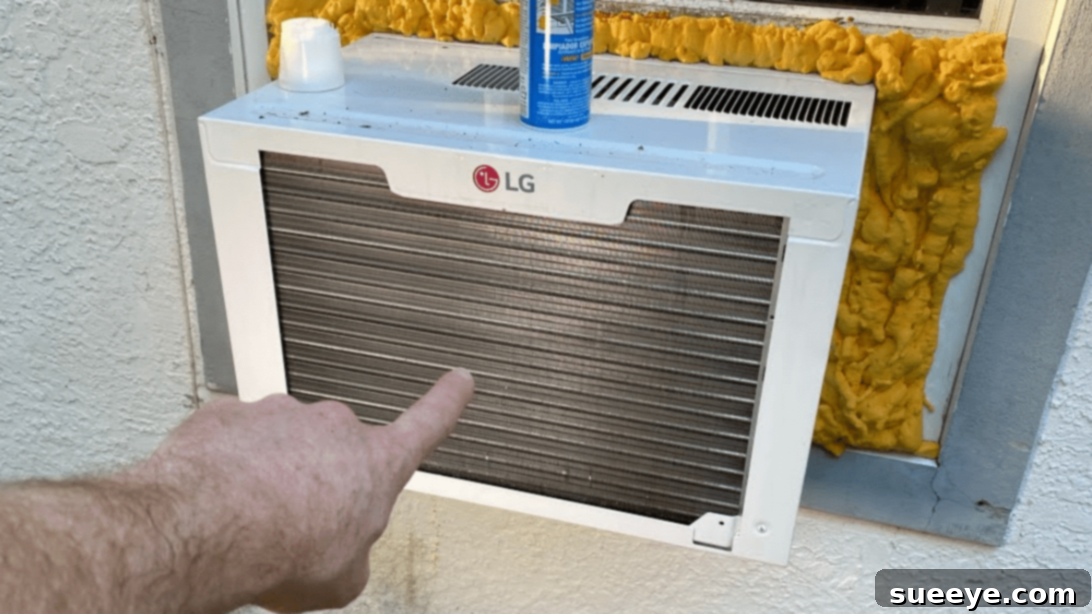
Effortless Window AC Cleaning: The Ultimate “Lazy” Hack for a Fresher Home
For years, the thought of cleaning my window air conditioning unit filled me with dread. It was always a cumbersome, time-consuming chore that rarely yielded the sparkling results I truly wanted, often demanding a significant investment of effort and an arsenal of cleaning products. There were countless times I knew my AC unit desperately needed attention, yet I lacked the energy or motivation to tackle such a daunting task. This struggle prompted me to seek out alternative, less strenuous methods – a quest for a cleaning solution that wouldn’t leave me exhausted but would still ensure a pristine and efficient unit.
I distinctly remember the frustration of wrestling with cumbersome covers, attempting to reach hidden coils, and spending what felt like an eternity scrubbing away layers of dust and grime. Despite all the effort, the outcome was often mediocre, leaving a faint musty odor or visible dirt lingering in stubborn corners. It became clear that I needed a smarter approach, one that aligned with a busy lifestyle and offered genuine efficacy without the typical hassle. This pursuit led me to discover an incredible cleaning hack that has completely revolutionized my AC maintenance routine.
RELATED: Troubleshooting Your Window AC: Fix a Unit That Won’t Cool
Revolutionizing AC Care with an Innovative Cleaning Hack
Among the various methods I explored, one particular technique stood out, championed by Kendall Todd TheSilverGuy on YouTube. This approach proved to be an absolute game-changer, delivering exceptional results without requiring me to break a sweat. It’s not just about convenience; it’s about efficacy. This method works wonders, especially when incorporated into a regular maintenance schedule. Instead of waiting for excessive dust and debris to accumulate, consistent application ensures that dirt is broken down easily, making each cleaning session quicker, more efficient, and ultimately, more satisfying.
Regular maintenance of your window AC unit is paramount for several reasons, extending far beyond just aesthetics. A clean AC unit contributes significantly to indoor air quality, energy efficiency, and the overall lifespan of the appliance. Neglecting routine cleaning can lead to a build-up of allergens, mold, and dust, circulating these particles throughout your home. Furthermore, a dirty unit has to work harder to cool your space, leading to increased energy consumption and higher electricity bills. This “lazy” hack addresses these critical issues head-on, providing a simple yet powerful solution to keep your AC performing at its best.
Why Regular AC Cleaning Is Crucial for Your Home and Health
Maintaining a clean air conditioning unit is not just about keeping your appliance looking good; it’s a fundamental aspect of home upkeep that profoundly impacts your health, comfort, and finances. An AC unit, particularly a window unit, acts as a filter, drawing in air from your environment. Over time, this process inevitably leads to the accumulation of dust, dirt, pet dander, pollen, and even mold spores on its coils and fins. When these components become caked with debris, several detrimental effects begin to manifest.
Firstly, the air quality in your home suffers dramatically. A dirty AC unit can become a breeding ground for allergens and microscopic contaminants, which are then recirculated into your living space. This can exacerbate respiratory issues, trigger allergies, and create an overall unhealthy environment, especially for individuals sensitive to airborne particles. Symptoms such as sneezing, coughing, watery eyes, and even a persistent stuffy nose can often be traced back to a neglected air conditioner.
Secondly, a clogged AC unit operates far less efficiently. The layers of grime on the evaporator coils act as an insulating barrier, preventing the unit from effectively absorbing heat from the air. This forces the compressor to work harder and longer to achieve the desired temperature, leading to a noticeable increase in your energy consumption. Consequently, your electricity bills will climb, and the strain on the unit’s components can lead to premature wear and tear, shortening its operational lifespan and necessitating costly repairs or even a complete replacement much sooner than anticipated.
Finally, regular cleaning prevents the development of unpleasant odors. The moisture trapped within a dirty unit, combined with organic matter like dust and mold, creates a musty, stale smell that permeates your home. By keeping your AC unit clean, you ensure that the air it circulates is not only cool but also fresh and odor-free, contributing to a more comfortable and inviting atmosphere.
The Challenge of Traditional AC Cleaning Methods
For many homeowners, the traditional approach to cleaning a window AC unit feels like a monumental undertaking. It typically involves a series of cumbersome steps, starting with the difficult and often frustrating process of safely removing the unit from its window mounting. This can be heavy and awkward, posing a risk of injury or damage to the unit itself. Once removed, the real work begins. Disassembling the outer casing and internal components often requires specific tools and a degree of mechanical aptitude, which not everyone possesses. Locating and carefully detaching the various screws, clips, and panels can be daunting, and the fear of damaging sensitive internal wiring or fragile fins is always present.
Once the internal components, particularly the evaporator coils and condenser fins, are exposed, the task of cleaning them is equally demanding. This usually involves painstaking manual scrubbing with brushes, often requiring specialized cleaning solutions that need careful rinsing. The process is inherently messy, with dirt and dirty water dripping everywhere, necessitating extensive protective sheeting and a thorough cleanup afterward. Reaching into tight crevices and between delicate fins without bending or damaging them adds another layer of difficulty. The entire endeavor is not only physically demanding but also incredibly time-consuming, often consuming an entire afternoon or more. For busy individuals, or those who simply lack the physical capacity or technical know-how, this traditional method can be a significant barrier to regular AC maintenance, leading to units that go uncleaned for far too long. This is precisely why the discovery of an easier, more efficient hack has been such a relief.
What You’ll Need for This Effortless Window AC Cleaning Hack:
- Frost King Foaming Cleaner (or a similar self-rinsing AC coil cleaner)
Easy Window AC Cleaning Hack for Lazy People:
Step 1: Prioritize Safety – Power Down and Disconnect
The very first and most critical step before you begin any cleaning or maintenance on your AC unit is to ensure your complete safety. Locate the power switch for your air conditioning unit and turn it off. Following this, it is absolutely essential to unplug the unit from its electrical outlet. This eliminates any risk of electrical shock during the cleaning process. Once the power is safely disconnected, take your chosen foaming cleaner and give the can a thorough shake for several seconds to activate the cleaning agents inside. Then, carefully remove the cap, preparing it for application.
Step 2: Apply the Foaming Cleaner to Key Components
With the unit powered off and disconnected, direct the nozzle of the foaming cleaner towards the internal components you wish to clean. Focus primarily on the evaporator coils and fins, which are the main areas where dust and grime accumulate. As you spray, ensure you are saturating these surfaces thoroughly with the product, aiming for an even coating of foam. Exercise extreme caution to avoid spraying any exposed electrical wires, circuit boards, or other sensitive electrical components, as this could cause damage or pose a safety hazard later. Continue spraying until the area is adequately covered in foam. Once applied, simply let the foaming cleaner sit and do its work. This specialized type of foaming cleaner is designed to be self-rinsing, meaning the active foam will gradually break down on its own, and in the process, it will dissolve and carry away all the accumulated dirt, dust, and grime without the need for manual rinsing.
Step 3: Allow to Dry and Restore Power
Once the foaming cleaner has completely broken down and the internal surfaces of your AC unit appear clean and dry, you can proceed to the final step. Take your time to visually inspect the cleaned areas, ensuring no residual foam or moisture remains. This drying process is crucial to prevent any electrical issues when the unit is reconnected. Once you are confident that everything is thoroughly dry, carefully plug the unit back into its electrical outlet. Then, you can turn the unit back on and enjoy the benefits of a freshly cleaned and more efficient air conditioner. You’ll likely notice an immediate improvement in airflow and cooling performance.
Benefits of Embracing This “Lazy” Cleaning Method
Unmatched Convenience and Time Savings
Perhaps the most compelling advantage of this cleaning hack is its unparalleled convenience. Unlike traditional methods that demand disassembly, scrubbing, and extensive rinsing, this technique is remarkably quick and straightforward. There’s no need to remove the heavy AC unit from the window, nor do you have to spend hours painstakingly scrubbing at grimy coils. The entire process takes mere minutes of active work, freeing up your valuable time for other activities and eliminating the dreaded chore from your weekend schedule. It transforms AC maintenance from a daunting task into a simple, almost effortless routine.
Superior Cleaning with Minimal Effort
Despite its simplicity, this method delivers a superior clean. Foaming cleaners are specifically formulated to penetrate deep into the intricate network of coils and fins, reaching areas that brushes and rags often cannot. The active foam expands to encapsulate dirt, dust, and even stubborn grease, effectively lifting it from the surfaces. As the foam breaks down, it carries away these contaminants, leaving the coils remarkably clean. This deep-cleaning action helps restore the unit’s original performance and ensures a more thorough sanitization than many manual methods.
Enhanced Air Quality and Health
A clean AC unit is a healthy AC unit, directly translating to healthier air within your home. By regularly using this foaming cleaner, you significantly reduce the accumulation of allergens such as dust mites, pollen, pet dander, and even mold spores that can thrive in damp, dirty coils. Removing these contaminants from the air circulating system means less irritation for allergy sufferers, reduced risk of respiratory issues, and an overall improvement in the purity and freshness of your indoor environment. Breathing cleaner air contributes to better sleep, improved concentration, and a greater sense of well-being.
Optimized AC Performance and Energy Efficiency
One of the most tangible benefits of this hack is the restoration of your AC unit’s optimal performance. When coils are dirty, they act as an insulator, hindering the unit’s ability to exchange heat efficiently. This forces the compressor to work harder and longer to reach and maintain your desired temperature. A clean unit, however, can cool your space much more effectively and quickly. This reduction in workload directly translates to improved energy efficiency, meaning your AC unit consumes less electricity to achieve the same cooling effect, leading to noticeable savings on your monthly energy bills.
Extended Lifespan of Your AC Unit
Just like any other mechanical appliance, an air conditioner benefits immensely from regular maintenance. When the unit is forced to operate with clogged coils, the increased strain on its internal components, particularly the compressor, can lead to premature wear and tear. This additional stress shortens the lifespan of the entire unit, increasing the likelihood of expensive breakdowns and early replacement. By keeping the coils clean and allowing the unit to operate efficiently, you reduce this strain, thereby extending the operational life of your AC unit and safeguarding your investment.
Cost Savings Through Prevention
Beyond the immediate energy bill reductions, regular cleaning with this “lazy” method contributes to significant long-term cost savings. By preventing the excessive build-up of dirt and reducing the strain on your AC’s components, you dramatically lower the chances of costly repairs. A unit that is well-maintained is far less likely to suffer from compressor failure, refrigerant leaks, or other major malfunctions that often require professional intervention. Investing a small amount of time and money in preventative cleaning can save you hundreds, if not thousands, in potential repair bills and premature replacement costs.
Maintaining Optimal AC Performance: Beyond This Hack
While this foaming cleaner hack is incredibly effective for maintaining the cleanliness of your AC coils, it’s part of a broader strategy for optimal AC performance. To ensure your unit runs at its peak efficiency and lasts for many years, consider incorporating these additional maintenance tips:
- Regular Filter Changes: The air filter is your first line of defense against dust and debris entering the unit. Check your AC filter monthly and replace it every 1-3 months, or more frequently if you have pets or allergies. A clean filter ensures better airflow and reduces strain on the system.
- Clear External Blockages: For window units, ensure that the exterior vents are not obstructed by curtains, furniture, or outdoor foliage. Good airflow around the unit is crucial for efficient heat dissipation.
- Keep the Area Around the Unit Clear: Ensure there’s ample space around your window unit indoors and outdoors to prevent restricted airflow.
- Annual Professional Inspection: Even with diligent DIY cleaning, an annual check-up by a qualified HVAC technician can identify potential issues early, ensure all components are functioning correctly, and top up refrigerant levels if necessary. They can also perform deeper cleaning of components that are not easily accessible.
- Check for Drain Pan Blockages: Periodically inspect the condensation drain pan and drain tube for any signs of clogs, algae growth, or standing water. A blocked drain can lead to water leaks and mold growth.
Important Safety Reminders
While this cleaning method is designed for ease and safety, always adhere to basic precautions to protect yourself and your appliance:
- Always Disconnect Power: Reiterate this critical step. Never work on an electrical appliance without unplugging it first.
- Read Product Instructions: Always follow the specific instructions and warnings provided by the manufacturer of your foaming cleaner.
- Ensure Ventilation: Work in a well-ventilated area to avoid inhaling chemical fumes. Open windows and doors if necessary.
- Wear Protective Gear: Consider wearing gloves and eye protection to prevent skin irritation or accidental contact with your eyes.
- Avoid Electrical Components: As mentioned, be meticulous in avoiding spraying electrical wiring or sensitive parts directly.
- Allow Adequate Drying Time: Never plug the unit back in until you are absolutely certain that all internal components are completely dry.
Conclusion: Embrace the Easy Way to a Cleaner AC
Gone are the days of labor-intensive AC cleaning sessions that left me questioning whether the effort was truly worth it. This straightforward, highly effective foaming cleaner hack has transformed my approach to window AC maintenance, proving that a pristine unit doesn’t have to come at the cost of your time or energy. By incorporating this simple routine, you can enjoy consistently clean, efficient, and long-lasting cooling without the typical hassle. You’ll not only save time and effort but also contribute to better air quality, lower energy bills, and extend the lifespan of your valuable appliance.
So, if you’re looking for a stress-free way to keep your window AC unit in top condition, give this “lazy” hack a try. It’s a small change that yields significant rewards. A big thank you to Kendall Todd TheSilverGuy on YouTube for sharing this brilliant tip. Give his channel a visit and subscribe for more ingenious home and DIY solutions!