
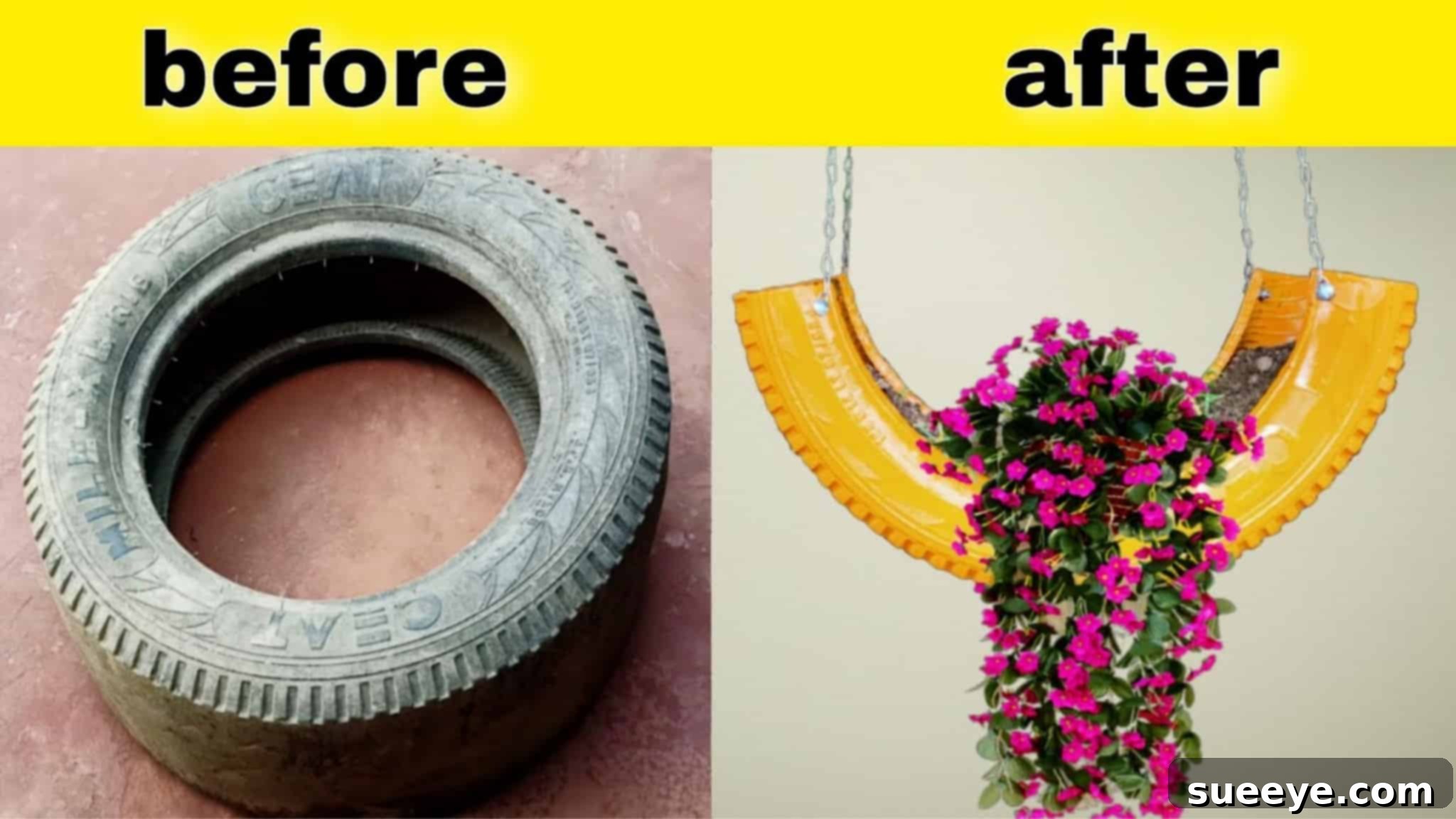
Transform Your Garden: Easy DIY Hanging Tire Flower Planters
Do you have a collection of old, unused tires gathering dust in your garage or yard? Instead of contributing to landfill waste, imagine transforming them into vibrant, personalized garden decor! Repurposing old tires is an ingenious way to embrace sustainable living, add character to your outdoor space, and prevent these non-biodegradable items from polluting the environment. This comprehensive guide will walk you through the simple yet rewarding process of creating stunning DIY hanging tire flower planters, perfect for any garden, patio, or balcony.
Old tires, while vital for vehicle safety, become a significant environmental burden once they are no longer roadworthy. Improperly discarded tires can pose fire hazards, become breeding grounds for mosquitoes, and leach harmful chemicals into the soil and water over time. By upcycling them into practical and beautiful planters, you’re not only giving them a new lease on life but also actively participating in waste reduction and environmental conservation. This project is not only incredibly simple and cost-effective but also offers endless possibilities for customization, allowing you to express your unique style.
RELATED: DIY Luxury Coffee Table Using An Old Tire
Why Repurpose Old Tires for Garden Planters?
The decision to repurpose old tires extends beyond mere aesthetics; it’s a step towards more sustainable living with tangible benefits:
- Environmental Stewardship: Every tire repurposed is one less tire in a landfill or an illegal dump. This reduces environmental pollution, minimizes the risk of tire fires (which release toxic smoke), and curtails the creation of habitats for disease-carrying insects.
- Cost-Effective Gardening: High-quality planters can be expensive. Utilizing old tires offers a free or very low-cost alternative, allowing you to allocate your gardening budget to plants, soil, and other essentials.
- Exceptional Durability: Tires are designed to withstand extreme conditions, making them incredibly durable and weather-resistant planters. They won’t crack, chip, or rot like many traditional materials, ensuring your creations last for years.
- Unleash Creativity: Tires provide a fantastic canvas for artistic expression. With a little paint and imagination, you can transform a plain black tire into a vibrant, eye-catching focal point that complements your existing garden decor.
- Unique Garden Feature: A hanging tire planter is an uncommon and appealing feature that adds a distinctive charm to your outdoor living area, sparking conversations and admiration from guests.
This DIY project is remarkably straightforward and requires only a few basic materials, making it accessible for crafters of all skill levels. You can personalize your hanging tire planters with various colors, patterns, and even attach decorative elements like plastic flowers or natural embellishments. Hang them from your porch, a sturdy tree branch, a pergola, or even against a strong garden wall to create stunning vertical interest. For a visual guide to this rewarding project, be sure to check out Sew & Style Tips’ tutorial.
Choosing and Preparing Your Old Tires
Not all old tires are created equal for crafting. Here’s what to consider:
- Source: Local tire shops often have a surplus of worn-out tires they are happy to give away or sell for a small fee. You might also find them at junkyards or through online community groups.
- Condition: Look for tires that are relatively clean and free from excessive grease or debris. While you will clean them, starting with less grime makes the process easier. Ensure there are no large punctures or exposed steel belts that could be dangerous to handle.
- Size: Standard car tires are ideal for most hanging planters due to their manageable size and weight. Truck tires might be too heavy once filled with soil and plants.
- Initial Cleaning: Before you even think about cutting or painting, a thorough cleaning is essential. Use a stiff brush, warm soapy water, and if necessary, a degreasing agent to remove all dirt, brake dust, and road grime. Rinse thoroughly and allow the tire to dry completely in the sun. This step is crucial for paint adhesion and overall hygiene.
Materials You’ll Need for Your DIY Hanging Tire Planter
Gathering your materials beforehand ensures a smooth and enjoyable crafting experience. Most items are readily available at hardware stores.
- Old Tire(s): Your primary material, thoroughly cleaned and dried.
- Exterior Paint: Choose a durable, weather-resistant paint suitable for outdoor use on rubber surfaces. Spray paint designed for plastics or metals often works well, as do exterior acrylic or latex paints. Consider using a primer first for better adhesion and longevity.
- Heavy-Duty Chain: Select a chain strong enough to support the weight of a tire filled with wet soil and plants. Galvanized or plastic-coated steel chains are excellent choices for rust resistance. The length will depend on your desired hanging height.
- Bolts and Nuts: Opt for rust-resistant hardware, such as stainless steel bolts and nuts. Choose a size that can securely pass through your chain links and tire wall, typically 1/4 to 3/8 inch in diameter, with a length appropriate for the tire’s thickness. Washers are highly recommended to distribute pressure and prevent the bolts from pulling through the rubber.
- Drill and Drill Bits: You’ll need a powerful drill with sharp bits suitable for drilling through rubber and potentially steel belts (though ideally, you’ll avoid cutting through them).
- Cutting Tool: A jigsaw with a blade designed for rubber or tough materials is the most efficient and safest option for cutting tires. A very sharp utility knife can also be used, but it requires more effort and caution.
- Safety Gear: Always prioritize safety! Wear sturdy work gloves to protect your hands, and safety glasses to shield your eyes from debris, especially when cutting or drilling.
- Potting Soil: High-quality, well-draining potting mix is essential for healthy plants.
- Plants/Flowers: Your choice of greenery to fill your beautiful new planter!
How to Make a Hanging Tire Flower Planter: Step-by-Step Guide
Step 1: Thoroughly Clean and Dry the Tire
As mentioned, proper preparation is key. Begin by cleaning your old tire meticulously. Use a hose to spray off loose dirt, then scrub vigorously with a stiff brush and a solution of warm water and dish soap or a dedicated degreaser. Pay special attention to the treads and sidewalls. Rinse until all soap residue and grime are gone. Allow the tire to dry completely in direct sunlight for at least 24 hours. A completely dry and clean surface is crucial for paint adhesion.
Step 2: Cut and Paint the Tire Halves
Carefully cut the tire in half. This is arguably the most challenging step, so proceed with caution. A jigsaw is the safest and most efficient tool for this task, providing a cleaner cut. If using a utility knife, ensure it’s extremely sharp, and make shallow, repetitive cuts along your desired line. You can choose a straight cut or get creative with a wavy or zig-zag pattern along the tread. Once cut, you’ll have two separate planter halves. Now, it’s time to add some color! Apply a primer specifically designed for rubber or outdoor use if desired, then paint each tire half with your preferred outdoor-grade paint. Apply multiple thin coats for even coverage and a smooth finish, allowing each coat to dry thoroughly according to the manufacturer’s instructions. Get creative with your color choices – bright hues can create a pop of color, while earthy tones blend naturally into the garden. Let the paint dry completely, which might take a day or two depending on the paint type and weather conditions.
Step 3: Drill Mounting and Drainage Holes
With your tire halves painted and dry, you’ll need to create holes for both mounting and drainage. First, mark the locations for your mounting holes. For a balanced hanging planter, you’ll typically need two holes on each “end” of the tire half – one towards the front and one towards the back. Ensure these holes are symmetrical to ensure the planter hangs level. Use your drill with a bit slightly larger than your chosen bolts to create these holes. Next, and crucially, drill several small drainage holes on the lowest point of the tire’s bottom surface. Proper drainage is vital for plant health, preventing waterlogging and root rot. A few holes around 1/4 to 1/2 inch in diameter should suffice.
Step 4: Secure the Hanging Chains
Now, it’s time to attach the chains that will allow your planter to hang. Take one end of your chain and insert a bolt through one of its links. Then, push the bolt through a pre-drilled mounting hole in the tire. On the inside of the tire, secure the bolt with a washer (to reinforce the rubber and prevent pull-through) and a nut, tightening it firmly. Repeat this process for the remaining mounting holes on the same tire half. Ensure all bolts are snugly tightened to prevent any wobbling or detachment. Repeat the entire process for the other tire half if you are making two planters. You can adjust the length of your chain by using S-hooks or cutting excess links to achieve your desired hanging height and aesthetic.
Step 5: Plant and Hang Your Masterpiece
Your planter is almost ready for its grand debut! Fill the tire half with a good quality potting mix, leaving a few inches from the rim for easy watering. Choose plants that are well-suited for hanging containers and your specific climate and light conditions. Trailing plants like petunias, ivy, sweet potato vine, or nasturtiums look spectacular cascading over the edge. Herbs, succulents, and compact flowers also thrive in these planters. Once your plants are nestled in, water them thoroughly. Finally, choose a sturdy location to hang your planter – a strong tree branch, a reinforced porch beam, a pergola, or a heavy-duty wall bracket. Always ensure the hanging point can support the significant weight of the planter once it’s filled with wet soil and mature plants. Step back and admire your eco-friendly, handmade creation!
Choosing the Right Plants for Your Tire Planter
Selecting suitable plants is crucial for the success and visual appeal of your hanging tire planters. Consider factors like sunlight exposure, watering needs, and growth habits.
- For Sunny Spots:
- Petunias: Offer a profusion of colorful blooms throughout the summer.
- Portulaca (Moss Rose): Drought-tolerant and vibrant, perfect for hot, sunny conditions.
- Geraniums: Classic and robust, providing continuous color.
- Nasturtiums: Edible flowers and leaves, adding both beauty and a culinary element.
- Succulents: For a low-maintenance, modern look, choose various trailing succulents.
- For Partial Shade/Shady Spots:
- Fuchsias: Known for their exotic, pendulous flowers.
- Impatiens: Bright and cheerful, perfect for adding color to shadier areas.
- Begonias: Come in various forms, offering both vibrant flowers and attractive foliage.
- Ivy (Hedera helix): A classic trailing plant that provides lush greenery.
- Ferns: Delicate and elegant, ideal for creating a natural, woodland feel.
- Herbs: Many herbs like mint, thyme, rosemary (if kept trimmed), and even basil can thrive in hanging planters, making them easily accessible for cooking.
Maintenance Tips for Long-Lasting Beauty
To ensure your DIY hanging tire planters remain beautiful and your plants healthy, follow these simple maintenance tips:
- Watering: Hanging planters tend to dry out faster than ground-level containers. Check the soil moisture daily, especially during hot or windy weather, and water thoroughly when the top inch of soil feels dry.
- Fertilizing: Plants in containers deplete soil nutrients quickly. Fertilize regularly with a balanced liquid fertilizer, following product instructions, to encourage vigorous growth and blooming.
- Pruning and Deadheading: Regularly pinch back leggy growth and remove spent flowers (deadheading) to encourage bushier growth and continuous blooming.
- Pest and Disease Check: Inspect your plants regularly for any signs of pests or diseases. Address issues promptly to prevent them from spreading.
- Winter Care: If you live in a region with cold winters, consider bringing tender plants indoors or moving the planters to a sheltered location. Alternatively, plant seasonal annuals and refresh them each spring.
- Chain Inspection: Periodically check the chains and bolts for any signs of rust, wear, or loosening. Tighten bolts as needed to ensure the planter remains securely hung.
More Creative Repurposing Ideas for Old Tires
The versatility of old tires extends far beyond planters. Once you’ve mastered this project, explore other creative ways to upcycle them:
- Easy DIY Upcycled Tire Seesaw Tutorial: Transform an old tire into a fun, safe seesaw for children, adding a playful element to your backyard.
- Easy-to-Build DIY Shelf Using an Old Bike Tire: Even bike tires can find new life as unique, circular shelves for displaying small items or decor.
- DIY Light-Up Table Made From An Old Tire: Create an innovative outdoor side table with internal lighting, perfect for evening ambiance.
- Outdoor Seating: Stack and cover tires with fabric or rope to create stylish and durable ottomans or chairs for your patio.
- Sandboxes for Kids: A large tractor tire can be cleaned, painted, and filled with sand for a unique, contained play area.
- Compost Bins: Stack multiple tires to create an effective and sturdy compost bin.
- Garden Edging: Cut tires into strips and use them to create durable, long-lasting borders for garden beds.
DIY Hanging Tire Flower Planter: Your Sustainable Garden Awaits
Embracing DIY projects like this hanging tire flower planter is a fantastic way to contribute to a greener planet while enhancing the beauty of your home. It’s an accessible, affordable, and incredibly rewarding craft that allows you to turn potential waste into a cherished piece of garden art. So, next time you come across an old tire, don’t see trash – see potential! Gather your tools, unleash your creativity, and embark on this sustainable journey to create stunning, personalized planters that will bring joy and color to your outdoor spaces for years to come.