
Discover the Power of Natural Drain Cleaning: Your Eco-Friendly Guide to Unclogging Drains
Dealing with a clogged drain is an inevitable household nuisance, often leading us to reach for strong, chemical-laden drain cleaners. While effective, these products come with a host of health risks, environmental concerns, and can even damage your plumbing over time. Many homeowners, myself included, shy away from their toxic fumes and corrosive properties. But what if there was a simple, highly effective, and completely natural alternative?
Inspired by the brilliant insights of Andrea Jean Cleaning on YouTube, we’ve discovered a revolutionary two-ingredient natural drain cleaner that truly works. This method leverages common kitchen staples to tackle stubborn clogs without posing a threat to your health or the planet. Say goodbye to harsh chemicals and embrace a safer, greener way to maintain clear pipes!
The Perils of Conventional Chemical Drain Cleaners
Before diving into our natural solution, it’s crucial to understand why so many are seeking alternatives. Commercial drain cleaners are typically formulated with highly corrosive chemicals like sodium hydroxide (lye) or sulfuric acid. While these agents can dissolve clogs, their aggressive nature comes with significant drawbacks:
- Health Hazards: Fumes can cause respiratory irritation, skin contact can lead to severe burns, and accidental ingestion is extremely dangerous. Keeping them around children or pets is a constant worry.
- Environmental Impact: Once flushed, these chemicals enter wastewater systems, potentially harming aquatic life and polluting water sources.
- Plumbing Damage: The heat generated by chemical reactions can warp or melt PVC pipes, weaken older metal pipes, and damage septic systems, leading to costly repairs.
- Ineffectiveness on all clogs: Some clogs, particularly hair or grease build-up, may only be partially dissolved, leading to recurring issues.
Given these concerns, it’s no wonder that a natural, non-toxic drain cleaner is a welcome relief for environmentally conscious and health-aware households.
Why Choose a Natural Baking Soda and Vinegar Solution?
The appeal of using baking soda and vinegar to unclog drains goes beyond just avoiding chemicals. This dynamic duo offers several compelling benefits:
- Safety: Both baking soda and vinegar are food-grade products, non-toxic, and safe to handle (though vinegar can be irritating to eyes). You won’t have to worry about dangerous fumes or corrosive burns.
- Cost-Effective: These ingredients are incredibly inexpensive and readily available in almost every kitchen, making it a budget-friendly solution.
- Eco-Friendly: They are biodegradable and won’t harm the environment or your septic system.
- Effective: The chemical reaction they produce creates a fizzing action that can break down grease, soap scum, and other organic matter commonly found in clogs.
- Odor Elimination: Baking soda is a natural deodorizer, helping to eliminate foul smells often associated with clogged drains.
The Science Behind the Fizz: How Baking Soda and Vinegar Work
At the heart of this natural drain cleaning method is a simple yet powerful acid-base reaction. Baking soda (sodium bicarbonate) is a mild base, and distilled white vinegar (acetic acid) is a mild acid. When these two substances combine, they create a chemical reaction that produces carbon dioxide gas.
This gas creates a vigorous bubbling and fizzing action, which helps to loosen and break apart the gunk, grease, and soap scum clinging to your drain pipes. The pressure from the expanding gas can also help to push the softened clog further down the pipe. While not as aggressive as sulfuric acid, the physical agitation combined with the dissolving properties of both ingredients makes for a surprisingly effective non-toxic drain unclogger.
Essential Materials for Your DIY Natural Drain Cleaner
Gathering your materials couldn’t be simpler. You likely have most, if not all, of these items already at home:
- Baking Soda: The star of our basic ingredient list, acting as an abrasive and odor neutralizer.
- Distilled White Vinegar: The acidic component that reacts with baking soda to create the unclogging fizz.
- Hot Water: Crucial for helping to loosen grease and soap scum before and after the chemical reaction. Boiling water is often preferred for its enhanced grease-melting capabilities.
- Dawn Dish Soap (Optional but Recommended for Grease Clogs): While not strictly one of the “two ingredients” for the chemical reaction, a squirt of Dawn (or similar degreasing dish soap) can significantly enhance the effectiveness, especially for grease-heavy clogs.
Step-by-Step Guide: Unclogging Drains Naturally with Baking Soda and Vinegar
This simple, non-toxic method, demonstrated beautifully by Andrea Jean Cleaning, makes drain maintenance accessible to everyone. Follow these steps carefully for the best results:
Step 1: Prepare Your Drain with Hot Water
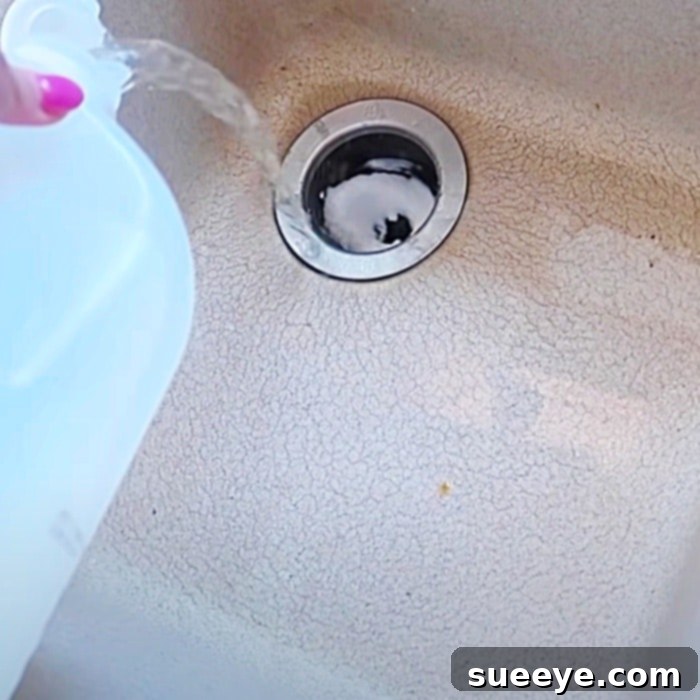
Begin by carefully pouring a generous amount of hot water down the clogged drain. If your tap water isn’t hot enough, boil a kettle of water. The hot water helps to pre-soften and loosen any grease, soap scum, or other debris that might be clinging to the pipes. This initial flush creates a more receptive environment for the baking soda and vinegar to work their magic. Use about 2-4 cups of very hot water, being cautious not to splash yourself.
Step 2: Introduce the Baking Soda
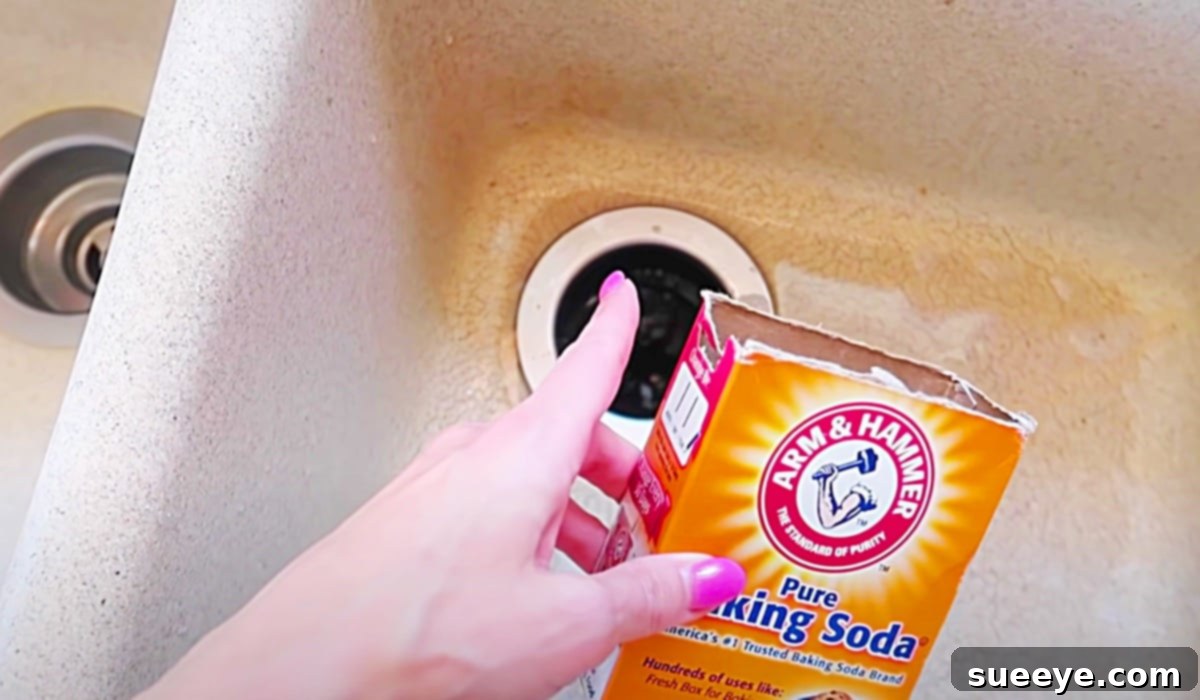
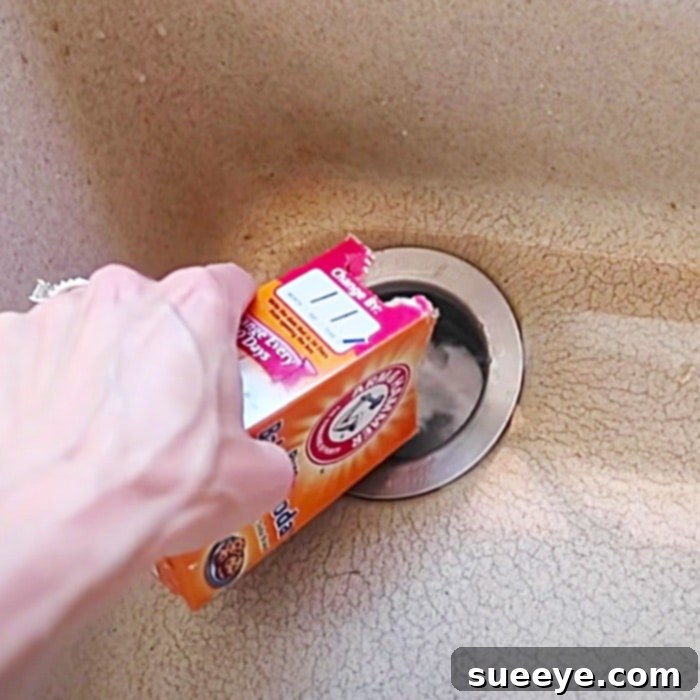
Next, pour one cup of baking soda directly into the drain opening. Try to get as much of it down the drain as possible, rather than having it sit around the opening. If you have a stubborn clog, you might want to use a little more. The baking soda acts as a mild abrasive and starts to absorb odors and any standing water.
Step 3: The Vinegar Reaction – The Unclogging Powerhouse
Immediately after the baking soda, pour one cup of distilled white vinegar down the drain. You will instantly notice a vigorous fizzing and bubbling sound and possibly see foam rising from the drain. This is the carbon dioxide gas being released as the acid (vinegar) reacts with the base (baking soda). If you’re using dish soap for grease clogs, add a squirt of Dawn after the baking soda and before the vinegar. Quickly cover the drain opening with a stopper or a wet cloth to help contain the pressure from the reaction, forcing it downwards into the clog.
Step 4: The Waiting Game
Allow the baking soda and vinegar mixture to work its magic for at least 30 minutes, or preferably for several hours (even overnight for very stubborn clogs). The longer you let it sit, the more time the chemical reaction has to break down and dissolve the clog. During this time, avoid running any water down that drain.
Step 5: Flush with More Hot Water
Once the waiting period is over, remove the stopper and flush the drain thoroughly with another large amount of hot water (2-4 cups, preferably boiling). This final flush will help wash away any remaining loosened debris and clear the pipe completely. You should notice that the water drains much faster, indicating a successfully unclogged pipe.
Advanced Tips for Stubborn Clogs and Preventive Maintenance
While the basic baking soda and vinegar method is incredibly effective, sometimes a clog requires a little extra persuasion or some proactive measures:
- Repeat the Process: For very stubborn or deeply embedded clogs, you may need to repeat the entire procedure two or three times. Patience is key!
- Add Dish Soap for Grease: As mentioned, for kitchen sink clogs often caused by grease, adding a squirt of a good degreasing dish soap (like Dawn) after the baking soda and before the vinegar can boost its effectiveness significantly.
- Gentle Plunging: After the mixture has sat for a while and you’ve flushed with hot water, if the drain is still slow, a few gentle plunges can help dislodge any remaining softened debris.
- Regular Maintenance: To prevent future clogs, consider performing this natural drain cleaning routine once a month. This proactive approach helps keep pipes clear and prevents build-up from becoming a major problem.
- Use Drain Strainers: Invest in simple drain strainers for all your sinks and shower drains. These inexpensive tools catch hair, food particles, and soap scum before they enter your pipes, dramatically reducing the frequency of clogs.
- Avoid Pouring Grease Down Drains: This is a golden rule for kitchen sink longevity. Scrape grease into the trash, not down the drain.
When to Seek Professional Help
While natural drain cleaners are powerful, they are not a magic bullet for every situation. It’s important to know when to call in the professionals:
- Persistent Clogs: If you’ve tried the baking soda and vinegar method multiple times over 24 hours and the drain remains completely blocked, it might indicate a more severe issue deeper in your plumbing system.
- Multiple Clogged Drains: If several drains in your home are clogged simultaneously, this often points to a main sewer line blockage, which requires professional attention.
- Foul Odors Despite Cleaning: Lingering foul odors after cleaning could mean decomposing matter is still present or there’s a more extensive issue.
- Sewage Backup: Any sign of sewage backing up into your sinks or toilets is an emergency that requires immediate professional plumbing intervention.
For standard, everyday clogs, however, this natural remedy is an excellent first line of defense.
Conclusion: Embrace a Safer, Greener Home
Cleaning drains doesn’t have to involve hazardous chemicals. By harnessing the simple, non-toxic power of baking soda and vinegar, as wonderfully showcased by Andrea Jean Cleaning, you can effectively clear most clogs, maintain healthy pipes, and contribute to a safer, more eco-friendly home environment. This method is not only gentle on your plumbing and the planet but also on your wallet. Give this natural drain cleaner a try and experience the satisfaction of a clear, chemical-free drain!