
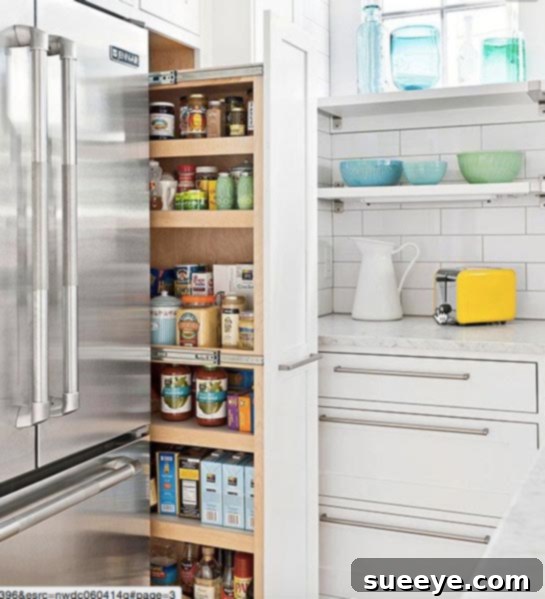
Unlock Hidden Potential: The Revolutionary Refrigerator Gap Pull-Out Pantry
In the perpetual quest for an organized and efficient home, the kitchen often emerges as the most challenging frontier. It’s the heart of the home, a hub of activity, and unfortunately, a common hotspot for clutter and disarray. We tirelessly search for ingenious ways to maximize every square inch, dreaming of a space where every item has its designated place, easily accessible yet neatly tucked away. This pursuit becomes even more critical for those navigating the confines of smaller apartments or compact kitchens, where conventional storage solutions are simply not an option. Imagine a world where you no longer have to trek to a distant pantry or wrestle with overflowing cabinets to find that one elusive ingredient. What if the solution to your kitchen storage woes has been hiding in plain sight all along?
Prepare to be amazed, as we delve into an idea so brilliant, so practical, and so undeniably transformative, it feels like the greatest innovation since sliced bread: the pull-out pantry ingeniously crafted to fit that often-overlooked, narrow gap beside your refrigerator. This isn’t just another kitchen hack; it’s a game-changer that promises to revolutionize your daily cooking experience, free up invaluable space, and bring an unprecedented level of convenience right to your fingertips. For anyone who has ever felt the frustration of a cramped kitchen or the inefficiency of a poorly organized pantry, this revelation is nothing short of miraculous.
The Perennial Challenge of Small Kitchens and Limited Storage
Small living spaces, whether in bustling city apartments, cozy starter homes, or charming older residences, frequently come with a common dilemma: surprisingly small kitchens. These compact culinary zones often leave residents grappling with a severe shortage of storage. Traditional solutions, such as installing more wall cabinets or a freestanding pantry, are frequently thwarted by architectural limitations, rental agreements prohibiting major structural changes, or simply the lack of available floor space. The result? Countertops become overwhelmed, ingredients pile up in inconvenient locations, and the simple act of preparing a meal can feel like a strategic military operation.
The implications of inadequate kitchen storage extend beyond mere inconvenience. It can lead to wasted food (due to items being lost or forgotten), increased stress during meal prep, and a general sense of unease in a space that should be inspiring and functional. The constant back-and-forth to a pantry located in another room, or the archaeological dig required to unearth a specific spice, drains energy and precious time. This is where the beauty of a targeted, space-saving solution like the refrigerator gap pantry truly shines, addressing these pervasive issues head-on with elegance and efficiency.
Discovering the Unsung Hero: The Refrigerator Gap Pull-Out Pantry
Every kitchen, regardless of its size, seems to possess a similar, often neglected void: the narrow space nestled between the side of the refrigerator and an adjacent wall or cabinet. This typically wasted strip of real estate, often measuring just a few inches wide (commonly around 4.5 to 6 inches, though variations exist), holds immense potential. Instead of allowing it to be a dust magnet or a forgotten crevice, imagine transforming it into a highly functional, fully accessible storage unit. This is precisely what the refrigerator gap pull-out pantry achieves.
The concept is deceptively simple yet incredibly effective: a tall, slender cabinet on wheels, designed to slide seamlessly into this gap. When you need an item, a gentle pull reveals its contents, offering a panoramic view of your spices, oils, canned goods, or frequently used condiments. Once you’ve grabbed what you need, it glides effortlessly back into its discreet hiding place, preserving the clean lines and open feel of your kitchen. This ingenious design not only reclaims otherwise lost space but does so in a way that enhances both the aesthetics and functionality of your culinary environment, making it an unbelievably handy addition to any kitchen.
Unpacking the Myriad Benefits of This Space-Saving Marvel
The advantages of integrating a pull-out pantry into your kitchen are profound and extend far beyond mere space reclamation. This clever storage solution offers a holistic upgrade to your kitchen’s utility and atmosphere.
Maximizing Every Inch of Space
This is arguably the most compelling benefit. In kitchens where every square inch is precious, converting a dead space into active storage is nothing short of a revelation. It effectively creates a “new cabinet” without requiring any major construction, demolition, or sacrificing existing countertop or floor space. For small apartments, where permission to make large holes in walls for additional cabinetry is often out of the question, this DIY-friendly solution provides a much-needed lifeline, proving that even the narrowest gaps can yield significant storage dividends, making it a fantastic small kitchen solution.
Unparalleled Convenience and Accessibility
Imagine having your most frequently used cooking essentials—spices, oils, sauces, baking supplies—organized and readily available. No more rummaging through deep cabinets or making multiple trips to a distant pantry. With a pull-out pantry, everything you need is literally at your fingertips. This instant accessibility significantly streamlines meal preparation, reduces cooking time, and minimizes stress, transforming a chore into a more enjoyable experience.
Enhanced Organization and Decluttering
A dedicated, well-organized pull-out pantry helps eliminate countertop clutter and prevents items from getting lost in the back of traditional cabinets. Each shelf can be thoughtfully arranged to hold specific categories of items, fostering a system that is easy to maintain. When everything has a home, your kitchen naturally feels more orderly, visually calmer, and far more inviting. This contributes significantly to overall kitchen organization.
Aesthetically Pleasing and Seamless Integration
One of the beauties of this solution is its ability to disappear. When closed, it blends seamlessly with your existing kitchen cabinetry or refrigerator, maintaining a clean and uncluttered aesthetic. You can customize its finish – paint it to match your cabinets, stain it to complement wooden elements, or leave it natural – ensuring it enhances your kitchen’s overall design rather than detracting from it. It’s a hidden gem that reveals its utility only when needed.
A Cost-Effective and Empowering DIY Solution
Building a refrigerator gap pantry is a highly economical alternative to custom cabinetry or professional remodels. With readily available materials and basic woodworking skills, you can construct a robust and beautiful storage unit for a fraction of the cost. This DIY approach not Preeserves money but also offers immense satisfaction and a sense of accomplishment, empowering you to tailor the solution precisely to your specific needs and preferences. It’s a project that delivers priceless utility without a hefty price tag.
Adaptability for Various Items
The versatile design of a pull-out pantry allows it to accommodate a wide array of kitchen essentials. From tall bottles of olive oil and vinegar to stacks of canned goods, jars of spices, small kitchen appliances, cleaning supplies, or even children’s snacks – its shelving can be adjusted to create the perfect home for diverse items. This adaptability makes it an incredibly flexible and valuable addition to any kitchen organization strategy.
Essential Design & Material Considerations for Your DIY Project
Embarking on a DIY refrigerator gap pantry project requires careful planning and selection of materials to ensure durability, functionality, and aesthetic appeal. The success of your custom storage unit hinges on these crucial decisions.
Accurate Measurement is Key
Before any cutting begins, precise measurements are paramount. Carefully measure the width, height, and depth of the gap between your refrigerator and the adjacent obstruction (wall, cabinet, or appliance). Remember to account for any potential obstructions like baseboards or uneven flooring. Crucially, consider the refrigerator door swing; ensure the pantry’s depth allows the door to open fully without hitting the unit. A slight clearance (e.g., 0.5 to 1 inch) on either side and the top is advisable to allow for smooth operation and prevent scraping.
Material Choices for Durability and Aesthetics
The primary structural material will dictate the pantry’s longevity and appearance. Plywood (especially Baltic Birch or furniture-grade plywood) is an excellent choice due to its strength, stability, and screw-holding ability. MDF (Medium-Density Fiberboard) offers a smooth finish ideal for painting but can be heavier and less resistant to moisture. For shelves, lighter plywood or even pegboard (for hooks) can be considered. Ensure all materials are smooth and free of defects before assembly.
The Magic of Mobility: Selecting the Right Casters
The casters are the unsung heroes of your pull-out pantry, enabling its smooth and silent operation. Opt for heavy-duty, low-profile swivel casters that can support the full weight of the pantry when loaded. Rubber wheels are often preferred for their quiet movement and floor protection. Consider casters with locking mechanisms if you want the option to keep the pantry stationary during use or cleaning. Proper placement of casters (typically four, one at each corner of the base) is vital for stability.
Hardware for Functionality and Style
Beyond the casters, choose appropriate hardware. A sturdy handle (or two, for a taller unit) will facilitate easy pulling and pushing. Shelf pins allow for adjustable shelving, offering flexibility as your storage needs evolve. Consider magnetic catches if you want the pantry to stay securely closed when not in use. All hardware should be robust and complement your kitchen’s existing fixtures.
Finishing Touches for Protection and Appeal
Once assembled, the finishing process protects your pantry and integrates it visually into your kitchen. Sanding all surfaces smooth is essential before applying primer, paint, or stain. A durable, washable paint finish is practical for a kitchen environment, or a clear polyurethane sealant can protect stained wood. Consider an edge banding for plywood edges to give it a more finished, professional look.
Bringing Your Vision to Life: A Conceptual Guide to Building Your Pantry
While specific step-by-step instructions might vary based on your design and skill level, the general process for constructing a refrigerator gap pantry follows a logical progression, ensuring a sturdy and functional outcome. Many excellent resources from home organization experts can provide detailed guidance to help you along the way.
Planning and Design Sketch
Begin by sketching out your design, marking dimensions and desired shelf spacing. Decide what items you intend to store to determine the optimal shelf heights. Will it have a solid back, or be open? A detailed plan minimizes errors during construction.
Cutting and Preparing Materials
Using your precise measurements, carefully cut all your wooden pieces – sides, top, bottom, and shelves. Accuracy here is crucial for a square and stable unit. Consider using a circular saw with a guide or having larger pieces cut at a hardware store for added precision.
Assembly and Reinforcement
Assemble the main box structure. Wood glue and screws or nails are typically used for strong joints. Ensure the unit remains perfectly square throughout the assembly process, using clamps if necessary. Reinforce corners if needed, especially if the unit will hold heavy items.
Sanding and Finishing
Once assembled, sand all surfaces smooth, starting with a coarser grit and progressing to finer grits. This prepares the wood for finishing and ensures a pleasant tactile experience. Apply your chosen primer, paint, or stain, following the manufacturer’s instructions for drying and recoating times. Multiple thin coats often yield a better finish than one thick coat.
Installing Casters and Hardware
Attach the casters to the bottom of the pantry base, ensuring they are evenly spaced and securely fastened. Install your chosen handle(s) at a comfortable height. If using adjustable shelves, drill shelf pin holes at regular intervals along the interior sides. Finally, insert shelf pins and position your shelves.
Loading and Optimizing
Once complete, begin loading your pantry. Place heavier items on lower shelves for stability. Organize items by category or frequency of use, ensuring that everything is visible and easily reachable. This final step transforms your raw materials into a highly efficient and beautiful kitchen asset.
Customization: Tailoring Your Pantry to Your Unique Needs
One of the most appealing aspects of a DIY pull-out pantry is the boundless potential for customization. This isn’t a one-size-fits-all product; it’s an opportunity to create a storage solution that perfectly aligns with your specific culinary habits and aesthetic preferences.
- Adjustable Shelving: Incorporate adjustable shelf pins to easily reconfigure shelf heights. This allows you to accommodate tall bottles one day and switch to shorter spice jars the next, providing unparalleled flexibility for various pantry items.
- Internal Dividers and Bins: Add small partitions or pull-out bins within shelves to keep smaller items like tea bags, baking soda, or spice packets neatly contained and prevent them from toppling over when the unit is moved.
- Magnetic Strips: Install magnetic strips on the sides or back panel to hold metal spice tins or small cooking utensils, further maximizing vertical storage and making the most of every inch.
- Hooks and Rods: Integrate small hooks for measuring spoons or oven mitts, or a tension rod to hold rolls of foil or plastic wrap, adding even more functionality.
- Integrated Labeling: Attach labels directly to shelves or use clear bins with labels to make identifying contents quick and easy, ensuring continuous organization and reducing search time.
- Aesthetic Integration: Beyond just matching paint, consider adding decorative trim, unique handles, or even a chalkboard panel on the side to write grocery lists or meal plans, making it a truly personalized piece.
The ability to tailor every detail ensures that your refrigerator gap pantry is not just a storage unit, but a perfectly integrated and highly personalized extension of your kitchen.
Beyond the Refrigerator: Other Potential Narrow Space Solutions
The brilliant concept of a narrow pull-out storage unit isn’t exclusively confined to the space beside your refrigerator. Once you embrace the philosophy of reclaiming “dead space,” you’ll start seeing opportunities throughout your home. Consider these other potential locations for similar custom solutions:
- Between a Washer/Dryer and a Wall: Perfect for laundry detergents, fabric softeners, and cleaning supplies, keeping your laundry room tidy.
- Beside the Oven or Dishwasher: Ideal for pot holders, oven mitts, or even small, flat baking sheets, keeping frequently used items close at hand.
- In a Bathroom: For extra toilet paper rolls, cleaning sprays, or personal care products next to a vanity or toilet, optimizing bathroom storage.
- In a Craft Room or Office: To store craft supplies, rolls of wrapping paper, or office organizers in tight corners, enhancing workspace efficiency.
- Between a Wall and a Large Piece of Furniture: Such as a dresser or bookshelf, for books, magazines, or small accessories, transforming unused voids.
The core principle remains the same: identify unused vertical gaps and transform them into functional, accessible storage. This creative approach to space management can significantly enhance organization and reduce clutter in various areas of your living environment, making your entire home feel more spacious and orderly.
Maintaining Order: Tips for a Continuously Organized Pantry
Building a new pull-out pantry is an exciting first step, but maintaining its organization is key to long-term satisfaction. A few simple habits can ensure your valuable new storage space remains tidy and efficient:
- Decant and Label: Transfer dry goods (like rice, pasta, or sugar) into clear, airtight containers. This not only looks uniform but also makes it easy to see contents and quantities. Label everything clearly with contents and expiration dates for better pantry management.
- Categorize Items: Group similar items together. All baking supplies on one shelf, all spices on another, oils and vinegars together. This logical arrangement makes finding things intuitive and reduces clutter.
- “First-In, First-Out” (FIFO): When stocking, place newer items behind older ones. This encourages you to use older products first, reducing waste and ensuring freshness.
- Regular Purge: Periodically (e.g., quarterly) go through your pantry. Discard expired items, donate unused non-perishables, and remove anything that doesn’t belong. This prevents accumulation and keeps the pantry efficient.
- Avoid Overstocking: While it’s tempting to fill every available spot, resist the urge to overstock. Leaving a little breathing room makes it easier to see and access items, and to put groceries away without creating new clutter.
- Use Bins and Dividers: Even with adjustable shelves, small bins or drawer dividers can help contain loose items and prevent them from shifting when the pantry is pulled out, maintaining order.
By integrating these habits, your refrigerator gap pantry will remain a highly functional and stress-free asset in your kitchen for years to come, truly becoming a cornerstone of clever kitchen organization.
Conclusion: Embrace the Power of Clever Kitchen Design
The refrigerator gap pull-out pantry is more than just a storage unit; it’s a testament to the power of innovative thinking in home organization. It brilliantly solves a common kitchen dilemma by transforming an overlooked sliver of space into a highly efficient, accessible, and aesthetically pleasing asset. This project embodies the spirit of practical home improvement, offering a significant boost in convenience, reducing clutter, and ultimately, making your kitchen a more enjoyable place to cook and gather.
From freeing up precious cabinet and counter space to putting frequently used essentials right at your fingertips, the benefits are undeniable. Whether you’re a seasoned DIY enthusiast or looking for your next rewarding project, building your own custom pull-out pantry promises both cost savings and immense personal satisfaction. So, take a fresh look at that narrow space beside your refrigerator. Envision its potential. Embrace this clever solution, inspired by brilliant ideas from countless home organization experts and publications, and transform your kitchen into a beacon of efficiency and order. It’s time to steal some much-needed kitchen storage and elevate your culinary experience!
Inspired by: Ingenious kitchen storage solutions often featured by home organization experts and publications.