
Master the Art of Quick Turkey Thawing: Your Guide to a Stress-Free Thanksgiving Dinner
Thanksgiving dinner is more than just a meal; it’s a cherished tradition, a gathering of loved ones, and a feast for the senses. At the heart of this celebration, the golden-brown turkey reigns supreme, surrounded by an array of beloved side dishes like creamy mashed potatoes, tangy cranberry sauce, savory stuffing, and delightful pies. However, the journey to that perfect centerpiece often begins days, or even weeks, before the big day, typically with the crucial step of thawing your frozen bird. Forgetting to plan ahead can turn holiday cheer into a last-minute panic, but thankfully, there are reliable solutions to ensure your Thanksgiving turkey makes it to the table on time.
Traditionally, thawing a turkey involves a slow, steady process in the refrigerator, which can take several days depending on its size. This method, while incredibly safe and effective, requires foresight and plenty of fridge space. For instance, a 15-pound turkey could take up to three days to fully thaw in the refrigerator, demanding careful planning. But what happens when life gets in the way, and you find yourself just hours away from dinner with a rock-solid, frozen turkey? Don’t despair! A quick and safe thawing method can save your holiday meal.
This comprehensive guide will walk you through an ingenious hack shared by Problem Solved, demonstrating how to quickly defrost a turkey using the cold water method. This technique is approved by food safety experts and can dramatically cut down thawing time, making sure your show-stopping turkey is ready for roasting precisely when you need it for your Thanksgiving dinner table.
RELATED: One-Pot Smothered Turkey Necks with Gravy
The Importance of Proper Turkey Thawing: Why It Matters
Before diving into the quick thawing method, it’s essential to understand *why* proper thawing is so critical. Thawing isn’t just about making the turkey pliable for cooking; it’s fundamentally about food safety. When a turkey thaws, its outer layers warm up faster than the interior. If these outer layers reach temperatures between 40°F and 140°F (4°C and 60°C) for too long, it enters the “danger zone” where harmful bacteria can multiply rapidly. This can lead to foodborne illnesses, which is the last thing anyone wants during a festive celebration.
The cold water thawing method, when executed correctly, ensures that the turkey remains at a safe temperature (below 40°F/4°C) throughout the process, minimizing bacterial growth while speeding up the thaw. This balance of speed and safety is what makes it an invaluable technique for busy holiday cooks.
Step-by-Step Guide: How to Safely Defrost a Turkey Quickly Using the Cold Water Method
Follow these detailed steps to quickly and safely defrost your Thanksgiving turkey, ensuring it’s perfectly ready for your culinary masterpiece.
Step 1: Keep It Wrapped – Packaging and Placement
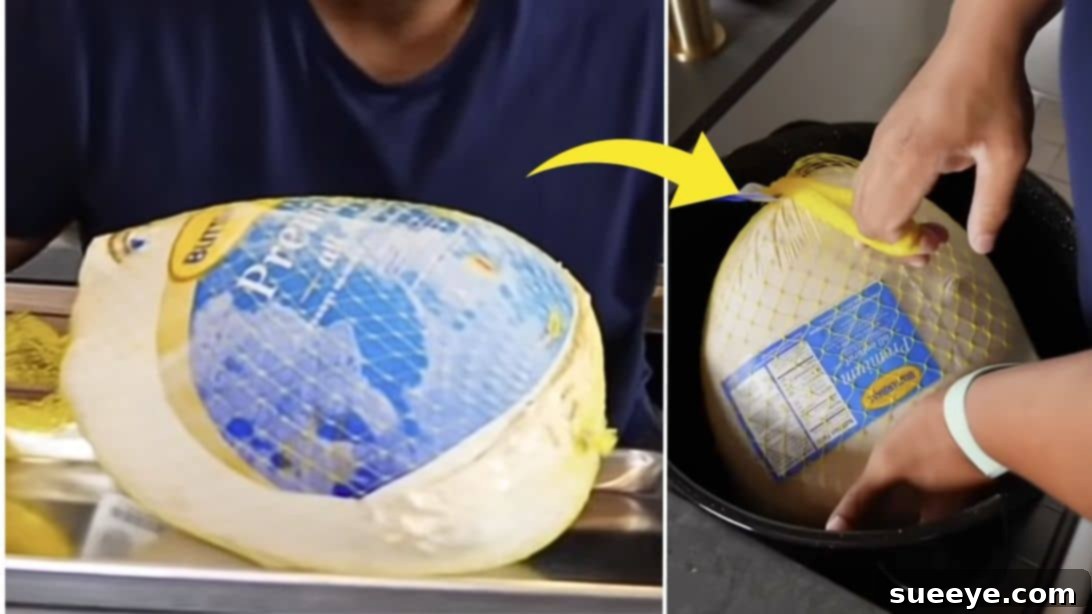
The first crucial step is to keep your turkey in its original, unopened, leak-proof packaging. This is non-negotiable for two significant reasons: it prevents water from seeping into the turkey, which could affect its flavor and texture, and more importantly, it prevents any potential cross-contamination of bacteria from the turkey to your sink or surrounding surfaces. Find a large, clean pot or a similar container – a large stockpot, a clean utility tub, or even your kitchen sink (after a thorough sanitization) will work. Carefully place the turkey into the pot, ideally breast-side down. This orientation can help the denser breast meat thaw more evenly with the rest of the bird, leading to a more consistent overall thaw.
Step 2: Submerge in Cool Water – The Right Temperature is Key
Once the turkey is securely in its container, fill the pot with cool tap water. The water should be cold, not warm or hot. While it might seem tempting to use hot water to accelerate the process, this is a dangerous mistake. Hot water would raise the surface temperature of the turkey too quickly, pushing it into the “danger zone” where bacteria thrive, and could even begin to prematurely cook the outer layers, resulting in an unevenly thawed and potentially unsafe bird. Ensure the turkey is completely submerged in the cool water. Every part of the turkey needs to be in contact with the water to facilitate rapid and uniform thawing.
Step 3: Keep It Down – Ensuring Full Submersion and Alternative Containers
A common issue with the cold water method is a buoyant turkey that insists on floating. To ensure continuous submersion, you’ll need to weigh it down. A sturdy baking pan placed directly on top of the turkey works well. For added weight, you can place heavy, sealed items like large cans of tomatoes, jars of pickles, or even a water-filled pitcher on the baking pan. Anything heavy and readily available in your kitchen can serve this purpose. If you don’t have a pot large enough for your turkey, don’t fret. A clean kitchen sink (ensure it’s thoroughly scrubbed and disinfected beforehand) or a clean, food-safe cooler can be excellent alternatives. If using a cooler, remember to disinfect it thoroughly with a bleach solution (e.g., one tablespoon of unscented liquid bleach per gallon of water) after the turkey is removed to prevent any bacterial residue.
Step 4: The Dynamic Thaw – Regular Water Changes for Speed and Safety
The key to the speed of this method lies in regularly changing the water. Every 30 minutes, drain the old, chilled water and refill the pot with fresh, cool tap water. This continuous exchange of water helps maintain a consistently cold environment around the turkey, preventing bacterial growth, while also bringing in slightly warmer water to accelerate the thawing process. The general rule of thumb for this method is approximately 30 minutes per pound of turkey. For example, a 12-pound turkey would take about 6 hours to thaw. A 20-pound turkey would require around 10 hours. Be sure to factor this into your holiday schedule. To check if your turkey is fully defrosted, feel for any hard, icy spots, especially in the cavity. The turkey should feel uniformly soft and flexible.
Step 5: Post-Thaw Prep – Ready for Roasting and Refrigeration
Once your turkey is completely defrosted, carefully remove it from the pot. It’s important to immediately pat it thoroughly dry with paper towels. A dry surface is crucial for achieving that coveted crispy skin during roasting. Now that it’s thawed, your turkey is ready for its next steps: whether that’s seasoning, brining, stuffing, or heading straight into the oven. If you’re not planning to roast it immediately, ensure it is transferred to the refrigerator as soon as possible. A thawed turkey can be safely stored in the refrigerator for one to two days before cooking. Always prioritize food safety to ensure your Thanksgiving meal is both delicious and worry-free.
Essential Food Safety Tips for Thawing Your Holiday Turkey
Ensuring your turkey is safely thawed is paramount for a healthy and enjoyable holiday meal. Here are some critical food safety guidelines to always keep in mind:
- Never Thaw at Room Temperature: Leaving a frozen turkey on the kitchen counter for hours is a serious food safety hazard. The outer layers can enter the danger zone (40°F – 140°F / 4°C – 60°C) long before the center thaws, allowing harmful bacteria to multiply.
- Use a Clean Environment: Always ensure your sink, pot, or cooler is spotlessly clean and sanitized before and after thawing to prevent cross-contamination.
- Do Not Refreeze Raw Thawed Turkey: Once a raw turkey is thawed, it should not be refrozen unless it has been cooked first. If you thaw it and realize you can’t cook it within the recommended 1-2 days, cook it and then you can safely freeze the cooked leftovers.
- Thorough Cooking is Key: Regardless of the thawing method, always cook your turkey to an internal temperature of 165°F (74°C) as measured with a food thermometer in the thickest part of the thigh, wing, and the center of the stuffing (if used).
- Prevent Cross-Contamination: Always wash your hands thoroughly with soap and water after handling raw turkey. Use separate cutting boards, utensils, and platters for raw and cooked poultry.
Common Thawing Mistakes to Avoid at All Costs
Even with the best intentions, a few common errors can compromise the safety and quality of your holiday turkey. Being aware of these pitfalls can help you avoid them:
- Ignoring Packaging Integrity: A torn or leaky package during the cold water thaw means water can get into the turkey, making it watery and potentially leading to bacterial contamination of your thawing water. Always ensure the packaging is sealed tightly.
- Using Hot Water: As stressed before, this is a major no-no. It can cook the exterior while leaving the interior frozen, creating a breeding ground for bacteria.
- Not Changing the Water Frequently Enough: The constant change of cool water is what makes the quick thawing method safe and efficient. Forgetting to change it every 30 minutes means the water will warm up, and the turkey will sit in a less-than-optimal temperature, increasing thawing time and bacterial risk.
- Assuming It’s Thawed Without Checking: Don’t rely solely on the clock. Always perform a physical check – ensure there are no hard, icy spots, especially in the turkey’s cavity.
- No Plan B: If you’re using a quick thaw method, have a contingency. Ensure you have enough time to cook the turkey fully once thawed, or have a backup plan for a smaller bird if yours simply won’t thaw in time.
Beyond Thawing: Achieving Thanksgiving Perfection
Once your turkey is perfectly thawed, the culinary adventure truly begins. Drying the turkey thoroughly before seasoning is a crucial step for crispy skin. Consider a dry brine for a flavorful and moist bird, or stuff it with your favorite aromatic ingredients. Whether you’re roasting, smoking, or deep-frying, starting with a properly thawed turkey sets the foundation for a delicious and memorable centerpiece.
Conclusion: A Seamless Thanksgiving with a Safely Thawed Turkey
A frozen turkey doesn’t have to derail your Thanksgiving plans. With the quick cold water thawing method, you have a safe, efficient, and reliable way to prepare your bird for roasting, even when time is of the essence. By following these steps carefully and adhering to essential food safety guidelines, you can ensure your holiday centerpiece is not only delicious but also perfectly safe for everyone to enjoy. So, go forth with confidence, conquer that frozen turkey, and savor every moment of your stress-free Thanksgiving feast!