
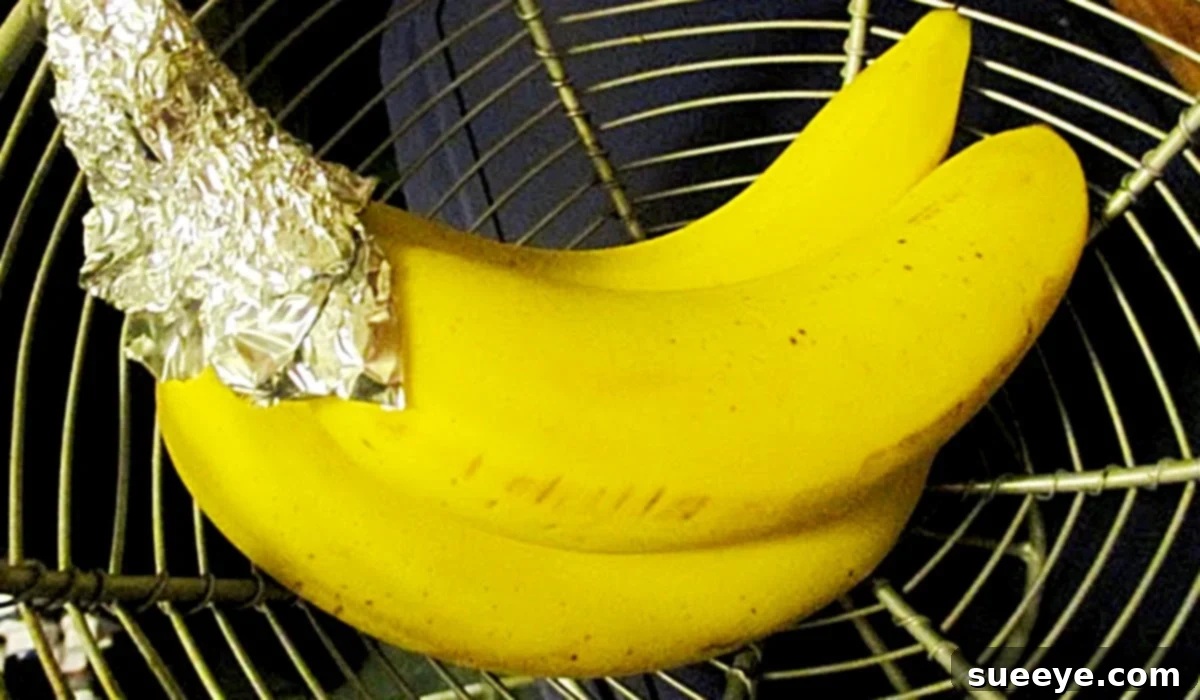
Are you tired of buying a fresh bunch of bananas only to have them turn brown and mushy within a few days? It’s a common kitchen dilemma that leads to unnecessary food waste. Bananas are a staple in many households, cherished for their delicious taste, nutritional benefits, and versatility in snacks, smoothies, and baking. However, their rapid ripening process can be a source of frustration. Fortunately, there’s a simple, cost-effective kitchen hack that promises to extend the life of your bananas, keeping them fresh and perfectly ripe for longer. Inspired by an eye-opening video tutorial from 107.3 Pop Crush on YouTube, we delved into the intriguing world of banana preservation, particularly focusing on the effectiveness of a surprising everyday item: aluminum foil.
How To Keep Bananas Fresh With Foil: The Ultimate Guide to Extending Banana Shelf Life
The secret to keeping bananas fresh longer lies in understanding their natural ripening process. Bananas, like many other fruits, release a natural gas called ethylene from their stems. This ethylene gas acts as a ripening hormone, signaling the fruit to mature and eventually decompose. The more ethylene gas present around the fruit, the faster it will ripen. By effectively sealing off the stem, we can significantly reduce the amount of ethylene gas released, thereby slowing down the ripening process and preserving your bananas for days beyond their usual shelf life.
The tutorial highlighted two primary methods for stem sealing: wrapping with plastic and wrapping with aluminum foil. While both aim to create a barrier, the materials interact differently with the fruit’s natural processes, leading to varied results. Intrigued by the claims, we couldn’t wait to put these methods to the test, observing their efficacy over a sustained period. Our goal was to determine which technique truly offered the best solution for maintaining banana freshness.
The Banana Freshness Challenge: Setting Up Our 6-Day Experiment
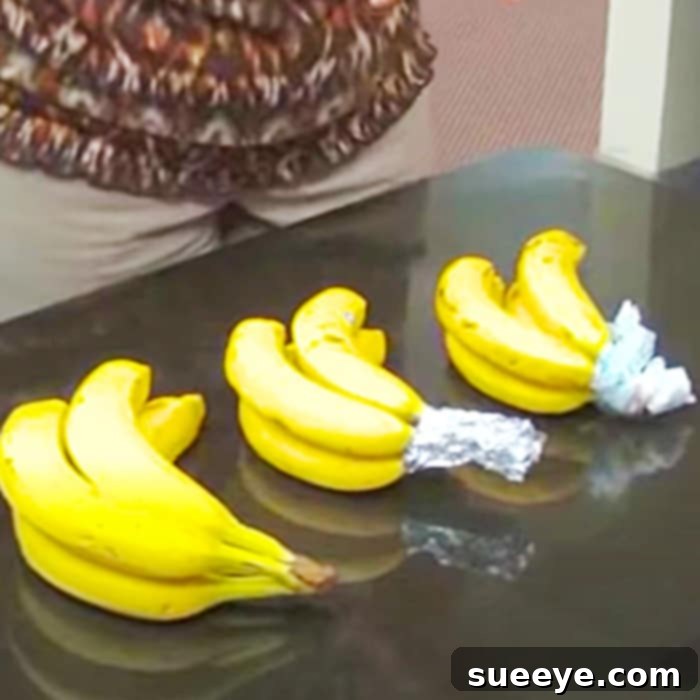
To thoroughly evaluate the different preservation techniques, we designed a simple yet effective home experiment, mirroring the spirit of the 107.3 Pop Crush video. We started with a fresh bunch of uniformly ripe, yellow bananas, ensuring they were free from any significant blemishes or signs of early ripening. This baseline consistency was crucial for obtaining reliable results. We then divided the bananas into three distinct groups, each subjected to a different storage method:
Group 1: The Control Group (No Wrap)
One segment of bananas was left completely unwrapped, serving as our control group. These bananas were stored at room temperature, exposed to the air as they typically would be in most kitchens. This group would provide a benchmark for the natural ripening rate, allowing us to accurately compare the effectiveness of the other methods. We anticipated these bananas would ripen fastest, demonstrating the usual lifespan of an unassisted banana.
Group 2: The Plastic-Wrapped Bananas
For the second group, we carefully wrapped the stems of the bananas individually with standard household plastic wrap. The idea behind this method is to create an airtight seal around the stem, thereby preventing the escape of ethylene gas. This is a common practice observed in some grocery stores and often recommended as a quick fix for fruit preservation. We aimed to see if this method truly delivered on its promise of extended freshness.
Group 3: The Aluminum Foil Wrapped Bananas
The third group, and arguably the most anticipated, involved wrapping the banana stems tightly with aluminum foil. Similar to the plastic wrap, the foil’s purpose is to create a barrier against ethylene gas. However, aluminum foil has different properties than plastic wrap, particularly regarding its permeability to air and moisture. The hypothesis was that foil might offer a superior seal or a more favorable environment for banana preservation.
All three groups of bananas were then placed side-by-side in the same location at room temperature, away from direct sunlight and other ripening fruits, to ensure consistent environmental conditions throughout the experiment. For the next six days, we diligently monitored their condition, observing changes in peel color, texture, and overall freshness.
The Revealing Outcomes: Which Method Triumphed in the Quest for Freshness?
After a full six-day observation period, the results were nothing short of astonishing and provided clear insights into the efficacy of each method. The visual differences between the groups were stark, allowing for definitive conclusions regarding the best way to keep bananas fresh.
The Plastic-Wrapped Bananas: A Surprising Failure
To our surprise, the bananas with stems wrapped in plastic film showed the quickest signs of deterioration. Within just a few days, these bananas began to develop significant brown spots and felt noticeably softer than the others. By the end of day six, they were quite overripe, bordering on spoiled. This outcome was particularly unexpected, as many people, and even some grocery stores, utilize plastic wrap for banana storage, presumably to extend their life.
The likely reason for this accelerated spoilage is moisture trapping. While plastic wrap effectively blocks ethylene gas from escaping, it also creates a micro-environment that can trap humidity and condensation. This trapped moisture, combined with the natural warmth of room temperature, can foster bacterial growth and accelerate the breakdown of the fruit’s cells, leading to faster decay rather than preservation. So, while grocery stores might use plastic for initial transport or bundling, it’s clearly not ideal for long-term home storage.
The Unwrapped Bananas: The Baseline
The control group, the bananas left entirely unwrapped, fared slightly better than their plastic-wrapped counterparts, but still ripened at their expected pace. By day six, they were well past their prime, showing widespread browning on their peels and a soft, mushy texture. They were still edible, particularly for baking purposes like banana bread, but certainly not ideal for fresh consumption. This result affirmed our baseline expectation, highlighting the natural progression of banana ripening without intervention.
The Aluminum Foil Wrapped Bananas: The Undeniable Victor
The star of our experiment was undoubtedly the bananas whose stems were meticulously wrapped in aluminum foil. After six full days, these bananas remained remarkably fresh. Their peels showed minimal browning, retaining a vibrant yellow color, and their texture was firm and perfectly ripe. They looked and felt as if they had only been picked a day or two prior, significantly outperforming both the unwrapped and plastic-wrapped groups.
This method proved to be the most effective in slowing down the ripening process. Aluminum foil creates an excellent barrier against ethylene gas, preventing it from permeating the surrounding air and accelerating the fruit’s maturation. Crucially, unlike plastic, aluminum foil doesn’t trap excessive moisture at the stem, allowing for better air circulation around the rest of the fruit and reducing the risk of premature decay caused by humidity.
Mastering the Aluminum Foil Method: A Simple Step-by-Step Guide
Implementing this highly effective banana preservation technique is incredibly straightforward. Here’s how you can easily adopt the aluminum foil method in your own kitchen to enjoy fresher bananas for longer:
- Choose the Right Bananas: Start with bananas that are mostly yellow with perhaps a hint of green at the tips. Avoid already heavily spotted or bruised bananas, as they are too far along in the ripening process to benefit significantly from this method.
- Separate the Bananas (Optional but Recommended): While you can wrap the entire bunch’s stem, for optimal results, it’s best to separate individual bananas. This ensures that the ethylene gas released by one banana doesn’t inadvertently affect its neighbors, even if their stems are wrapped. Gently twist or cut the stem of each banana to separate it from the bunch.
- Prepare the Foil: Tear off a small piece of aluminum foil, roughly 3-4 inches wide. You don’t need a large piece; just enough to securely cover the stem.
- Wrap the Stem Tightly: Take one separated banana and wrap the torn piece of aluminum foil tightly around its stem. Ensure the foil covers the entire cut end of the stem and extends slightly down the top of the banana. Press the foil firmly to create a snug seal, preventing any gas from escaping or entering.
- Store at Room Temperature: Place your foil-wrapped bananas in their usual spot on your kitchen counter or fruit bowl. Avoid placing them in direct sunlight or next to other fruits that produce high levels of ethylene, such as apples, tomatoes, or avocados, as this could still accelerate their ripening.
Beyond the Foil: Additional Tips for Extending Banana Shelf Life
While the aluminum foil method is incredibly effective, combining it with other smart storage practices can maximize your bananas’ freshness:
Keep Bananas Away from Other Fruits
As mentioned, many fruits, including apples, pears, peaches, and tomatoes, also release ethylene gas. Storing bananas near these fruits will cause them to ripen even faster, negating the efforts of stem wrapping. Always give your bananas their own designated space.
Store at Room Temperature (Initially)
Bananas should always be stored at room temperature until they reach your desired level of ripeness. Refrigerating green or under-ripe bananas can halt their ripening process completely, resulting in a black peel but an unpalatable, starchy, and unripe flesh.
Refrigerate Ripe Bananas
Once your bananas have reached perfect ripeness, you can transfer them to the refrigerator. The cold temperature will significantly slow down further ripening, preserving their sweetness and texture. Don’t be alarmed if the peel turns black; this is a natural reaction to the cold and does not affect the quality or taste of the fruit inside. They will remain fresh for several more days in the fridge.
Hang Your Bananas
Using a banana hanger can also contribute to longer shelf life. Hanging bananas prevents them from bruising on the counter (which accelerates ripening) and allows for better air circulation around the entire bunch, reducing pressure points that can lead to early spoilage.
Freeze Overripe Bananas
If you find yourself with a few too many ripe bananas despite your best efforts, don’t throw them away! Overripe bananas are perfect for freezing. Peel them, slice them into smaller pieces, and store them in an airtight freezer bag or container. Frozen banana slices are fantastic for smoothies, or you can use them whole for baking delicious banana bread, muffins, or pancakes. This is an excellent way to prevent food waste and always have a supply of banana goodness on hand.
Conclusion: A Simple Hack for Sustainable Living
The simple act of wrapping banana stems in aluminum foil proves to be an incredibly effective and practical method for significantly extending their freshness. Our home experiment, inspired by 107.3 Pop Crush, clearly demonstrated that this technique outperforms both leaving bananas unwrapped and using plastic film, which surprisingly hastened spoilage. By understanding the role of ethylene gas and how aluminum foil effectively mitigates its impact, you can drastically reduce food waste and enjoy your bananas at their prime for much longer.
This easy kitchen hack is not only cost-effective but also contributes to more sustainable living by minimizing the amount of food that ends up in the bin. We encourage you to try this method at home and experience the remarkable difference for yourself. Say goodbye to prematurely browning bananas and hello to consistently fresh, delicious fruit!