
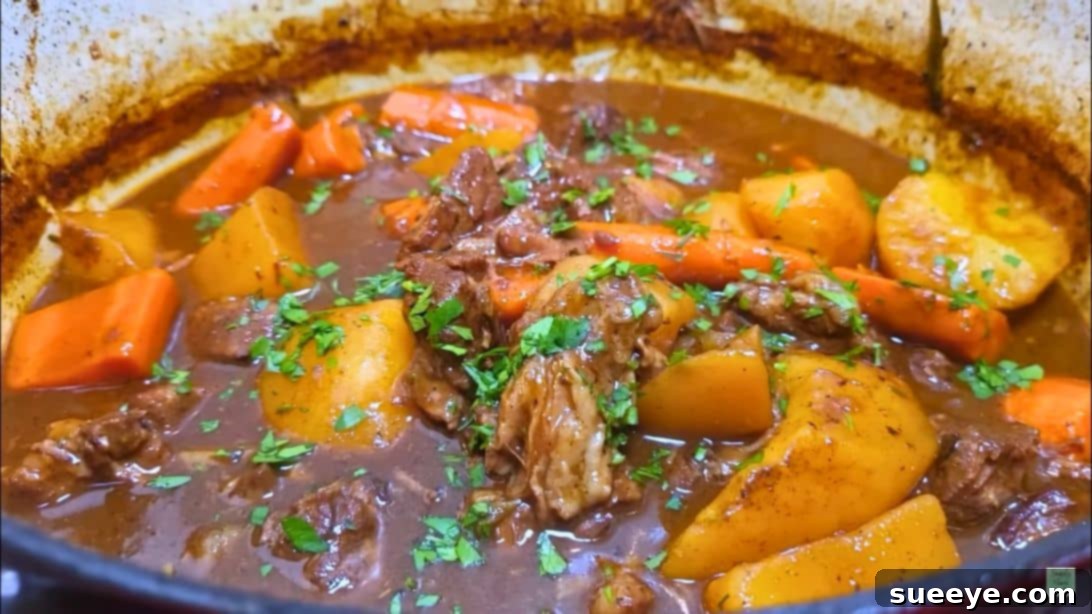
There are few culinary delights as comforting and deeply satisfying as a One-Pot Oven Beef Stew, especially as the crisp chill of winter settles in. Imagine the rich aroma filling your home, the promise of tender beef, perfectly cooked vegetables, and a savory broth that warms you from the inside out. This recipe for a classic oven-braised beef stew, inspired by the simple yet profound flavors perfected by Simply Mamá Cooks, delivers an irresistible dish that will become a staple in your family’s meal rotation. It’s a hearty, flavorful masterpiece, designed for ease and maximum deliciousness.
This isn’t just any beef stew; it’s an experience. The beef chuck roast, slow-cooked to melt-in-your-mouth perfection, alongside tender potatoes and sweet carrots, all bathed in an incredibly rich, savory sauce, creates a symphony of textures and tastes. Whether you’re planning a cozy family dinner or preparing a comforting lunch, this beef stew is the epitome of home-cooked goodness. Its robust flavors and wholesome ingredients make it an ideal meal for the cold season, offering both nourishment and warmth.
RELATED: Looking for the perfect accompaniment? Don’t forget to check out this Easy Crockpot Garlic Mashed Potatoes Recipe to complement your stew!
One of the greatest advantages of this recipe is its “one-pot” design. Say goodbye to piles of dirty dishes and hello to simple cleanup after a fulfilling meal. This makes it not only a fantastic weeknight option but also an excellent choice for gatherings, potlucks, or entertaining a larger group, effortlessly scaling up to feed many hungry guests. While this beef stew is a complete meal in itself, it also pairs beautifully with a variety of side dishes. Envision crusty artisan bread, fluffy mashed potatoes, steaming white rice, crisp green beans, or warm, flaky biscuits, all perfect for soaking up every last drop of the exquisite gravy. There’s truly nothing quite like a classic, oven-braised French beef stew to bring warmth and joy to any table.
Why Choose This One-Pot Oven Beef Stew?
In a world of complicated recipes, this one stands out for its simplicity and the depth of flavor it achieves with minimal effort. Here’s why this oven beef stew should be your next go-to recipe:
- Unmatched Convenience: The “one-pot” method isn’t just a gimmick; it’s a game-changer. From searing the meat to simmering the stew, everything happens in a single vessel. This dramatically reduces cleanup time, allowing you more moments to enjoy with your family rather than scrubbing pans.
- Deep, Developed Flavors: The magic of oven braising allows flavors to meld and deepen over several hours. The consistent, low heat transforms humble ingredients into a rich, complex sauce that coats every piece of tender beef and vegetable. This slow cooking process extracts maximum flavor from the aromatics, wine, and broth.
- Perfectly Tender Beef: Using beef chuck roast, a cut known for its marbling and ability to break down beautifully under slow, moist heat, guarantees incredibly tender, fork-shredded beef. The oven provides the ideal environment for this transformation, ensuring juicy, succulent results every time.
- Wholesome and Hearty: Packed with protein from the beef, carbohydrates from potatoes, and essential vitamins from carrots and other vegetables, this stew is a balanced, nutritious meal. It’s comforting without being overly heavy, making it perfect for sustaining you through colder months.
- Ideal for Entertaining: Preparing a meal for a crowd can be daunting, but this stew makes it easy. It can be made ahead of time (flavors only improve overnight!), and it holds well, allowing you to focus on your guests rather than last-minute cooking stress.
The Magic of Oven Braising for Stews
Oven braising is the secret weapon behind truly spectacular beef stew. It involves searing meat at high heat to create a flavorful crust, then cooking it slowly in a covered pot with liquid at a lower temperature. This method is particularly effective for tougher cuts of meat like beef chuck, which, under prolonged, gentle heat, break down into incredibly tender morsels. The controlled, consistent heat of an oven, especially when using a heavy-bottomed Dutch oven or similar pot, prevents scorching and ensures even cooking.
Unlike stovetop simmering, where heat often comes from the bottom, oven braising envelops the pot in heat from all sides. This gentle, uniform cooking environment encourages the connective tissues in the beef to gelatinize, resulting in that desirable melt-in-your-mouth texture. Simultaneously, the aromatic vegetables, herbs, and liquids infuse the meat and the entire stew with deep, rich flavors, creating a harmonious and unforgettable dish.
Essential Ingredients for an Unforgettable Beef Stew
Crafting the perfect beef stew begins with selecting quality ingredients. Each component plays a vital role in building the layered flavors of this classic dish:
- 3 1/2 lbs of Boneless Beef Chuck Roast: This is the star of the show. Chuck roast is ideal for stewing due to its rich marbling and connective tissue, which breaks down into gelatin during slow cooking, yielding incredibly tender and flavorful results.
- 2 teaspoons of Coarse or Flaky Salt & 1 1/2 teaspoons of Cracked Black Pepper: Essential for seasoning the beef before searing, helping to develop a flavorful crust and enhancing the overall taste of the stew.
- 1/4 cup of Cooking Oil: Used for browning the beef and sautéing the aromatics. A high smoke point oil like canola, vegetable, or grapeseed oil is recommended.
- 1 Large Onion (chopped): The foundation of flavor for many savory dishes, onions provide a sweet and pungent base when sautéed.
- 1 Celery Stick (chopped): Part of the classic mirepoix (onion, carrot, celery), it adds an earthy, slightly bitter note that balances the richness of the stew.
- 5 Cloves of Garlic (roughly chopped): An indispensable aromatic, garlic infuses the stew with its pungent, savory essence.
- 2 tablespoons of Tomato Paste: A concentrated source of umami, tomato paste adds depth, a touch of acidity, and a beautiful color to the sauce. It should be cooked briefly to deepen its flavor.
- 6 tablespoons of All-Purpose Flour: Used to create a roux-like coating on the beef, which thickens the stew and helps bind the flavors.
- 4 1/2 cups of Beef Broth: The primary liquid base, providing savory depth and moisture for braising the beef and vegetables. Choose a high-quality, low-sodium broth if possible.
- 1 1/2 cups of Dry Red Wine: Adds complexity, acidity, and a robust depth of flavor. A dry red wine like Cabernet Sauvignon, Merlot, or Pinot Noir works wonderfully. The alcohol cooks off, leaving only its rich essence.
- 3 Sprigs of Fresh Thyme & 2 Sprigs of Fresh Rosemary: These woody herbs are classic partners for beef, imparting earthy, aromatic notes that are synonymous with comforting stews.
- 1 Dried Bay Leaf: Contributes a subtle, herbaceous note that rounds out the stew’s flavor profile. Remember to remove it before serving.
- 1 1/2 lbs of Russet Potatoes: Starchy potatoes that absorb the rich stew liquid beautifully and become wonderfully tender. Cut them into substantial chunks so they don’t disintegrate during cooking.
- 2 Large Carrots: Add natural sweetness, vibrant color, and another layer of earthy flavor. Like potatoes, cut them into larger pieces for even cooking.
- Salt and Pepper to Taste: Final seasoning adjustments are crucial for balancing the flavors before serving.
- Chopped Fresh Parsley: A bright, fresh garnish that adds a pop of color and a touch of herbaceousness to the finished dish.
Using fresh, high-quality ingredients will elevate your beef stew from good to truly exceptional. Don’t be afraid to taste and adjust seasonings throughout the cooking process!
How to Make Beef Stew in the Oven: A Step-by-Step Guide
Follow these detailed steps to create a truly remarkable one-pot oven beef stew that will impress everyone at your table.
Step 1: Prepare the Beef
Begin by patting your boneless beef chuck roast dry with paper towels. This crucial step helps achieve a better sear. Then, cut the roast into uniform 1 to 1 1/2-inch pieces. Uniformity ensures even cooking. Generously season all sides of the beef chunks with the coarse or flaky salt and freshly cracked black pepper. While your beef is seasoning, place your heavy-bottomed pot or Dutch oven over medium-high heat and allow it to preheat for a few minutes. A properly heated pot is key for effective searing.
Step 2: Brown the Beef to Perfection
Once your pot is hot, add the cooking oil. When the oil shimmers, carefully place the seasoned beef pieces into the pot in a single layer, ensuring there are spaces in between each piece. Avoid overcrowding the pot, as this will steam the meat instead of browning it. If necessary, brown the beef in batches. Cook each side until it develops a deep, rich brown crust – this Maillard reaction is vital for creating complex flavors. Once beautifully browned on all sides, transfer the beef to a clean plate and set aside.
Step 3: Build the Flavor Base
Reduce the heat to medium. Add the chopped onion and celery to the same pot, along with a small pinch of salt. Sauté, scraping up any browned bits from the bottom of the pot, until the vegetables become translucent and tender, usually about 5-7 minutes. Next, add the roughly chopped garlic and, if the pot seems dry, a tiny bit more oil. Continue to sauté for another minute until fragrant, being careful not to burn the garlic. Stir in the 2 tablespoons of tomato paste and cook for an additional minute, stirring constantly. This step deepens the tomato flavor and color.
Step 4: Incorporate the Flour
Return the browned beef, along with any accumulated juices from the plate, to the pot with the sautéed vegetables. Sprinkle the 6 tablespoons of all-purpose flour evenly over the beef and vegetables. Stir thoroughly to ensure the beef and vegetables are well coated with the flour. Cook for about 2 minutes, stirring occasionally, allowing the flour to cook out and thicken slightly, which will prevent a raw flour taste in the final stew.
Step 5: Add Liquids and Aromatics
Pour in the dry red wine. Using a wooden spoon or spatula, aggressively scrape the bottom of the pot to deglaze, loosening all the flavorful browned bits (fond) that have accumulated. These bits are packed with umami and are essential for a rich sauce. Allow the wine to simmer for a minute or two to reduce slightly. Then, add the beef broth, fresh thyme sprigs, fresh rosemary sprigs, and the dried bay leaf. Stir everything together. Place the lid securely on the pot and increase the heat to bring the mixture to a rolling boil.
Step 6: Begin Oven Braising
Once the stew mixture has reached a boil, turn off the stovetop heat. Carefully transfer the covered pot to your preheated 325°F (160°C) oven. Allow the stew to cook undisturbed for an hour and a half. This initial braising period begins the tenderization process for the beef.
Step 7: Introduce Vegetables and Continue Braising
While the stew is in the oven during its first cooking phase, prepare your vegetables. Peel and cut the russet potatoes into large, roughly 1 1/2-inch chunks, and peel and slice the carrots into thick, sturdy pieces. After the initial 1.5 hours, carefully remove the pot from the oven. Using tongs, remove and discard the spent sprigs of thyme and rosemary, as well as the bay leaf. They have imparted their flavor. Taste the broth and adjust seasonings (salt and pepper) if needed. Add the prepared chunks of carrots and potatoes to the pot. Stir gently to ensure they are submerged in the liquid. Cover the pot with its lid once more and return it to the oven for another 1.5 hours, or until the beef is incredibly tender and the vegetables are cooked through but still hold their shape.
Step 8: The Finishing Touch and Serving
Once the stew has finished its second cooking period, carefully remove it from the oven. Give it a gentle stir. The sauce should be rich and thickened, and the beef should be falling apart. Ladle generous portions into bowls and garnish with freshly chopped parsley just before serving. The vibrant green parsley adds a burst of freshness and color, completing this magnificent one-pot oven beef stew.
Tips for the Best One-Pot Oven Beef Stew
To ensure your beef stew is nothing short of spectacular every time, consider these additional tips:
- Don’t Rush the Browning: This is arguably the most crucial step for flavor. Take your time to get a deep, dark sear on all sides of the beef. This caramelization (Maillard reaction) builds layers of savory notes that cannot be replicated.
- Use a Quality Dutch Oven: A heavy-bottomed, oven-safe pot, like a cast-iron Dutch oven, distributes heat evenly and maintains a consistent temperature, which is essential for successful braising.
- Deglaze Thoroughly: After browning the meat and sautéing the aromatics, the browned bits (fond) stuck to the bottom of the pot are pure flavor gold. Use a wooden spoon to scrape them up when you add the wine or broth.
- Taste and Adjust Seasoning: Flavors can change during long cooking times. Always taste your stew after the first braising period and before serving. Adjust salt, pepper, or even a splash of red wine vinegar for brightness, if needed.
- Uniform Vegetable Cuts: While the beef needs to be in larger chunks, ensure your potatoes and carrots are also cut into similar, substantial sizes. This prevents them from turning to mush during the extended cooking time.
- Rest Before Serving: Like a good steak, allowing the stew to rest for 10-15 minutes after it comes out of the oven lets the flavors meld further and the sauce to settle.
- Make Ahead for Enhanced Flavor: Beef stews often taste even better the next day. The flavors continue to meld and deepen overnight in the refrigerator. Reheat gently on the stovetop or in the oven.
Serving Suggestions: What to Pair with Your Hearty Stew
This One-Pot Oven Beef Stew is a meal in itself, but it can be elevated and diversified with thoughtful pairings:
- Crusty Bread or Baguette: Essential for soaking up every last drop of the rich, savory gravy. A warm, crusty loaf is a non-negotiable accompaniment.
- Creamy Mashed Potatoes: A classic pairing! The smooth texture and buttery flavor of mashed potatoes provide a wonderful contrast to the robust stew, and they are perfect for absorbing the sauce. Don’t forget to check out our Easy Crockpot Garlic Mashed Potatoes Recipe.
- Fluffy Rice: White or brown rice can also serve as an excellent base for the stew, soaking up the delicious liquid.
- Warm Biscuits: Light, flaky biscuits offer another comforting option for dipping and savoring the sauce.
- Simple Green Vegetables: To add freshness and a touch of color, serve with steamed green beans, roasted asparagus, or blanched broccoli.
- Fresh Side Salad: A crisp green salad with a light vinaigrette can provide a refreshing counterpoint to the richness of the stew.
- Red Wine Pairing: Since the stew uses red wine, consider pairing it with a glass of the same varietal you used in the recipe, like a robust Cabernet Sauvignon or a mellow Merlot, to enhance the meal’s overall experience.
Storage and Reheating Your Beef Stew
One of the beauties of beef stew is its excellent shelf life and how well it reheats, making it perfect for meal prep or enjoying leftovers:
- Refrigeration: Store any leftover stew in an airtight container in the refrigerator for up to 3-4 days. Ensure it has cooled completely before storing.
- Freezing: Beef stew freezes beautifully! Transfer cooled stew to freezer-safe containers or heavy-duty freezer bags, leaving a little headspace. It can be frozen for up to 2-3 months. Thaw overnight in the refrigerator before reheating.
- Reheating:
- Stovetop: Gently reheat thawed or refrigerated stew in a pot over medium-low heat, stirring occasionally, until heated through. Add a splash of beef broth or water if the stew seems too thick.
- Microwave: For individual portions, microwave in a microwave-safe bowl, stirring every minute, until hot.
Frequently Asked Questions About Oven Beef Stew
- Can I make this stew without red wine?
Yes, you can! If you prefer not to use wine, simply substitute it with an equal amount of beef broth. The stew will still be delicious and flavorful, though it might lack a bit of the complexity that wine adds. - What other vegetables can I add to the stew?
Feel free to customize your stew with other root vegetables like parsnips or turnips, or even add mushrooms during the last hour of cooking for an earthy touch. Just ensure they are cut to appropriate sizes for even cooking. - Can I use a different cut of beef?
While beef chuck roast is highly recommended for its tenderness and flavor when braised, you can also use other cuts suitable for stewing, such as beef short ribs (boneless) or stewing beef. Cooking times might need slight adjustments. - How can I make my stew thicker or thinner?
If your stew is too thin, you can make a slurry by mixing 1-2 tablespoons of cornstarch with an equal amount of cold water, then stirring it into the simmering stew until it thickens. If it’s too thick, simply add more beef broth or water until you reach your desired consistency. - Can I make this stew in a slow cooker?
Yes, you can adapt this recipe for a slow cooker. Follow steps 1-5 (browning beef, sautéing aromatics, adding flour and liquids) on the stovetop. Then, transfer everything to your slow cooker and cook on low for 6-8 hours or on high for 3-4 hours, adding the potatoes and carrots during the last 1.5-2 hours of cooking.
One Pot Oven Beef Stew: A Comforting Classic
This One-Pot Oven Beef Stew recipe is more than just a meal; it’s an embrace of comfort, tradition, and culinary satisfaction. With its simple preparation, robust flavors, and the convenience of a single pot, it effortlessly delivers a hearty, wholesome dish perfect for any occasion, especially when the weather calls for something truly warming. So gather your ingredients, fire up your oven, and prepare to create a memorable meal that will be cherished by all. Enjoy the process, savor the aromas, and delight in every spoonful of this timeless, comforting classic.