
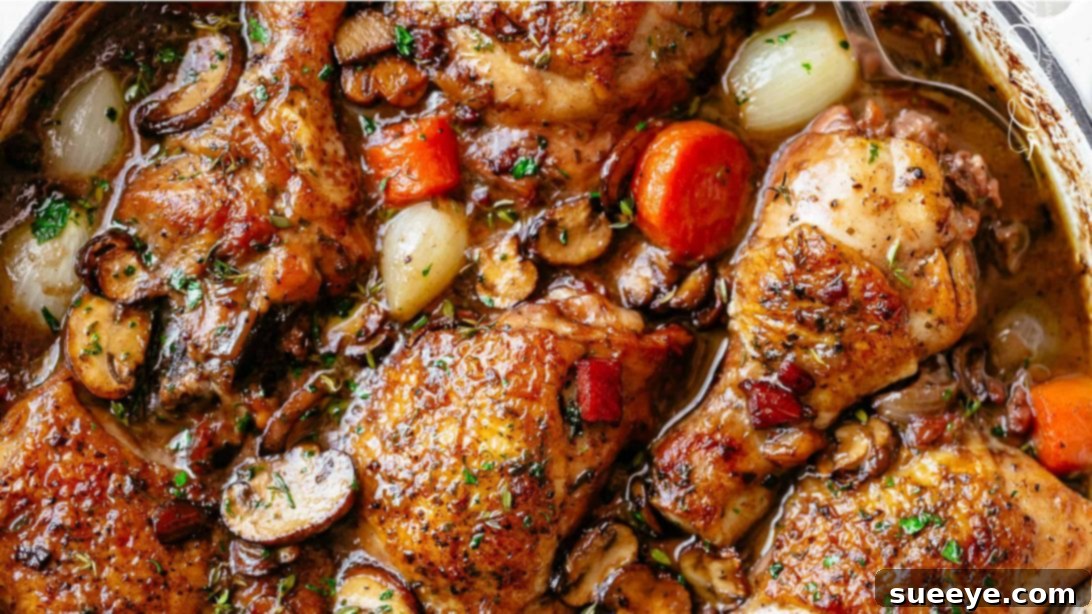
Mastering Classic Coq Au Vin: An Easy One-Pot French Chicken Stew Recipe
Are you looking for an impressive yet surprisingly simple dish that will transport your taste buds straight to the heart of France? If you have chicken on hand and are seeking an extraordinary way to prepare it, then look no further than this exquisite Coq Au Vin recipe, inspired by the culinary expertise of Cafe Delites on YouTube. This beloved French classic, often hailed as a pinnacle of rustic elegance, transforms humble chicken into a rich, deeply flavorful stew, thanks to the magic of red wine, savory bacon, and aromatic herbs.
Coq Au Vin, literally meaning “rooster with wine,” is a hearty, comforting meal renowned for its succulent chicken, tender vegetables, and an intoxicating sauce that penetrates every morsel. The beauty of this particular rendition lies in its accessibility. Despite its sophisticated reputation, this recipe is incredibly straightforward to follow, making it perfect for both seasoned cooks and adventurous beginners alike. You’ll be amazed at the depth of flavor you can achieve in a single pot, making clean-up a breeze.
This dish is an ideal choice for a comforting family dinner, a gathering with friends, or even a romantic dinner for two. Imagine a chilly evening, a warm, fragrant stew simmering on the stove, promising a meal that’s both nourishing and incredibly satisfying. Pair it with creamy mashed potatoes, crusty bread, or even a simple green salad, and you have a complete, unforgettable dining experience. Get ready to elevate your cooking skills and delight your palate with this timeless French masterpiece.
RELATED: Easy One-Pot Chicken Stew & Dumplings Recipe
What is Coq Au Vin? A Culinary Journey
Coq Au Vin is more than just a chicken stew; it’s a celebration of French culinary heritage. Originating from Burgundy, this dish traditionally features rooster braised with red Burgundy wine, lardons (bacon), mushrooms, and sometimes garlic and pearl onions. Over time, chicken became the more common poultry choice, making it accessible and quicker to cook while retaining the classic flavors. The essence of Coq Au Vin lies in its slow braising process, which allows the chicken to become incredibly tender and absorb the complex flavors of the wine and other ingredients.
The dish is a testament to French rural cooking, where local ingredients were combined to create meals that were both nourishing and flavorful. It exemplifies the concept of ‘terroir’ – the unique characteristics imparted by the region’s climate, soil, and traditional practices. While various regional variations exist (some using white wine, others specific local ingredients), the red wine version remains the most iconic. It’s a dish that evokes images of cozy French bistros and home kitchens, embodying comfort and culinary artistry.
Why This Coq Au Vin Recipe Stands Out
This particular Coq Au Vin recipe, inspired by Cafe Delites, distinguishes itself through its simplicity and effectiveness. Many classic French recipes can seem daunting, but this version streamlines the process without sacrificing any of the authentic flavors. Here’s why it’s a must-try:
- One-Pot Wonder: Minimizing clean-up, this recipe cleverly uses a single pot or Dutch oven for searing, sautéing, and braising, locking in all the delicious flavors.
- Rich, Deep Flavor: The combination of crispy bacon, perfectly seared chicken, aromatic vegetables, and a luxurious red wine sauce creates an unparalleled depth of flavor that develops beautifully as it simmers.
- Effortless Elegance: Despite its ease, the final dish looks and tastes incredibly sophisticated, making it ideal for entertaining guests or simply treating yourself to a gourmet meal at home.
- Hearty and Satisfying: Packed with protein and vegetables, Coq Au Vin is a complete meal that will leave you feeling wonderfully satisfied.
- Beginner-Friendly: With clear, step-by-step instructions, even those new to French cooking can achieve perfect results on their first attempt.
Ingredients for a Rich and Flavorful Coq Au Vin
Crafting the perfect Coq Au Vin begins with selecting quality ingredients. Each component plays a vital role in building the dish’s signature deep, savory flavor profile. Here’s what you’ll need to gather:
- 2 tbsp oil: A neutral cooking oil like canola, vegetable, or grapeseed oil is perfect for searing and sautéing.
- 4 ounces of bacon, diced: Bacon is essential, not just for its flavor but also for the rendered fat, which provides a rich base for cooking the chicken and vegetables. Opt for thick-cut bacon for more texture and flavor.
- 8 chicken pieces, skin on and bone in: Using bone-in, skin-on chicken (such as thighs, drumsticks, or a mix) is crucial. The bone adds incredible flavor to the stew, while the skin crisps beautifully and protects the meat from drying out during braising.
- 2 tsp salt, plus more to season: Essential for seasoning every layer of the dish. Remember to adjust to taste throughout the cooking process.
- ½-1 tsp freshly ground black pepper, plus more to season: Freshly ground pepper offers a more vibrant and aromatic kick compared to pre-ground versions.
- 1 onion, diced: A foundational aromatic, providing a sweet and savory base.
- 8 ounces of carrots, cut into 1-inch pieces: Carrots add sweetness, color, and texture, softening beautifully as they braise.
- 4 cloves garlic, minced: Garlic is a cornerstone of French cuisine, adding depth and a pungent aroma.
- ¼ cup brandy, optional: Brandy offers a delicate warmth and complexity, deepening the flavor of the sauce. If you prefer not to use alcohol, you can omit it or substitute with a splash of extra chicken stock.
- 350ml or 1½ cup red wine: This is the star of Coq Au Vin! A dry red wine like Burgundy, Pinot Noir, or Cabernet Sauvignon works best. Choose a wine you would enjoy drinking, as its flavor will concentrate in the sauce.
- 1¼ cups low-sodium chicken stock or broth: Low-sodium stock allows you to control the overall saltiness of the dish more effectively. It provides additional liquid and savory notes.
- 5 sprigs thyme: Fresh thyme offers an earthy, herbaceous aroma that pairs wonderfully with chicken and red wine.
- 3 tbsp unsalted butter, at room temperature, divided: Butter is used to sauté mushrooms and, combined with flour, creates a ‘beurre manié’ (kneaded butter) to thicken the sauce, adding richness and a silky texture.
- 1½ tbsp all-purpose flour: Used with butter to form the thickening agent for the stew.
- 8 ounces of frozen pearl onions: These add a delightful sweetness and tender texture to the finished dish without the fuss of peeling fresh ones.
- 8 ounces of brown mushrooms, thickly sliced: Cremini or button mushrooms are ideal, adding an earthy, umami depth. Slicing them thickly ensures they retain some texture after cooking.
- 2 tbsp of freshly chopped parsley, for garnish, optional: A sprinkle of fresh parsley at the end brightens the dish with color and a fresh, peppery note.
Step-by-Step Guide: How to Make the Perfect Coq Au Vin
Follow these detailed steps carefully, and you’ll be rewarded with a Coq Au Vin that tastes like it came straight from a French countryside kitchen.
Step 1: Preparing the Foundation (Bacon and Chicken)
Begin by preheating your oven to 350°F (175°C). This ensures your oven is ready for the braising stage. Place a large, heavy-bottomed pot or Dutch oven on your stove over medium heat. Add the diced bacon and cook it gently for about 8 to 10 minutes, stirring occasionally, until it’s beautifully crispy and has rendered its fat. The rendered bacon fat is a crucial flavor enhancer, so don’t discard it! Using a slotted spoon, transfer the crispy bacon pieces to a plate lined with paper towels to drain excess fat, and set them aside. This bacon will be added back into the stew later, providing bursts of savory flavor and texture.
Next, prepare your chicken. Pat each piece thoroughly dry with paper towels. This step is essential for achieving a good sear, as moisture prevents browning. Season the chicken generously all over with salt and freshly ground black pepper. Working in batches to avoid overcrowding the pan (which would steam the chicken instead of searing it), place the chicken pieces skin-side down in the hot bacon fat in the pot. Sear for approximately 5 minutes per side, or until the skin is deeply golden brown and crispy, and the meat begins to caramelize. This searing creates a flavorful crust and locks in moisture. Once seared, transfer the chicken pieces to the plate with the cooked bacon, setting them aside for later. Leave the rendered fat and any browned bits (fond) in the pot – this is where the next layer of flavor will begin.
Step 2: Building Flavor (Aromatics and Wine)
With the chicken removed, add the diced onions and carrots to the same pot, along with a pinch more salt and pepper. Sauté these aromatics over medium heat for about 5 minutes, stirring frequently, until they begin to soften and lightly brown. The browning of the vegetables adds another layer of sweetness and complexity to the stew. Now, add the minced garlic and cook for just another minute until it becomes fragrant. Be careful not to burn the garlic, as it can turn bitter.
Pour in the brandy (if using), red wine, and chicken stock. Immediately use a wooden spoon to scrape up any browned bits (fond) from the bottom of the pot. This process, known as deglazing, incorporates all those concentrated flavors into your liquid base. Give everything a good stir to combine. Add the fresh thyme sprigs, then carefully return the seared chicken and crispy bacon back into the pot, ensuring you also pour in any accumulated juices from the plate – these juices are packed with flavor! Bring the liquid to a gentle simmer, allowing the aromas to meld.
Step 3: The Oven Magic and Mushroom Sauté
Once the stew is simmering, cover the pot tightly with a lid and carefully transfer it to your preheated oven. Allow it to braise for approximately 20 to 30 minutes, or until the chicken is thoroughly cooked through and very tender. Braising in the oven ensures even cooking and prevents the bottom from scorching, allowing the flavors to develop slowly and deeply.
While the chicken is in the oven, take this opportunity to prepare the mushrooms. Place a separate pan on a stove over medium heat. Add 1 tablespoon of the unsalted butter and let it melt until foamy. Add the thickly sliced brown mushrooms to the pan. Cook for about 8 to 10 minutes, stirring occasionally, until the mushrooms are soft, beautifully browned, and have released their liquid. Searing mushrooms separately rather than adding them directly to the stew prevents them from becoming soggy and ensures they develop a rich, earthy flavor. Once cooked, set them aside.
Step 4: The Finishing Touches (Thickening and Serving)
Once the chicken is done cooking in the oven, carefully remove the pot. The aroma will be incredible! To thicken the sauce, take the remaining 2 tablespoons of unsalted butter and mash it together with the 1½ tablespoons of all-purpose flour in a small bowl to create a smooth paste, known as a ‘beurre manié’. This paste is a classic French thickening agent that ensures a lump-free, silky sauce. Add this butter-flour mixture into the simmering pot of stew, stirring continuously until it has completely dissolved and the sauce begins to thicken to your desired consistency. This usually takes a few minutes.
Next, add the frozen pearl onions and the sautéed mushrooms to the pot. Bring the stew back to a gentle simmer once more, allowing it to cook for an additional 10 minutes. This gives the pearl onions time to soften and warm through, and allows all the newly added flavors to meld beautifully with the thickened sauce. During this final simmer, taste the sauce and adjust the seasoning with additional salt and pepper as needed. The flavors should be rich, balanced, and harmonious. Finally, remove the thyme sprigs (if desired) and garnish generously with freshly chopped parsley just before serving. Serve immediately, perhaps over creamy mashed potatoes, and savor every delicious bite!
Expert Tips for a Flawless Coq Au Vin
Achieving a restaurant-quality Coq Au Vin at home is simpler than you think with these expert tips:
- Choose the Right Wine: The wine is paramount. Use a dry, full-bodied red wine you’d enjoy drinking. Pinot Noir, Burgundy, or even a good Cabernet Sauvignon are excellent choices. Avoid “cooking wine” as it often contains added salt and inferior flavor.
- Don’t Skimp on Bacon: Quality bacon is key. Its rendered fat and savory flavor lay the foundation for the entire dish. Crispy bacon added back at the end provides a wonderful textural contrast.
- Sear for Flavor: Don’t rush the searing of the chicken. A deep golden-brown crust adds immense flavor and a beautiful color to the final stew. Pat the chicken very dry before searing for best results.
- Mise en Place (Everything in its Place): Prepare all your ingredients (chop vegetables, measure liquids) before you start cooking. This French culinary philosophy will make the cooking process smooth and enjoyable.
- Adjust Seasoning: Taste the sauce at various stages, especially before serving. The flavors will concentrate, so adjust salt and pepper as needed for perfect balance.
- Patience is a Virtue: Coq Au Vin benefits from slow, gentle cooking. Resist the urge to rush the braising process, as the tenderness of the chicken and depth of flavor depend on it.
Serving Suggestions: What to Pair with Coq Au Vin
Coq Au Vin is a complete meal on its own, but certain accompaniments truly elevate the experience:
- Creamy Mashed Potatoes: The classic pairing! The smooth, buttery mashed potatoes are perfect for soaking up the rich, savory sauce.
- Crusty French Bread: A warm baguette is essential for dipping into the luxurious sauce, ensuring no drop goes to waste.
- Pasta or Rice: Egg noodles or a simple serving of white rice can also be excellent choices to complement the stew.
- Green Vegetables: Balance the richness with something fresh. Steamed green beans, asparagus, or a simple mixed green salad with a light vinaigrette provide a refreshing contrast.
- Wine Pairing: Serve the same red wine you used in the recipe, or a similar dry red, to perfectly complement the flavors of the dish.
Variations and Customizations for Your Coq Au Vin
While the classic Coq Au Vin is wonderful, don’t hesitate to experiment and make it your own:
- White Coq Au Vin (Coq Au Vin Blanc): For a lighter flavor profile, try using dry white wine (like Chardonnay or Sauvignon Blanc) and chicken stock, often with pearl onions and button mushrooms, sometimes with cream added at the end.
- Vegetable Additions: Feel free to incorporate other root vegetables like parsnips or celery, or even some chopped leeks for added flavor.
- Herb Alternatives: While thyme is traditional, a bay leaf or a sprig of fresh rosemary can also add delightful aromatic notes.
- Non-Alcoholic Version: If you prefer to omit alcohol, you can replace the red wine with an equal amount of good quality non-alcoholic red wine, or use additional low-sodium chicken stock combined with a tablespoon of red wine vinegar for acidity and depth. You can also add a splash of grape juice for sweetness.
- Chicken Cuts: While bone-in, skin-on chicken is recommended for flavor, boneless, skinless thighs can be used for a quicker cooking time, though the flavor may be slightly less robust.
Storage and Reheating: Enjoying Your Leftovers
Coq Au Vin often tastes even better the next day as the flavors have more time to meld and deepen. Here’s how to store and reheat your delicious leftovers:
- Refrigeration: Allow the stew to cool completely, then transfer it to an airtight container. It will keep well in the refrigerator for up to 3-4 days.
- Freezing: Coq Au Vin freezes beautifully. Once cooled, portion the stew into freezer-safe containers or heavy-duty freezer bags. It can be frozen for up to 2-3 months. Thaw overnight in the refrigerator before reheating.
- Reheating: For best results, reheat the stew gently on the stovetop over medium-low heat, stirring occasionally, until it is heated through. You may need to add a splash of chicken stock or water to loosen the sauce if it has thickened too much. Alternatively, you can reheat individual portions in the microwave.
This classic French Coq Au Vin recipe promises a delightful culinary experience with minimal fuss. Its rich, complex flavors and tender chicken make it a truly satisfying meal that you’ll want to make again and again. Enjoy the process of creating this timeless dish and savor the incredible results!
*All images are credited to Cafe Delites via YouTube. Visit their channel for more inspiring recipes!