
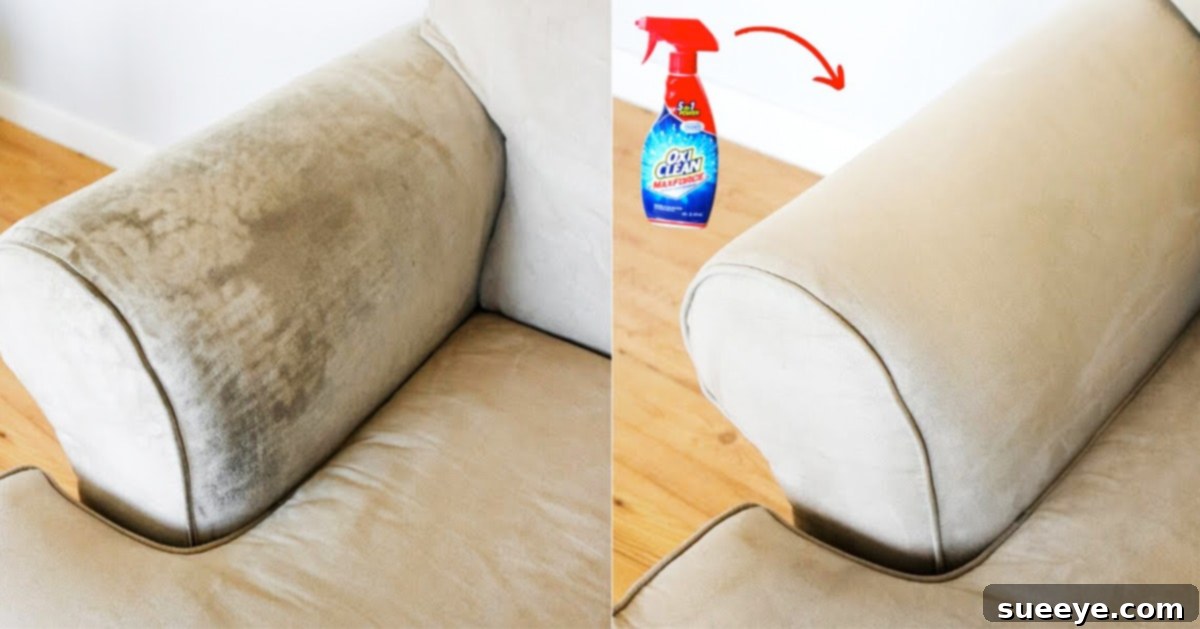
Revitalize Your Sofa: The Ultimate Guide to Removing Stubborn Stains with Oxi Clean
There are few things as frustrating as discovering an unsightly stain marring the beauty of your beloved sofa or couch. Whether it’s a spilled drink, a food mishap, or a pet accident, stains can quickly transform a cozy living space into a source of stress. Fortunately, restoring your furniture to its pristine condition doesn’t have to be a daunting task or require expensive professional services. With the right approach and a powerful cleaning agent like Oxi Clean, you can effectively tackle even the toughest of marks.
Inspired by the practical and highly effective cleaning tips shared by DIY Lily Ardor on YouTube, this comprehensive guide will walk you through a simple yet potent method for stain removal. While the original demonstration features a microfiber couch and sofa, the principles outlined here are adaptable and generally effective across various upholstery materials. Oxi Clean has long been a go-to for many households, proving its efficacy in laundry rooms and bathrooms alike, and it’s equally impressive when it comes to lifting stubborn stains from your furniture.
This detailed guide aims to provide you with all the knowledge you need to confidently clean your sofa. We’ll cover everything from essential supplies and preparation to step-by-step instructions, ensuring you achieve professional-level results right at home. Say goodbye to unsightly blemishes and hello to a fresh, clean, and inviting living space once more.
Why Oxi Clean is Your Best Friend for Upholstery Stains
Oxi Clean products are renowned for their powerful oxygen-based cleaning action. Unlike traditional bleach, Oxi Clean uses a combination of hydrogen peroxide and sodium percarbonate to create oxygen bubbles that lift and break down stains at a molecular level. This makes it incredibly effective against a wide range of organic stains, including food, drink, pet accidents, and general dirt and grime, without the harshness or color-fading risks often associated with chlorine bleach. Its versatility and ability to penetrate deep into fabric fibers make it an ideal choice for restoring your sofa’s appearance.
Pre-Cleaning Considerations: Know Your Fabric
Before diving into any cleaning process, it’s crucial to understand your sofa’s upholstery material. Most furniture tags include cleaning codes:
- W: Water-based cleaner safe (like Oxi Clean).
- S: Solvent-based cleaner only.
- WS: Water or solvent-based cleaner safe.
- X: Vacuum only, no liquids.
While Oxi Clean is generally safe for many “W” and “WS” fabrics, especially durable ones like microfiber, it’s always wise to perform a patch test on an inconspicuous area first. Apply a small amount of the Oxi Clean solution to a hidden spot (like the back of a cushion or underneath the sofa) and let it sit for 5-10 minutes. Blot with a clean white cloth to check for any color transfer or fabric damage. If no adverse reactions occur, you can proceed with confidence.
What You’ll Need: Essential Supplies for Stain Removal
Gathering your materials before you begin will ensure a smooth and efficient cleaning process. Most of these items are likely already in your home or easily accessible, making this a truly DIY-friendly method.
- Oxi Clean Max Force (or similar Oxi Clean stain remover): This is the star of our cleaning show. While Max Force is excellent, other Oxi Clean variants can also be effective. For lighter stains or as an alternative, a solution of mild dish soap and water can sometimes work, but Oxi Clean provides superior stain-fighting power.
- Hard Bristle Brush: A brush with firm bristles is essential for agitating the Oxi Clean solution into the fabric fibers, helping to break down and lift the stain. Ensure it’s clean and free from any residues that could transfer to your sofa.
- Clean Sponge: A soft, clean sponge will be used for wetting the stained area and assisting in the rinsing process. Avoid abrasive sponges that could damage your upholstery.
- Microfiber Towels: Several clean, absorbent microfiber towels are crucial for blotting, rubbing, and drying the treated areas. Microfiber is highly effective at absorbing moisture and dirt without leaving behind lint.
- Little Green Bissell Spot Cleaner (or similar portable extractor), optional but highly recommended: This compact upholstery cleaner is a game-changer. It effectively sprays a cleaning solution and then vacuums up the dirty water, providing a deep clean and significantly reducing drying time. If you don’t have one, don’t worry – we’ll cover alternatives.
- Small Bowl/Bucket: For mixing water or rinsing your sponge.
- Vacuum Cleaner: A regular household vacuum with an upholstery attachment is useful for initial preparation.
Directions: Your Step-by-Step Guide to a Spotless Sofa
Step 1: Prepare Your Sofa and the Area
Before you begin the actual stain treatment, proper preparation is key. Start by carefully removing all the cushions from your sofa. This allows you to access all areas, including seams and crevices where dirt and debris might accumulate, and ensures you can treat stains on the cushion covers effectively. Use your regular vacuum cleaner with an upholstery attachment to thoroughly vacuum the entire sofa, including the base, armrests, and both sides of the cushions. This step removes loose dirt, dust, and pet hair, preventing them from turning into muddy residue once you introduce liquid cleaners.
It’s also a good idea to ensure the room is well-ventilated. Open windows or turn on a fan to facilitate air circulation, which will aid in drying and dissipate any cleaning solution odors. Place a protective layer, such as old towels or a plastic sheet, under the stained area if the stain goes through the cushion or is on a fixed part of the sofa, to protect your floor.
Step 2: Apply Oxi Clean to the Stained Area
Once your sofa is prepped, it’s time to target the stains. Identify all visible marks. Take your Oxi Clean Max Force spray and generously spray the stained areas. Ensure the stain is fully saturated with the product, but avoid oversaturating the fabric to prevent deep penetration into the foam padding, which can prolong drying time and potentially lead to mildew. For larger stains, work in manageable sections.
If you’re using a powdered Oxi Clean mixed with water, follow the product’s instructions for dilution. Apply the solution using a clean cloth or sponge, dabbing it onto the stain rather than rubbing, to avoid spreading the stain further.
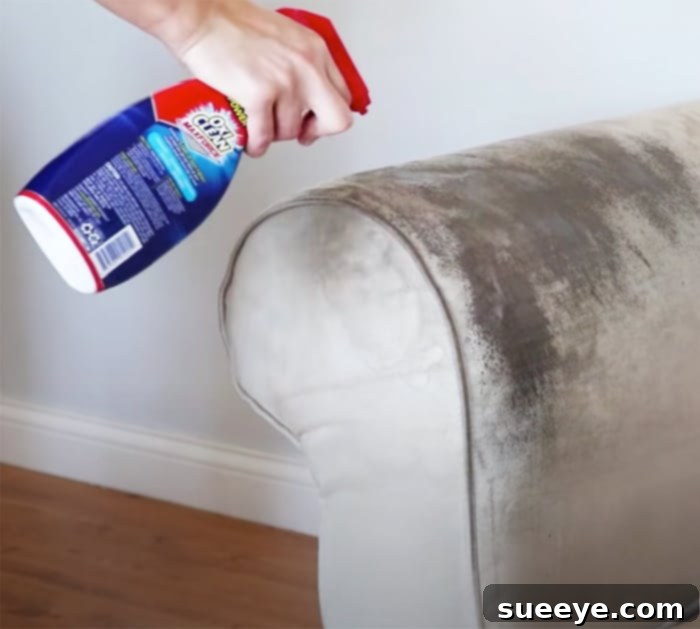
Step 3: Agitate and Let it Soak
Immediately after applying the Oxi Clean, take your hard bristle brush and gently but firmly scrub the stained area. The goal here is to work the cleaning solution deep into the fabric fibers, loosening the stain particles. Scrub in multiple directions (circular motions, then back and forth) to ensure thorough coverage. Be firm enough to agitate the stain, but avoid excessive force that could damage the fabric pile.
Once you’ve scrubbed, allow the Oxi Clean to soak into the fabric for approximately 5 to 10 minutes. This soaking time is crucial as it allows the oxygenating power of Oxi Clean to break down and lift the stain from the fibers. For particularly stubborn or old stains, you might extend the soaking time slightly, but always keep an eye on the fabric to ensure no discoloration occurs. If the stain doesn’t completely disappear after the first round, don’t hesitate to repeat steps 2 and 3.
Step 4: Rinse and Extract the Cleaning Solution
This step is vital for removing the cleaning solution and the lifted stain particles from your sofa. If you have a Little Green Bissell Spot Cleaner or a similar portable upholstery extractor, fill its clean water tank according to the manufacturer’s instructions. Spray clean water onto the treated area while simultaneously vacuuming it up. The Bissell effectively rinses the fabric and extracts the dirty water, along with the stain residue. Move the nozzle slowly over the area, overlapping passes slightly, until the water extracted appears clear. This indicates that most of the cleaning solution and stain are gone.
If you don’t have an upholstery extractor, don’t despair! You can achieve good results with a clean sponge and microfiber towels. Dampen a clean sponge with plain water (do not use soap). Gently dab and wipe the treated area to rinse away the Oxi Clean solution. Follow immediately with a clean, dry microfiber towel, firmly pressing and blotting to absorb as much moisture and loosened stain as possible. Repeat this process of dabbing with a damp sponge and blotting with a dry microfiber towel several times, using fresh sections of the towel, until no more stain or cleaning residue transfers onto the towel. You’ll likely need multiple microfiber towels for this.
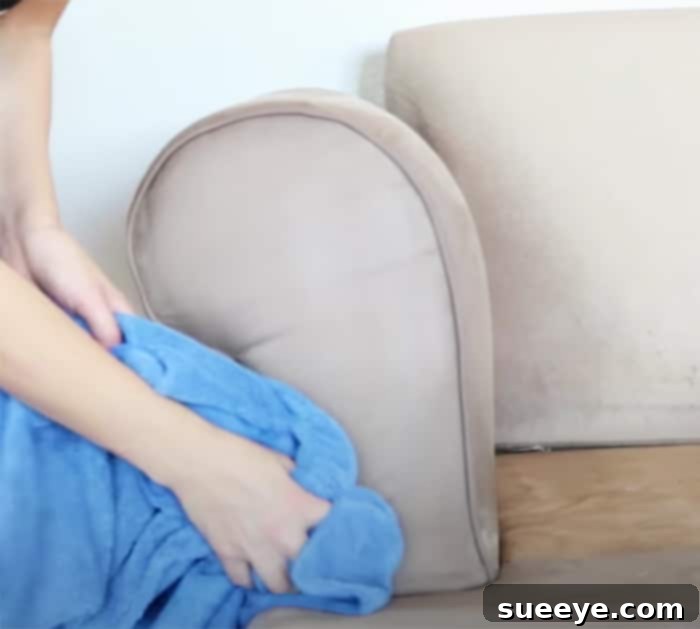
Step 5: Ensure Proper Drying
Proper drying is crucial to prevent water rings, mildew, or a musty odor. After extracting as much moisture as possible, ensure good air circulation around the cleaned areas. Open windows, use a fan, or even a dehumidifier to speed up the drying process. Avoid sitting on the sofa or replacing cushions until the treated areas are completely dry to the touch. This can take several hours, depending on humidity levels and the amount of moisture applied. Direct sunlight can also help with drying, but be cautious as prolonged exposure might fade certain fabrics. If cleaning cushions, stand them on their edges to allow air to circulate around all sides.
Step 6: Restore Fabric Pile and Inspect
Once the sofa is completely dry, you might notice that the fabric fibers feel a bit stiff or matted where they were scrubbed. For fabrics like microfiber, gently rub the fibers with a clean, dry microfiber towel or a soft brush to help restore their original softness and texture. This helps to even out the appearance and prevent any “cleaned” spots from standing out. Take a final look at the treated areas under good lighting to ensure the stain has been completely removed. If any faint residue remains, you can repeat the entire process or just steps 2 through 5, focusing on the remaining spot.
Couch Cleaning Tips for Various Fabric Types
While this Oxi Clean method is highly effective for durable, water-safe fabrics like microfiber, it’s essential to exercise caution with other materials:
- Natural Fibers (Cotton, Linen): Generally water-safe, but always patch test for colorfastness. May be more prone to water rings if not dried quickly.
- Synthetics (Polyester, Nylon): Similar to microfiber, they usually respond well to water-based cleaners.
- Delicate Fabrics (Silk, Velvet): Avoid this method. These require specialized cleaning, often by professionals, to prevent damage.
- Leather/Suede: Never use Oxi Clean or water-based cleaners. Use products specifically designed for leather or suede.
Always refer to your sofa’s care tag for specific instructions, and remember the importance of patch testing any cleaning product on an inconspicuous area first.
Preventing Future Sofa Stains: Tips for Long-Term Cleanliness
Prevention is always better than cure. By adopting a few simple habits, you can significantly reduce the likelihood of future sofa stains:
- Use Slipcovers: Especially for sofas in high-traffic areas or homes with kids and pets, removable, washable slipcovers offer excellent protection.
- Enforce “No Food or Drink” Rules: While not always practical, establishing zones for eating and drinking away from the sofa can save you many headaches.
- Apply Fabric Protectors: Products like Scotchgard can create a barrier that repels liquids and makes spills easier to clean up. Always test on an inconspicuous area first.
- Regular Vacuuming: Frequent vacuuming prevents dirt and dust from building up and becoming embedded in the fabric, reducing the overall need for deep cleaning.
- Rotate Cushions: Regularly flipping and rotating cushions helps distribute wear and tear evenly, extending the life and appearance of your sofa.
- Address Spills Immediately: The quicker you act on a fresh spill, the easier it will be to remove. Blot (don’t rub) immediately with a clean cloth.
Final Thoughts on Keeping Your Sofa Pristine
Overall, this Oxi Clean method provides an incredibly effective and relatively inexpensive way to combat those annoying stains on your couch. Accidents are an inevitable part of life, whether it’s a dropped snack, an overflowing coffee cup, or a pet’s little mishap. But with the right tools and techniques, you don’t have to live with the evidence. By following these detailed steps, you can confidently tackle most common upholstery stains, revitalizing your furniture and extending its lifespan.
Remember, patience and thoroughness are your allies in the battle against stains. Don’t rush the process, and always prioritize the safety of your upholstery by performing patch tests. A clean, fresh sofa not only enhances the aesthetics of your living room but also contributes to a more hygienic and comfortable home environment. Embrace these DIY cleaning tips and enjoy a beautifully clean sofa once again!