
Mastering DIY Yoga Pants & Leggings: Your Ultimate Guide to Sewing Custom Activewear
Imagine slipping into a pair of yoga pants or leggings that fit you perfectly, offer unparalleled comfort, and reflect your unique style – all while significantly cutting down on your clothing budget. For too long, many of us have invested heavily in activewear, only to be met with compromises on fit, quality, or style. What if we told you that creating your own high-quality leggings and yoga pants is not only achievable but an incredibly rewarding journey? This comprehensive guide will equip you with the knowledge to transform fabric into your new favorite wardrobe staples.
While the thought of sewing might conjure images of elaborate party dresses, learning to create practical, everyday garments like leggings can be just as, if not more, gratifying. Let’s be honest, leggings have become an indispensable part of modern wardrobes, worn for diverse activities from intense workouts to casual lounging, and even styled for chic daily outings. Embarking on this sewing adventure unlocks a world of customization, ensuring you never have to settle for less than perfect comfort or ideal fit again.
Why Sew Your Own Leggings and Yoga Pants? Beyond the Price Tag
The appeal of crafting your own activewear stretches far beyond the obvious financial savings. While the cost-effectiveness is indeed a compelling factor, especially considering the soaring prices of premium athletic wear, the benefits are wonderfully multifaceted:
Achieve That Elusive, Perfect Fit
One of the most common frustrations with off-the-rack leggings is finding that elusive perfect fit. Whether it’s a waistband that uncomfortably digs in, legs that are perpetually too long or too short, or fabric that sags in all the wrong places, ill-fitting activewear can detract significantly from both comfort and confidence. When you take control and sew your own, you gain complete command over every measurement and detail, allowing you to tailor the garment precisely to your unique body shape. Bid farewell to the dreaded “waist gap,” ankle bunching, or uncomfortable tightness.
Unleash Your Unique Personal Style
Are you tired of the limited color palettes and predictable designs that dominate retail shelves? Sewing your own leggings empowers you to explore an endless spectrum of fabrics, prints, and colors. From vibrant, energetic patterns that supercharge your workouts to sophisticated, subtle textures perfect for everyday wear, you can create pieces that genuinely resonate with your personal aesthetic. The design possibilities are truly limitless: add bespoke details like breathable mesh panels, striking contrasting side stripes, or even cleverly integrated pockets.
Embrace Superior Comfort and Lasting Durability
Mass-produced leggings often prioritize fleeting trends over genuine comfort and enduring quality. By meticulously selecting high-grade fabrics and employing robust sewing techniques, you can craft garments that not only feel exceptionally soft against your skin but are also built to withstand the rigors of frequent wear and washing. A deep understanding of fabric stretch and, crucially, recovery, means your handmade leggings will consistently maintain their shape, support, and integrity through countless activities and laundry cycles.
Empower Your Inner Maker and Boost Your Skills
There’s an unparalleled sense of pride and accomplishment that accompanies wearing something you’ve lovingly created with your own hands. Sewing leggings is an excellent project for honing your skills with knit fabrics – a versatile and valuable technique for any aspiring sewist. It’s an empowering journey that beautifully blends practicality with artistic expression, allowing you to wear your craft.
Choosing the Perfect Fabric: The Foundation of Flawless Leggings
The success and longevity of your homemade leggings depend enormously on your fabric choice. Not all stretch fabrics are created equally, and understanding the specific requirements for activewear is absolutely critical.
The Non-Negotiable Role of Stretch Knit Fabrics
Leggings, by their very nature, must be crafted from stretch knit fabrics. This isn’t merely a recommendation; it’s a fundamental necessity for achieving the desired comfort, freedom of movement, and supportive fit. Unlike woven fabrics, which are made of threads interlaced at right angles, knits are constructed from interlocking loops of thread, granting them their inherent elasticity. For leggings, you will typically want a fabric possessing at least 50% four-way stretch. This means the fabric stretches both horizontally (across the grain) and vertically (with the grain). To test this, take a 4-inch piece of fabric and observe if it comfortably stretches to 6 inches or more in both directions.
Understanding Fabric Recovery: The Key to Enduring Shape
Beyond simply stretching, the fabric must exhibit strong “recovery.” What exactly does this entail? Recovery refers to a fabric’s vital ability to swiftly and firmly return to its original dimensions after being stretched. If you pull a piece of fabric and it doesn’t snap back with noticeable tension and bounce, it is fundamentally unsuitable for leggings. Fabrics with inadequate recovery will inevitably bag out at the knees and seat, progressively losing their supportive, flattering fit over time. This characteristic is paramount for garments that are constantly subjected to movement, stress, and repeated wear.
The Magic of Spandex (Lycra/Elastane) Content
The undisputed secret ingredient for exceptional recovery and comfortable stretch is spandex, also widely known as Lycra or elastane. Any fabric destined for leggings or yoga pants should contain a significant percentage of this high-performance synthetic fiber, typically ranging between 5% and 20%. Spandex fibers impart the crucial elastic quality that allows the fabric to stretch generously and then “snap back” into its original form during wear, effectively preventing sagging and ensuring a consistently snug yet flexible fit.
Popular Fabric Blends for Optimal Leggings:
- Cotton Spandex: A favored option for its breathability and wonderfully soft, natural hand-feel. It’s exceptionally comfortable for daily wear and lighter activities, though it may not offer the same advanced moisture-wicking properties as synthetic blends. Aim for blends containing at least 5-10% spandex for good performance.
- Nylon Spandex: An outstanding choice for high-performance activewear. Nylon is celebrated for its remarkable durability, smooth luxurious feel, and superior moisture-wicking capabilities, making it perfectly suited for intense workouts. It often provides a sleek, slightly compressive sensation.
- Polyester Spandex: Another superb contender for athletic wear. Polyester is inherently durable, highly resistant to fading, and magnificently holds vibrant prints. It also efficiently wicks away moisture and dries rapidly, making it ideal for strenuous, sweaty activities.
- Rayon Spandex: Prized for its exceptional drape and luxurious softness. While incredibly comfortable, rayon blends typically offer slightly less robust recovery and durability compared to nylon or polyester blends. This makes them better suited for lounge-style leggings or casual wear rather than high-intensity exercise.
Fabric Weight and Opacity: Essential Considerations
The weight of your chosen fabric plays a significant role in both its feel and, crucially, its opacity. Lighter weight knits are excellent for warmer climates or a true “second skin” feel, but it is paramount to ensure they are not sheer when stretched on the body. Medium to heavier weight knits generally provide superior opacity and often offer a desirable level of compression, making them ideal for the majority of yoga pants and athletic leggings. Always perform a “squat test” with a stretched piece of fabric against your body before cutting into your main yardage to confirm it remains opaque when worn.
Essential Tools and Techniques for Sewing Stretch Knits Like a Pro
Equipping yourself with the correct tools and mastering specific sewing techniques tailored for knit fabrics will undoubtedly make your legging-making adventure considerably smoother and more enjoyable, yielding professional-looking results.
Your Must-Have Sewing Tools:
- Sewing Machine: A standard home sewing machine is perfectly capable of sewing knits effectively. If you happen to own an overlocker (also known as a serger), it is an invaluable asset for creating incredibly strong, professional, and durable seams, though it is not strictly essential for beginners.
- Ballpoint or Stretch Needles: These are absolutely critical for sewing knit fabrics. These specialized needles feature a rounded tip that gently pushes the fabric fibers aside rather than piercing them directly. This prevents skipped stitches, fabric damage, and unsightly holes.
- Good Quality Polyester Thread: Always opt for high-quality polyester thread. It possesses a slight inherent stretch, which is perfectly suited for knit garments, effectively preventing seams from snapping or popping when the fabric stretches during wear.
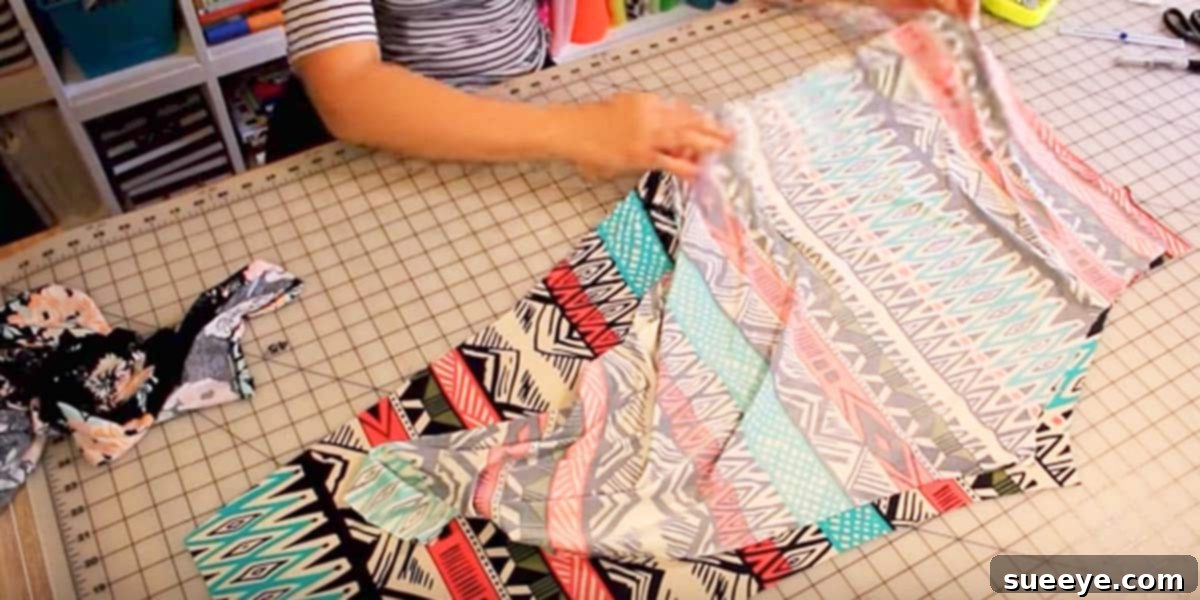
- Rotary Cutter and Self-Healing Mat: While not strictly mandatory, a rotary cutter combined with a self-healing mat offers unparalleled precision and produces wonderfully clean cuts on knit fabrics, which can be prone to shifting or slipping when cut with traditional scissors.
- Fabric Clips or Pins: Fabric clips are frequently preferred over traditional pins when working with knits. They securely hold slippery fabric layers together without leaving permanent holes or snags, which pins can sometimes do in delicate knits.
- Measuring Tape & Rulers: Essential for taking accurate body measurements, transferring pattern markings, and making precise adjustments to your pattern pieces.
- Reliable Pattern: Invest in a well-drafted leggings pattern specifically designed for stretch knit fabrics. There are many excellent independent pattern designers offering patterns with clear instructions.
Key Sewing Techniques for Unmatched Success:
- Mastering Stretch Stitches: Your sewing machine likely offers several suitable options. A narrow zigzag stitch (e.g., 0.5mm width, 2.5mm length) is a highly versatile and dependable choice. A triple stretch stitch (which appears as three parallel lines of stitching) provides even greater strength and elasticity. Overlockers/sergers create exceptionally durable, flexible, and neat seams.
- Working with Waistbands: Many modern leggings patterns incorporate a wide fabric waistband. This design is often intended to be folded over or worn high for superior support and comfort, skillfully eliminating the need for a separate elastic band and creating a smooth, comfortable fit. If you do choose to use elastic, ensure it is specifically designed for activewear or boasts excellent recovery.
- Flawless Hemming of Knits: For a professional and polished finish, consider using a twin needle on your domestic sewing machine. This creates two parallel lines of stitching on the right side of the fabric with a zigzag stitch on the wrong side, allowing the hem to stretch beautifully. Alternatively, a wide zigzag stitch or a neatly serged rolled hem can also yield excellent results.
- Gentle Handling During Sewing: It is crucial to avoid stretching your fabric as you feed it through your sewing machine, as this can result in wavy, distorted seams. Instead, allow your machine’s feed dogs to do the work, simply guiding the fabric gently without applying unnecessary tension.
Designing Your Dream Leggings: Customization and Personal Style
One of the most thrilling aspects of crafting your own leggings is the unparalleled freedom to customize every single detail to perfectly align with your preferences and specific activity requirements. My personal preference, especially for dynamic activities like biking and yoga, always leans towards a very high-waisted, exceptionally stretchy pant that steadfastly stays in place, guaranteeing absolutely no awkward slippage or adjustments during movement. I particularly love incorporating a wide, fold-over fabric band at the top of these pants, offering the versatility of being worn at full height for maximum core coverage and support, or stylishly folded over for a comfortable mid-rise look.
Key Considerations for Your Custom Design:
- Waist Height: Carefully decide between a high-waisted style (offering supreme coverage and support, ideal for yoga and core-focused workouts), a classic mid-rise (a universally comfortable and flattering option), or a trendy low-rise (for a more fashion-forward or minimal aesthetic).
- Leg Length: Full-length leggings are perfect for cooler weather, providing complete coverage and warmth. Capri-length options are excellent for warmer days or for achieving a distinct style. You might also consider adding stirrups for dancers or cyclists, or even creating comfortable shorts for intense summer workouts.
- Fit Preference: What kind of fit do you truly desire? Do you prefer a compressive fit that provides muscle support and stability, a standard snug yet comfortable fit, or a more relaxed, loungewear-inspired style? Your answer to this will significantly influence your pattern selection and potentially the specific type of fabric you choose.
- Adding Functional Details: Think creatively about practical additions! A discreet small waistband pocket for securing a key or card, or a more spacious side seam pocket perfectly sized for a smartphone, can be incredibly practical and enhance usability. Strategically placed mesh panels can add both stylish ventilation and a contemporary design element. For outdoor enthusiasts, incorporating reflective elements is an excellent idea for enhanced visibility during dusk or dawn activities.
Caring for Your Handmade Activewear: Maximize Longevity
To ensure your meticulously handcrafted yoga pants and leggings retain their perfect shape, vibrant color, and essential elasticity for as long as possible, diligent and proper care is absolutely essential. While you should always refer to your specific fabric’s care instructions, generally adhering to these guidelines will serve you well:
- Wash Cold: Always use cold water for washing. This is crucial for preventing shrinkage, minimizing color fading, and most importantly, protecting the delicate spandex fibers from degradation.
- Gentle Cycle: Opt for your washing machine’s delicate or gentle cycle setting. This will be far kinder to both the fabric and the seams, prolonging the garment’s life.
- Mild Detergent, Avoid Harsh Chemicals: Use a mild, gentle detergent. It is vital to avoid harsh detergents, bleach, or fabric softeners, as these chemicals can aggressively break down spandex over time, severely diminishing its essential recovery properties and elasticity.
- Air Dry is Best: Wherever possible, avoid tumble drying, especially on high heat. High temperatures are particularly damaging to spandex and can also lead to pilling on the fabric surface. Air drying by laying your garments flat or hanging them will significantly extend the life and preserve the quality of your handmade activewear.
Start Your Empowering Sewing Journey Today!
Embracing the dynamic world of DIY activewear is a decision that promises profound satisfaction and tangible benefits. The empowering ability to create comfortable, custom-fitting, and stylish yoga pants and leggings is truly transformative. It allows you to break free from the limitations of generic, mass-produced options and instead invest your time and creativity into crafting garments that genuinely serve your body, enhance your activities, and perfectly align with your unique lifestyle. There are countless fantastic online tutorials and expertly drafted patterns available to guide you through every step of the process, making this exciting venture accessible even for absolute beginners. So, gather your chosen fabric, confidently thread your sewing machine, and prepare to create activewear that you’ll not only love to wear but will cherish for years to come!