
Unclog Your Drains Naturally: The Ultimate Guide to Homemade Drain Cleaners
There’s nothing quite as frustrating as a slow-draining or completely clogged sink or bathtub. The stagnant water, the unsightly residue, and the nagging thought of needing a solution quickly can disrupt your day. For years, the go-to answer for many households has been store-bought chemical drain cleaners, promising fast results with minimal effort. However, these powerful concoctions come with a hidden cost: they can be harmful to your health, damaging to your plumbing, and detrimental to the environment. What if there was a simpler, safer, and equally effective way to tackle stubborn clogs using ingredients you likely already have in your pantry? This comprehensive guide will reveal the magic of homemade drain solutions, empowering you to keep your drains flowing freely without harsh chemicals.
The Hidden Dangers of Conventional Chemical Drain Cleaners
Before diving into the world of natural solutions, it’s crucial to understand why so many homeowners are seeking alternatives to traditional chemical drain cleaners. While their marketing often highlights speed and power, these products harbor several significant downsides that are rarely advertised:
- Health Hazards: Most chemical drain cleaners contain highly corrosive substances like sulfuric acid, lye (sodium hydroxide), or bleach. When inhaled, their fumes can cause respiratory irritation, eye damage, and even severe chemical burns upon skin contact. Accidental ingestion, especially by curious children or pets, can be fatal.
- Environmental Impact: Once these chemicals clear your clog, they don’t simply disappear. They flow into your municipal water system or septic tank, potentially harming aquatic life and disrupting natural ecosystems. Their breakdown products can also contribute to water pollution.
- Plumbing Damage: Despite their claims, chemical drain cleaners can be incredibly harsh on your pipes. The intense heat generated by their chemical reactions can warp or soften PVC pipes, making them more susceptible to leaks. For older metal pipes, these chemicals can accelerate corrosion, leading to costly repairs and premature pipe replacement. Moreover, if a chemical cleaner fails to clear a clog, it can sit in the pipe, intensifying its corrosive action.
- Temporary Fixes: Often, these cleaners only burn a small hole through the center of a clog, leaving much of the obstruction intact. This means the problem will likely return, leading to a cycle of repeated chemical use and further pipe degradation.
Understanding these risks makes the search for a safe and sustainable alternative not just a preference, but a necessity for a healthier home and planet.
My Journey to Discovering Natural Drain Solutions
My own experience with a persistent bathroom sink clog perfectly illustrates the frustration and eventual relief that led me to embrace natural remedies. It started with a slow drain, a minor annoyance that quickly escalated into a full-blown blockage. I tried the classic coat hanger trick, fishing out a surprising amount of hair and grime, convinced I had solved the problem. Yet, the water still refused to drain properly. It was utterly baffling and incredibly frustrating.
The immediate thought, as for many, was to rush to the store and grab a bottle of chemical drain cleaner. But something held me back. Perhaps it was the memory of the acrid smell, or the nagging worry about what those harsh chemicals might be doing to my old pipes. Instead of reaching for a commercial product, I turned to the vast resource that has provided solutions for countless dilemmas: the internet. A quick search for “homemade drain cleaner” or “natural clog remover” opened up a whole new world of possibilities. I stumbled upon several tutorials, and one, in particular, caught my eye for its simplicity and the readily available ingredients it recommended. What did we ever do before the internet? It truly is a treasure trove of practical wisdom.
Inspired and a little skeptical, I decided to give it a try. The transformation was astonishing. My sink, which had taken a grueling fifteen minutes to grudgingly drain just the night before, was flowing freely in less than three minutes after applying the natural solution. I couldn’t believe it. All this time, I had been resorting to those expensive, harsh chemicals, unaware that a simple, safe, and incredibly effective solution was waiting in my own kitchen cabinet. This revelation solidified my commitment to sharing this knowledge, hoping to save others from the same chemical dependency and plumbing woes.
Your Essential Homemade Drain Cleaner Recipe: Baking Soda and Vinegar
The cornerstone of natural drain cleaning lies in the powerful yet gentle reaction between two common household ingredients: baking soda and white vinegar. This combination creates a fizzing action that can break down many types of clogs without damaging your pipes or harming the environment. Here’s what you’ll need and a simple, step-by-step guide to unleash its power.
What You’ll Need: Simple Ingredients for a Powerful Clean
- Baking Soda (Sodium Bicarbonate): Approximately ½ to 1 cup. This alkaline powder is a mild abrasive and odor neutralizer.
- White Vinegar (Acetic Acid): Approximately 1 to 2 cups. The acid in vinegar reacts with baking soda to create a fizz.
- Boiling Water: Several cups. Helps to loosen grease and wash away debris.
- Measuring Cups: For accurate proportions.
- Old Cloth or Stopper: To cover the drain opening.
Step-by-Step Guide: How to Unclog Your Drain Naturally
- Clear Standing Water: If your sink or tub has standing water, try to remove as much of it as possible. You can use a cup to scoop it out or a sponge to soak it up. The goal is to allow the baking soda and vinegar to reach the clog directly.
- Pour Boiling Water: Carefully pour 2-4 cups of boiling water down the drain. This helps to soften any greasy clogs and warms the pipes, making the subsequent steps more effective. Allow it to sit for a minute or two.
- Add Baking Soda: Follow the boiling water with ½ to 1 cup of baking soda. Make sure to get as much of it as possible down the drain opening. You can use a spoon or funnel if needed. Let the baking soda sit in the drain for about 5-10 minutes to absorb odors and start working on the clog.
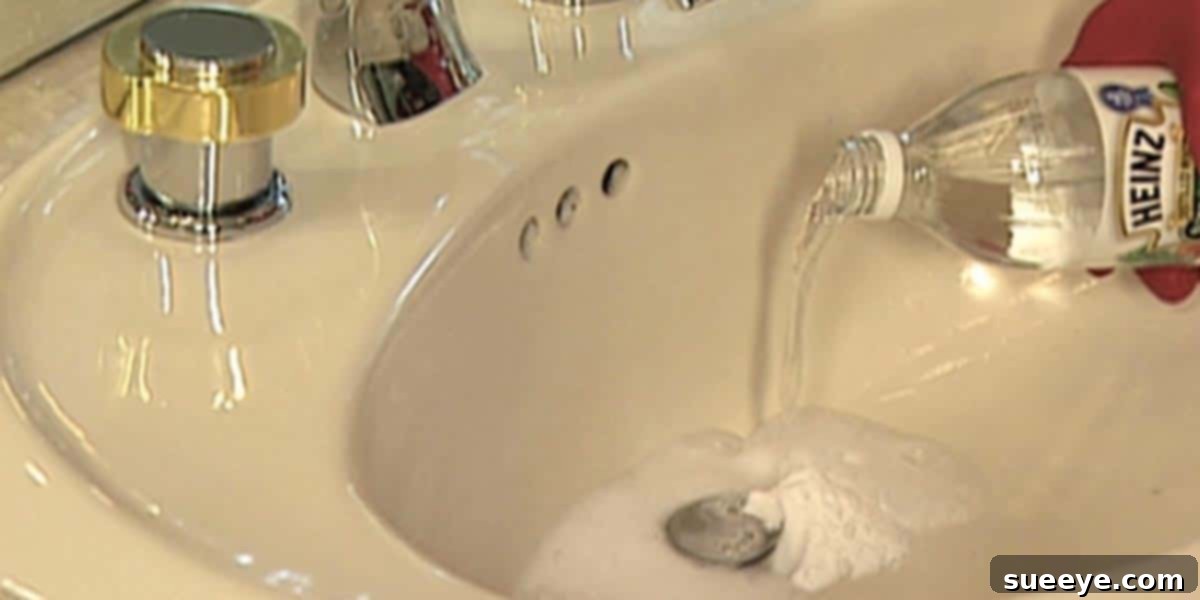
- Introduce White Vinegar: Slowly pour 1 to 2 cups of white vinegar down the drain. You should immediately hear a fizzing sound and see foam rising. This is the chemical reaction at work!
- Cover and Wait: Immediately cover the drain opening tightly with an old cloth or a drain stopper. This traps the foaming action and gases (carbon dioxide) within the pipe, forcing them to work harder on the clog. Allow this powerful mixture to sit for at least 30 minutes, or even better, overnight for particularly stubborn clogs.
- Flush with Hot Water: After the waiting period, remove the cover and flush the drain thoroughly with another 2-4 cups of very hot or boiling water. This will help to wash away the loosened clog material and the remaining solution.
- Repeat if Necessary: For very stubborn clogs, you might need to repeat the entire process once or twice. Sometimes a single application is enough, but persistence pays off.
How Does This Natural Solution Work? The Science Behind the Fizz
The effectiveness of the baking soda and vinegar method isn’t just an old wives’ tale; it’s rooted in basic chemistry. When baking soda (sodium bicarbonate, a base) and white vinegar (acetic acid) combine, they create a classic acid-base reaction. This reaction produces a significant amount of carbon dioxide gas, which manifests as the vigorous fizzing and foaming you observe.
This effervescent action is key to dislodging clogs. The pressure from the expanding gas, combined with the gentle abrasive quality of the baking soda and the dissolving power of the vinegar, works to break down common drain obstructions such as:
- Grease Buildup: Hot water helps melt the grease, and the baking soda and vinegar can help emulsify it, making it easier to flush away.
- Soap Scum: The acidic nature of vinegar is excellent at dissolving soap scum and mineral deposits that often accumulate on pipe walls.
- Hair and Grime: While not a direct solvent for hair, the fizzy action can help loosen tangled hair from the pipe walls, allowing it to be flushed through. The baking soda also acts as a deodorizer, neutralizing unpleasant smells that often accompany clogs.
Unlike harsh chemical cleaners that rely on extreme corrosivity or heat, this natural method works by mechanical agitation and gentle dissolving, making it safe for most plumbing systems, including PVC and septic tanks.
Beyond the Basic Clog: When to Use This Method (and When Not To)
While the baking soda and vinegar method is remarkably effective for many common household clogs, it’s important to understand its capabilities and limitations. Knowing when to use it and when to call a professional can save you time, effort, and potential headaches.
This Method is Highly Effective for:
- Slow Drains: If your water is draining sluggishly but not completely blocked, this method can often clear the partial obstruction and restore normal flow.
- Hair and Soap Scum Clogs: Especially prevalent in bathroom sinks and showers, these clogs respond well to the fizzing action and dissolving properties of the solution.
- Grease Buildup: Often found in kitchen sinks, minor grease clogs can be broken down, particularly when combined with boiling water.
- Odor Elimination: Beyond clearing clogs, baking soda and vinegar are excellent natural deodorizers, neutralizing foul smells emanating from drains.
- Preventative Maintenance: Regular monthly flushing with this solution can prevent minor buildups from becoming major clogs.
Limitations and When to Call a Professional:
While powerful, baking soda and vinegar may not be the solution for every type of clog:
- Completely Blocked Drains: If your drain is completely sealed and no water can pass through, the baking soda and vinegar mixture may not be able to reach the clog effectively, or the pressure generated might not be sufficient.
- Solid Objects: If a non-soluble object (like a toy, jewelry, or a large food item) has fallen down the drain, this method will not be able to dissolve it.
- Mainline Sewer Issues: If multiple drains in your home are slow or backed up simultaneously, it often indicates a blockage in your main sewer line, which requires professional attention.
- Recurring Clogs: If you find yourself repeatedly needing to unclog the same drain, it might be a symptom of a larger underlying issue with your plumbing system, such as tree roots in outdoor pipes or damaged pipes, warranting a plumber’s inspection.
- After Using Chemical Cleaners: If you’ve already poured a chemical drain cleaner down a blocked drain, it’s best to avoid using baking soda and vinegar immediately afterward. The mixing of different chemicals can produce dangerous fumes or reactions. It’s safer to wait a day or two and flush thoroughly with water, or better yet, call a professional who is equipped to handle pipes that may contain caustic chemicals.
In cases where the natural method doesn’t work or if you suspect a more serious issue, don’t hesitate to contact a qualified plumber. They have specialized tools like augers (snakes) and video inspection cameras to diagnose and clear complex obstructions safely and effectively.
Preventing Future Clogs: Proactive Steps for Clear Drains
The best way to deal with a clogged drain is to prevent it from happening in the first place. Adopting a few simple daily habits and performing regular maintenance can significantly reduce the likelihood of future blockages and keep your plumbing running smoothly for years to come.
Daily Habits to Adopt:
- Use Drain Screens: Place strainers or screens over all your drains, especially in the kitchen sink and shower. These inexpensive devices catch hair, food particles, and soap scum before they can go down the drain and cause problems. Empty them regularly into the trash.
- Proper Grease Disposal: Never pour cooking grease, oil, or fat down the drain. As it cools, it solidifies and clings to pipe walls, accumulating over time to form stubborn clogs. Instead, pour cooled grease into an old container (like a jar or coffee can) and dispose of it in the trash.
- Brush Hair Before Showering: A significant cause of bathroom clogs is shedding hair. A quick brush before you step into the shower can capture much of the loose hair, preventing it from going down the drain.
- Avoid “Flushable” Wipes and Cotton: Despite marketing claims, many “flushable” wipes do not break down adequately in plumbing systems and can cause severe clogs. The same goes for cotton balls, Q-tips, paper towels, and feminine hygiene products. Always dispose of these items in the trash.
- Run Hot Water: After using the sink, especially the kitchen sink, run hot water for 30 seconds to a minute. This helps to flush down any lingering grease or food particles and can prevent them from solidifying further down the pipe.
- Use a Garbage Disposal Properly: If you have a garbage disposal, use it for small, soft food scraps. Avoid putting fibrous foods (like celery stalks, corn husks), coffee grounds, eggshells, or large amounts of anything down it. Always run plenty of cold water while the disposal is operating and for 10-15 seconds afterward.
Monthly Maintenance for Long-Term Drain Health:
- Regular Baking Soda and Vinegar Flush: Even if your drains are flowing perfectly, a monthly preventative flush with ½ cup of baking soda followed by 1 cup of white vinegar (let sit for 30 minutes, then flush with hot water) can work wonders. This routine helps to break down minor buildups before they become major clogs and keeps your drains fresh.
- Enzyme Cleaners: Consider using natural enzyme drain cleaners as part of your maintenance routine. These products contain beneficial bacteria that “eat” away at organic matter in your pipes without the harshness of chemicals.
By integrating these proactive measures into your household routine, you can significantly prolong the life of your plumbing system, avoid the frustration of clogs, and contribute to a healthier home environment.
Embrace a Safer, Smarter Way to Maintain Your Drains
The journey from frustration over a clogged sink to the joy of a freely flowing drain, all achieved with simple, natural ingredients, has been a revelation. It underscores a powerful truth: effective solutions don’t always need to be complex, expensive, or hazardous. The homemade drain cleaner, utilizing the humble power of baking soda and vinegar, stands as a testament to this principle.
By choosing to unclog your drains naturally, you’re not just solving an immediate problem; you’re making a conscious decision that benefits your entire household and the wider environment. You’re safeguarding your family from exposure to toxic fumes and corrosive chemicals, protecting your plumbing from unnecessary damage, and reducing your ecological footprint by preventing harmful substances from entering our water systems. Moreover, you’re likely saving money by avoiding costly store-bought alternatives and potential plumbing bills.
This method is more than just a quick fix; it’s an education in sustainable home maintenance. It encourages a proactive approach, offering not only a reliable solution for existing clogs but also a gentle, effective way to prevent future blockages through regular upkeep. The ease of access to ingredients, the simplicity of the process, and the peace of mind that comes with using non-toxic solutions make this the superior choice for any homeowner.
So, the next time you face a sluggish drain, resist the urge to reach for the chemical bottle. Instead, empower yourself with the knowledge shared here. Give the baking soda and vinegar method a try. You might be surprised, just as I was, by how remarkably effective and utterly satisfying it is to solve household problems with nature’s own simple remedies. Your pipes, your health, and the planet will thank you.