
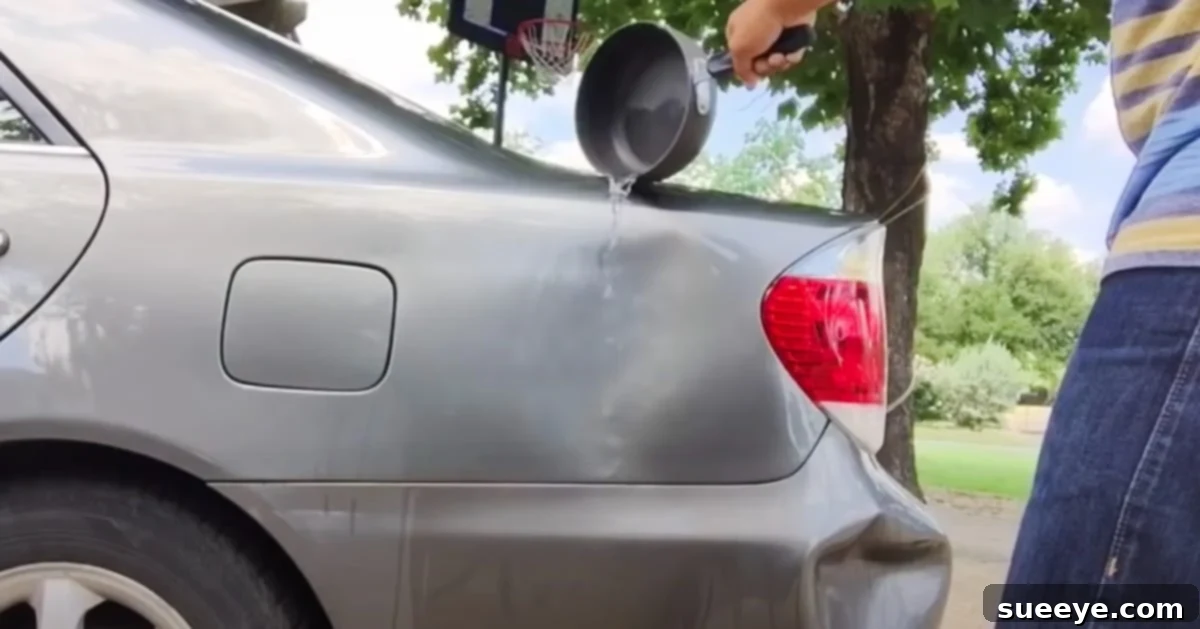
DIY Car Dent Removal: The Surprisingly Effective Boiling Water and Plunger Hack
Discovering a dent on your car can be incredibly frustrating. Whether it’s a minor ding from a rogue shopping cart or a more noticeable indentation from a fender bender, these imperfections not only mar your vehicle’s appearance but can also be expensive to fix professionally. Thankfully, not all dents require a trip to the body shop. There’s a clever and surprisingly effective DIY car dent removal technique circulating among car enthusiasts that utilizes common household items: boiling water and a toilet plunger. This ingenious lifehack, popularized by channels like TeamFamily on YouTube, offers a cost-effective and relatively low-effort solution for certain types of dents, making it a worthwhile endeavor for anyone looking to restore their car’s smooth finish without breaking the bank. This article will delve deep into this method, explaining its mechanics, identifying suitable dent types, and providing a comprehensive, step-by-step guide to help you achieve professional-looking results right in your driveway.
The Frustration of Dents and the Appeal of DIY Solutions
Car dents are an unfortunate reality of vehicle ownership. They can appear out of nowhere, leaving you wondering how they got there. Beyond the aesthetic blemish, dents can sometimes affect the resale value of your car. Traditional dent repair can range from hundreds to thousands of dollars, depending on the severity and location of the damage. This cost often deters car owners from getting minor dents fixed, leading them to live with the imperfections. This is precisely where DIY solutions shine. The idea of fixing a dent yourself, with tools you likely already own, is incredibly appealing. It offers a sense of empowerment, saves significant money, and provides instant gratification when the dent pops back into place.
While professional paintless dent repair (PDR) services are excellent for complex dents, the boiling water and plunger method targets a specific niche: shallow, rounded dents on flexible plastic or metal panels that haven’t creased the metal or damaged the paintwork. Understanding the limitations of this method is crucial, but for suitable dents, it’s an absolute game-changer. The simplicity of the process—requiring minimal effort and no specialized tools—makes it an attractive option for first-time DIYers and experienced mechanics alike. If you’re a friend with a dented car, this is definitely a tip worth passing on.
Understanding the Mechanics: How Heat and Suction Work Together
At its core, this DIY car dent removal technique leverages basic principles of physics: thermal expansion and suction. When hot boiling water is applied to the dented area, it heats the metal or plastic panel. This heat causes the material to expand and become more pliable or flexible. Think of it as “relaxing” the stressed metal that has been pushed inwards. The panel becomes less rigid and more willing to return to its original shape.
Once the material is heated and softened, the toilet plunger comes into play. The plunger creates a strong vacuum seal around the dent. As you pull the plunger outwards, this suction force, combined with the panel’s increased flexibility, helps to gently pull the dent outwards. The heated material, being more malleable, can then be encouraged to “pop” back into its original contour. Some proponents even suggest rapidly cooling the area with cold water immediately after pulling the dent out, which can help the metal contract and “set” in its restored position. This synergistic approach of softening the material with heat and then applying a controlled pulling force with suction is what makes this simple hack surprisingly effective for the right kind of damage.
Suitable Dents and Important Limitations
Before you grab your kettle and plunger, it’s vital to understand which types of dents respond well to this method and which do not. This DIY technique is most effective for:
- Shallow, Rounded Dents: Dents that have a smooth, concave shape, much like the inside of a bowl, are ideal. These dents typically haven’t stretched the metal too much.
- Dents on Flat or Gently Curved Panels: Areas like doors, fenders, and large, relatively flat sections of the hood or trunk lid are good candidates.
- Dents Without Sharp Creases: If the dent has a sharp fold or crease in the metal, the fibers of the material are likely stretched and damaged, making it very difficult for the metal to return to its original shape with just heat and suction.
- Dents Where Paint is Intact: This method is designed for situations where the paint has not cracked, chipped, or scratched. If the paint is damaged, even if the dent comes out, you’ll still have a paint repair to contend with.
- Plastic Bumper Dents: Many modern bumpers are made of flexible plastic. These often respond exceptionally well to heat, as the plastic becomes very pliable and can be reshaped easily.
However, this method will likely *not* work on:
- Large, Major Dents: Dents that affect a significant portion of the panel or are very deep often involve structural damage that a plunger cannot fix.
- Dents with Sharp Creases or Folds: As mentioned, these signify permanent stretching or tearing of the metal, requiring professional bodywork.
- Dents Near Body Lines or Edges: Areas where the panel has complex curves, sharp edges, or is close to seams are harder to work with, as it’s difficult to get a good seal with the plunger.
- Dents on Aluminum Panels: While some heat can help, aluminum behaves differently than steel and may not respond as readily to this method.
- Dents with Damaged Paint: Even if the dent pops out, you’ll still have paint damage, which might require professional repair anyway.
- Dents in Structural Areas: If the dent is on a structural component or near critical sensors, it’s best to consult a professional.
Always assess the dent carefully before attempting this hack. If you’re unsure, or if the dent falls into one of the “not suitable” categories, it’s always safer to consult a professional body shop.
Essential Supplies for Your DIY Dent Removal Project
One of the greatest advantages of this method is the simplicity of the required tools. Most items are readily available around your home. Here’s a detailed list:
- Hot Boiling Water: This is the key to making the metal or plastic pliable. You’ll need enough to pour over the entire dented area for a sustained period. A kettle is perfect for this.
- Toilet Plunger (Clean): Crucially, use a *clean* toilet plunger. You’ll want one with a good suction cup that can create a firm seal on your car’s surface. Make sure it’s not one that has been used for its intended purpose, or thoroughly sanitize it if it has been. A cup-style plunger (for sinks or flat surfaces) might work better than a flange-style plunger (for toilets).
- Microfiber Cloths: Essential for cleaning the area before and after, and for drying.
- Car Wash Soap or General Cleaner: To thoroughly clean the dented area.
- Gloves: To protect your hands from the hot water.
- Safety Glasses: Always a good idea when working with hot liquids or applying force.
- Bucket (Optional): To catch excess water, especially if working in a garage or driveway.
- Cold Water/Ice Pack (Optional but Recommended): For rapid cooling after the dent is pulled, helping the metal set.
- Hair Dryer or Heat Gun (Optional Alternative Heat Source): If you’re concerned about pouring boiling water directly, a powerful hair dryer on its highest setting or a heat gun (used with extreme caution to avoid paint damage) can also be used to warm the area.
Step-by-Step Directions for Successful Dent Removal
Follow these steps carefully to maximize your chances of success and ensure safety:
Step 1: Prepare the Area and Gather Supplies
First, ensure your car is parked on a level surface, preferably in a well-lit area. Thoroughly clean the dented area and the surrounding panel with car wash soap and water, then dry it completely with a clean microfiber cloth. This removes any dirt, grime, or wax that could prevent the plunger from creating a good seal or interfere with the heating process. Gather all your supplies within easy reach, including your clean toilet plunger, boiling water, gloves, and optional cold water.
Step 2: Apply Heat to the Dent
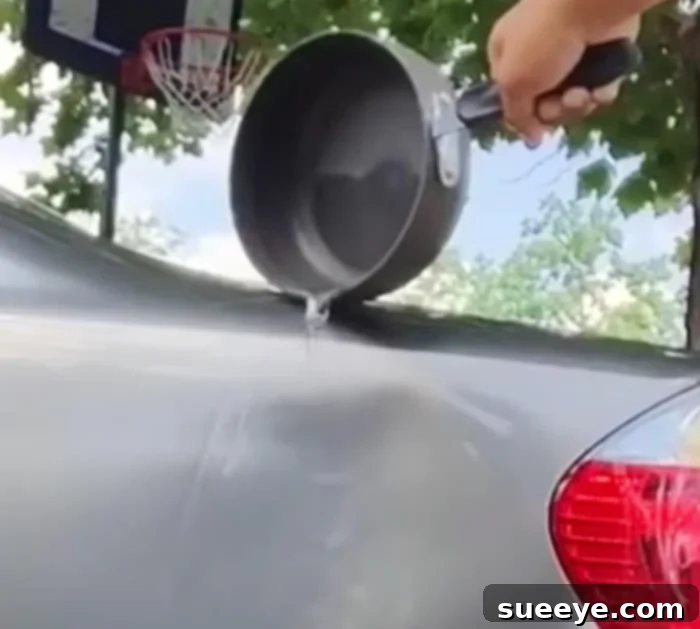
Carefully pour the hot boiling water directly over the car dent. It’s crucial to cover the entire dented area, allowing the heat to penetrate the metal or plastic. Pour slowly and steadily for at least one to two minutes, ensuring the panel becomes sufficiently warm. For larger dents, you might need to continuously pour the hot water for a longer duration. The goal is to make the material pliable without damaging the paint. While some worry about boiling water damaging the car’s coat, modern automotive paint finishes are quite durable. However, if you’re particularly concerned, or if your paint is old or already compromised, you can opt for an alternative heat source like a powerful hair dryer on its highest setting, holding it a few inches away from the surface and continuously moving it. A heat gun can also be used, but with extreme caution, as it can quickly overheat and damage paint if not used correctly. The heat will help the car surface to expand and become flexible, making it easier for the toilet plunger to get a grip and pull the dent out.
Step 3: Position and Plunge the Dent
Immediately after heating the area, while the panel is still warm and flexible, quickly position the toilet plunger over the center of the dent. Press down firmly to create a strong, airtight seal around the edges of the dent. The success of this step hinges on establishing a complete vacuum seal. Once sealed, pull the plunger outwards with a firm, steady motion. You might need to repeat this “plunge and pull” action several times. Don’t just yank it once; a series of rhythmic pulls can often be more effective. Listen for a “pop” sound, which indicates the dent has released. If the dent doesn’t come out after a few attempts, reapply the hot water to reheat the area and try plunging again. Sometimes, adjusting the plunger’s position slightly can also make a difference. The heated surface helps the plunger adhere better and allows the material to respond to the suction more readily.

Step 4: Optional Cooling and Inspection
Once the dent has popped out, or you’ve achieved the desired reduction in its severity, you can optionally apply cold water or an ice pack to the repaired area. This rapid cooling helps the metal or plastic contract quickly, effectively “setting” it in its newly restored, flat position. After cooling, thoroughly clean and dry the area. Inspect the panel from various angles to ensure the dent has been completely removed. Minor imperfections might remain, but they will be significantly less noticeable than the original dent.
Important Safety Considerations and Pro Tips
While this method is generally safe, it’s crucial to exercise caution:
- Protect Your Hands: Always wear heat-resistant gloves when handling boiling water to prevent burns.
- Test on an Inconspicuous Area (If Worried): If you’re genuinely concerned about paint damage, especially on older cars, test a small amount of boiling water on an unseen part of the vehicle first, like inside the door jamb, to observe how the paint reacts.
- Clean Plunger: Reiterating this point because it’s important for hygiene and not transferring dirt to your car.
- Patience is Key: Don’t get discouraged if the dent doesn’t pop out immediately. Reapply heat, try different angles with the plunger, and persist. Sometimes it takes multiple attempts.
- Know When to Stop: If the dent isn’t responding after several attempts, or if you notice any signs of paint stress (cracking, bubbling), stop immediately. Continuing might cause more damage. This method isn’t a magic bullet for every dent.
- Consider the Environment: Be mindful of where the hot water will go. If in a driveway, it’s fine, but in a garage, use a bucket to catch runoff.
Beyond the Plunger: Other DIY Dent Removal Methods
The boiling water and plunger technique is just one of several DIY dent repair hacks. Others include:
- Dry Ice Method: Similar to the boiling water, dry ice rapidly cools the metal, causing it to contract and often pop out.
- Suction Cup Dent Pullers: Available in auto stores, these specialized tools are essentially more robust plungers designed specifically for car dents.
- Plastic Hammer (from the inside): If you can access the back of the dented panel (e.g., by removing an inner door panel), gently tapping the dent out with a rubber mallet or plastic hammer can be effective.
However, the boiling water and plunger method stands out for its accessibility and the fact that the tools are often already at hand, making it a truly immediate solution for many minor dents. I was quite shocked when I first came across this video because I didn’t think it would actually work, but the proof is in the results demonstrated by many online tutorials. For myself, if I ever find myself in this predicament again, I’d probably stick to the plunging technique due to its simplicity and effectiveness for suitable dents.
Conclusion: A Cost-Saving Hack Worth Trying
Overall, the boiling water and toilet plunger method is an ingenious and practical lifehack for dealing with minor, shallow car dents. It requires no crazy steps beyond heating the dented surface and applying suction, making it an incredibly accessible DIY repair. By understanding how thermal expansion and suction work in tandem, and by carefully following the steps, you can save yourself a significant amount of money and the hassle of visiting a body shop. It’s an overall great idea and hack that will save money in the end, offering a surprisingly satisfying solution to a common automotive headache. Remember to assess your dent carefully, prepare your supplies, follow the directions, and prioritize safety. While it won’t fix every type of damage, for the right dent, this simple technique can restore your car’s smooth finish and leave you feeling like a seasoned auto repair pro. Give it a try, and you might just be amazed at the results!