
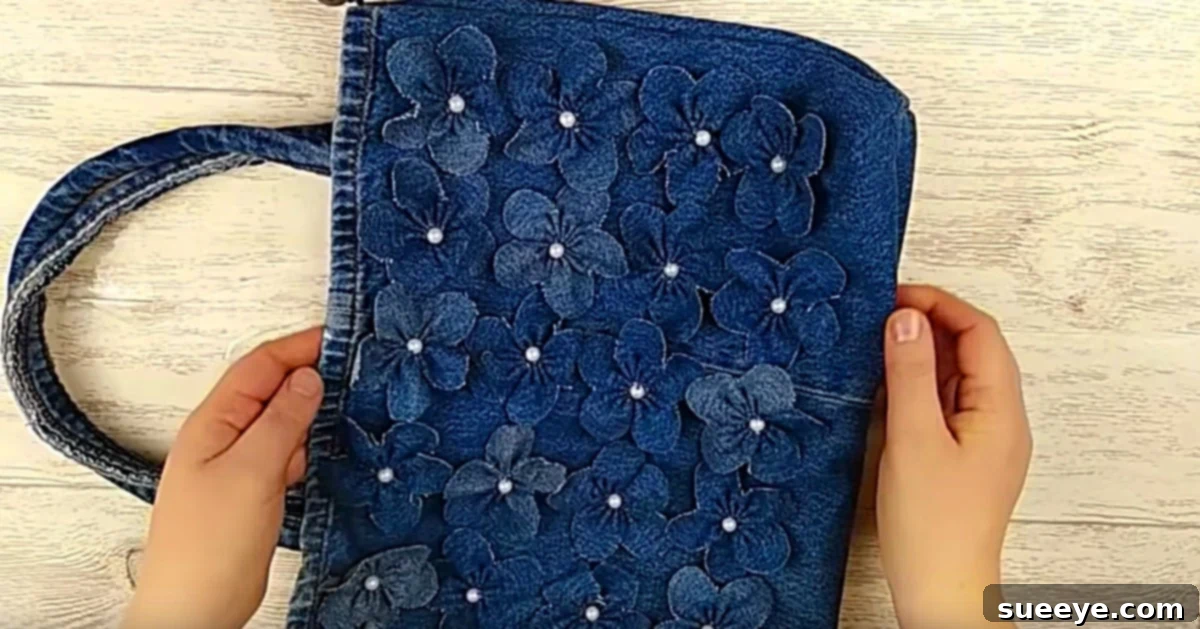
DIY Upcycled Jean Purse with Beautiful Denim Flowers: A Step-by-Step Guide
Are you looking for a creative and sustainable way to refresh your wardrobe while embracing eco-friendly crafting? We’ve discovered an incredibly inspiring project that transforms a pair of old, forgotten jeans into a stunning, one-of-a-kind floral denim purse. This DIY upcycled jean purse is not just a fashion statement; it’s a testament to sustainable living, proving that discarded items can be given a vibrant new life. Perfect for spring and beyond, this project is accessible to crafters of all skill levels, offering a fantastic opportunity to create something truly unique with your own hands.
Unlike many other tutorials you might encounter, this particular method stands out with several ingenious details. The design focuses on simplicity, requiring no complex patterns, making it ideal for beginners. What truly sets this upcycled denim bag apart is its captivating aesthetic: the entire purse is adorned with an array of charming denim flowers, meticulously cut from the leftover fabric remnants. You have the flexibility to either hand-sew these embellishments for a classic touch or use a reliable fabric adhesive like Liquistitch, Fabritac, or even a hot glue gun for a quicker assembly. These scattered flowers give the purse a wonderfully fresh and attractive look, making it the perfect accessory to complement your spring outfits.
Another brilliant feature of this DIY jean bag is its resourceful use of materials. The sturdy waistband of your old jeans isn’t discarded; instead, it’s ingeniously repurposed to create durable and comfortable purse handles. By simply cutting the waistband from the jeans and removing the belt loops, you’ll have perfectly integrated handles that add to the bag’s cohesive design and rustic charm. This project is a canvas for your creativity, offering endless possibilities for personalization. Whether you choose to reinforce pressure points with colorful embroidery floss, add metallic threads for a hint of sparkle, or incorporate other unique embellishments, the sky truly is the limit. Remember, in the world of DIY, there’s no right or wrong way – your creation is a reflection of your individual style.
Why Upcycle Your Jeans? The Benefits of Sustainable Crafting
In an age where fast fashion contributes significantly to landfill waste, upcycling offers a powerful alternative. Transforming old jeans into a stylish purse isn’t just a fun craft; it’s a conscious choice that benefits both your wallet and the planet. Here’s why diving into this sustainable denim project is a fantastic idea:
- Environmental Impact: Every pair of jeans upcycled is one less item sent to a landfill. Denim production requires significant water and resources, so repurposing extends the life cycle of the fabric, reducing your ecological footprint and promoting circular fashion.
- Cost-Effective: Why buy a new bag when you can create a beautiful one from something you already own? This project requires minimal investment in new materials, primarily just thread or glue, making it an incredibly budget-friendly endeavor that saves money while being creative.
- Unique Style Statement: Mass-produced bags often lack individuality. A handmade upcycled denim bag guarantees you a unique accessory that no one else will have, reflecting your personal taste, creative spirit, and commitment to original fashion.
- Skill Development: From cutting and sewing to gluing and embellishing, this project allows you to learn and practice various crafting techniques, building confidence and expanding your DIY repertoire. It’s a great way to hone your sewing or crafting skills.
- Mindfulness and Relaxation: Engaging in creative projects like this can be incredibly therapeutic. The process of transforming materials with your hands offers a mindful escape, reducing stress and fostering a sense of accomplishment. It’s a rewarding hobby that provides a tangible result.
Materials: What You’ll Need for Your Denim Masterpiece
Gathering your supplies is the first exciting step in bringing your upcycled jean purse to life. Most of these items you might already have around your home, especially if you’re a seasoned crafter. Even if you’re new to DIY, these are readily available and affordable, making this a truly accessible project.
- A Pair of Old Jeans: The star of our show! Look for jeans that are no longer worn but still have plenty of usable fabric. Consider the wash (light, medium, dark) and the fabric composition (stretch vs. rigid) as these will affect the final look and feel of your purse. Rigid denim tends to hold its shape better for bags, while stretch denim can offer a softer drape. Ensure they are clean and dry before you start cutting.
- Sharp Scissors: Good quality fabric scissors are essential for clean, precise cuts through denim. Dull scissors can fray edges and make the cutting process frustrating. A rotary cutter with a self-healing mat is an excellent alternative for straight lines and quick cuts if you have one available.
- Needle and Thread OR Fabric Glue: This is where you choose your preferred method of assembly for your upcycled bag.
- Needle and Thread: If you enjoy sewing, a strong denim-weight thread or all-purpose polyester thread will work well. You can hand-sew for a rustic, visible stitch look, or use a sewing machine for speed and durability. Embroidery floss can also be used for decorative stitching on the flowers, adding an extra layer of detail.
- Fabric Glue: For a no-sew option, high-quality fabric glue is your best friend. Brands like Liquistitch, Fabritac, or E6000 are excellent choices known for their strong bonds and flexibility. A hot glue gun can be used for attaching flowers quickly, but consider its long-term durability for structural elements of the purse. Always read the instructions on your chosen adhesive for proper application and drying times.
- Small Beads: These will add a lovely finishing touch to the center of your denim flowers, giving them a more polished and decorative appearance. Choose colors that complement your denim or add a pop of contrast for visual interest. Buttons, rhinestones, or even small fabric scraps can also be used for this purpose.
- Optional Tools & Supplies: To enhance your crafting experience and the final product.
- Pins or Fabric Clips: To hold fabric pieces together securely while sewing or gluing, ensuring precise alignment.
- Measuring Tape or Ruler: For accurate cutting and sizing, especially when creating the main purse panels and handles.
- Fabric Marker or Chalk: To mark cutting lines on your denim, ensuring straight and consistent cuts.
- Iron and Ironing Board: To press seams for a professional finish and to help flatten fabric before cutting.
- Lining Fabric: (Optional) For a more refined interior, added durability, and to protect the contents of your purse.
- Embellishments: (Optional) Patches, studs, fabric paint, lace, or other decorative elements to further personalize your upcycled denim purse and truly make it your own statement piece.
Directions: A Detailed Step-by-Step Guide to Your Denim Purse
Crafting this upcycled jean purse is a rewarding journey, and by following these detailed steps, you’ll create a durable and beautiful accessory. Remember, while a video can provide visual guidance, these comprehensive instructions will walk you through each crucial stage, ensuring a successful outcome for your denim flower purse.
Step 1: Preparing Your Jeans and Cutting the Basic Purse Pattern
Start by thoroughly washing and drying your old jeans. This ensures they are clean and pre-shrunk, preventing any surprises after your purse is complete. Lay the jeans flat and smooth them out, removing any wrinkles. The beauty of this project lies in its no-pattern approach, cleverly utilizing the existing structure of the jeans. The core idea is to create a simple tote shape that is both functional and stylish.
First, carefully cut off the legs of the jeans, typically around the mid-thigh area or lower, depending on how tall you want your purse to be. Save these leg pieces, as they will be crucial for creating your charming denim flowers. Next, you’ll form the main body of the purse. The video demonstrates how to cut the main panel (often utilizing the upper part of the jeans, including the existing pockets if desired) to form the front and back of your tote. You will then cut a rectangular piece for the bottom and sides, effectively creating the base and depth of the bag. Precision here is key for a well-structured purse, so use your ruler and fabric marker to draw straight, even lines before cutting. This ensures your upcycled jean tote has a clean and professional silhouette.
Step 2: Assembling the Purse Body
Once your main denim pieces are cut, it’s time to bring them together to form the structure of your recycled denim bag. If you’re sewing, place the front and back panels right sides together with the bottom/side panel. Pin them carefully along the edges you intend to sew, ensuring alignment. Using a sturdy denim needle on your sewing machine (if applicable) and strong thread, sew along the designated seams, leaving the top opening unstitched. If hand-sewing, use a backstitch or a strong running stitch for maximum durability. Remember to backstitch at the beginning and end of each seam to secure it and prevent unraveling. If you’re opting for fabric glue, apply a generous, even line of glue along the edges to be joined. Press the pieces together firmly and use fabric clips or heavy objects to hold them in place while the glue dries completely, according to the manufacturer’s instructions. This step forms the basic, functional structure of your upcycled tote bag.
Step 3: Crafting and Attaching the Decorative Denim Flowers
This is where your upcycled jean purse truly blossoms and comes to life! Using the denim remnants saved from the jean legs, you’ll create a multitude of charming flowers. There are several creative ways to approach this: you can cut out simple circles of varying sizes, fray their edges slightly for a rustic, soft look, and then stack them to create layered petals. Another popular method is to cut a spiral shape from a denim circle and then roll it up from the outside in, securing the end with a few stitches or a dab of glue to create a beautiful rosette. Alternatively, you can cut individual petal shapes and arrange them in a floral pattern. Experiment with different techniques to achieve a variety of floral textures and styles, adding depth and interest to your bag.
Once your denim flowers are formed, add a small bead to the center of each one, securing it with a stitch or a tiny dab of glue. This bead acts as a lovely accent, giving the flowers a more polished and decorative appearance. Now, it’s time to attach them to your purse. This project encourages scattering the flowers all over the front (and even the back!) of the bag for a lush, full effect, reminiscent of a blooming garden. If sewing, carefully stitch each flower firmly in place. If gluing, apply fabric glue to the back of each flower and press it firmly onto the denim purse. Allow ample drying time, especially if you’re using a strong fabric adhesive, to ensure they are securely attached and will withstand daily use. The more flowers you add, the more vibrant and eye-catching your upcycled denim bag will become, transforming it into a true work of art.
Step 4: Creating and Attaching the Waistband Handles
The waistband of your old jeans makes incredibly sturdy and stylish handles, demonstrating ingenious upcycling. Begin by carefully cutting the entire waistband section from your jeans. Make sure to cut close to the main body fabric, meticulously removing all belt loops as you go. You’ll likely have two main pieces of waistband. Decide on the desired length for your handles; you can use the full length of the waistband pieces for longer, shoulder-friendly straps or cut them shorter if you prefer handbag-style handles. Position these waistband pieces on the inside of the purse’s top opening, aligning them to create comfortable handle loops. You can choose to overlap them slightly or butt them up against each other for different aesthetic effects. Securely attach them by sewing them firmly in place, either by hand with a sturdy needle and strong thread for a reinforced bond or with multiple passes on your sewing machine for maximum strength. If using glue, ensure the contact points are robust and allowed to dry for an extended period to bear the weight of the bag’s contents. Proper attachment of the handles is crucial for the functionality and longevity of your DIY jean purse.
Step 5: Final Touches and Personalization
With the main construction complete, take a moment to admire your work! Now is the exciting time for any final reinforcements or personal embellishments that will truly make your upcycled jean purse unique. If you used fabric glue for structural seams, consider adding a few hand stitches at pressure points (like where the handles meet the bag) for extra durability and peace of mind. You might want to add a simple fabric lining to the inside of your purse for a more finished look, to protect the contents from rubbing against the raw denim, and to add a pop of color or pattern. Pockets from the original jeans or new internal pockets can also be sewn in for added organization. Consider adding a magnetic snap, a button closure, or a zipper for enhanced security. This is your creation, so feel free to add more embroidery, attach patches, incorporate studs, or even apply a touch of fabric paint to truly make it your own. The possibilities for customization are truly limitless, allowing your unique style to shine through in every detail of your handmade floral denim bag.
Tips for Success and Durability for Your Recycled Denim Bag
To ensure your upcycled jean purse stands the test of time and looks fantastic for years to come, keep these practical tips in mind. These suggestions will help you achieve a professional-looking and long-lasting recycled denim bag.
- Choose Your Jeans Wisely: Sturdy, non-stretch denim often works best for a structured bag that maintains its shape. However, don’t shy away from experimenting with different washes, colors, or even patchwork denim for a truly unique and artistic look.
- Sharpen Your Tools: Always use sharp fabric scissors. This not only makes cutting easier and less strenuous but also results in cleaner edges, which are especially important if you plan to fray edges for your flowers or want a crisp finish on your seams.
- Reinforce Key Areas: Whether sewing or gluing, pay extra attention to stress points like where the handles attach to the bag and the bottom seams. Adding extra stitches or a double layer of glue in these areas will significantly enhance the bag’s longevity and ability to hold heavier items.
- Allow for Full Drying Time: If you’re primarily using fabric glue for construction or embellishments, patience is crucial. Rushing the drying process can compromise the bond. Follow the manufacturer’s recommendations for curing times, which can sometimes be up to 24-72 hours, to ensure maximum strength.
- Embrace Imperfections: Handmade items inherently have character. Don’t strive for absolute perfection; instead, celebrate the unique qualities that come with a lovingly crafted piece. Minor inconsistencies add to its charm and tell the story of its creation.
- Consider a Lining: While optional, adding a simple cotton lining can significantly improve the interior of your bag. It protects the inside, prevents items from snagging on raw seams, and can give your purse a more professional and polished finish.
- Care for Your Creation: Depending on how you constructed your bag (sewn vs. glued), hand washing or spot cleaning might be preferable to machine washing to maintain its shape, the integrity of its embellishments, and the strength of its seams. Always be gentle with your handmade item.
The Joy of DIY Fashion and Conscious Consumption
Creating your own upcycled jean purse with beautiful denim flowers is more than just a craft project; it’s an empowering step towards a more sustainable and personalized lifestyle. In a world saturated with mass-produced goods, a handmade item carries a story, a sense of effort, and a unique charm that cannot be replicated. You’re not just making a bag; you’re actively contributing to the slow fashion movement, reducing textile waste, and showcasing your individuality through sustainable fashion choices.
This project encourages you to look at discarded items with fresh eyes, recognizing their potential for transformation. The satisfaction of turning something old into something new, useful, and beautiful is immense. It fosters creativity, encourages resourcefulness, and provides a tangible reward for your efforts. Share your creation with pride, knowing that you’ve crafted a stylish accessory that’s good for the planet and perfectly reflects your unique creative spirit. So grab those old jeans, unleash your inner designer, and get ready to enjoy your magnificent, handmade floral denim tote!