
Avocado, often hailed as a “superfood,” has become a staple in kitchens worldwide, cherished for its creamy texture, rich flavor, and impressive nutritional profile. This versatile fruit lends itself to an astonishing array of culinary creations, from savory delights to surprisingly sweet treats. Whether you’re whipping up a vibrant salad, spreading it on toast, blending it into a refreshing smoothie, crafting zesty salsa, filling sandwiches, making innovative chips, or even incorporating it into desserts, the possibilities are virtually endless. Beyond elaborate recipes, the humble avocado is also incredibly satisfying enjoyed on its own, perhaps with just a sprinkle of sea salt, a dash of black pepper, or your favorite blend of seasonings to enhance its natural goodness.
The culinary journey with avocados often begins with a crucial first step: ensuring you have a perfectly ripe fruit. An avocado that’s too hard won’t offer that desired creamy consistency, while an overripe one can be stringy, discolored, or even taste off. Knowing how to pick the ideal avocado can make all the difference in your dishes. If you’re planning to prepare delicious avocado recipes at home and want to master the art of selecting a perfectly ripe fruit – and just as importantly, recognizing one that has gone bad – you’ve come to the right place. This comprehensive guide will equip you with simple yet effective techniques to tell if an avocado is ripe and ready to eat, or if it’s best to avoid it. We’ll explore visual cues, tactile tests, and other insider tips, ensuring your avocado experience is always top-notch.
For more great avocado-related content, check out these resources: How to Freeze an Avocado in Three Ways.
Ready to elevate your avocado game? Let expert advice guide you through the nuances of avocado ripeness. We’ll delve into straightforward steps to determine if an avocado is good to eat, and equally important, how to identify signs of spoilage so you can confidently choose the best fruit from the store or from your home stock. Whether you’re aiming for that perfect guacamole or a simple avocado toast, understanding ripeness is key.
Once you’re a pro at picking and ripening, you might want to try these delicious and easy avocado recipes: Easy Creamy Avocado Toast Recipe, Cheesecake Factory Avocado Egg Rolls Copycat Recipe, and Best Tuna and Avocado Salad.
How to Tell If an Avocado Is Ripe: The Ultimate Guide
Achieving the perfect avocado ripeness is an art, but one that’s easily mastered with a few simple tests. When an avocado is perfectly ripe, its flavor is at its peak, and its texture is wonderfully creamy, making it ideal for any dish. Here’s how to assess an avocado’s readiness.
The Color Test: A Visual Indicator of Ripeness
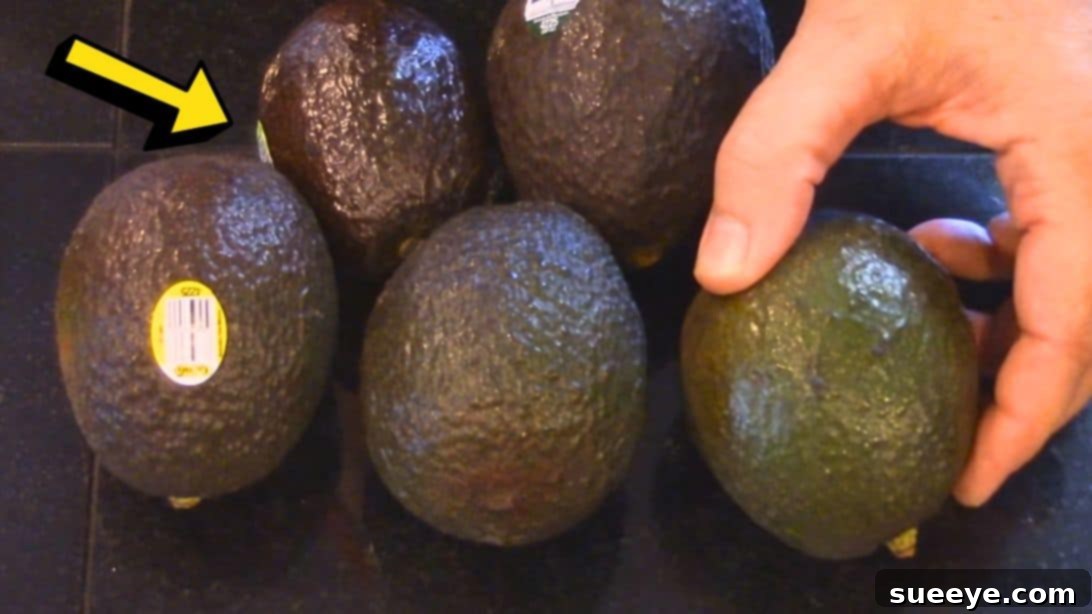
The skin color of an avocado provides a strong initial clue about its ripeness. While some varieties might differ slightly, generally, a vibrant green avocado is likely underripe. As it matures, the skin transitions to a darker green, often with purplish or brownish undertones. A perfectly ripe Hass avocado, the most common variety, will typically have a dark green, almost black skin. However, be cautious: if the skin is uniformly black and lacks any green hue, it might be overripe. You’re looking for that sweet spot where the color is deep and dark, but not completely ebony. Some slight variations in color, like small darker spots, are usually normal and don’t indicate spoilage. It’s the overall deep, rich hue that signals readiness.
It’s also worth noting that external blemishes or small dark spots on an avocado’s skin do not necessarily mean the fruit is bad inside. These can often be bruises from handling or transportation, which typically only affect the skin or a shallow part of the flesh, leaving the majority of the fruit perfectly edible and delicious. Don’t let a few minor imperfections deter you from a potentially perfect avocado.
The Squeeze Test: Feeling for Perfection
The most reliable method for determining avocado ripeness is the gentle squeeze test. To perform this, cradle the avocado in the palm of your hand and apply very light, even pressure with your fingers. A perfectly ripe avocado will yield slightly to this gentle pressure without feeling mushy or leaving deep indentations. It should feel firm but give a little, indicating its creamy interior. If the avocado feels rock hard and shows no give, it is still unripe and needs more time. Conversely, if it feels very soft, squishy, or watery, it is likely overripe and may have started to spoil. The key is a subtle give, a gentle bounce-back that tells you it’s ready for consumption.
The Stem Test: A Peek Beneath the Cap
Another excellent indicator of an avocado’s internal state is the stem cap test. Gently attempt to flick off the small woody stem at the broader end of the avocado. If the stem comes off easily and reveals a bright green or yellowish color underneath, the avocado is likely ripe and in good condition. A brown or dark green color beneath the stem could mean the fruit is past its prime or has internal bruising. If the stem is difficult to remove, the avocado is probably not ripe enough yet. This test is highly effective but should ideally be done right before you intend to use the avocado, as removing the stem can expose the flesh to air and accelerate spoilage.
How Do You Know If an Avocado Is Bad? Spotting Spoilage
Just as important as identifying a ripe avocado is recognizing one that has gone bad. Eating spoiled fruit can lead to an unpleasant taste experience and, in some cases, digestive upset. Here’s a comprehensive guide to detecting a bad avocado.
External Signs of Spoilage
Begin by visually inspecting the avocado for any obvious signs of damage or decay. Look for cuts, holes, or large, unusually soft spots on the skin. While small bruises are often superficial, deep cuts or punctures can allow bacteria and mold to enter, leading to faster spoilage. Another critical area to check is the stem end. Gently try to pop off the small stem cap. If the area underneath is dark brown, black, or moldy, chances are the avocado is bad or significantly overripe. A perfectly good avocado will reveal a light green or yellowish hue beneath the cap. If the stem is difficult to remove, the avocado might still be underripe.
When you’re at the grocery store, it’s generally best to avoid performing the stem test on green, unripe avocados. Popping off the stem cap on an unripe fruit exposes the flesh to air, which significantly accelerates its decay process. This can lead to a perfectly good avocado spoiling prematurely before it even has a chance to ripen for the next customer. Only perform the stem test when you are considering immediate consumption or are confident the avocado is ripe.
Internal Signs of Spoilage (After Cutting)
Sometimes an avocado might look fine on the outside, but reveal its true condition once cut open. The most obvious sign of a bad avocado is widespread dark brown or black discoloration in the flesh, often accompanied by a stringy texture. While small, isolated brown spots can sometimes be just bruising, extensive dark areas indicate spoilage. Another warning sign is a sour or chemical smell, rather than the fresh, subtly nutty aroma of a good avocado. If you detect any mold, stringiness, or a distinctly off-putting smell, it’s best to discard the entire fruit, even if parts of it still look green. Trust your senses: if it looks or smells wrong, it probably is.
How to Ripen Avocados Quickly and Effectively
Bought some unripe avocados and can’t wait to enjoy them? Don’t despair! There are effective methods to speed up the ripening process so you can savor that creamy goodness sooner. The key lies in leveraging ethylene gas, a natural plant hormone produced by fruits that signals ripening.
The Paper Bag Method: Harnessing Ethylene Gas
The most popular and reliable technique to ripen avocados quickly involves using a paper bag. Place your unripe avocados inside a brown paper bag. To supercharge the process, add fruits like apples or bananas to the bag with the avocados. Apples and bananas are excellent producers of ethylene gas. When these fruits are placed together in an enclosed space like a paper bag, the concentrated ethylene gas from the apples and bananas will encourage the avocados to ripen significantly faster. Fold the top of the bag loosely to trap the gas while still allowing some air circulation. Store the bag at room temperature, away from direct sunlight. Check your avocados daily; depending on how unripe they were, they could be ready in 1-3 days.
Other Ripening Tips
- Room Temperature: Always ripen avocados at room temperature. Refrigeration slows down the ripening process considerably, and can even stop it altogether if the avocado is very hard.
- Sunlight (Limited): While direct sunlight isn’t strictly necessary, a warm spot on a counter might slightly accelerate ripening compared to a cooler, dark pantry. However, excessive heat can cause uneven ripening or spoilage.
- Patience: Sometimes, the best method is simply patience. If you’re not in a hurry, leaving avocados on your countertop at room temperature will allow them to ripen naturally, typically within 4-7 days depending on their initial hardness.
How to Store Ripe and Cut Avocados for Freshness
Once you’ve achieved that perfect ripeness, knowing how to store avocados, both whole and cut, is essential to maximize their freshness and prevent waste. Proper storage can extend their shelf life and keep them ready for your next culinary adventure.
Storing Whole, Ripe Avocados
A perfectly ripe, whole avocado can be stored in the refrigerator for 3 to 5 days. The cooler temperature slows down the ripening process significantly, pausing it at its prime. Before refrigeration, ensure the avocado is indeed ripe using the squeeze and color tests. Storing unripe avocados in the fridge will halt their ripening, leaving you with perpetually hard fruit. If you plan to use a ripe avocado within a day or two, it’s fine to keep it on the counter; otherwise, the fridge is your best friend for extending its peak freshness.
Storing Cut Avocados
Cut avocados, once exposed to air, begin to oxidize rapidly, turning brown and losing their vibrant green color and fresh taste. To prevent this, several methods can be employed:
- Lemon or Lime Juice: The citric acid in lemon or lime juice acts as a natural antioxidant. Brush or squeeze a thin layer of citrus juice over the exposed flesh of the avocado.
- Airtight Container with Onion: Place the cut avocado (flesh side up) in an airtight container with a quarter of a red onion. The sulfur compounds emitted by the onion help to prevent oxidation. Ensure the onion does not touch the avocado directly, to avoid imparting an onion flavor.
- Water Bath: For halves, place the cut side down in a shallow bowl of cold water, ensuring the water covers the exposed flesh. This creates a barrier against air. This method is best for short-term storage (1-2 days).
- Plastic Wrap: Tightly wrap the cut avocado half (with the pit still in, if possible, as it also helps prevent oxidation) with plastic wrap, pressing it directly against the exposed flesh to remove any air pockets. Then place it in an airtight container.
Using these techniques, cut avocados can typically stay fresh for 1 to 3 days in the refrigerator, depending on the method and how ripe they were initially. Always check for any signs of spoilage, such as a sour smell or excessive browning, before consuming.
The Nutritional Powerhouse: Benefits of Avocados
Beyond their delicious taste and creamy texture, avocados are celebrated for their incredible health benefits. They are packed with essential nutrients, making them a fantastic addition to any diet.
- Healthy Fats: Avocados are rich in monounsaturated fatty acids, particularly oleic acid, which is known for its heart-healthy properties. These fats can help reduce bad cholesterol levels and support overall cardiovascular health.
- Rich in Vitamins and Minerals: They are an excellent source of numerous vitamins and minerals, including Vitamin K, Vitamin C, Vitamin E, B-vitamins (B5, B6, folate), and potassium. In fact, avocados contain more potassium than bananas, which is vital for maintaining healthy blood pressure levels.
- Fiber Content: High in dietary fiber, avocados aid in digestion, promote a feeling of fullness, and can help regulate blood sugar levels. Both soluble and insoluble fibers are present, contributing to gut health.
- Antioxidants: Avocados contain antioxidants like lutein and zeaxanthin, which are beneficial for eye health and can protect against age-related macular degeneration.
- Weight Management: Despite being calorie-dense, the healthy fats and fiber in avocados contribute to satiety, potentially reducing overall calorie intake and supporting weight management efforts.
Incorporating avocados into your diet regularly can contribute significantly to your overall well-being, making them a truly valuable and versatile fruit.
Mastering Avocado Ripeness: Your Key to Culinary Success
Understanding how to select, ripen, and store avocados is a game-changer for any home cook or avocado enthusiast. The difference between an underripe, overripe, and perfectly ripe avocado can dramatically impact the flavor, texture, and overall enjoyment of your meals. By utilizing the simple yet effective color, squeeze, and stem tests, you can confidently identify an avocado that is at its peak of freshness and ready to be transformed into your favorite dishes.
Remember, patience is a virtue, especially when dealing with ripening avocados, but with the right techniques like the paper bag method, you can accelerate the process when time is of the essence. And for those precious cut halves, employing proper storage methods will ensure they remain green and delicious for longer. Armed with this knowledge, you are now well-equipped to consistently choose and enjoy the finest avocados, unlocking their full potential in your kitchen. So go ahead, pick out that perfect avocado, and savor its creamy, nutritious goodness!