
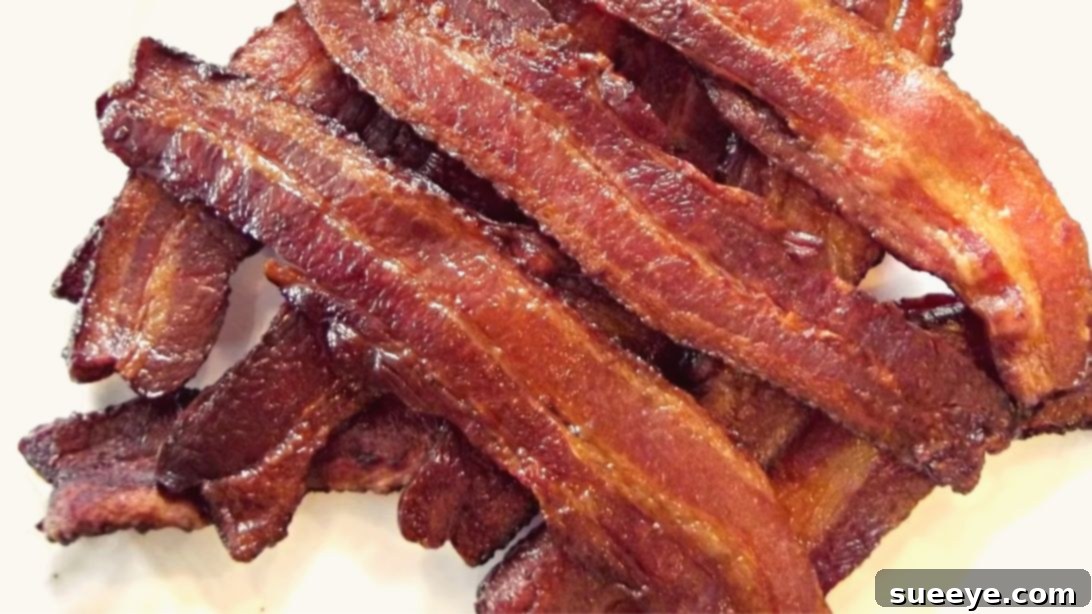
For many, the smell of sizzling bacon is an irresistible morning delight. Yet, the traditional method of frying bacon on a stovetop can often turn into a greasy ordeal. Splattering oil, unevenly cooked strips, and the tedious process of cooking multiple batches can quickly diminish the joy of this breakfast staple. If you’ve ever found yourself wishing for a cleaner, easier, and more efficient way to achieve perfectly crispy bacon, your culinary dreams are about to come true.
The secret lies in harnessing the consistent heat of your oven. This oven baking method not only eliminates the mess associated with stovetop frying but also ensures each strip cooks evenly, delivering a consistently crispy texture that’s simply unmatched. Whether you’re preparing a small serving for yourself or a large batch for a hungry crowd, the oven method simplifies the process, making it a hands-off experience that frees you to focus on other aspects of your meal.
Gone are the days of constant flipping, oil burns, and smoky kitchens. With just a few simple materials and a little guidance, you can transform your bacon-cooking routine. Learn how to achieve golden, crispy bacon with minimal effort and maximum satisfaction, as demonstrated in this fantastic tutorial by The Hillbilly Kitchen – Down Home Country Cooking on YouTube.
Why Oven-Baked Bacon is a Game-Changer
Adopting the oven method for cooking bacon brings a host of benefits that make it superior to pan-frying:
- Mess-Free Cooking: Perhaps the most significant advantage is the elimination of oil splatters. The bacon cooks enclosed in the oven, keeping your stovetop and countertops spotless.
- Even Crispiness: The circulating hot air in the oven ensures that every part of every bacon strip cooks evenly. You’ll achieve a consistent crispness from end to end, without burnt edges or undercooked centers.
- Hands-Off Convenience: Once the bacon is in the oven, your work is largely done. There’s no need for constant attention, flipping, or adjusting heat, freeing you to prepare other elements of your meal.
- Perfect for Large Batches: A standard sheet pan can accommodate a generous amount of bacon, making this method ideal for family breakfasts, brunches, or meal prepping for the week ahead. Say goodbye to cooking bacon in multiple small batches.
- Effortless Cleanup: By lining your sheet pan with aluminum foil or parchment paper, cleanup becomes a breeze. Simply discard the liner with the rendered grease, and your pan is virtually clean.
- Consistent Results: With a preheated oven and set cooking times, you can consistently achieve your desired level of crispness, from slightly chewy to shatteringly crisp.
Essential Ingredients & Materials
Gathering your supplies is the first step towards perfect oven-baked bacon. You likely have most of these items already in your kitchen.
- Bacon: Choose your preferred cut – thin, regular, or thick-cut. The thickness will influence cooking time.
- Sheet Pan: A sturdy, rimmed baking sheet is crucial to contain the bacon and rendered grease. Opt for one with slightly deeper edges.
- Aluminum Foil: Essential for easy cleanup and containing grease. You can also use parchment paper for a non-stick surface.
- Paper Towels: For draining excess grease from the cooked bacon, ensuring maximum crispness.
- Oven: The star of the show!
Step-by-Step Directions for Perfect Oven Bacon
Step 1: Preparation and Initial Bake
The foundation of great oven-baked bacon begins with proper setup. Begin by selecting a sheet pan that has a bit of depth, ideally with raised edges to prevent any grease from overflowing. Line this pan generously with aluminum foil, ensuring it covers not only the bottom but also extends up and over the edges on all sides. This meticulous lining is your secret weapon for containing all the bacon grease that will render out during cooking, making cleanup remarkably simple.
Next, carefully arrange your bacon strips in a single layer across the foil-lined pan. It’s crucial that the strips do not overlap. Overlapping bacon will steam rather than crisp, leading to unevenly cooked results. Give each strip a little breathing room for optimal heat circulation. While you’re arranging the bacon, preheat your oven to 350 degrees Fahrenheit (175 degrees Celsius). A properly preheated oven is vital for consistent cooking and achieving that coveted crisp texture.
Once your oven reaches the target temperature and your bacon is neatly arranged, slide the sheet pan into the hot oven. Let the bacon cook for approximately a few minutes. This initial phase starts the rendering process. Keep a watchful eye on it, as ovens can vary, and bacon can go from perfectly cooked to burnt surprisingly quickly. For even cooking, halfway through this initial period, carefully turn each bacon strip using tongs. This ensures both sides get direct exposure to the heat, contributing to uniform crispness.
Step 2: Monitoring Doneness and Final Steps
The precise cooking time for your oven-baked bacon is highly dependent on its thickness and your desired level of crispness. Generally, thinner bacon strips will cook the fastest, often requiring only about 3 to 3½ minutes per side for a total of 6-7 minutes. Regular-sized bacon typically takes a bit longer, usually around 7 minutes per side, for a total of 14 minutes. For thick-cut bacon, which offers a meatier bite, you can expect a cooking time of approximately 10 to 12 minutes per side, totaling 20-24 minutes. It’s important to remember that these are guidelines; always trust your eyes and nose.
During the entire cooking process, you should aim to flip the bacon strips only once, ideally halfway through the total cooking time, as mentioned in Step 1. Over-flipping can interfere with the crisping process. Once the bacon achieves a beautiful golden-brown color and reaches your preferred level of crispiness – whether you like it slightly pliable or shatteringly brittle – it’s time to remove it from the oven. Exercise caution, as the pan and rendered grease will be extremely hot.
Using tongs, carefully transfer the cooked bacon strips from the hot pan to a plate generously lined with several layers of paper towels. Arrange them in a single, flat layer to allow excess grease to drain away efficiently. This crucial step helps in achieving and maintaining maximum crispness. As the bacon cools, it will continue to crisp up slightly.
Do not discard the rendered bacon grease! It’s a flavorful commodity. Once the grease has cooled slightly in the foil-lined pan (but is still liquid), carefully pour it into a heat-proof container with a tight-fitting lid. Allow it to cool completely at room temperature, then secure the lid and store it in your refrigerator. Bacon grease is excellent for frying eggs, sautéing vegetables, or adding depth of flavor to various dishes. It’s a culinary treasure you won’t want to waste.
Pro Tips for the Crispiest Bacon
While the basic method is straightforward, a few expert tips can elevate your oven-baked bacon from good to absolutely phenomenal:
- Consider a Wire Rack: For ultimate crispness, place a wire cooling rack inside your foil-lined sheet pan before laying out the bacon. This elevates the bacon, allowing hot air to circulate completely around each strip and preventing it from sitting in its own rendered grease. The grease will drip through to the foil below, making cleanup still easy.
- Start with a Cold Oven (Optional Method): Some chefs swear by placing bacon in a cold oven and then turning it on. As the oven heats up, the bacon slowly renders its fat, resulting in an even crispier texture and less shrinkage. If you try this, still preheat to 350°F (175°C) and then add 5-10 minutes to the total cooking time.
- Don’t Overcrowd the Pan: Give your bacon strips space. Overcrowding leads to steaming, not crisping. If you have a lot of bacon, use two sheet pans.
- Monitor Closely Towards the End: Bacon can go from perfectly done to burnt in a matter of seconds. Stay near the oven during the last few minutes of cooking, and trust your senses – sight and smell are your best guides.
- Adjust Temperature for Preference: While 350°F (175°C) is standard, some prefer 400°F (200°C) for quicker, crispier results (requiring even closer monitoring) or 325°F (160°C) for a slightly chewier texture.
Common Mistakes to Avoid
Even with a simple method, a few missteps can hinder your quest for perfect bacon:
- Not Preheating the Oven: Placing bacon in a cold oven (unless intentionally using the cold-start method) can lead to uneven cooking and a less desirable texture.
- Overlapping Bacon: As mentioned, this traps moisture and prevents proper crisping. Always ensure a single layer.
- Forgetting the Foil/Parchment: Skipping this step will result in a difficult cleanup, as the rendered grease will bake onto your pan.
- Ignoring the Bacon: While hands-off, it’s not entirely ‘set it and forget it.’ Keep an eye on it, especially towards the end, to prevent burning.
- Not Draining Excess Grease: Leaving bacon to sit in its own fat will make it greasy and less crispy. The paper towel step is essential.
Flavor Variations and Serving Suggestions
Once you’ve mastered the basic technique, feel free to experiment with flavor!
- Spicy Bacon: Sprinkle a pinch of cayenne pepper or red pepper flakes over the bacon before baking.
- Candied Bacon: For a sweet and savory treat, sprinkle brown sugar and a dash of black pepper over the bacon halfway through cooking.
- Peppered Bacon: A generous crack of fresh black pepper adds a delightful aromatic kick.
- Maple Bacon: Drizzle a small amount of maple syrup over the bacon during the last 5-7 minutes of baking for a caramelized finish.
Perfectly cooked bacon is incredibly versatile. Serve it alongside eggs and toast for a classic breakfast, crumble it over salads, use it in sandwiches, or incorporate it into savory baked goods like quiches and muffins. It’s also an excellent addition to burgers or even as a standalone snack.
The image below provides a visual summary of how to achieve perfect bacon every time, reinforcing the key steps and tips.
Conclusion: Your New Favorite Bacon Method
Say goodbye to the splatter and stress of stovetop bacon. The oven method is a revelation for anyone who loves perfectly cooked bacon but dreads the cleanup. With its ability to produce consistently crispy strips, handle large quantities with ease, and simplify your kitchen routine, it’s no wonder this technique is quickly becoming the preferred choice for home cooks everywhere.
Embrace this simple yet transformative cooking method, and enjoy the delicious rewards. Your breakfast table (and your kitchen) will thank you. Remember, the journey to culinary mastery often starts with simple, effective techniques. Give this oven-baked bacon method a try, and prepare to be delighted!
*All image credit belongs to The Hillbilly Kitchen – Down Home Country Cooking via YouTube. Follow and subscribe to her channel for more incredible cooking tips and recipes!