
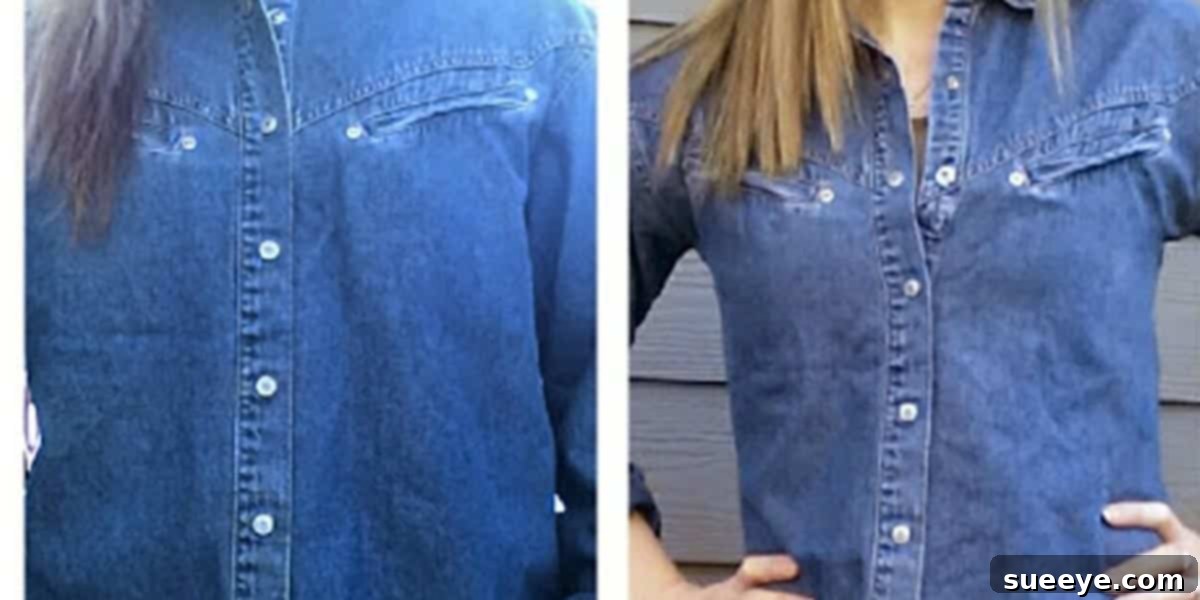
Transform Your Wardrobe: The Ultimate Guide to Altering Men’s Shirts for a Perfect Female Fit
Are you looking for unique, stylish additions to your wardrobe without breaking the bank? Do you appreciate the comfort and classic appeal of a men’s button-down shirt but wish it had a more flattering fit for your body shape? You’re in luck! Learning how to alter men’s shirts into perfectly fitted and incredibly stylish pieces for women is not only satisfying but also surprisingly simple. This guide will walk you through everything you need to know, from selecting the ideal shirt to the easy steps of transformation, allowing you to unlock a world of personalized fashion.
Men’s collared shirts are a true fashion chameleon. They are renowned for their versatility, comfort, and the effortless ability to elevate an everyday casual ensemble into something chic and put-together. However, for many women, the traditional boxy cut of a men’s shirt can feel shapeless and overwhelming. The good news is, you don’t have to sacrifice style for comfort. With just a few basic sewing skills and a little creativity, you can refashion an oversized men’s shirt into a bespoke garment that celebrates your unique figure.
Why Men’s Shirts Are a Goldmine for Women’s Fashion
Before diving into the alteration process, let’s explore why men’s shirts are such a fantastic starting point for your DIY fashion projects. Their inherent qualities make them perfect candidates for transformation:
- Unmatched Versatility: A men’s shirt can be styled in countless ways. Imagine it as a crisp work shirt, a relaxed weekend top, a chic beach cover-up, or even layered over a dress. Its classic design offers a neutral canvas for your personal style.
- Quality Fabrics: Men’s shirts, especially those made from 100% cotton, linen, or high-quality blends, often boast durable and comfortable fabrics. These materials hold up well to wear and washing, ensuring your altered creation lasts.
- Sustainable Fashion Choice: Repurposing existing garments, whether from your partner’s closet or a local thrift store, is a wonderful way to practice sustainable fashion. It reduces textile waste and gives clothes a second life, making you a conscious consumer and a style icon.
- Budget-Friendly: Thrift stores are treasure troves for men’s shirts, often available for just a few dollars. This makes altering them an incredibly cost-effective way to expand your wardrobe with unique, custom-fit pieces.
- Unique Style Potential: Unlike mass-produced women’s clothing, an altered men’s shirt offers a unique, one-of-a-kind aesthetic. You control the fit, the length, and the details, ensuring your garment perfectly reflects your taste.
Perhaps you’ve found yourself eyeing your husband’s favorite button-down, or you’ve spotted a pattern you adore on a clearance rack in the men’s section. The desire to make it truly *yours* is a powerful motivator. For many, including myself, men’s shirts were a comfortable go-to, particularly when an oversized fit was preferred. But as our bodies and styles evolve, the desire for a more defined silhouette often grows. This alteration process is about embracing your shape and tailoring fashion to fit you, not the other way around.
Choosing Your Canvas: Selecting the Perfect Men’s Shirt for Alteration
The success of your alteration project begins with choosing the right shirt. Not all men’s shirts are created equal when it comes to refashioning. Here’s what to look for to ensure an easy and rewarding transformation:
1. Prioritize Shoulder Fit and Arm Length
These are the two most critical areas. While side seams and hems are easily adjustable, altering shoulders or shortening arm length significantly (while maintaining the cuff structure) can be more challenging for beginners. Ideally, the shirt’s shoulder seams should sit reasonably close to your own shoulders, and the sleeve length should be adequate, even if a bit long. A little extra length in the arms is fine, as you can easily shorten them or roll them up.
2. Consider the Collar Size
Similar to shoulders, altering the collar can be complex. Choose a shirt where the collar isn’t excessively large or disproportionate to your neck. A slightly oversized collar can still look chic, but a vastly too-big one might require more advanced techniques to adjust.
3. Embrace Fabric Quality and Type
Look for shirts made from natural fibers like cotton, linen, or chambray. These fabrics are generally easier to sew, press beautifully, and are comfortable to wear. Avoid anything too slippery or stretchy for your first project, as these can be trickier to handle.
4. Inspect for Potential
Don’t just look at the current shape; imagine its potential. Does it have interesting pockets, unique buttons, or a desirable pattern? These details can add character to your finished piece. For example, I once found a shirt on sale at a thrift store for a mere $3. It was initially shapeless and large, but its good arm length and unusual pockets hinted at a fantastic transformation.
5. Condition Check
Before purchasing, especially from a thrift store, carefully inspect the shirt for any irreparable stains, tears, or excessive wear. While minor imperfections can sometimes be worked around, major damage might make the effort not worthwhile.
The Anatomy of an Alteration: What You Can Easily Change
The beauty of altering a men’s shirt lies in the simplicity of the most impactful changes. You don’t need to be a master tailor to achieve a custom fit. Here are the key areas you’ll focus on:
1. Side Seams: Creating a Fitted Silhouette
This is arguably the most transformative step. Taking in the side seams allows you to sculpt the shirt to your waist and hips, creating a flattering, feminine silhouette from an otherwise boxy garment. You can achieve anything from a subtly tapered fit to a dramatically cinched waist, depending on your preference.
2. Adding Darts: Enhancing Waist Definition
For an even more tailored look, especially if you desire extra waist definition, adding bust or waist darts to the front and/or back of the shirt can make a significant difference. Darts help remove excess fabric and create a three-dimensional shape that conforms to your curves.
3. Sleeves: Adjusting Length and Taper
If the sleeves are too long, shortening them to a cuff-friendly length, a three-quarter sleeve, or even transforming them into short sleeves is straightforward. You can also taper the sleeves for a slimmer, more modern fit, especially if they are overly wide.
4. Hemline: Customizing the Length and Shape
The original hem of a men’s shirt might be too long or straight for your liking. You have full creative freedom here:
- Cropping: For a trendy look, crop the shirt to sit at your natural waist or just above your hips.
- Curved Hem: Create a flattering high-low hem or a gently curved hem.
- Straighten: If the original hem is curved, you can opt for a straight hem for a more modern finish.
Tools of the Trade: Your Essential Sewing Kit
You don’t need a professional sewing studio to tackle this project. A few basic tools are all it takes:
- Sewing Machine: While hand sewing is possible, a sewing machine will make the process much faster and give you neater, more durable seams.
- Fabric Scissors: Sharp scissors specifically for fabric are crucial for clean cuts.
- Pins: To hold fabric in place before sewing.
- Fabric Chalk or Marker: For marking your desired new seam lines directly onto the fabric.
- Measuring Tape: For accurate measurements.
- Seam Ripper: Your best friend for correcting mistakes or unpicking original seams.
- Iron and Ironing Board: Pressing seams as you go is key to a professional finish.
A Quick Glimpse at the Altering Process (Step-by-Step Overview)
The altering process is surprisingly quick and accessible, making it an excellent project for sewing novices looking to gain confidence. If you’re a newbie to sewing, this would be a good way to get your feet wet!
- Try On and Mark: Put the shirt on inside out. Using pins, pinch the excess fabric along the side seams, sleeves, and any other areas you want to take in, until you achieve your desired fit. Mark these lines with fabric chalk.
- Measure and Refine: Take the shirt off and use your measuring tape and a ruler to draw smooth, even lines connecting your chalk marks. You’ll typically create a gentle curve from the underarm to the hip.
- Sew New Seams: Carefully sew along your marked lines. Always test your stitch on a scrap piece of fabric first.
- Trim and Finish: Trim the excess fabric, leaving a consistent seam allowance (e.g., 1/2 inch or 1.5 cm). Finish the raw edges with a zigzag stitch or a serger to prevent fraying.
- Adjust Hem and Sleeves: Mark and sew new hems for the bottom and sleeves as desired.
- Press: Give your newly sewn seams and hems a good press with an iron for a crisp, professional finish.
While this overview provides the basic steps, visual guides are incredibly helpful. Many excellent step-by-step tutorials are available online that can demonstrate these techniques clearly. Don’t be afraid to search for “how to tailor a men’s shirt for a woman” or “DIY refashion button-down” to find detailed video instructions.
Beyond the Basics: The Benefits of DIY Alterations
The act of altering clothing offers benefits that extend far beyond simply owning a new shirt:
- Boosted Confidence: Wearing clothes that fit perfectly and express your unique style can significantly boost your confidence.
- Skill Development: Each alteration project refines your sewing skills, opening doors to more complex creations and a deeper understanding of garment construction.
- Personalized Style: You’re not just following trends; you’re creating them. Your altered shirt will be a testament to your personal creativity and taste.
- Environmental Impact: By extending the life of existing garments, you’re contributing to a more sustainable fashion ecosystem and reducing your carbon footprint.
- Financial Savings: Custom-fit clothing often comes with a hefty price tag. DIY alterations allow you to achieve a high-end look on a budget.
So, why wait? Those big, shapeless shirts are brimming with potential. Whether they’re languishing in the back of your closet or waiting to be discovered at a local thrift store, they hold the promise of becoming your next favorite, custom-tailored piece. Embrace the joy of creation, the satisfaction of a perfect fit, and the reward of sustainable style. Bring out those big shirts, grab your sewing kit, and start transforming your wardrobe today!
Photo Credit: So Much To Make