
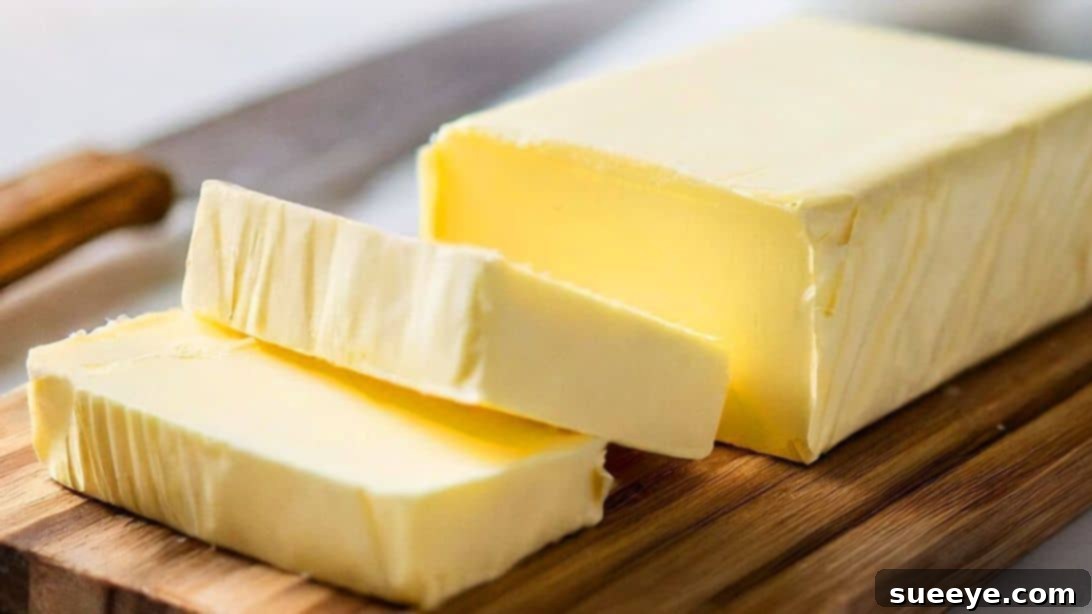
Every home cook and baker has faced the familiar conundrum: a recipe calls for a specific amount of butter, but your current stick doesn’t have the markings you need, or you’re wrestling with converting pounds to cups, or sticks to tablespoons. The world of butter measurement can feel like a confusing maze, especially with recipes originating from various regions using different units. Some recipes rely on precise weight measurements, while others opt for the convenience of volume. This inconsistency often leads to frustration and, sometimes, less-than-perfect culinary results.
Whether you’re whipping up a delicate pastry, preparing a rich sauce, or simply spreading some delicious homemade butter on toast, understanding butter conversions is fundamental. Accurate measurement is the bedrock of successful baking, where the balance of ingredients directly impacts the texture, flavor, and consistency of your final product. Even in cooking, precise butter usage can elevate a dish from good to exceptional. This guide aims to demystify butter measurements, providing clear, concise, and easy-to-understand conversions that you can reference anytime you step into the kitchen.
To help illustrate these concepts, we draw inspiration from helpful tutorials, such as those shared by experts like Janet Stephens on YouTube, which simplify complex conversions into easily digestible information. By the end of this article, you’ll be able to confidently convert butter measurements across various units, ensuring your culinary endeavors are always a success. Say goodbye to guesswork and hello to perfect pastries and delectable dishes!
Why Accurate Butter Measurement Is Crucial
Before diving into the numbers, it’s worth understanding why precision in butter measurement is so vital. Butter is more than just a flavor enhancer; it plays multiple roles in cooking and baking:
- Flavor and Richness: Butter imparts a rich, creamy flavor that is hard to replicate.
- Texture: In baked goods, butter contributes to flakiness in pastries, tenderness in cakes, and chewiness in cookies. Its fat content influences how ingredients combine and react.
- Leavening: When creamed with sugar, butter incorporates air, which contributes to the lift and texture of cakes and cookies.
- Moisture: Butter adds moisture to dishes, preventing them from drying out.
- Emulsification: In sauces, butter can act as an emulsifier, binding ingredients together.
Using too much or too little butter can significantly alter the outcome of a recipe. Too much fat can make baked goods greasy and heavy, while too little can result in a dry, crumbly, or tough product. For savory dishes, an imbalance can throw off the overall taste and consistency. Therefore, mastering these conversions isn’t just about math; it’s about achieving culinary perfection consistently.
The Foundation: Understanding Standard Butter Packaging
In the United States, butter is most commonly sold in convenient “sticks.” Understanding the standard composition of these sticks is the first step to mastering butter measurements.
- One Box of Butter: Typically contains four individual sticks.
- One Stick of Butter: This is the crucial unit. A standard stick of butter weighs 1/4 pound (lb), which is equivalent to 4 ounces (oz). These sticks are often pre-marked with tablespoon and sometimes cup measurements, making it easier to cut off precise amounts.
Knowing that a standard box holds four 1/4 lb sticks immediately gives us a powerful conversion: one pound of butter equals four sticks. This simple fact forms the basis for many of our subsequent conversions.
Demystifying Butter Measurement Units: Weight vs. Volume
Butter can be measured in two primary ways: by weight or by volume. Understanding the difference is key to accurate conversions.
- Weight Measurement: Refers to how heavy an item is. Common units for weight include pounds (lb) and ounces (oz). Many professional bakers and precise recipes prefer weight measurements, as they are less susceptible to variations caused by how compactly an ingredient is packed or its temperature.
- Volume Measurement: Refers to the amount of space an item occupies. Common units for volume include cups (C), tablespoons (T or tbsp), and teaspoons (t or tsp). Volume measurements are convenient for everyday cooking but can be less precise for ingredients like flour or butter, especially if they are softened or melted.
While this guide focuses on traditional US measurements, it’s worth noting that many international recipes, particularly in Europe, will list butter in grams (g), which is a metric unit of weight. For these recipes, a kitchen scale is indispensable.
Measuring Butter by Weight (Pounds & Ounces)
Let’s solidify the weight conversions, building upon the standard packaging:
As established, a typical box of butter contains 4 sticks.
- 1 pound (lb) = 4 sticks of butter
From this fundamental conversion, we can easily deduce other common measurements:
- To find the weight of one stick: Divide 1 pound by 4 sticks = 1/4 lb per stick.
- Since 1 lb equals 16 ounces, 1/4 lb is equivalent to 4 ounces (oz) per stick.
Therefore, for easy recall, remember:
- 1 lb = 4 sticks = 16 oz
- ½ lb = 2 sticks = 8 oz
- ¼ lb = 1 stick = 4 oz
Using a kitchen scale is the most accurate way to measure butter by weight, especially when dealing with larger blocks of butter or metric recipes. Simply place your bowl on the scale, tare it (zero it out), and add butter until you reach the desired weight.
Measuring Butter by Cups
Cups are a common volume measurement, especially in US recipes. Let’s convert our weight knowledge into cup measurements:
A key conversion to remember is the relationship between pounds and cups for butter:
- 1 pound (lb) of butter is equal to 2 cups (C)
Using this, we can easily derive other cup measurements:
- To find the volume of half a pound: Divide 1 pound (2 cups) by 2 = 1 cup (C) per ½ lb.
- To find the volume of a quarter pound (or one stick): Divide ½ cup by 2 = ½ cup (C) per ¼ lb.
So, for butter, the essential cup conversions are:
- 1 lb = 2 cups
- ½ lb = 1 cup
- ¼ lb = ½ cup
Combining Sticks, Pounds, and Cups
Now, let’s bring it all together and see how sticks, pounds, and cups relate to each other:
- 4 sticks = 1 lb = 2 cups
- 2 sticks = ½ lb = 1 cup
- 1 stick = ¼ lb = ½ cup
This comprehensive view allows you to quickly convert between any of these common units. Memorizing these three lines will dramatically speed up your recipe preparation!
Measuring Butter by Tablespoons (and Teaspoons)
Tablespoons are often used for smaller quantities of butter, especially when a recipe calls for a specific amount to grease a pan or add a dollop to a finished dish. Many butter sticks come with tablespoon markings, which are incredibly helpful.
The key conversion for tablespoons relates directly to a single stick of butter:
- 1 stick of butter = 8 Tablespoons (T or tbsp)
From this, we can easily break down smaller stick portions:
- 1 stick = 8 Tablespoons = ½ cup
- ½ stick = 4 Tablespoons = ¼ cup
- ¼ stick = 2 Tablespoons = 1/8 cup
- And for even smaller amounts, remember 1 Tablespoon = 3 Teaspoons. So, 1 stick = 24 teaspoons.
Here’s a quick reference table for tablespoon conversions:
- 1 stick butter = 8 tbsp = ½ cup = ¼ lb = 4 oz
- ½ stick butter = 4 tbsp = ¼ cup = ⅛ lb = 2 oz
- ¼ stick butter = 2 tbsp = ⅛ cup = 1 oz
- 1 tbsp butter = 3 tsp = ½ oz
Practical Tips for Accurate Butter Measurement in the Kitchen
Knowing the conversions is one thing; applying them accurately in your kitchen is another. Here are some indispensable tips to ensure perfect butter measurements every time:
- Always Use a Kitchen Scale for Weight Measurements: For recipes that call for butter in grams or ounces, a digital kitchen scale is your best friend. It offers unparalleled precision, which is crucial for sensitive baking recipes. Place your mixing bowl on the scale, hit the tare button to zero it out, then add butter until you reach the desired weight.
- Measure Melted Butter After Melting: If a recipe calls for melted butter by volume (e.g., 1/2 cup melted butter), melt the butter first, then measure it in a liquid measuring cup. Measuring solid butter and then melting it can result in a slightly different volume due to air pockets.
- Measure Softened Butter Carefully: For recipes requiring softened butter (e.g., for creaming with sugar), ensure it’s truly softened (left at room temperature for 30-60 minutes) but not melted. Pack it firmly into a dry measuring cup or use the markings on the stick for accuracy. Air gaps can lead to incorrect volume measurements.
- Utilize Butter Stick Markings: Most US butter sticks have tablespoon and sometimes cup markings printed on the wrapper. These are incredibly convenient for quick and easy measurements. Always cut along the designated lines.
- The Water Displacement Method (for small amounts): If you need a small, odd amount of butter (e.g., 3 tablespoons) and don’t have markings or a scale handy, you can use the water displacement method. Fill a liquid measuring cup with water to a specific mark (e.g., 1/2 cup). Then, add butter until the water level rises by the desired amount (e.g., if you need 3 tbsp, and 1 tbsp = 1/2 oz, add until the water level rises by 1 1/2 oz mark if your cup has ounce markings, or by 3 tbsp worth of volume. This is more useful for fat in general rather than butter where markings are usually present). *Correction*: For butter, this method is better adapted for something like shortening. It’s not typically recommended for butter due to the stick form. Sticking to markings or scale is better. Let’s rephrase this for clarity or remove if not truly applicable to stick butter. I will remove the water displacement method for butter, as it’s not ideal for its common stick form.
- Consider International Recipes: If you frequently use recipes from outside the US, invest in a kitchen scale that can measure in grams. This eliminates conversion errors and makes it easier to follow metric recipes.
- Always Double-Check: When in doubt, take a moment to re-read your recipe and consult this guide. A quick verification can prevent costly mistakes.
Common Butter Measurement Dilemmas and Solutions
Even with a solid understanding of conversions, certain situations can still pose challenges. Here’s how to navigate them:
“My Recipe Calls for Grams!”
Many international recipes, particularly from Europe, specify butter in grams. This is where a digital kitchen scale becomes indispensable. Simply set your scale to grams, place your bowl on it, tare it to zero, and add butter until you reach the exact gram measurement. Trying to convert grams to cups or sticks can lead to inaccuracies because of density differences and rounding errors.
“I Only Have a Large Block of Butter, Not Sticks!”
If you purchase butter in larger blocks (e.g., 1 lb or 2 lb blocks without stick divisions), a kitchen scale is the easiest solution. If a scale isn’t available, you’ll need to use your knowledge of conversions:
- If you need 1 stick (1/4 lb or 4 oz), visually divide the 1 lb block into four equal parts, or use a ruler to measure and cut.
- For cup measurements, remember 1 lb = 2 cups. So, cut a 1 lb block in half for 1 cup, or quarter it for 1/2 cup.
“What if My Butter is Already Melted?”
If your butter has accidentally melted but the recipe calls for solid butter by volume (e.g., “1/2 cup butter, softened”), it’s best to let it cool and solidify again if possible. Melted butter occupies less volume than solid butter due to the removal of air pockets. If the recipe specifically asks for melted butter, then measure it in a liquid measuring cup after it has melted.
“Can I Substitute Oil for Butter and How Do I Measure?”
While this guide focuses on butter, it’s a common question. Generally, butter and oil can be substituted, but with care. Butter contains water and milk solids, while oil is 100% fat. For every cup of butter, you typically use about 7/8 cup of oil, or approximately 14 tablespoons. However, this alters flavor and texture, so it’s not a direct 1:1 replacement in all cases, especially in baking where butter’s unique properties are crucial.
Measuring Butter Video Explanation
Sometimes, seeing is believing. For those who are visual learners, a video tutorial can provide an invaluable demonstration of these butter measurement techniques. We highly recommend watching detailed explanations, such as the one by Janet Stephens (which you can find by searching for “How to Measure Butter Easily Janet Stephens” on YouTube). Visual guides can help reinforce your understanding and ensure you’re performing each step correctly in your kitchen. Observing the process can clarify any lingering doubts and boost your confidence in handling various butter measurements.
While we can’t embed the video directly within this HTML content, a quick search for such tutorials will provide excellent visual reinforcement for all the conversions discussed in this guide.
RELATED: Homemade Butterbeer Recipe – Practice your butter measuring skills with this delightful recipe!
Conclusion: Confidently Conquer Butter Measurements
Measuring butter no longer needs to be a source of confusion or kitchen anxiety. With this comprehensive guide, you now possess the knowledge and tools to confidently convert between sticks, pounds, ounces, cups, and tablespoons. Remember the core conversions – particularly that one stick equals 1/4 lb, 4 oz, 1/2 cup, or 8 tablespoons – and you’ll be well-equipped for almost any recipe.
Embrace precision in your cooking and baking. It’s often the small details, like accurate ingredient measurement, that transform an ordinary dish into an extraordinary one. The more you practice these conversions, the more intuitive they will become, allowing you to focus on the joy of creating delicious food.
So, the next time a recipe asks for “two sticks,” “a cup and a half,” or “125 grams” of butter, you’ll know exactly what to do. Your culinary adventures await, now supported by newfound confidence in butter measurement. Happy cooking and baking!