
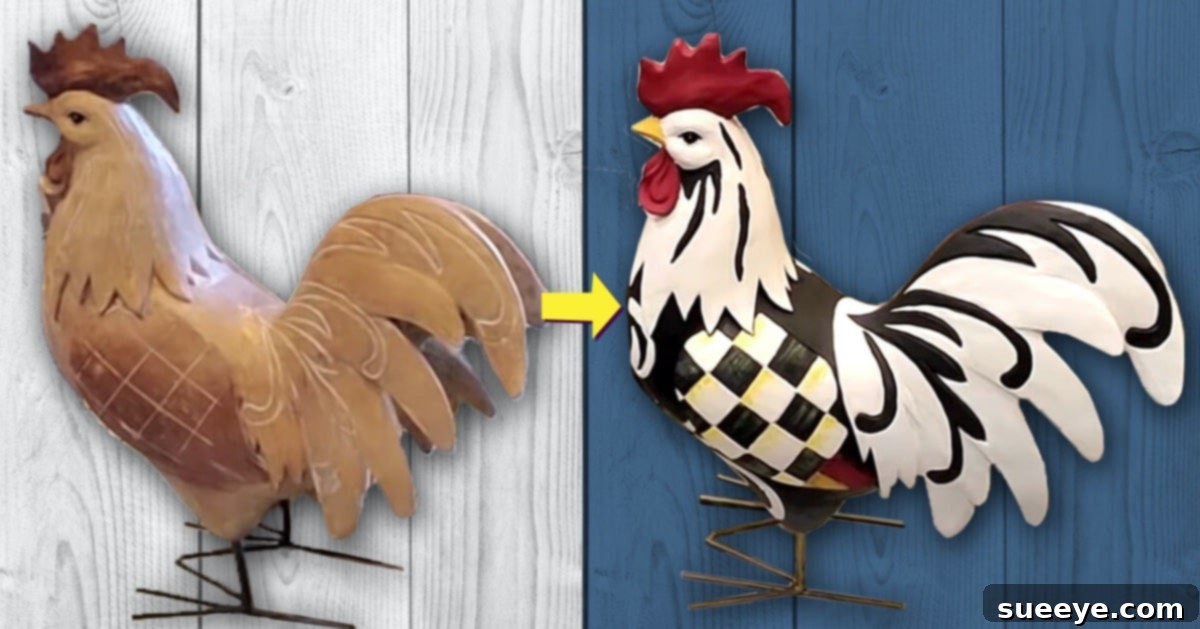
Transforming your home into a charming Country French sanctuary often starts with iconic decorative elements that evoke warmth and rustic elegance. Among these, the majestic rooster stands as a quintessential symbol, bringing vibrant life and personality to any kitchen or dining space. If you’ve ever admired the whimsical, hand-painted aesthetic of McKenzie Childs decor, you know the magic these pieces can infuse into a room. Imagine bringing that unique artistry into your own home, not by purchasing expensive items, but by crafting a stunning, personalized piece yourself.
I recently stumbled upon an inspiring painted rooster video tutorial by Jody At Southern Seasons on YouTube, and it instantly sparked my creative spirit. Jody’s method offers a wonderfully accessible approach to achieving that sought-after McKenzie Childs Country French look, making it perfect for both seasoned crafters and enthusiastic beginners. What impressed me most was how professional the finished project appeared, despite the simplicity of the steps involved. The technique is almost like a sophisticated “paint-by-numbers,” yet it feels much more intuitive, especially with rooster statues that often feature raised, distinctive characteristics that guide your brushwork. This guide will walk you through recreating this delightful project, helping you infuse your kitchen with unparalleled French farmhouse charm.
How To Paint A McKenzie Childs Inspired Rooster: A DIY Guide to French Country Decor
The allure of French Country and farmhouse decor lies in its ability to blend comfort with elegance, creating spaces that feel both lived-in and luxurious. A hand-painted rooster, particularly one inspired by the distinctive McKenzie Childs style, serves as more than just a decoration; it’s a conversation starter, a focal point that ties your aesthetic together. This DIY project allows you to customize your decor, ensuring your rooster statue perfectly complements your existing color scheme and personal taste. Not only is it a fun and rewarding creative endeavor, but it also offers a budget-friendly way to achieve a high-end designer look.
Before diving into the painting process, let’s gather all the necessary tools and materials. Having everything ready beforehand ensures a smooth and enjoyable crafting experience.
Essential Materials for Your McKenzie Childs Inspired Rooster Project:
- Rooster Statue: The foundation of your project! Look for a ceramic, resin, or wooden rooster statue at craft stores, home decor outlets like Marshall’s or TJ Maxx, antique shops, or even online marketplaces. The size and intricate details are entirely up to your preference.
- Craft Acrylic Paints: Choose a palette that reflects the McKenzie Childs aesthetic – typically bright, contrasting colors. Jody’s tutorial utilizes light ivory, yellow, black, and red, which are excellent starting points. Consider adding a vibrant blue or a rich green for extra flair, or even a deep purple to emulate the brand’s whimsical feel. High-quality acrylic paints offer good coverage and durability.
- Assorted Paintbrushes: You’ll need a variety for different tasks.
- Flat Brushes: For applying base coats and broader strokes.
- Round Brushes: Versatile for general painting and blending.
- Detail Brushes: Essential for fine lines, eyes, and intricate patterns like checkerboards.
- Acrylic Spray Finishing Gloss (or Matte/Satin): A crucial step to protect your artwork. A gloss finish will give your rooster a vibrant, polished look, while matte or satin will offer a softer, more subtle appearance.
- Primer (Optional, but Recommended): A white or grey acrylic primer can help your paint adhere better, especially if your statue has a glossy finish or a dark original color. It also ensures colors appear truer.
- Painter’s Tape (Optional): Useful for creating crisp, clean lines if you plan to incorporate geometric patterns like stripes or checks.
- Paper Towels or Rags: For cleaning brushes and wiping up spills.
- Water Container: For rinsing your brushes.
- Drop Cloth or Newspaper: To protect your work surface from paint splatters.
- Fine-Grit Sandpaper (Optional): If your statue has imperfections or a very slick surface, light sanding can help paint adhesion.
Step-by-Step Directions for Painting Your Country French Rooster:
This project is all about embracing creativity and enjoying the process. Don’t be afraid to experiment with colors and patterns. The beauty of McKenzie Childs style often lies in its imperfect, hand-crafted charm.
Step 1: Prepare Your Rooster Statue
Begin by thoroughly cleaning your rooster statue. Use a damp cloth to wipe away any dust, dirt, or grease. If the statue has a very smooth or glossy surface, a light sanding with fine-grit sandpaper can create a better “tooth” for the paint to adhere to. If you’re using primer, apply one to two thin, even coats, allowing each coat to dry completely according to the manufacturer’s instructions. Priming creates a uniform base, especially important if your statue is a dark color or has existing patterns you want to cover. Ensure your workspace is well-ventilated and covered with a drop cloth or newspaper to protect surfaces.
Step 2: Establish the Base Colors
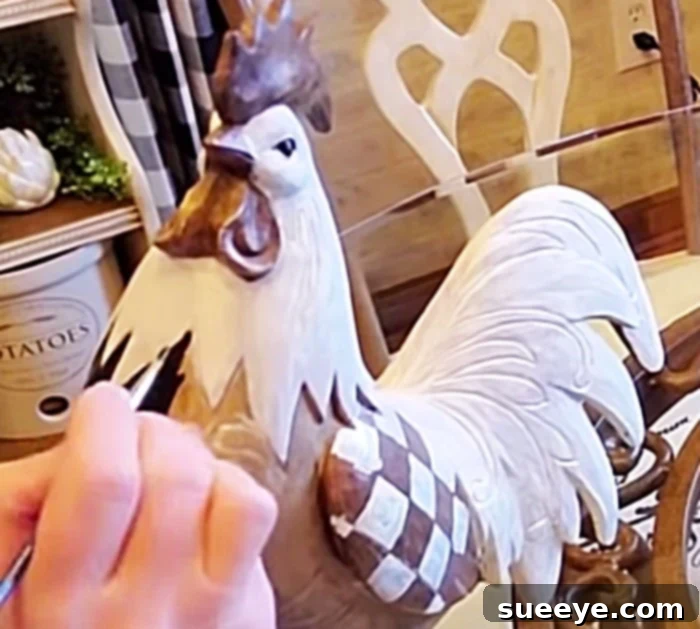
Following Jody’s method, you’ll start by painting all the ivory-colored sections of the rooster. This typically includes the main body feathers or areas you want to designate as lighter background elements. Use a flat brush for larger areas and a smaller round brush for more defined sections. Apply the paint in thin, even coats. Acrylic paint dries relatively quickly, but it’s crucial to allow each layer to fully dry before applying the next. This prevents streaking and ensures vibrant, opaque color. Don’t worry about perfection at this stage; subsequent layers and details will refine the look.
Step 3: Introduce Your Primary Accent Colors
Once the ivory base is dry, begin introducing your accent colors. For a classic McKenzie Childs-inspired look, this often means applying vibrant yellow to areas like the legs, beak, or specific feather sections, and bold red to the comb and wattle – the fleshy growths on the top of the head and under the beak. Use appropriate brush sizes to carefully apply these colors. If your rooster has raised features, these natural divisions make it incredibly easy to “paint by numbers” as Jody demonstrates, allowing you to follow the contours of the statue for defined color blocks. Again, multiple thin coats will achieve the best coverage and most vibrant results.
Step 4: Add Bold Black Accents and Details
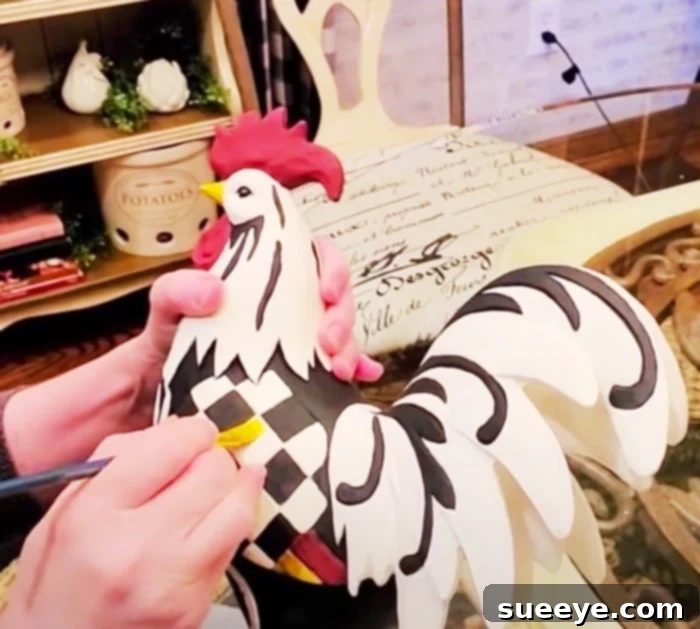
Black is a signature color in McKenzie Childs designs, often used for dramatic contrasts, outlining, and creating checkerboard patterns. Use your black paint to outline sections, add definition to feathers, or paint intricate details like the rooster’s eyes. If you’re incorporating the iconic McKenzie Childs checkerboard pattern, carefully paint squares on specific areas like the tail feathers, wings, or even the base. Using painter’s tape can help achieve crisp lines for these patterns. A fine detail brush is indispensable for these smaller, precise applications. Take your time with these details, as they significantly contribute to the overall character and McKenzie Childs aesthetic of your rooster.
Continue to follow Jody’s easy-to-understand instructions in her video tutorial. She provides excellent visual guidance that simplifies each step, helping you bring your artistic vision to life. Pay close attention to her techniques for blending, layering, and adding small touches that make a big difference.
Step 5: The Finishing Touches and Sealing
Once all your paint layers are dry and you are satisfied with your rooster’s vibrant new look, it’s time for the crucial final step: sealing. Shake your acrylic spray finishing gloss (or matte/satin sealant) well. In a well-ventilated area (preferably outdoors), hold the can about 8-12 inches away from your rooster and apply thin, even coats. Rotate the statue to ensure full coverage, avoiding drips or pooling. It’s better to apply several thin coats than one thick one. Allow each coat to dry completely before applying the next. The sealant will protect your paint job from dust, moisture, and wear, ensuring your beautiful creation lasts for years to come. It also enhances the colors and provides a professional finish.
Tips for Achieving a Flawless McKenzie Childs Inspired Look:
- Patience is Key: Don’t rush the drying process between coats. This is crucial for crisp lines and vibrant colors.
- Reference Images: Keep McKenzie Childs imagery handy for inspiration on color combinations and pattern styles.
- Embrace Imperfection: The charm of hand-painted items often lies in their slight irregularities. Don’t strive for machine-perfect lines; a slightly imperfect brushstroke adds character.
- Practice Makes Perfect: If you’re nervous about a specific detail, practice on a scrap piece of cardboard or a hidden area of the statue first.
- Personalize It: While drawing inspiration from McKenzie Childs, feel free to add your own unique twist with different colors or patterns that resonate with your home decor.
- Layering for Depth: Use thin layers of paint to build up color and create depth, especially for feathered areas.
Displaying Your Magnificent Rooster
Once your painted rooster is completely dry and sealed, it’s ready to take its place of honor in your home. These charming figures look fantastic on kitchen countertops, open shelves, dining room buffets, or even as a centerpiece on a kitchen island. Pair your new masterpiece with other French Country elements like distressed wooden signs, fresh flowers in a rustic vase, or checkered linens to complete the aesthetic. Its vibrant colors and whimsical design will instantly uplift your space, creating an inviting and stylish atmosphere that reflects your personal touch.
This little rooster is truly adorable, and the transformation from an ordinary statue to a McKenzie Childs-inspired gem is incredibly rewarding. I managed to find my rooster statue at a local Marshall’s for just $10, and with a few hours of enjoyable painting, it turned into an amazing focal point for my Country French kitchen. This project is not just about painting a statue; it’s about infusing your home with character, expressing your creativity, and adding a touch of personalized elegance that will be admired by all. So grab your paints, find your rooster, and start creating a piece of art that truly brings your country kitchen to life!