
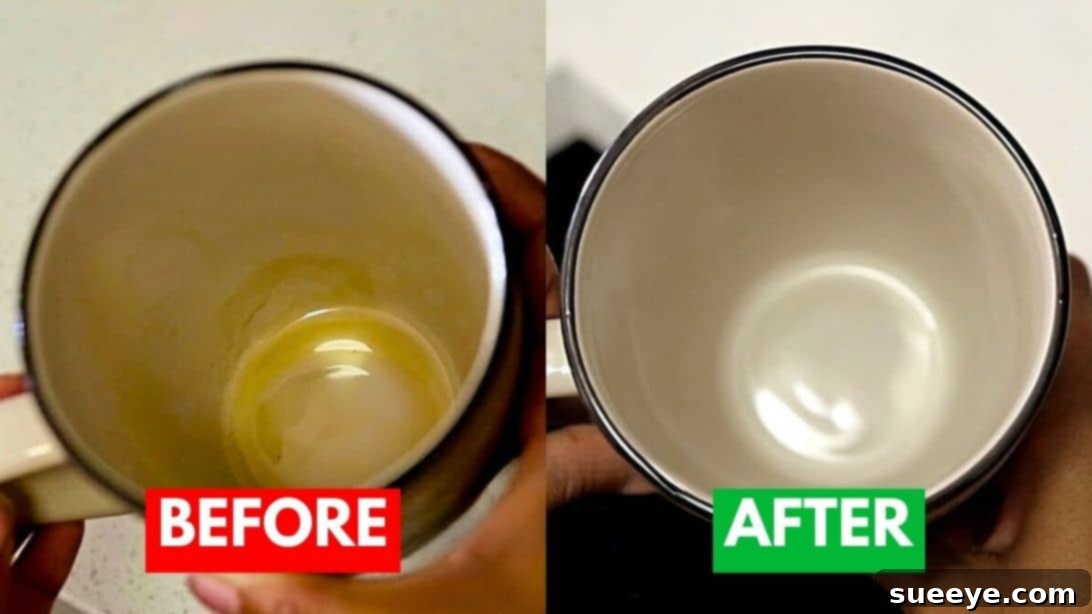
For many of us, the day simply doesn’t begin without that comforting aroma and rich flavor of a freshly brewed cup of coffee or a soothing mug of tea. Whether it’s your first sip in the quiet morning or an afternoon pick-me-up, your favorite mug quickly becomes an indispensable part of your daily ritual. However, this cherished relationship often comes with an unsightly downside: persistent brown stains that mar the pristine interior of your beloved cup. If your go-to mug has started to look less like its original color and more like a permanent shade of coffee brown at the bottom, you’re not alone. This common predicament is primarily due to compounds known as tannins, naturally present in coffee and tea, which are also responsible for the beverages’ characteristic bitter notes and their ability to create stubborn discoloration on surfaces over time.
The good news is that restoring your stained coffee mug to its sparkling glory doesn’t require harsh chemicals or expensive specialized cleaners. You probably already have a powerful arsenal of natural, effective ingredients right in your kitchen pantry. This simple, DIY cleaning method uses common household items to effectively eliminate those unsightly coffee and tea stains, leaving your mugs looking brand new. You’ll only need a few readily available items: everyday dish soap, fresh lemon juice, versatile baking soda, hot water, and a standard sponge. Let’s reclaim the original beauty of your coffee cups without a trip to the store!
This straightforward technique is not only incredibly effective but also gentle on your mugs, making it a sustainable and cost-efficient solution. Many coffee aficionados, including myself, have tried and tested this method with remarkable success. My own favorite mug, once visibly discolored, is now gleaming white again, proving the worth of this simple yet potent cleaning strategy. If you’re a devoted coffee or tea drinker who regularly reaches for the same comforting mug, this cleaning approach is definitely worth adding to your routine. Inspired by expert tips, this guide will walk you through each step to clean even the most stubborn coffee mug stains in just a few minutes, using only these humble, effective ingredients.
Beyond refreshing your mugs, explore more clever home hacks: How to Remove Stains From Plastic Dishes or discover an ingenious use for old coffee grounds: How to Burn Coffee Grounds to Get Rid of Mosquitoes.
Understanding Coffee and Tea Stains: The Tannin Factor
Before we dive into the cleaning process, let’s briefly understand what causes these persistent stains. Coffee and tea contain compounds called tannins, which are naturally occurring polyphenols. These tannins give your beverages their distinctive color, flavor, and astringency. When these hot liquids sit in a ceramic or porcelain mug, especially one with microscopic imperfections or pores, tannins can bind to the surface. Over time, and with repeated exposure, these accumulated tannins oxidize and deepen in color, forming the characteristic brown rings and splotches that are so difficult to remove with just regular washing. The good news is that the solution lies in a combination of mild acids and gentle abrasives, which efficiently break down and lift these stubborn tannin deposits.
Why Choose a DIY Natural Cleaning Method for Your Mugs?
Opting for a DIY approach to clean your coffee-stained mugs offers several compelling advantages over store-bought chemical cleaners:
- Safety: Using food-safe ingredients like lemon juice and baking soda means you won’t expose your dishes or yourself to harsh chemicals that could potentially linger or irritate skin.
- Cost-Effective: These ingredients are incredibly inexpensive and are likely already staples in your kitchen, saving you money on specialized cleaning products.
- Environmentally Friendly: Natural cleaners reduce your environmental footprint by minimizing the use of synthetic chemicals and their packaging.
- Gentle on Mugs: While powerful against stains, baking soda and lemon juice are gentle enough not to scratch or damage the glaze of most ceramic and porcelain mugs.
- Accessibility: No need for a special trip to the store; the solution is often just a few steps away in your own home.
What You Need To Clean a Stained Coffee Mug
Gathering your supplies is the first step to sparkling mugs. Here’s a detailed look at each component and its role in the cleaning process:
- Dish Soap: Your everyday dish soap acts as a degreaser and helps lift general grime. It also aids in creating a paste consistency.
- Lemon Juice: The citric acid in lemon juice is a natural bleach and stain remover. It works by breaking down the organic compounds in tannins and adds a fresh scent.
- Baking Soda: A mild abrasive that gently scrubs away stains without scratching surfaces. Its alkaline properties also help neutralize acidic tannin stains.
- Hot Water: Heat helps to loosen stains and activate the cleaning agents, allowing them to penetrate more effectively.
- Sponge: A non-abrasive or lightly abrasive sponge is perfect for scrubbing the paste into the stained areas. Avoid steel wool or highly abrasive pads that could scratch your mug’s surface.
How to Clean a Stained Coffee Mug: Step-by-Step Guide
Follow these simple steps to transform your stained mugs back to their original condition. This method is designed for maximum effectiveness with minimal effort.
Step 1: The Initial Lemon Juice and Hot Water Soak – Prepping the Stain
Begin by adding a few generous squirts of fresh lemon juice directly into your stained coffee mug. Aim for about one to two tablespoons, ensuring the bottom of the mug is coated. The citric acid in the lemon juice immediately starts to work on the stubborn tannin stains, beginning the process of breaking down their molecular structure. Next, carefully fill the mug to the brim with hot water. The heat from the water isn’t just for diluting; it helps to activate the lemon juice, opens up the microscopic pores on the mug’s surface, and starts to loosen any dried or caked-on coffee residue. This pre-soak is crucial for softening the stains, making them much easier to remove in the subsequent steps. Allow this potent mixture to sit undisturbed for a minimum of 15 to 20 minutes. For particularly old or dark stains, you might consider extending this soaking time up to an hour for optimal results.
Step 2: Creating the Powerful Cleaning Paste – Baking Soda and Dish Soap
After the initial soak, empty the mug, but don’t rinse it immediately; a little moisture from the lemon water is beneficial. Now, add approximately an inch (or about two tablespoons) of baking soda to the bottom of the mug. Follow this with a few squirts of dish soap – enough to create a cleaning solution when mixed. To form a paste, add just a few drops of hot water. The goal is to achieve a thick, slightly abrasive paste consistency. This combination is a powerhouse: baking soda provides a gentle scrubbing action while its alkaline nature helps to lift acidic tannin stains, and dish soap acts as a surfactant, breaking down grease and helping to suspend the loosened grime. Mix these ingredients right in the mug with your sponge or a spoon until a uniform paste forms.
Step 3: Scrubbing Away the Stains – Gentle but Thorough
Now that your cleaning paste is ready, it’s time for the elbow grease. Take your sponge (preferably the abrasive side if it’s a dual-sided sponge, but ensure it’s not too harsh) and begin to scrub the paste vigorously into all the stained areas of the mug. Focus on the bottom, sides, and any rings that have formed. The baking soda acts as a fine abrasive, physically lifting the stains, while the lemon juice and dish soap work chemically to dissolve and emulsify the residue. Apply steady, circular motions, ensuring the paste reaches every nook and cranny. You should start to see the brown stains fading and lifting away as you scrub. Continue scrubbing until the mug’s surface appears clean and free of discoloration. For particularly tough spots, you may need to apply a bit more pressure or add a tiny bit more baking soda to enhance the abrasive action.
Step 4: The Final Rinse – Revealing a Spotless Mug
Once you are satisfied that all the stains have been thoroughly scrubbed away, it’s time for the final reveal. Rinse the mug exceptionally well under clean, running water. Ensure all traces of the baking soda paste, lemon juice, and dish soap are completely washed away. You’ll immediately notice the dramatic difference – your mug should now be gleaming white, just like it was on the day you bought it. Give it a quick inspection under good light to ensure no residue or faint stains remain. If any tiny spots persist, don’t hesitate to repeat steps 2 and 3 for those specific areas. Dry your beautifully restored mug with a clean towel, and it will be ready for your next cup of coffee or tea, looking as good as new!
Preventing Future Coffee and Tea Stains
While this cleaning method is highly effective, prevention is always better than cure. Here are some practical tips to keep your mugs pristine for longer:
- Rinse Immediately: The simplest prevention is to rinse your mug with water immediately after finishing your drink. This prevents tannins from drying and settling onto the surface.
- Regular Washing: Don’t let your mugs sit unwashed for days. Regular daily washing with dish soap and warm water can prevent stain buildup.
- Deep Clean Periodically: Even with daily rinsing, some minor tannin accumulation can occur. Incorporate this lemon and baking soda deep clean every few weeks to maintain their brightness.
- Consider Mug Material: While ceramic and porcelain are popular, some materials are more resistant to staining. Glass mugs, for instance, show fewer stains.
- Avoid Leaving Liquids Overnight: The longer coffee or tea sits in a mug, especially overnight, the more time tannins have to bond with the surface.
Alternative Natural Stain Removal Methods
While the lemon and baking soda method is a champion, here are a few other natural options you can try for stubborn stains or as variations:
- Vinegar Soak: Similar to lemon juice, white vinegar is acidic and can help dissolve stains. Fill the mug with a 50/50 mixture of white vinegar and hot water and let it soak for several hours or overnight before scrubbing.
- Salt Scrub: For a purely abrasive approach, you can create a paste using salt and a tiny bit of water. The coarse texture of salt can help scrub away stains. This is best for very light, fresh stains.
- Hydrogen Peroxide: For very tough, old stains, a mixture of hydrogen peroxide and baking soda can be more potent. Apply a paste of baking soda and a few drops of 3% hydrogen peroxide, let it sit for 10-15 minutes, then scrub and rinse. Exercise caution and wear gloves when using hydrogen peroxide.
- Denture Cleaning Tablets: These tablets are designed to break down stains and food particles. Drop one into your stained mug, fill with hot water, and let it dissolve and soak for an hour or two, then rinse.
Final Thoughts on Spotless Mugs
Removing coffee and tea stains from your favorite mugs doesn’t have to be a chore or require harsh chemicals. With simple, natural ingredients like lemon juice and baking soda, you can effectively tackle even the most stubborn discoloration. This DIY method is not only easy and affordable but also safe for your dishes and the environment. By following these straightforward steps, and perhaps adopting a few preventative habits, you can ensure your beloved mugs remain sparkling clean and ready for countless more enjoyable sips. Say goodbye to brown stains and hello to a refreshed coffee ritual!