
5 Essential Steps to Naturally Alleviate and Fix Bunions for Better Foot Health
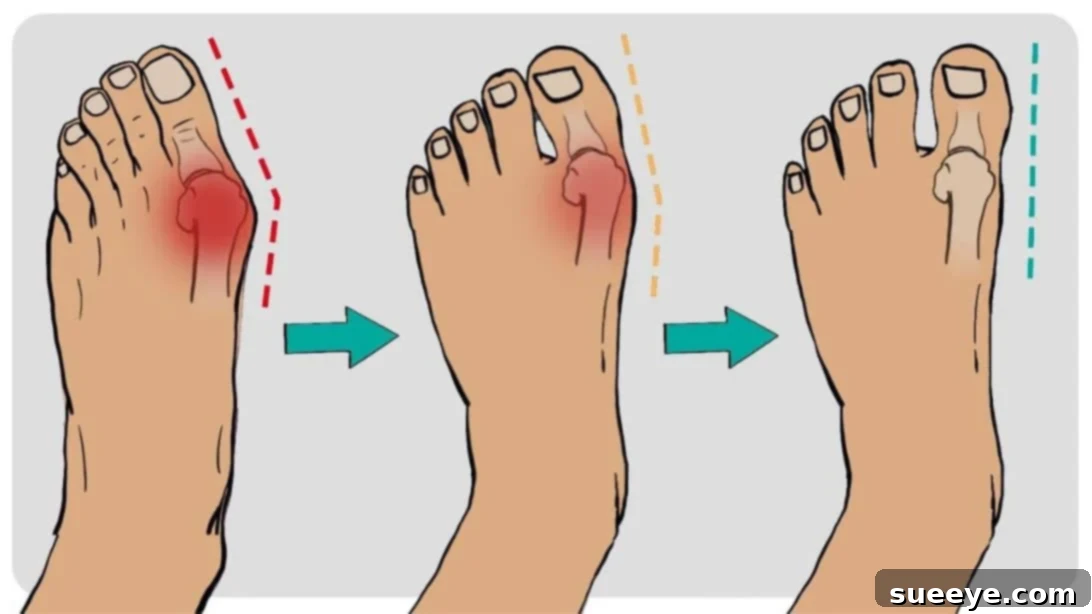
Bunions, medically known as hallux valgus, are a common and often painful foot condition affecting millions globally. Characterized by a bony bump at the base of the big toe, a bunion forms when the big toe deviates towards the smaller toes, causing the joint to protrude outwards. This misalignment can lead to significant discomfort, inflammation, and difficulty in finding comfortable footwear, impacting daily activities and overall quality of life.
While severe bunion cases might eventually require surgical intervention, many individuals can find substantial relief and even improve their foot health through conservative, non-invasive methods. Focusing on correcting biomechanical imbalances, strengthening foot muscles, and promoting natural toe splay can be incredibly effective. Inspired by insights from foot health experts like Barefoot Strength on YouTube, we’ve compiled five crucial steps you can take to address bunions and foster healthier, happier feet.
By understanding and implementing these strategies, you can work towards reducing pain, slowing bunion progression, and regaining proper foot function. Let’s delve into these actionable steps to start your journey toward bunion relief and improved foot mechanics.
1. Embrace Footwear with Wide Toe Boxes
The shoes we wear play a pivotal role in the development and progression of bunions. Traditional shoes, especially those with narrow, pointed toe boxes and elevated heels, often force the toes into an unnatural, compressed position. This constant pressure can exacerbate the big toe’s deviation and accelerate bunion formation. Shifting to footwear with a wide toe box is arguably the most fundamental and impactful step you can take.
Barefoot shoes, or minimalist footwear, are specifically designed to mimic the experience of walking barefoot while offering protection. They feature a generous toe box that allows your toes to splay out naturally, just as they would without shoes. This design prevents compression, reduces pressure on the big toe joint, and encourages the foot’s intrinsic muscles to work as intended. Furthermore, many barefoot shoes offer a “zero-drop” sole, meaning there’s no height difference between the heel and the toe, which promotes a more natural gait and balanced posture.
To assess if your current shoes have an adequately wide toe box, try this simple test: Remove the insole from your shoe and place your bare foot on top of it. All your toes, especially your big toe and pinky toe, should fit comfortably within the perimeter of the insole, with a little extra room to spare. If any part of your foot, particularly your toes, hangs over the edges, the shoe is too narrow and will likely contribute to toe compression and bunion aggravation. Making the switch to properly fitting, wide-toe-box shoes is a game-changer for bunion management and overall foot health.
2. Integrate Silicone Toe Spreaders into Your Routine
Once your toes have been compressed for years, simply wearing wider shoes might not be enough to encourage them back into their natural alignment. This is where silicone toe spreaders become invaluable tools. These small, flexible devices are designed to fit between your toes, gently separating them and encouraging them to realign.
Toe spreaders work by actively counteracting the inward pressure that often contributes to bunion formation. By creating space between the toes, they help stretch the connective tissues and muscles that have become tight and adaptively shortened due to prolonged compression. Consistent use can gradually improve toe splay, reduce friction between toes, and alleviate pressure on the bunion joint itself.
The effectiveness of toe spreaders is not just anecdotal. A 2017 study, for instance, indicated that individuals with moderate to severe bunion cases experienced positive outcomes, including reduced pain and improved toe alignment, with regular use of these accessories. When starting, begin with short durations of wear, gradually increasing the time as your feet adapt. They can often be worn comfortably inside wider shoes, during rest, or even during certain exercises. Look for high-quality, soft silicone spreaders that are comfortable and durable for sustained use.
3. Incorporate Toe Socks into Your Daily Attire
Complementing wide-toe-box shoes and toe spreaders, toe socks offer another simple yet effective way to support natural toe alignment and foot health. Unlike conventional socks that can inadvertently squeeze toes together, toe socks feature individual compartments for each digit, much like gloves for your feet.
The primary benefit of toe socks is their ability to prevent toe crowding and friction. By providing a barrier between each toe, they allow for greater individual toe movement and reduce the likelihood of blisters or irritation that can occur when toes rub against each other, especially in individuals with bunions or hammertoes. This independent movement is crucial for strengthening the intrinsic muscles of the foot and promoting better proprioception—your body’s sense of its position and movement.
Wearing toe socks can enhance the benefits of toe spreaders, as they help maintain separation even when the spreaders aren’t in use. They can also improve overall foot hygiene by wicking away moisture from between the toes, preventing fungal growth. While it might take a little getting used to, many find toe socks surprisingly comfortable and beneficial for everyday wear, during exercise, or as part of a comprehensive bunion management strategy.
4. Improve Ankle Mobility for Better Foot Mechanics
The health of your feet is intrinsically linked to the mobility and stability of your entire lower kinetic chain, particularly your ankles. Limited ankle mobility can significantly impact your gait, leading to compensatory movements that place undue stress on your forefoot and big toe joint, thereby contributing to bunion development or aggravation. When your ankle joint lacks full range of motion, your foot may “pronate” excessively, rolling inward to compensate, which in turn pushes the big toe laterally.
Improving ankle mobility helps restore natural foot function and distribute forces more evenly across the foot. One excellent exercise to target ankle mobility involves a controlled lunge-like stretch:
- Stand with one foot forward and the other back, in a staggered stance.
- Ensure your back foot is pointed straight ahead and flat on the ground, with the heel firmly planted.
- Slowly bend your front knee, leaning forward into a partial lunge.
- Focus on pressing your toes of the back foot into the ground, while keeping the heel down, to maximize the stretch through your ankle joint and calf.
- You should feel a deep stretch along the back of your lower leg, from your calf up to your Achilles tendon.
- Hold for 20-30 seconds, then switch legs.
This exercise helps to lengthen tight calf muscles and improve the dorsiflexion of your ankle—the ability to move your foot upwards towards your shin. Consistent practice of this and other ankle mobility drills, such as ankle circles and calf stretches against a wall, can significantly enhance your body’s natural shock absorption and reduce the strain on your forefoot, providing relief and support for bunion management.
5. Strengthen Your Foot Arch and Intrinsic Foot Muscles
The arches of your feet are critical for providing support, acting as natural shock absorbers, and facilitating efficient movement. A weakened or collapsed arch (pes planus or flat feet) can lead to overpronation, where the foot rolls inward excessively during walking, placing increased stress on the big toe joint and contributing to bunion progression. Strengthening the intrinsic muscles of the foot, which are located entirely within the foot, is essential for maintaining arch integrity and proper toe alignment.
One highly effective exercise to engage and strengthen these crucial muscles is the “toe splay and scrunch” (often part of what’s known as the “short foot exercise”):
- While seated or standing, place your bare foot flat on the ground.
- First, focus on spreading your toes as wide apart from one another as you possibly can, trying to create as much space between each toe as possible without lifting your heel or ball of your foot off the ground. Imagine pushing your big toe outward and your pinky toe outward. Hold this spread for a few seconds.
- Next, without curling your toes, try to contract them together and pull the ball of your foot back towards your heel, as if you’re trying to shorten your foot. You should feel the arch of your foot lift slightly. This is often referred to as the “short foot” position.
- Relax, then repeat the sequence: spread toes wide, then contract/shorten the foot.
Perform these movements slowly and deliberately, focusing on the engagement of the small muscles in your arch and between your toes. Aim for several repetitions on each foot daily. Other beneficial exercises include picking up marbles with your toes, doing towel scrunches (using your toes to pull a towel towards you), and practicing single-leg balancing to activate foot stabilizers. Consistent effort in strengthening your foot arch will improve foot stability, reduce overpronation, and provide a stronger foundation for healthier toe alignment, helping to manage and potentially mitigate bunion-related issues.
Beyond the Steps: Consistency, Patience, and Professional Guidance
Embarking on a journey to fix bunions naturally requires commitment and patience. The changes you seek—realigning bones, strengthening muscles, and improving mobility—do not happen overnight. Consistency in applying these five steps is paramount. Make foot care a regular part of your daily routine, much like brushing your teeth or exercising.
While these conservative methods can provide significant relief and improvement for many, it’s important to acknowledge that every individual’s bunion condition is unique. Factors such as the severity of the bunion, its duration, underlying genetic predispositions, and overall foot mechanics can influence outcomes. Therefore, if you experience persistent pain, increased discomfort, or if your bunions show signs of worsening despite consistent efforts, it is always advisable to consult with a healthcare professional.
A podiatrist, orthopedic specialist, or a physical therapist specializing in foot and ankle health can provide a comprehensive diagnosis, assess the specific biomechanics of your foot, and recommend a personalized treatment plan. They can offer guidance on orthotics, advanced exercises, or discuss surgical options if conservative measures prove insufficient. Combining diligent self-care with expert professional advice offers the most holistic approach to managing and improving bunion health.
Conclusion: Empowering Your Foot Health Journey
Bunions can be a source of persistent pain and frustration, but they are not an insurmountable challenge. By adopting a proactive and informed approach, you can take significant steps toward alleviating discomfort and improving the natural alignment of your feet. From the fundamental choice of wearing shoes with wide toe boxes to actively strengthening your foot arches and enhancing ankle mobility, each step outlined provides a vital component in your journey toward healthier feet.
Remember, the goal is not just to “fix” a bunion but to foster a comprehensive understanding and appreciation for your foot health. Embracing minimalist footwear, utilizing toe spreaders and toe socks, and committing to regular mobility and strengthening exercises will not only address your current bunion concerns but also contribute to long-term foot vitality and overall well-being. Start today, be consistent, listen to your body, and empower your feet to carry you through life with greater comfort and strength.