
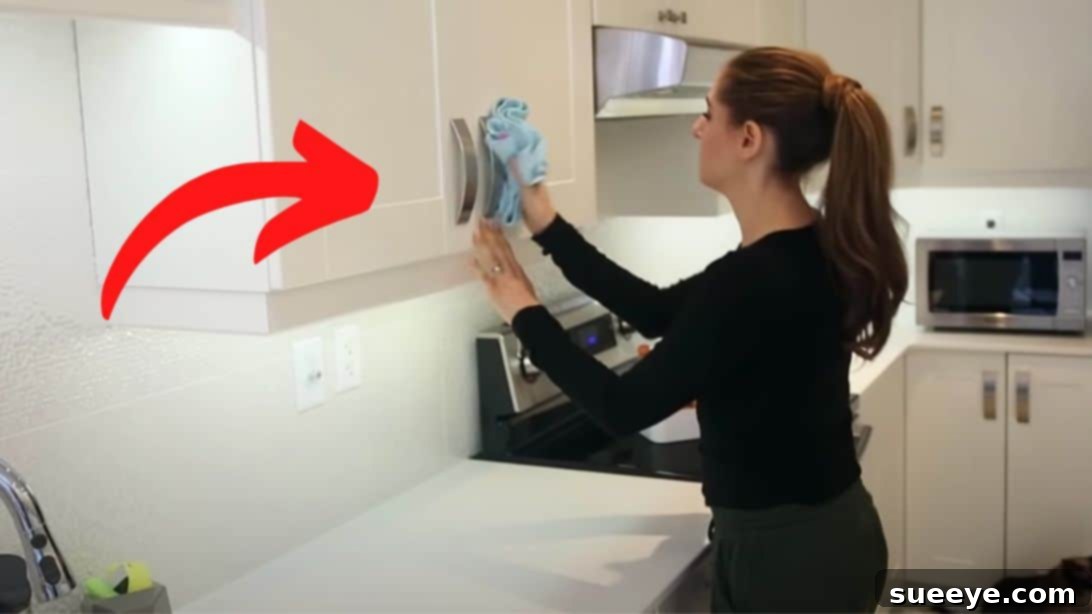
Transforming your home from chaotic to sparkling clean doesn’t have to be an overwhelming ordeal. While the thought of tackling household chores can often feel exhausting, adopting a few smart strategies can significantly reduce the effort and time involved, making your cleaning routine far more efficient and even enjoyable. This comprehensive guide, inspired by expert techniques from Clean My Space, shares seven indispensable cleaning tips that promise to revolutionize the way you approach tidiness. These aren’t just minor adjustments; they are foundational principles that, once mastered, will lead to noticeably cleaner results in less time, freeing you up to enjoy your home rather than constantly stressing about its upkeep. Prepare to discover simple yet powerful methods that will make your cleaning faster, more effective, and genuinely easier. We’ll dive into each tip with detailed explanations to help you implement them immediately and achieve a consistently pristine living environment.
1. Master the Top-to-Bottom, Left-to-Right Cleaning Method
One of the most common pitfalls in home cleaning is a disorganized approach. Randomly jumping from one area to another not only wastes valuable time but also often results in missing spots and re-doing work. The most fundamental and highly effective strategy for efficient home cleaning is to clean methodically: always start from the top and work your way down, and similarly, move consistently from left to right across a surface or room. This systematic technique leverages gravity; as you dust and wipe higher surfaces, any dislodged dirt, dust, or debris will naturally fall downwards, accumulating on lower surfaces. By cleaning the floor last, you ensure that you are gathering all the fallen particles without having to re-clean areas you’ve already addressed. Imagine dusting light fixtures and ceiling fans first, then shelves, countertops, furniture, and finally vacuuming or mopping the floor. This prevents dust from settling on freshly cleaned surfaces and avoids the frustration of re-cleaning. Furthermore, cleaning from left to right ensures a thorough sweep of an area, making it virtually impossible to miss sections. This methodical approach helps maintain focus, creates a clear path of action, and significantly enhances the efficiency and effectiveness of your entire cleaning process, delivering a consistently sparkling result every time you tackle your household chores.
2. Optimize Your Efficiency with a Portable Cleaning Caddy
Constantly fetching cleaning supplies from under the sink or a distant cupboard is a significant time-waster and a major source of frustration during any cleaning session. An expert tip for maintaining momentum and reducing physical exertion is to have all your necessary cleaning products and tools readily accessible in a portable caddy. Before you even begin, gather everything you anticipate needing for the task at hand: various sprays (all-purpose, glass, disinfectant), microfiber cloths, sponges, scrub brushes, trash bags, and even vacuum attachments. Place them all in a sturdy bucket, a dedicated cleaning caddy, or even an apron with large pockets. This simple act of preparation means you won’t have to run back and forth, breaking your rhythm and wasting precious minutes. By centralizing your supplies, you create a seamless workflow, allowing you to move through each room or section with uninterrupted focus. This not only speeds up the entire cleaning process but also helps you stay organized and mentally engaged, turning what could be a tedious chore into a streamlined, productive activity. A well-stocked, portable cleaning caddy is truly a game-changer for anyone serious about efficient home maintenance and maximizing their cleaning time.
3. Harness the Power of “Dwell Time” for Superior Cleaning
Many people spray a cleaning product onto a surface and immediately wipe it off, expecting instant results. However, to truly maximize the effectiveness of your cleaning agents, you must respect the concept of “dwell time.” This refers to the duration a product needs to sit on a surface to actively break down grime, dissolve grease, or kill bacteria and viruses. Most household cleaners, especially disinfectants, are formulated to work best after a specific contact time, often ranging from 5 to 10 minutes. By allowing the product to “dwell” on the surface for the recommended period, you enable its active ingredients to penetrate and loosen dirt, effectively sanitize, and significantly reduce the need for strenuous scrubbing. Think of it as letting the product do the hard work for you. While the cleaner is working, you can efficiently move on to another task, such as organizing a different section or preparing your next area. Always read the instructions on your cleaning product labels, as dwell times can vary depending on the product’s formulation and its intended purpose. Incorporating this simple habit into your routine not only ensures a deeper, more hygienic clean but also saves you physical effort and allows your cleaning products to perform at their peak efficacy, leading to superior and long-lasting results.
4. Adopt the “Start Gentle, Escalate as Needed” Approach
When faced with a stubborn mess, our first instinct might be to reach for the strongest chemical cleaner available. However, a more prudent and often equally effective strategy is to start with the safest and gentlest product and gradually escalate only if necessary. This approach is beneficial for several reasons: it protects your surfaces from potential damage (e.g., discoloration, etching, or weakening of finishes), it’s generally healthier for you and your household members by minimizing exposure to harsh chemicals and fumes, and it’s more environmentally friendly. Many common cleaning tasks can be accomplished with simple solutions like water and microfiber cloths, or mild, eco-friendly detergents and DIY recipes using ingredients like vinegar or baking soda. For instance, a sticky countertop might only need hot water and a gentle dish soap, rather than an abrasive cleaner. Only if these lighter options fail to yield the desired results should you then consider moving to a stronger, more specialized product. By starting gentle, you not only extend the life of your home’s surfaces and protect your health but also cultivate a more sustainable and mindful cleaning routine, proving that powerful cleaning doesn’t always require powerful chemicals, and often, less is truly more.
5. Implement the “Eye-Level Test” for a Flawless Finish
It’s incredibly frustrating to finish cleaning a surface, only to notice missed spots once you step back or view it from a different angle. The “eye-level test” is a simple yet incredibly effective technique that helps ensure a truly thorough and streak-free clean, especially on reflective surfaces like mirrors, windows, and polished countertops. The trick is to physically change your perspective: instead of just looking straight down at what you’ve cleaned, crouch down, stand back, and examine the surface from various angles and different lighting conditions. What might look perfectly clean when viewed from directly above can reveal unsightly streaks, smudges, residual cleaner, lint, or missed dirt when observed from eye-level or against a light source. This technique is particularly useful for detecting those subtle imperfections that often go unnoticed but detract from a truly clean finish. By taking a moment to perform this quick inspection from multiple vantage points, you empower yourself to catch and correct imperfections before they become noticeable to others, guaranteeing a professionally clean and sparkling finish every time. It’s a small extra step that makes a monumental difference in the overall quality and satisfaction of your cleaning efforts.
6. Utilize the Efficient “S” Pattern for Streak-Free Results
When cleaning large, flat surfaces such as windows, mirrors, glass tables, or shower doors, the way you wipe can significantly impact the outcome, especially concerning streaks and missed spots. The “S” pattern, or zigzag method, is an expert technique that ensures comprehensive coverage and a streak-free finish while minimizing fatigue. To implement this, start at the top right-hand corner of the surface you are cleaning. Swipe your cleaning cloth or tool horizontally all the way to the left edge of the surface, then drop down slightly (overlapping your previous stroke by about an inch) and swipe horizontally all the way back to the right. Continue this zigzag motion, moving downwards across the entire surface in a continuous “S” pattern. This technique ensures that you overlap each stroke slightly, preventing gaps and ensuring an even distribution of cleaning product and pressure. The continuous motion also prevents the cloth from becoming oversaturated in one area and too dry in another, which is a common cause of unsightly streaks. By adopting the “S” pattern, you’ll find yourself achieving superior, uniformly clean results with less effort and fewer streaks, making your cleaning routine significantly more effective and visually satisfying, particularly for those challenging reflective surfaces.
7. Achieve Visual Harmony with Parallel and Perpendicular Alignment
Cleaning isn’t just about removing dirt; it’s also about creating a sense of order and tranquility in your living space. One often-overlooked aspect of a truly tidy and aesthetically pleasing home is the precise alignment of objects on surfaces. The “parallel and perpendicular” rule is a simple yet powerful design principle that can dramatically enhance the visual appeal and organization of any room. Instead of leaving items haphazardly scattered, consciously arrange them so they are either perfectly parallel or perpendicular to the edges of the surface they rest on. For example, books on a shelf should be aligned vertically or horizontally along the shelf’s edge, creating clean, intentional lines. Decorative objects on a coffee table or dresser should form neat lines or angles relative to the table’s perimeter, rather than being placed randomly. This principle extends beyond merely aesthetic appeal; it also makes the act of cleaning much easier. When items are neatly organized and aligned, you can quickly group them, move them aside to wipe down the surface underneath, and then return them to their designated, aligned spots with minimal effort. This deliberate organization reduces visual clutter, creates clean lines, and contributes to an overall sense of calm and order that makes your home feel not just clean, but truly pristine, inviting, and meticulously cared for. It’s the final touch that elevates a clean space to a beautifully organized sanctuary, enhancing your daily living experience.
By integrating these seven expert cleaning tips into your routine, you’ll discover a remarkable transformation in how you manage your home’s upkeep. From mastering systematic cleaning patterns to optimizing your tools and respecting product dwell times, each technique is designed to boost efficiency, enhance effectiveness, and ultimately simplify your life. Embracing these strategies will not only lead to a consistently cleaner and more organized home but also empower you with a sense of control and accomplishment over your living environment. Say goodbye to endless, exhausting cleaning sessions and hello to a smarter, more sustainable approach to maintaining a beautiful and hygienic home. Start implementing these game-changing hacks today and experience the profound difference for yourself. Your future self (and your sparkling home) will undoubtedly thank you for taking these steps towards a more effortless and effective cleaning regimen!