
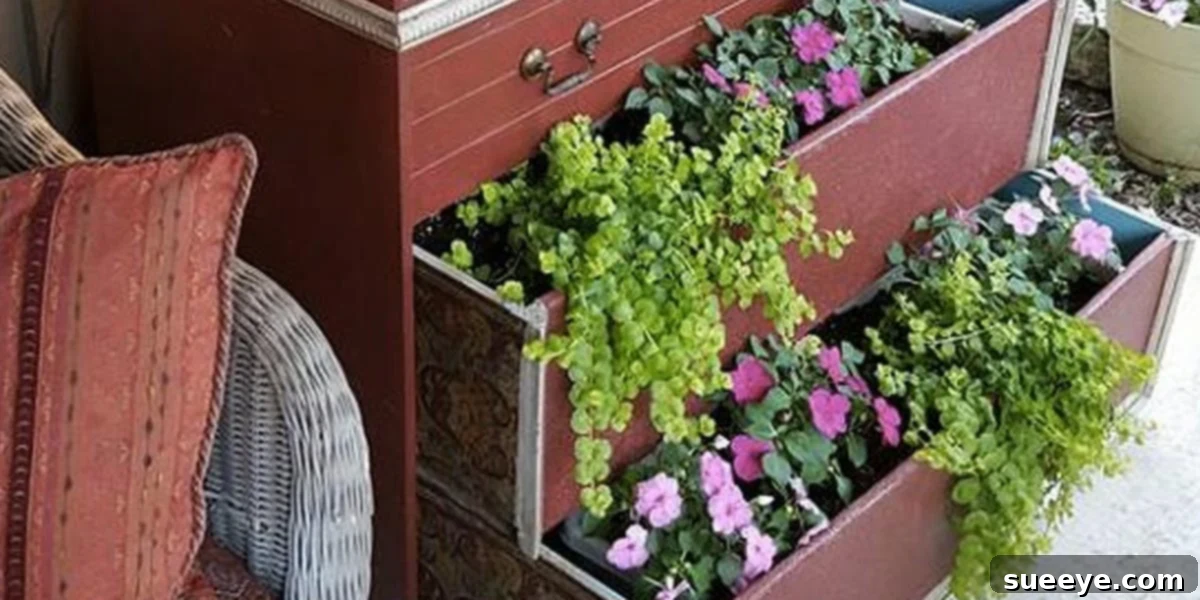
Transform Your Old Dresser into a Stunning Planter: A Creative Upcycling Guide
There’s an undeniable charm in giving new life to old objects, especially when they become a vibrant focal point in your home or garden. An old dresser, once a simple repository for clothes, can be gloriously reimagined as a multi-tiered planter, bursting with colorful flora. This ingenious upcycling project not only adds a touch of whimsical elegance and unique character to your outdoor space but also champions sustainability by diverting forgotten furniture from landfills.
If you’re looking for a budget-friendly, deeply satisfying, and highly customizable DIY endeavor, transforming a forgotten dresser into a flourishing garden display is an exceptional choice. Imagine cascading petunias spilling from partially opened drawers, fragrant herbs neatly nestled in a rustic top compartment, or a vibrant succulent collection creatively arranged across different levels. The journey from a dusty, unused piece of furniture to a living masterpiece is surprisingly straightforward, offering ample opportunities for personalization.
Why Choose a Dresser for Your Next Planter Project? The Allure of Upcycling
Repurposing furniture, particularly a dresser, for a planter goes far beyond mere aesthetics. It’s a statement of creativity, sustainability, and personal style. Here’s why this project has captivated so many garden enthusiasts and DIY lovers:
Sustainability and Eco-Friendliness at Its Best
In an era where environmental consciousness is more critical than ever, upcycling stands out as a powerful way to reduce waste. Instead of discarding an old dresser, contributing to landfill overload and material consumption, you’re giving it a second, purposeful life. This act of recycling and repurposing lessens the demand for new manufactured goods, conserving valuable resources and energy in the process. Creating a dresser planter is a tangible step towards a greener, more sustainable lifestyle, demonstrating how creativity can beautifully intertwine with environmental responsibility.
Unique Aesthetic and Unparalleled Personal Touch
Unlike generic, mass-produced planters, a dresser planter carries a unique story and an unparalleled charm. Each dresser has its own character, which can be amplified or completely transformed through careful preparation, paint, distressing techniques, or decorative embellishments. The multi-tiered structure of the drawers offers a dynamic display opportunity, creating visual interest that single-level planters simply cannot achieve. Your dresser planter will instantly become a conversation starter, a personalized piece of outdoor art that reflects your individual taste and passion for gardening.
Exceptional Cost-Effectiveness for Garden Enthusiasts
Building and adorning a beautiful garden can often be an expensive endeavor, especially when sourcing unique and large decorative planters. An old dresser can frequently be acquired for free from curbsides, garage sales, community swap meets, or even from your own attic or garage. Even if you purchase one from a thrift store, the cost is typically far less than buying multiple large, specialty planters. The primary expenses will likely be for exterior-grade paints, robust liners, and, of course, the plants themselves, making this an incredibly budget-friendly way to create a high-impact, stunning garden feature.
Versatility in Design and Diverse Planting Possibilities
The inherent design of a dresser, with its multiple drawers, provides incredible versatility for planting schemes. You can choose to keep some drawers completely closed for a sleek look, partially open them to create a charming cascading effect with trailing plants, or even remove some entirely to create larger, deeper planting pockets for bigger root systems. This flexibility allows for diverse planting designs, accommodating various plant sizes, types, and even different sun or water requirements within the same unit. From vibrant annuals to hardy perennials, fragrant herbs, or even a mini succulent garden, the creative possibilities for your upcycled dresser planter are truly endless.
Choosing the Perfect Dresser: Key Considerations for Your Planter Project
Not every old dresser is destined for planter glory. Selecting the right foundation is crucial for both the success and the long-term longevity of your outdoor project. Here’s what you should consider when scouting for your perfect piece of furniture to repurpose:
- Material Matters: Solid wood dressers are generally far superior to those made from particle board or MDF. Solid wood is inherently more durable, holds up significantly better against the elements (even with proper sealing and waterproofing), and provides a sturdier base for heavy soil and plants.
- Condition Assessment: While a little wear and tear can add charming character to a rustic planter, it’s wise to avoid dressers with extensive wood rot, severe water damage, or significant structural instability. Minor repairs like filling small cracks or tightening joints are manageable, but a severely compromised piece might not withstand the considerable weight of soil, water, and plants over time.
- Stability is Key: Before committing, ensure the dresser stands firmly on its feet. If it wobbles, investigate if it can be easily reinforced. Remember, it will be holding a substantial amount of weight once it’s filled with soil and watered, so a stable base is paramount.
- Drawer Functionality: Even if you plan to fix the drawers permanently open, ensure they slide out relatively smoothly. You’ll be working with them extensively to create your various planting levels and secure them in place.
- Style and Size: Consider the overall aesthetic of your garden or outdoor space and choose a dresser that complements it. The size should also be appropriate for your chosen location – not too small to make an impact, but not so large that it overwhelms the area.
Step-by-Step Guide: Bringing Your Dream Dresser Planter to Life
With your ideal dresser proudly in hand, it’s time to roll up your sleeves and begin the exciting transformation. Follow these steps carefully to ensure a durable, functional, and undeniably beautiful end result.
1. Preparation and Repair: Laying the Durable Foundation
This initial phase is absolutely vital for the dresser’s longevity and its eventual appearance. Begin by thoroughly cleaning the entire dresser, meticulously removing all dust, dirt, grime, and any cobwebs. A stiff brush and a solution of mild detergent with water work well. Once completely dry, carefully assess the dresser for any necessary repairs:
- Thorough Sanding: Lightly sand all surfaces, especially if you plan to paint. This critical step creates a roughened surface, allowing for significantly better adhesion for primer and paint, ensuring a longer-lasting finish.
- Wood Filler Application: Fill any visible cracks, gouges, or deep scratches with a good quality exterior-grade wood filler. Allow it to dry completely according to the manufacturer’s instructions, then sand the filled areas smooth and flush with the surrounding wood.
- Hardware Removal: Remove all existing knobs, handles, drawer pulls, and any other decorative hardware you do not intend to keep. You can choose to replace them later with new, weather-resistant alternatives or opt for a cleaner look by omitting them entirely.
- Structural Reinforcement: If any joints appear loose or weak, use strong wood glue and clamps to secure them firmly. For added stability, particularly crucial for an outdoor piece holding significant weight, consider adding L-brackets to the inside corners of the dresser frame.
2. Painting and Finishing: Your Canvas Awaits
This is where your dresser truly begins its remarkable new life. Choosing the right finish is paramount for both enhancing its aesthetics and providing essential protection against the elements.
- Prime Time is Essential: Apply at least one, preferably two, coats of a high-quality exterior-grade wood primer. This step is non-negotiable as it effectively seals the wood, prevents moisture absorption, and ensures your topcoat of paint adheres properly and lasts significantly longer.
- Strategic Paint Selection: Choose an exterior-grade paint specifically designed for outdoor use. Latex or acrylic outdoor paints are excellent choices, offering superior durability and resistance to harsh UV rays, moisture, and temperature fluctuations. Consider colors that beautifully complement your garden’s existing palette. Vibrant hues can make a bold, cheerful statement, while muted or earthy tones can blend seamlessly with natural surroundings for a more serene look.
- Optional Sealing for Enhanced Protection: For an extra layer of robust protection, especially for the top surfaces and any parts that will be frequently exposed to direct watering or heavy rainfall, consider applying a clear, exterior-grade polyurethane or a marine-grade varnish. This creates an impermeable barrier against the elements.
- Achieving a Distressed Look: For a popular shabby-chic or rustic aesthetic, apply a base coat, allow it to dry, then apply a contrasting top coat. Once the top coat is dry, lightly sand through it in strategic areas (edges, corners, raised details) to reveal the color underneath or the natural wood for an appealing weathered appearance.
3. Essential Waterproofing and Drainage: The Key to Long-Term Success
This is arguably the most critical step for the long-term longevity and health of your dresser planter. Wood and constant moisture do not mix well, leading to rot and structural failure. Proper waterproofing and impeccable drainage will prevent wood deterioration and ensure your plants thrive for years to come.
- Robust Drawer Liners: The most effective method is to line each drawer you intend to plant in. Heavy-duty plastic sheeting, such as dedicated pond liner material (which is extremely durable), or thick contractor-grade garbage bags are excellent options. Cut the plastic to size, ensuring it extends slightly up the sides of the drawer for full coverage. Secure it firmly with staples or a strong, waterproof adhesive. As an alternative, you can place pre-made plastic planter boxes or trays directly inside the drawers, ensuring they fit snugly.
- Crucial Drainage Holes: This cannot be stressed enough – proper drainage is absolutely crucial! Even with liners, stagnant water can accumulate, leading to root rot for your plants. Drill several drainage holes (at least 1/2 inch to 1 inch in diameter) through the bottom of each drawer *and* through your plastic liner. If using planter boxes, ensure they already have adequate drainage holes.
- Optimizing Drainage with a Gravel Layer: Before adding your potting mix, place a 1-2 inch layer of coarse gravel, small stones, or even broken terracotta pot pieces at the very bottom of each lined and drilled drawer. This gravel layer further improves drainage by preventing soil from washing out through the drainage holes and creating a reservoir for excess water away from plant roots.
4. Arranging and Securing the Drawers: Crafting Your Display
The way you position and secure the drawers defines the aesthetic and functionality of your dresser planter. This step allows for immense creative expression.
- Cascading, Partially Opened Drawers: For a dynamic, multi-level cascading effect, pull out the drawers to varying degrees. Secure each drawer firmly in its desired position by drilling screws through the drawer slides into the dresser frame. This crucial step prevents them from sliding further out or being inadvertently pushed back in by the weight of the soil, wind, or accidental bumps.
- Fully Open Top, Closed Bottom Concept: You might choose to utilize only the top surface and perhaps the very top drawer for planting, keeping the lower drawers closed. This can create a more streamlined look, or even allow the lower drawers to function as waterproofed storage for small gardening tools, gloves, or other outdoor essentials.
- Fixed, Staggered Drawers: Some popular designs involve fixing all drawers in a slightly open, staggered position, creating a tiered waterfall of greenery. Whichever arrangement you choose, ensure all fixed drawers are incredibly stable and won’t shift or collapse once filled.
5. Soil and Plant Selection: Filling with Vibrant Life
With the structure meticulously prepared and secured, it’s time for the vibrant heart of your planter – the soil and plants. Thoughtful selection here will ensure a flourishing display.
- Choosing the Right Potting Mix: Always use a high-quality potting mix specifically designed for containers. It should be lightweight, well-draining, yet retain enough moisture to nourish your plants. Avoid using heavy garden soil or topsoil, as these can compact severely in containers, impeding drainage and air circulation around roots.
- Strategic Planting Approach:
- Top Drawer/Surface: This area is ideal for taller plants, small ornamental shrubs, or focal point flowers that provide height and structure to your design.
- Lower, Partially Opened Drawers: These are perfect for cascading or trailing plants like petunias, verbena, ivy, lobelia, or creeping Jenny, which will beautifully spill over the edges, enhancing the multi-tiered effect. They also work exceptionally well for herbs, succulents, smaller annuals, or even small vegetable plants.
- Consider Sunlight Needs: Group plants with similar light and water requirements together. Carefully observe the sun exposure in your chosen location to select appropriate plants – full sun varieties for sunny spots, shade-tolerant plants for shadier areas.
- Variety in Color and Texture: Mix and match plant varieties for optimal visual appeal. Consider different heights, leaf textures, and bloom times to ensure continuous interest and a dynamic display throughout the growing season.
Adding Your Personal Flair: Creative Decorative Touches
Once the practical steps are complete and your plants are settled, it’s time to infuse your unique personality into the dresser planter. This is where you can truly make it your own, transforming a functional item into a personal work of art that complements your outdoor aesthetic.
- Artistic Decoupage: As mentioned in the original inspiration, decoupage is a fantastic way to add intricate patterns, whimsical imagery, or specific themes to your dresser. Use outdoor-grade Mod Podge and weather-resistant paper, fabric cutouts, or even vintage maps to personalize the drawer fronts or sides.
- Custom Stenciling: Apply stenciled designs, repeating patterns, or even inspiring words to the sides or front of the dresser for a highly custom and professional-looking touch.
- Stylish New Hardware: If you removed the original hardware, consider adding decorative, weather-resistant pulls or knobs that perfectly complement your garden’s aesthetic. These small details can make a significant impact.
- Charming Miniature Garden Elements: Create an enchanting fairy garden scene in one of the drawers with tiny figurines, miniature pathways, pebbles, and small, delicate plants. This adds a whimsical and magical touch.
- Enchanting Lighting: Incorporate solar-powered fairy lights, LED string lights, or small lanterns around and within the dresser for a magical evening glow, transforming your planter into a nighttime spectacle.
- Durable Mosaic Tiles: For a more ambitious and visually striking touch, apply weather-resistant mosaic tiles to the top surface or the drawer fronts. This creates a beautiful, long-lasting, and highly artistic finish.
Caring for Your Dresser Planter: Essential Maintenance Tips for Longevity
To ensure your beautiful dresser planter remains a vibrant and cherished feature in your garden for many years to come, ongoing care and thoughtful maintenance are absolutely essential. Regular attention will prevent premature deterioration and keep your plants flourishing.
- Consistent Watering: Monitor the soil moisture regularly. Container plants, especially those in exposed drawers, tend to dry out significantly faster than plants in the ground. Water thoroughly until you see excess water draining from the bottom holes. However, be careful to avoid overwatering, which can lead to detrimental root rot.
- Optimal Sun Exposure: Position your dresser planter in an area that provides the appropriate amount of sunlight for your chosen plants. If certain drawers receive too much or too little sun, consider rotating the dresser or strategically placing taller plants to provide necessary shade or move sun-loving plants to more exposed spots.
- Regular Fertilizing: As nutrients tend to leach out from container soil more quickly due to frequent watering, feed your plants with a balanced liquid fertilizer according to the product instructions, especially during their active growing season.
- Pest and Disease Control: Regularly inspect your plants for any signs of pests or diseases. Address any issues promptly using organic or appropriate treatments to maintain plant health.
- Strategic Winterizing: In colder climates with freezing temperatures, bringing the dresser planter indoors, into a garage, or under a covered patio for the winter is highly advisable. If it must remain outdoors, empty the soil, clean the drawers thoroughly, and cover the entire dresser with a durable, waterproof tarp to protect it from frost, snow, and ice. Alternatively, plan for annual replanting each spring.
- Periodic Re-sealing: Periodically inspect the paint and sealant on your dresser. If you notice any chipping, peeling, or signs of wear, touch up or re-apply a fresh protective coat every couple of years to maintain its weather resistance and aesthetic appeal.
Beyond the Dresser: Exploring Other Creative Furniture Upcycling Ideas
The exhilarating concept of repurposing furniture for planters doesn’t have to stop at dressers. Once you’ve experienced the joy and satisfaction of this project, you might find yourself looking at other discarded pieces with new, creative eyes. The fundamental principles remain similar: clean, prepare, waterproof, and plant.
- Nightstands and End Tables: These smaller versions of the dresser planter are perfect for compact spaces like balconies, small patios, or even as charming indoor plant stands.
- Old Bookshelves: The individual shelves of a discarded bookshelf can be transformed into tiered planting areas, ideal for showcasing an assortment of herbs, succulents, or small flowering plants.
- Antique Desks: An old desk offers both a spacious top surface and multiple drawers, providing ample planting space. You could even create a whimsical “desk garden” complete with vintage stationery and miniature accessories.
- Chairs: Remove the seat of an old chair and replace it with a wire basket lined with coir or moss, then plant vibrant flowers for a quirky and eye-catching display.
- Bathtubs: For a grand and unconventional statement, an old bathtub can be repurposed into a large planter for water-loving plants, a miniature pond feature, or even a raised garden bed.