
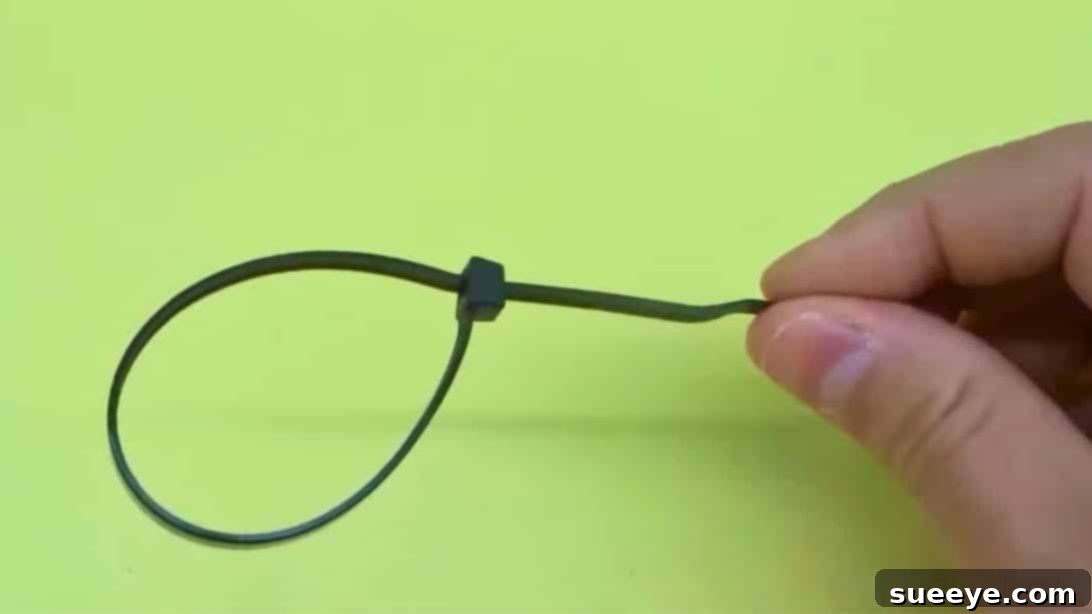
Zip ties, widely recognized as cable ties, are indispensable fasteners celebrated for their ease of use, remarkable strength, and unparalleled versatility. These ingenious plastic straps have become a staple in homes, offices, workshops, and countless professional environments. Whether you’re wrangling a spaghetti mess of computer cables, securing plants to garden stakes, or simply bundling items for storage, their lightweight design, straightforward application, and robust durability make them the swift and effective solution for a myriad of tasks.
Despite their pervasive presence, a common misconception persists: many people believe that the only way to remove a zip tie is by cutting it. This belief leads to the unfortunate and unnecessary disposal of perfectly functional fasteners. Imagine the sheer volume of zip ties discarded daily, contributing to plastic waste, all because users are unaware of a simple, non-destructive release method. This practice not only impacts the environment but also represents a constant, albeit small, expenditure for frequent users.
The truth is, unlocking a zip tie without resorting to scissors or cutters is not only possible but surprisingly simple. In most cases, you won’t even need specialized tools – often, just your own fingernail will suffice. This comprehensive guide will unveil a clever technique that empowers you to efficiently open and reuse standard zip ties, thereby saving you money, significantly reducing plastic waste, and equipping you with a practical, eco-friendly skill. If you know anyone who frequently utilizes zip ties only to snip them off, share this invaluable tutorial. They will undoubtedly discover this hack to be a game-changer for their organizational and DIY endeavors.
RELATED: Unlock More Potential: 8 Clever Tricks With Cable Ties You Should Know
The Case for Reuse: Why Unlocking Zip Ties Matters
Mastering the art of non-destructive zip tie removal offers a wealth of advantages that extend far beyond simply learning a new trick. It’s a habit that benefits your wallet, the environment, and your overall efficiency:
- Significant Cost Savings: While individually inexpensive, the cumulative cost of continually purchasing new zip ties can add up, especially for those who rely on them regularly. Reusing them means fewer trips to the store and more money in your pocket. This simple act turns a consumable item into a reusable resource.
- Environmental Stewardship: The vast majority of zip ties are made from nylon plastic, a material that takes hundreds of years to decompose in landfills. By extending the lifespan of each zip tie through reuse, you actively diminish your contribution to plastic pollution, promoting a more sustainable and responsible approach to consumption.
- Enhanced Convenience and Preparedness: There’s rarely a good time to run out of zip ties when you need one for a quick fix or project. Maintaining a readily accessible stash of reused, perfectly functional ties ensures you’re always prepared, eliminating frustrating delays and last-minute runs to the hardware store.
- Ideal for Temporary Applications: Many uses for zip ties are temporary in nature – holding components during an assembly, securing items for transport, or bundling seasonal decorations. Being able to remove them without destruction makes them perfectly suited for these temporary roles, allowing for repeated deployment without waste.
It’s worth noting that while specialized “releasable” or “reusable” zip ties exist, featuring an obvious lever for release, this guide focuses on the standard, single-use zip ties that are far more common. Learning this technique renders the majority of zip ties reusable, making this hack universally applicable and highly practical.
The Fingernail Method: Step-by-Step Guide to Opening Zip Ties Without Cutting
This ingenious technique is surprisingly straightforward and relies on a fundamental understanding of the zip tie’s locking mechanism. You’ll be astonished at how easily you can liberate a locked tie using just your own digit. Follow these steps precisely for a successful and gentle release:
Step 1: Create Slack and Maintain Tension
Begin by firmly grasping the tail end of the zip tie, which is the part of the strap that extends beyond the locking head. Use your non-dominant hand (typically your left hand for right-handers) to hold this end securely. Now, gently push this strap end towards the locking head and simultaneously pull it slightly to the side. The objective here is to introduce a small amount of slack or looseness around the locking mechanism. This subtle movement helps to reduce the pressure exerted by the internal locking component, making it significantly easier to manipulate.
Step 2: Identify the Locking Pawl
Carefully inspect the locking head of the zip tie. If you peer closely into the small opening where the serrated strap passes through, you will discern a tiny, wedge-shaped piece of plastic. This critical component is known as the “pawl” or “locking barb.” Its design specifically allows the strap to pass in one direction while preventing it from retracting, thanks to the pawl catching on the strap’s ridges. Understanding the precise location and function of this small piece is paramount to successfully unlocking the tie.
Step 3: Disengage the Pawl and Release the Strap
With the slack you meticulously created in Step 1, gently bend the protruding strap with your non-dominant hand to maintain slight tension and an optimal angle. Now, using the sturdy tip of your fingernail from your dominant hand’s index finger, carefully insert it into the minuscule gap around the locking head, aiming directly for that tiny plastic pawl. The goal is to gently push or bend this small piece of plastic away from the serrated ridges on the strap. You might experience a subtle “give” or a faint click as the pawl disengages from its locked position.
The instant you feel the pawl release its grip, slowly and steadily pull the strap back out from the locking head with your non-dominant hand. If the strap doesn’t slide out smoothly, slightly adjust your fingernail’s position and reapply gentle pressure to the pawl. You may need to repeat the action of pushing the pawl and simultaneously pulling the strap a few times, particularly if the zip tie is exceptionally tight or constructed from a rigid material. Patience and a delicate touch are crucial here. Continue this alternating action until the entire strap slides freely and completely out of the locking head.
This fingernail method is most effective for standard-sized, more flexible zip ties where the pawl is readily accessible and pliable enough for manual manipulation. For heavier-duty or industrial-grade zip ties, or if your fingernails are short or brittle, you may need to consider an alternative tool to achieve the same result.
Alternative Tools for Releasing Zip Ties Without Damage
While the fingernail trick is incredibly convenient and often all you need, certain zip ties – especially thicker, more rigid ones – might require a little extra assistance. Furthermore, not everyone has strong or suitably long fingernails. Fortunately, several common household items can serve as excellent, precise alternatives for disengaging the locking pawl:
- Small Flat-Head Screwdriver: This is arguably one of the most effective and commonly available alternative tools. Its thin, flat tip is ideal for inserting into the small opening of the locking head and gently prying the pawl away from the strap’s ridges. Opt for the smallest screwdriver in your toolkit for maximum precision.
- Unbent Paperclip: A sturdy paperclip, carefully straightened out and perhaps given a slight bend at its tip, can be a surprisingly effective improvised tool. Its slender profile allows it to access the pawl even in confined spaces within the locking head.
- Sewing Needle or Sturdy Pin: For exceptionally small zip ties or those with a particularly narrow and recessed locking mechanism, a sewing needle or a strong pin can provide the necessary precision and reach. When using such sharp objects, exercise extreme caution to prevent any accidental injury.
- Utility Knife or Box Cutter (USE EXTREME CAUTION!): While the primary goal is not to cut the tie, the very tip of a sharp utility knife blade can be used with extreme care to depress the pawl on larger, stiffer ties. **This method carries a significant risk of cuts and injury and should only be attempted by experienced individuals who can maintain absolute control and who are wearing appropriate protective gear.** It is generally advisable to prioritize safer alternatives whenever possible.
Regardless of the tool you choose, the underlying principle remains constant: the objective is to gently push the internal locking pawl away from the serrated strap, thereby releasing the tension, and then carefully pull the strap free. Always perform this task in a brightly lit area, ensuring you have a steady hand to prevent any accidental damage to the zip tie or, more critically, to yourself or the items being unfastened.
Here’s another practical trick you might want to try with zip ties: Make A DIY Drain Cleaning Tool Snake Stick With Zip Tie
Maximizing Longevity: Tips for Successful Zip Tie Reuse and Maintenance
Once you’ve mastered the invaluable skill of non-destructive zip tie removal, a few best practices can further enhance their utility and ensure your reused ties perform optimally for countless future tasks. Proper inspection and storage are key to maximizing their lifespan:
- Thorough Inspection Before Reuse: Before repurposing any released zip tie, always conduct a careful visual inspection. Look for any signs of damage such as cracks, nicks, stretching, or deformation, especially around the locking head and along the serrated ridges of the strap. A compromised zip tie may fail under stress, potentially causing damage or safety hazards, so it’s always best to discard any that show signs of wear.
- Cleanliness is Key: If a zip tie was used in a dirty, dusty, or greasy environment, a quick wipe-down with a damp cloth can help remove contaminants. This not only maintains its aesthetic appeal but also prevents debris from interfering with the locking mechanism during future use.
- Optimal Storage Conditions: To preserve the integrity and flexibility of the plastic, store your collection of reused zip ties in a cool, dry place, away from direct sunlight and extreme temperatures. UV exposure and heat can degrade plastic over time, making it brittle. A small storage container, drawer, or even a labeled bag is ideal for keeping them organized by size and readily accessible.
- Knowing When to Cut is Still Important: While reuse is highly encouraged, there will be instances where cutting a zip tie remains the most practical or safest option. For example, if a zip tie is cinched excessively tight, buried deep within a complex bundle, or if attempting to release it non-destructively poses a significant risk of damaging the bundled items, it’s safer and more efficient to cut it carefully. Always use appropriate cutting tools, such as flush cutters or sharp scissors, and make the cut as close to the locking head as possible to minimize sharp edges.
- Consider Releasable Ties for Frequent Tasks: For specific applications that demand frequent fastening and unfastening, such as temporary cable bundling for audio-visual equipment setups or prototyping electronics, investing in purpose-built “releasable” zip ties is a smart choice. These often feature an easily accessible lever or tab designed for quick, tool-free release, offering maximum convenience for high-turnover uses.
By integrating these thoughtful habits into your routine, you not only significantly extend the working life of your zip ties but also contribute to a more organized, efficient, and environmentally conscious approach to all your projects and everyday fastening needs.
Beyond the Basics: The Myriad Applications of Zip Ties
Understanding how to effectively reuse zip ties only magnifies their already impressive utility. These humble fasteners are true workhorses, proving themselves indispensable across an incredible range of applications. Let’s delve into some of the countless ways zip ties serve as genuine household and professional essentials:
- Mastering Cable Management: This is arguably their most iconic and widespread application. Zip ties are unparalleled for taming unruly computer cables, television wires, charging cords, and appliance power lines. They create a significantly neater, safer, and more organized environment, preventing trip hazards and improving aesthetics.
- Gardening Support and Organization: In the garden, zip ties are invaluable. Use them to gently secure delicate plants to stakes or trellises, bundle garden hoses for tidy storage, or even create temporary, flexible fencing. Their inherent weather resistance makes them perfectly suited for outdoor conditions.
- Versatile DIY Projects & Home Repairs: From securing loose car components under the hood to creating makeshift clamps for gluing projects, zip ties are incredibly useful for both temporary fixes and more permanent attachments in a wide variety of do-it-yourself endeavors and household repairs.
- Optimizing Organization & Storage: Beyond cables, zip ties are excellent for bundling disparate items together for efficient storage, such as rolls of wrapping paper, tent poles, sports equipment, or holiday decorations. They can also be used to quickly attach labels to storage bins, boxes, or luggage for easy identification.
- Travel and Enhanced Security: For added peace of mind during travel, zip ties can secure luggage zippers, providing a simple visual deterrent against tampering. They can also be used to temporarily close gates, cabinets, or toolboxes, offering a basic layer of security.
- Creative Crafts & Hobbies: Many crafters and hobbyists find innovative uses for zip ties in creating unique sculptures, weaving intricate patterns, or securely attaching components in their artistic projects. Their flexibility and strength open up new creative possibilities.
- Emergency Preparedness & Survival: Keep a supply of zip ties in your emergency kit. They can be critical for securing loose items during an evacuation, making temporary repairs to equipment, or even (with extreme care and proper knowledge) assisting in first aid by stabilizing temporary splints.
The sheer adaptability and enduring strength of zip ties mean that once you start recognizing their potential, you’ll find an application for them in almost every corner of your life. Mastering their non-destructive release only amplifies their value, transforming them from single-use disposables into versatile, enduring tools that serve you repeatedly.
Conclusion: Embrace the Power of Smart Reuse
In an era increasingly focused on sustainability, resourcefulness, and smart living, the simple yet profound act of learning how to undo a zip tie without cutting it stands out as an incredibly powerful and often overlooked skill. This comprehensive guide has meticulously demonstrated that with a combination of patience, a keen eye for the underlying locking mechanism, and either your own fingernail or a common household tool, you can effortlessly release and successfully reuse these ubiquitous fasteners.
By adopting this simple yet impactful hack, you’re doing more than just saving a few cents; you are actively making a conscious choice to reduce plastic waste, conserve valuable resources, and embrace a more efficient, economical, and environmentally friendly approach to your everyday tasks, organizational challenges, and DIY projects. So, the next time you encounter a fastened zip tie, remember the insights shared in this tutorial. Give the non-destructive release method a try, confidently share your newfound knowledge with others, and revel in the profound satisfaction of transforming a disposable item into a reusable, long-lasting asset. Happy organizing and smart living!
Seeking more ingenious DIY hacks, practical solutions, and organizational wisdom? Dive into our extensive collection of articles for a wealth of ideas to simplify and enhance your daily life!