
Unleash Your Inner Artist: Easy Canvas Painting for Beginners (No Talent Required!)
Have you ever found yourself admiring a beautiful piece of art and wished you could create something similar, only to tell yourself, “I can’t even draw a stick figure!”? Many aspiring artists are held back by this very common misconception. The truth is, painting on canvas doesn’t require innate talent or years of art school. It’s a skill that can be learned, and more importantly, an incredibly fulfilling journey that anyone can embark upon. This guide is designed to shatter those self-limiting beliefs and show you just how little “talent” it truly takes to create a captivating work of art you’ll be proud of. And the best part? You’re completely free to use any colors you want!
Imagine the satisfaction of stepping back from a canvas and seeing something beautiful emerge from a few simple strokes. It’s not magic; it’s the power of allowing yourself to experiment and embrace the process. Forget about intricate details or perfect realism for now. We’re talking about putting a wide brush into a dollop of paint and making a simple, expressive stroke. When these simple strokes are combined, layered, and allowed to interact, they can transform into something that looks truly impressive, as if a seasoned artist created it.
The Unexpected Journey: How Simple Strokes Led to Artistic Fulfillment
My own journey into the world of painting began with exactly this kind of approach. Like many, I started with something incredibly simple, believing I had no artistic bone in my body. I chose basic colors and experimented with broad, sweeping movements across the canvas. There was no pressure to produce a masterpiece, only a desire to explore. And from those humble beginnings, something amazing happened. One simple stroke led to another, and slowly but surely, my confidence grew, and my skills began to develop naturally. Today, I’m able to call myself an artist, painting custom pet portraits for clients who actually pay me for my work! It’s a testament to the fact that you never know where that very first, simple step might lead you.
This personal anecdote isn’t meant to boast, but to inspire. It highlights the profound potential hidden within each of us, waiting to be unleashed with just a little encouragement and the right starting point. You don’t need a grand vision; you just need to allow yourself to begin. Trust me, if I can do it, so can you. The surprises that await you on this creative path are truly wonderful.
Why Embrace Canvas Painting? More Than Just a Hobby
Beyond the simple joy of creation, engaging in canvas painting offers a wealth of benefits that extend far beyond merely decorating a wall:
- Stress Relief and Mindfulness: The act of focusing on colors, textures, and movements can be incredibly meditative, helping to quiet a busy mind and reduce stress.
- Boost Your Confidence: Completing a painting, no matter how simple, provides a tangible sense of accomplishment that can significantly boost your self-esteem.
- Unleash Creativity: Painting is a fantastic outlet for self-expression, allowing you to explore your emotions, ideas, and unique perspective in a visual form.
- Personalized Home Decor: Imagine adorning your living space with original artwork created by your own hands. It adds a unique, personal touch that no store-bought piece can replicate.
- Thoughtful Gifts: Handmade art makes for incredibly personal and cherished gifts for friends and family, demonstrating care and effort.
- Develop New Skills: You’ll naturally learn about color theory, composition, brush control, and various painting techniques over time, without even realizing it.
Getting Started: Essential Materials for Your First Masterpiece
One of the beautiful things about starting with abstract, simple stroke painting is that you don’t need a huge investment in expensive supplies. Here’s a breakdown of what you’ll need to gather to kickstart your artistic journey:
1. Canvases
This is where your art comes to life! You can often find canvases at incredibly affordable prices, especially during sales. Stores like Michael’s, Hobby Lobby, or even online retailers frequently offer multi-packs or deep discounts. Don’t worry about size initially; a small to medium canvas (e.g., 8×10, 11×14, or 12×16 inches) is perfect for beginners. Both stretched canvases (ready to hang) and canvas boards (thinner, more rigid) are great options.
2. Inexpensive Acrylic Paints
Acrylic paints are ideal for beginners because they are versatile, fast-drying, and clean up easily with water. You don’t need to splurge on artist-grade paints right away. Craft acrylics or student-grade sets are more than sufficient. Start with a basic palette of colors:
- Primary colors: Red, Blue, Yellow
- Neutrals: White, Black
- Bonus: Perhaps a green, purple, or brown to expand your initial options.
This simple selection will allow you to mix a wide range of secondary and tertiary colors.
3. A Couple of Cheap Brushes
While the original suggestion of a 2-inch brush is fantastic for broad strokes, it’s wise to have a small variety.
- 2-inch flat brush: Essential for covering large areas, creating wide, sweeping strokes, and blocking in backgrounds.
- 1-inch or 1/2-inch flat brush: Useful for slightly smaller areas or more defined lines.
- A small round or detail brush: Handy for adding tiny accents or correcting small areas, though not strictly necessary for your very first abstract piece.
Again, inexpensive synthetic brushes from craft stores are perfectly fine for starting out.
4. Other Handy Supplies
- Water Cup: For rinsing your brushes. Keep a separate cup for darker colors if you’re worried about muddying light ones.
- Paper Towels or an Old Rag: For drying brushes and wiping off excess paint.
- Palette: A simple paper plate, a piece of plastic, an old ceramic tile, or even parchment paper works perfectly for mixing your paints.
- Protective Covering: Lay down newspaper, an old sheet, or a plastic tablecloth to protect your workspace from accidental drips.
- Easel (Optional): While an easel can be helpful, it’s by no means a requirement. Many artists prefer to paint flat on a table or even prop their canvas against a wall.
Your First Canvas Masterpiece: A Step-by-Step Guide to Intuitive Painting
Now that you have your supplies, let’s dive into the fun part! Remember, the goal here is to relax, experiment, and enjoy the process, not to achieve perfection.
Step 1: Set Up Your Workspace
Lay down your protective covering. Arrange your paints on your palette, pour water into your cup, and have your paper towels ready. Place your canvas in a comfortable position, whether on a table, an easel, or propped up. Good lighting is always a plus!
Step 2: Embrace the Mindset of Experimentation
Take a deep breath. Let go of any preconceived notions of what your painting “should” look like. This is about exploration. There are no mistakes, only opportunities to learn and adjust. Think of it as a playful experiment with color and form.
Step 3: Choose Your Colors (or Don’t!)
You can pre-select a few colors you like together, or simply grab a few that call to you in the moment. Don’t overthink your palette. Sometimes the most interesting combinations emerge from spontaneous choices. Consider starting with a base color or two for your background if you wish, or jump straight into layering.
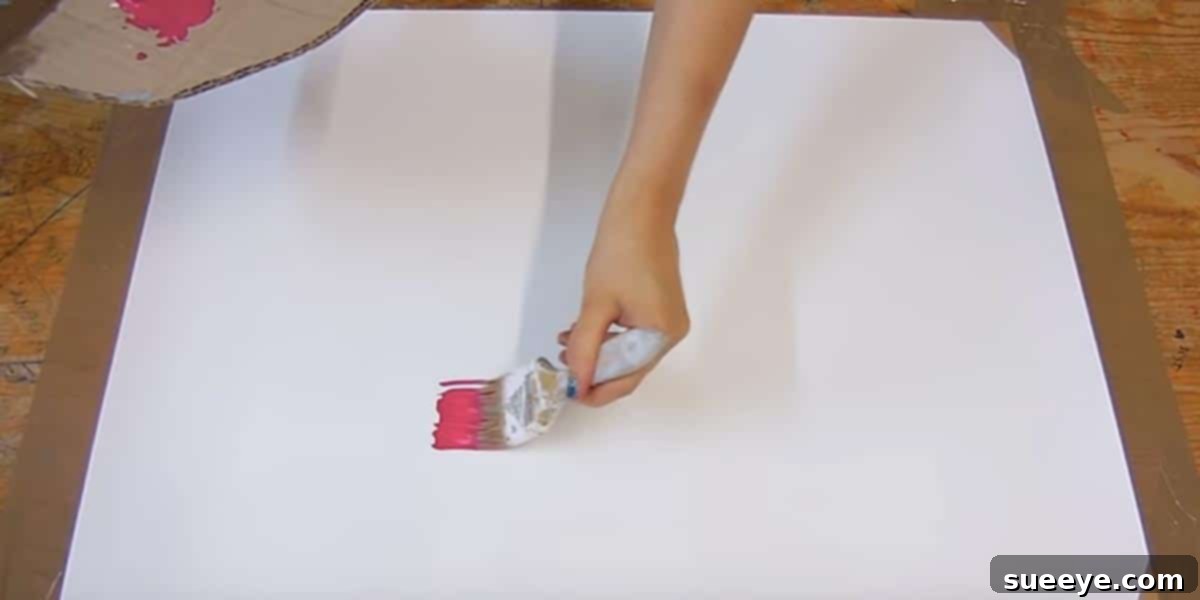
Step 4: The Simple Stroke Method – Letting the Brush Lead
This is the core of our “no talent needed” approach.
- Load Your Brush: Dip your wide brush into a color, ensuring it’s well-loaded but not dripping excessively.
- Apply with Intent (but no pressure): Bring the brush to the canvas. Start by making simple, broad strokes. You can sweep it horizontally, vertically, or diagonally.
- Vary Pressure and Direction: Experiment with applying different amounts of pressure. A lighter touch will create a softer, more transparent stroke, while more pressure will lay down a thicker, more opaque line. Change the direction of your strokes. Let them overlap.
- Layer Your Colors: As acrylics dry quickly, you can start layering new colors over existing ones. Apply a second color next to or partially over the first. Blend them slightly while they’re still wet for softer transitions, or let them dry completely before adding a new layer for more distinct effects.
- Don’t Overthink It: The beauty of this method lies in its spontaneity. Don’t obsess over where each stroke goes. Let your hand move intuitively. The “conglomeration of strokes” will naturally start to form interesting patterns and textures.
- Focus on Feeling: Pay attention to how the colors interact, how the brush feels on the canvas, and the rhythm of your movements. This is your creative meditation.
Step 5: Step Back and Observe
Every now and then, take a step back from your canvas. Look at it from a distance. Does anything need adjusting? Do you want to add more of a certain color? Does it need more depth or contrast? Don’t be afraid to add more layers or strokes until you feel a sense of completion. Remember, you’re the artist, and you decide when it’s done!
Tips for Success on Your Artistic Journey
- Practice Regularly: Like any skill, consistent practice will lead to improvement. Even short, frequent painting sessions are beneficial.
- Experiment Fearlessly: Try new color combinations, different brush strokes, or even unconventional tools (sponges, credit cards) once you feel comfortable. The magic often happens outside your comfort zone.
- Embrace “Mistakes”: There are no mistakes in art, only happy accidents and opportunities to learn. A stroke you don’t like can always be painted over or incorporated into something new.
- Find Inspiration Everywhere: Look at other artists’ work (online, in galleries), observe colors and textures in nature, or find inspiration in everyday objects. Don’t copy, but let ideas spark your own unique creations.
- Share Your Work (If You Feel Like It): Showing your art to others can be a great motivator and provide valuable feedback. But remember, you paint for *yourself* first and foremost.
- Most Importantly: Enjoy the Process! The journey of creating is often more rewarding than the final product. Allow yourself to have fun, relax, and savor the act of bringing color to a canvas.
Beyond the First Stroke: Where Will Your Art Take You?
Starting with simple, intuitive strokes is just the beginning. As you gain confidence and familiarity with your materials, you might find yourself drawn to exploring more specific techniques, incorporating different elements, or even attempting more representational subjects. The initial freedom of abstract painting can serve as a powerful foundation, building your understanding of color, composition, and personal style without the pressure of perfect replication.
From painting small canvases for your own home decor, creating heartfelt gifts, or even, as in my own case, venturing into commissioned pieces like pet portraits, the possibilities are endless. That first step, the one where you just allow yourself to start, is the most profound. It unlocks a world of creative potential you might never have known you possessed.
Ready to Paint Your Story?
So, what are you waiting for? That inner artist is eager to come out and play! Don’t let the fear of not being “good enough” hold you back for another moment. Gather your simple supplies – a cheap canvas, a few inexpensive paints, and a wide brush – and get ready to experience the pure joy of creation.
Watch a simple step-by-step tutorial online (there are countless free resources available for abstract acrylic painting), get out your paints and brushes, and start making those wonderful, expressive strokes. You’ll be absolutely amazed at what you can achieve. And when you do create something you love, make sure to SHARE it with your friends on Facebook and inspire them to begin their own artistic adventure!