
WD-40 has long been a staple in garages, workshops, and homes worldwide, synonymous with lubrication and rust prevention. Yet, its true versatility extends far beyond these basic applications. Many of us are only scratching the surface of what this iconic blue and yellow can truly achieve. From mundane household chores to surprising outdoor solutions, WD-40 proves to be an indispensable multi-purpose product. Inspired by an incredible video by Simple Ideas on YouTube, we’re diving deep into a world of unexpected WD-40 hacks that will transform the way you tackle everyday problems. Get ready to discover ingenious ways to clean, protect, and simplify your life with this legendary spray.
Unleash the Power: Unexpected WD-40 Hacks and Uses for Your Home
For decades, WD-40 has been the silent hero in countless households, revered for its ability to lubricate sticky mechanisms and banish rust. But what if we told you that the uses of this remarkable product extend far beyond just loosening a rusty bolt or silencing a squeaky hinge? Its unique formulation, designed as a water displacer and rust preventative, also offers an astonishing array of solutions for common household dilemmas, outdoor challenges, and even some fun, quirky tricks. This guide, drawing inspiration from insightful demonstrations, aims to reveal the true potential of WD-40, turning you into a problem-solving maestro.
What Exactly Is WD-40? Understanding the Multi-Use Formula
Before we dive into the hacks, let’s briefly touch upon what makes WD-40 so effective. The name itself, “Water Displacement, 40th formula,” hints at its primary function: to remove moisture. Developed in 1953 by Norm Larsen, it was originally created to protect missile parts from rust and corrosion. Its secret formula combines various hydrocarbons, lubricants, and anti-corrosion agents, making it a five-in-one wonder: a penetrant, lubricant, rust preventative, moisture displacer, and cleaner. It works by creating a barrier that protects against moisture and corrosion, while also dissolving dirt, grime, and adhesive bonds. Understanding this fundamental chemistry helps us appreciate its diverse applications, from freeing stuck mechanisms to cleaning surfaces and beyond.
Essential Materials for Your WD-40 Adventures:
- WD-40 Multi-Use Product: Always have a can handy, preferably with the Smart Straw for precise application in tight spots.
- Soft Cloths or Paper Towels: Indispensable for wiping, cleaning, and buffing surfaces after application.
- Cotton Pads: Ideal for smaller, more controlled applications, particularly when dealing with delicate surfaces or for use as a fire starter.
- Optional: A Balloon: For one of the more surprising and scientifically interesting demonstrations of WD-40’s properties.
- Gloves: Recommended for extended use to protect your hands and prevent skin irritation.
Amazing WD-40 Hacks Revealed: From Household to Outdoors
Household Cleaning and Maintenance Miracles with WD-40
WD-40’s cleaning power is often underestimated. Beyond its lubricating properties, it acts as a powerful solvent, making it perfect for tackling tough stains and grime around the house, saving you time and effort.
1. Erasing Marker Stains from Screens and Surfaces
Have you ever experienced the panic of finding permanent marker on a computer screen, a whiteboard, a laminate countertop, or even a painted wall? WD-40 comes to the rescue! Its solvent properties can break down the stubborn pigments in permanent markers and crayons without damaging many surfaces. For computer screens, apply a small amount onto a cotton pad, gently wipe the marked area in small, circular motions, and then immediately wipe clean with a separate, dry microfiber cloth. Always test on an inconspicuous area first, especially on painted walls, as paint types vary. This trick works remarkably well on non-porous surfaces, leaving them spotless and free of unwanted artistic expressions.
2. Removing Stubborn Gum from Carpet and Hair
Few things are as frustrating as gum stuck in carpet fibers or, worse, in someone’s hair. Instead of resorting to drastic measures like cutting, reach for your can of WD-40. For carpet, spray a small amount directly onto the gum, allowing it to penetrate for a few minutes. The WD-40 helps to break down the gum’s stickiness and its bond with the fibers, making it significantly easier to scrape away with a butter knife or stiff brush. Blot the area afterward with a clean cloth and a mild detergent solution to remove any residue. For hair, apply a tiny amount to the gum itself, gently work it in with your fingers, and then carefully comb the gum out. Always wash the affected area thoroughly with shampoo and water afterward to remove all traces of WD-40.
3. Silencing Squeaky Hinges and Doors
A classic use, but one that perfectly highlights WD-40’s lubricating prowess. Squeaky doors are not only annoying but can also indicate friction and potential wear on the hinge mechanisms. A quick, targeted spray of WD-40 onto the hinge pins will lubricate them thoroughly, stopping the irritating squeak instantly and providing a protective barrier against future rust and corrosion. This simple fix not only restores peace to your home but also extends the life of your hinges, preventing premature wear and tear.
4. Banishing Adhesive Residue and Stickers
Whether it’s the sticky remains of an old price tag, a stubborn bumper sticker, or adhesive from tape, residue can be incredibly difficult to remove without leaving behind a gummy mess. WD-40 is a superb solvent for breaking down these sticky bonds. Spray it directly onto the residue, let it sit for a moment to allow the solvents to work, and then wipe away with a clean cloth. The residue will often come off effortlessly, leaving no sticky trace behind. This also works wonders on glues and epoxies that haven’t fully cured.
5. Shining Stainless Steel Appliances
Fingerprints, smudges, and water spots are the bane of stainless steel owners, quickly diminishing the sleek look of appliances. WD-40 can not only clean these unsightly marks but also add a protective, streak-free shine. Apply a small amount to a soft cloth and wipe down your stainless steel appliances, always moving with the grain of the steel for the best results. It effectively cleans away grime and leaves a thin, invisible barrier that repels new fingerprints and water spots, keeping your appliances looking pristine for longer.
6. Removing Scuff Marks from Floors and Shoes
Those unsightly black scuff marks on linoleum, tile floors, or even the rubber soles of your shoes can be easily erased with WD-40. Spray a small amount onto a soft cloth, gently rub the scuff mark, and watch it disappear as the WD-40 breaks down the rubber transfer. Remember to clean the area with a standard floor cleaner afterward to remove any oily residue and prevent slipperiness, ensuring safety.
Outdoor and Automotive Ingenious Solutions with WD-40
Beyond the confines of your home, WD-40 continues to impress with its utility in the garage, garden, and even for personal items, proving its worth in a variety of challenging environments.
7. Waterproofing Shoes and Boots
Facing a sudden downpour or prolonged wet conditions? WD-40 can provide a temporary waterproofing solution for fabric shoes and boots. By displacing water, it creates a protective barrier that helps repel moisture, keeping your feet drier. Spray an even, light coat over the fabric exterior, ensuring good ventilation, and allow it to dry completely before wearing. While not a permanent alternative to dedicated waterproofing sprays, it can certainly save your feet from an unexpected soaking. Always test on an inconspicuous area first, and avoid using on delicate leathers or suedes, which may be discolored or damaged.
8. Unfreezing and Protecting Locks
Winter can be harsh on outdoor locks, causing them to freeze solid and become impossible to open. WD-40 acts as both a de-icer and a lubricant. Spray it directly into a frozen lock to quickly melt ice and allow the key to turn freely. Regular application can also prevent locks from freezing in the first place, by displacing any moisture that would otherwise turn to ice within the mechanism. It also lubricates the internal components, ensuring smooth operation year-round, regardless of the weather.
9. The Unexpected Fire Starter (with extreme caution!)
In a survival situation or when struggling to start a campfire with damp kindling, WD-40 can act as an effective accelerant. The video from Simple Ideas brilliantly demonstrates this: simply soak a cotton pad or even some fine wood shavings in WD-40, place it amongst your kindling, and light it. The flammable petroleum distillates in WD-40 will help the flame catch quickly and sustain it long enough for your wood to ignite. CRITICAL SAFETY NOTE: Always use extreme caution when using WD-40 as a fire starter. Only do so in well-ventilated outdoor environments, away from anything flammable, and keep the can far from the flame. Never use it on an existing fire, near dwellings, or indoors. This should be considered an emergency measure only.
10. Repelling Pests like Spiders and Insects
While not a pesticide, WD-40 can effectively deter spiders and other crawling insects. Spray a thin line around window sills, door frames, and other potential entry points into your home. The scent and residue are generally unpleasant to many pests, discouraging them from crossing the barrier. This can be a useful, albeit temporary, preventative measure against unwanted creepy crawlies. However, always use with caution, especially around pets and children, and avoid spraying near food preparation areas or on plants.
11. Removing Tar and Grime from Your Car
Road tar, stubborn tree sap, and tough grime can adhere tenaciously to your car’s paintwork, making it difficult to remove with standard car washes. WD-40 can dissolve these contaminants without harming your car’s finish. Spray a small amount onto the affected area, let it sit for a minute or two to allow it to penetrate, then gently wipe away with a soft microfiber cloth. Follow up with a thorough car wash to remove any WD-40 residue and leave your vehicle sparkling clean.
12. Lubricating Garden Tools and Preventing Rust
Garden tools, especially during the off-season, are prone to rust and stiffness. A regular application of WD-40 can keep them in top condition. Spray it on hinges of pruning shears, shovels, and rakes to prevent rust formation and ensure smooth operation. It displaces moisture and leaves a protective film, extending the lifespan of your valuable gardening equipment.
Quirky and Surprising WD-40 Tricks
13. The Balloon Popper: A Fun Chemical Reaction
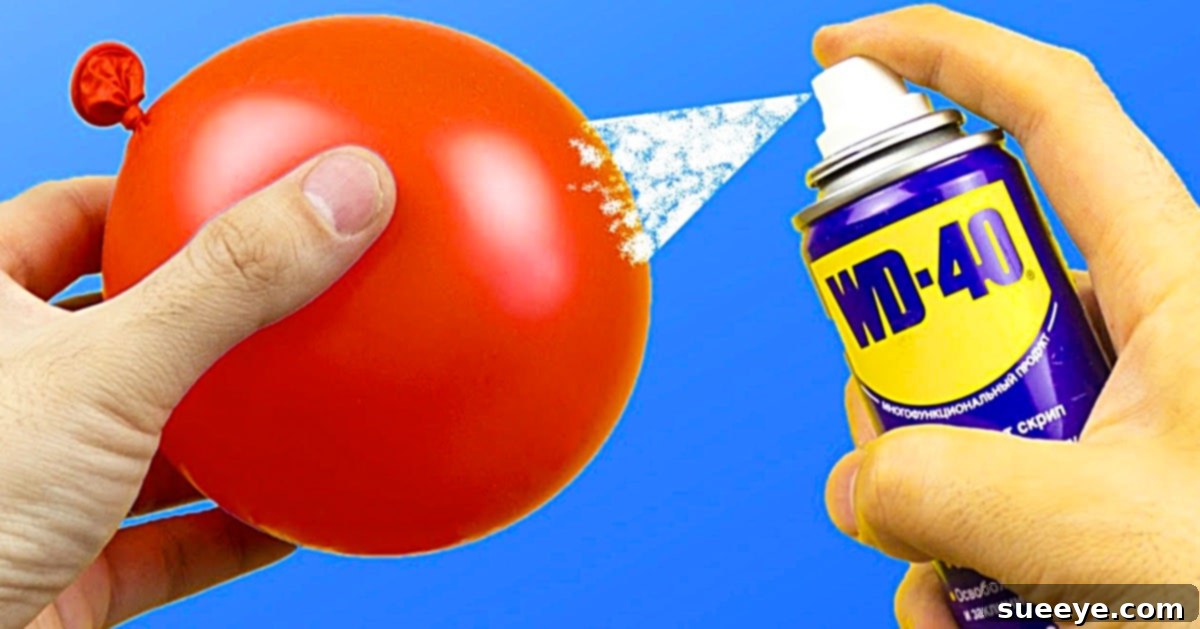
Here’s a fun one you might not expect, showcasing the unique chemical properties of WD-40: it can instantly pop a latex balloon! The petroleum distillates in WD-40 interact with the natural rubber latex of the balloon, weakening its structure almost instantly upon contact. A small, targeted spray will cause the balloon to burst dramatically. This is a neat party trick or a fun science demonstration, but always keep it away from eyes and use in a well-ventilated area.
14. Separating Stuck Glassware
If you’ve ever had two glass tumblers, bowls, or even vases become stubbornly stuck together, WD-40 offers a remarkably simple solution. Instead of forcing them apart and risking breakage, spray a small amount of WD-40 into the crevice where the two pieces meet. The WD-40 will lubricate the contact points, allowing you to gently twist and separate the glassware without any damage. Remember to wash the glassware thoroughly with soap and water afterward.
Important Safety and Best Practices When Using WD-40
While WD-40 is incredibly versatile and generally safe for many applications, it’s crucial to use it safely and responsibly to prevent accidents or damage:
- Ventilation: Always use WD-40 in a well-ventilated area, especially when spraying larger amounts, to avoid inhaling fumes.
- Flammability: WD-40 is flammable. Keep it away from open flames, sparks, and heat sources. Never spray it on live electrical equipment or hot surfaces.
- Skin Contact: Avoid prolonged skin contact. If it gets on your skin, wash thoroughly with soap and water. If irritation occurs, discontinue use.
- Eye Contact: If WD-40 gets into your eyes, flush immediately with water for several minutes and seek medical attention if irritation persists.
- Patch Test: Before using WD-40 on sensitive or painted surfaces (e.g., certain plastics, delicate fabrics, freshly painted walls), always perform a patch test in an inconspicuous area to ensure it doesn’t cause damage or discoloration.
- Avoid Ingestion: Keep out of reach of children and pets. Do not ingest WD-40; it is harmful if swallowed.
- Specific Materials: Be cautious when using on rubber, as it can sometimes cause swelling or degradation over time. Also, avoid using it on areas that require precise, non-migrating lubrication (e.g., specific bicycle chains or fine machinery parts that might require specialized lubricants).
- Electrical Equipment: While it displaces water, avoid spraying WD-40 directly onto sensitive electronics unless specifically recommended by the manufacturer, as it can leave a residue.
The Scent of Versatility and Nostalgia
For many, the distinctive, somewhat sweet, and petroleum-like scent of WD-40 is more than just an odor – it’s a powerful memory trigger. I personally recall the comforting smell filling our house when my dad would clean his guns, lubricate tools, or work on various household projects. It was a scent that brought a sense of security, industry, and problem-solving. It’s truly one of those polarizing aromas – you either love it and find it reassuring, or you simply can’t stand it! But for those of us who appreciate its unique bouquet, it’s intrinsically linked to efficacy, durability, and the satisfaction of a job well done. This familiar smell underscores the product’s enduring presence and utility in countless homes and lives across generations.
Conclusion: A True Multi-Tool in a Can
From unfreezing a stubborn outdoor lock to effortlessly removing gum from your carpet, and even assisting with starting a campfire, WD-40’s potential is truly astounding. What began as a rust preventative for aerospace components has evolved into a universal problem-solver, proving its worth in countless scenarios, both expected and surprisingly ingenious. By exploring these unexpected WD-40 hacks, you can unlock greater efficiency, simplify challenging tasks, and maintain your belongings with remarkable ease. Remember to always use it responsibly and safely, adhering to the guidelines provided. You’ll find that this little can of WD-40 packs a powerful punch, making it one of the most versatile and indispensable products you can keep on hand. So next time you face a sticky situation, a squeaky hinge, or a rusty challenge, remember the humble can of WD-40 – it just might be the solution you never knew you needed!