
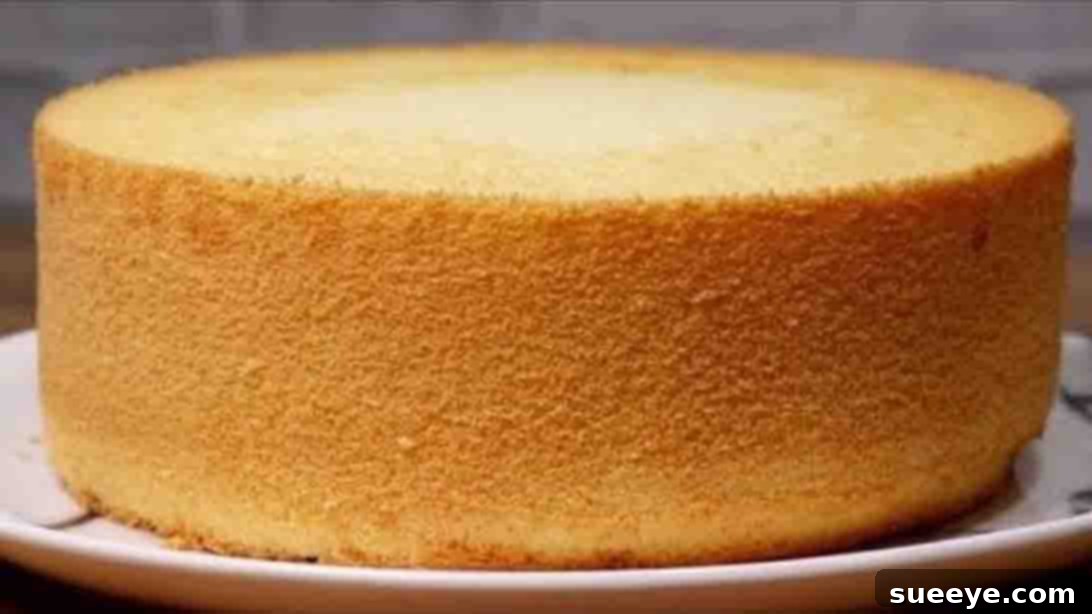
Embarking on the delightful journey of home baking doesn’t have to be complicated. For those eager to don an apron and create something truly special right in their own kitchen, we present an incredibly simple yet profoundly satisfying 3-ingredient sponge cake recipe. This method, expertly demonstrated by yummy.expert on YouTube, is a perfect starting point for novices and a go-to treat for seasoned bakers alike. It strips away the complexity often associated with baking, offering a straightforward path to a perfectly light, airy, and melt-in-your-mouth cake.
This beginner-friendly sponge cake is more than just a dessert; it’s a versatile foundation for countless culinary creations. Imagine using it as the canvas for your icing practice, transforming it into a layered masterpiece, or simply enjoying it unadorned with a cup of tea. Its simplicity belies its delicious outcome, making it an ideal choice for a quick afternoon snack, a delightful addition to your tea time, or a special treat for the kids after school. Dive into the world of easy baking with this foolproof recipe, and prepare to be amazed by what you can achieve with just three basic ingredients.
Unlock Your Inner Baker: Why This 3-Ingredient Sponge Cake Is Perfect For You
The allure of this particular sponge cake recipe lies in its sheer simplicity and consistent results. Many aspiring bakers are intimidated by long ingredient lists and complex techniques, but this recipe skillfully navigates these hurdles. It’s designed to be incredibly forgiving, making it a true “fool-proof” option where perfect results are virtually guaranteed every time. You won’t need advanced culinary skills or specialized equipment to whip up this light and fluffy delight.
What makes it so special? Firstly, its texture is a dream – effortlessly light and incredibly airy, it truly melts in your mouth, leaving a delicate sweetness that isn’t overpowering. Secondly, its versatility is unmatched. While superb on its own, it serves as an excellent base for various desserts. Want to practice your piping skills? This cake is your ideal canvas. Dreaming of a simple fruit shortcake? Slice this sponge cake, add some fresh berries and a dollop of whipped cream. The possibilities are endless, making it an indispensable recipe for anyone looking to expand their baking repertoire without added stress. Experience the joy of baking success with minimal effort and maximum flavor.
The Magic of Three Ingredients: How Simplicity Creates Perfection
It might seem almost too good to be true: a delicious, fluffy sponge cake with only three ingredients. But the magic truly lies in the synergistic combination of these core components: eggs, sugar, and self-rising flour. Each plays a crucial role in creating the cake’s signature texture and taste.
- Eggs: These are the powerhouse of the recipe, providing both structure and aeration. When whisked vigorously with sugar, the eggs create a stable foam that traps air, which is essential for the cake’s light and airy crumb. Room temperature eggs are vital here, as they whip up to a greater volume, leading to a much fluffier cake.
- Sugar: Beyond its sweetening properties, sugar plays a critical role in stabilizing the egg foam. It helps to create a strong yet tender structure, preventing the foam from collapsing and ensuring a moist and delicate final product.
- Self-Rising Flour: This convenient ingredient comes pre-mixed with leavening agents (baking powder) and a pinch of salt, eliminating the need to measure them separately. The leavening agents react with heat and moisture during baking, producing carbon dioxide bubbles that further expand the cake batter, contributing to its airy texture. The gentle folding of this flour into the egg mixture is key to maintaining the air pockets developed during whisking.
Understanding the role of each component helps to appreciate the elegant simplicity of this recipe and reinforces why following the steps carefully leads to such consistent, delightful results. It’s a testament to how fundamental ingredients, when combined correctly, can produce baking brilliance.
Before You Begin: Essential Tips for Sponge Cake Success
Even with a foolproof recipe, a few pre-baking tips can elevate your experience and ensure a perfectly baked sponge cake every single time. Paying attention to these small details can make a big difference in the final outcome, guaranteeing a cake that’s consistently light, airy, and delicious.
- Room Temperature Eggs Are Non-Negotiable: This cannot be stressed enough. Cold eggs do not whip up to the same volume as room temperature eggs. For optimal aeration, take your eggs out of the fridge at least 30 minutes to an hour before you plan to start baking. This will result in a much fluffier and lighter sponge.
- Accurate Measurement is Key: While this recipe is simple, baking is a science. Use proper measuring cups and spoons, and level off your flour accurately. A slight variation can affect the cake’s texture.
- Do Not Overmix: Once you add the flour, your goal is to gently fold it in just until combined. Overmixing will develop the gluten in the flour, resulting in a tough, dense cake rather than the desired light and airy texture. Think gentle, deliberate strokes.
- Preheat Your Oven: Always preheat your oven fully before placing the cake inside. A consistently heated oven ensures even baking and proper leavening. Use an oven thermometer if you suspect your oven’s temperature might be inaccurate.
- Prepare Your Pan Properly: Lining your cake mold with baking paper is crucial for easy removal. This prevents the delicate sponge from sticking and ensures a clean release, preserving its perfect shape.
By keeping these simple tips in mind, you’re setting yourself up for an enjoyable baking experience and a truly outstanding 3-ingredient sponge cake.
Ingredients You’ll Need:
- 3/4 cups + 1 tbsp self-rising flour
- 3/4 cup granulated sugar
- 5 large eggs, at room temperature
Step-by-Step Directions to Your Perfect Sponge Cake
Step 1: Preparing the Batter – The Art of Whipping and Folding
The first step is crucial for achieving the signature airy texture of this 3-ingredient sponge cake. In a large, clean mixing bowl, carefully crack your five room-temperature eggs. To these eggs, add the 3/4 cup of granulated sugar. Now, using an electric mixer, whisk this mixture on high speed for approximately five minutes. You’ll notice the mixture transforming into a pale yellow, thick, and very frothy concoction. It should significantly increase in volume and become light and airy – this indicates that enough air has been incorporated, which is vital for the cake’s rise and texture.
Next, it’s time to gently incorporate the self-rising flour. Sift the 3/4 cups + 1 tbsp of self-rising flour directly into the egg and sugar mixture. Sifting is important as it aerates the flour and prevents lumps. For best results, sift it in two batches, folding gently after each addition. The key here is to fold, not stir vigorously. Use a spatula to gently bring the batter from the bottom to the top, turning the bowl as you go. This motion helps to preserve the air bubbles you’ve worked so hard to create. Continue folding just until the flour is fully incorporated and no streaks remain – be very careful not to overmix, as this can deflate your batter and result in a dense cake.
Finally, prepare your cake mold. Line it meticulously with baking paper, ensuring the paper covers the bottom and extends up the sides. This prevents sticking and makes for easy removal later. Carefully pour the delicate batter into the prepared mold, distributing it evenly.
Step 2: Baking and Cooling – The Patience for Perfection
With the batter ready, it’s time for baking. Before placing your cake in the oven, gently tap the cake mold on your counter a few times. This simple action helps to release any large air bubbles trapped in the batter, which can prevent uneven baking and large holes in your finished sponge. Once tapped, carefully place the cake mold into a preheated oven set at 325 degrees Fahrenheit (160 degrees Celsius). Bake the cake for approximately 40 minutes. The exact baking time may vary slightly depending on your oven, so keep an eye on it.
To check for doneness, insert a toothpick into the center of the cake. If it comes out clean, your sponge cake is perfectly baked and ready. If there’s wet batter, continue baking for a few more minutes and retest. Once baked, remove the cake from the oven and allow it to cool in the mold for about ten minutes. This crucial cooling period allows the cake to set and prevents it from collapsing when removed. After ten minutes, gently invert the cake onto a wire rack, carefully peel off the baking paper, and leave it to cool completely. Allowing it to cool entirely before slicing is essential for a clean cut and to prevent the cake from becoming crumbly or steaming internally. Once fully cooled, you can begin slicing and serving this magnificent homemade sponge cake. Enjoy every light and airy bite!
Serving Suggestions and Creative Variations for Your Sponge Cake
The beauty of this 3-ingredient sponge cake lies not just in its simplicity but also in its incredible adaptability. While perfectly delicious on its own, it serves as an exquisite canvas for a myriad of flavors and presentations. Here are some ideas to elevate your homemade sponge cake:
- Classic Simplicity: A simple dusting of powdered sugar adds an elegant touch and a subtle sweetness that complements the cake’s light texture.
- Berry Bliss: Pair slices of sponge cake with a generous serving of fresh berries (strawberries, raspberries, blueberries) and a dollop of freshly whipped cream. The tartness of the fruit beautifully balances the sweetness of the cake.
- Lemon Zest Delight: For a refreshing twist, infuse the cake with a bright citrus flavor. You can add a tablespoon of lemon zest to the batter before folding in the flour, or drizzle a simple lemon glaze (powdered sugar mixed with lemon juice) over the cooled cake.
- Chocolate Lover’s Dream: Melted chocolate or a rich chocolate ganache can transform this simple cake into an indulgent treat. Drizzle it generously or create a thin layer over the entire cake.
- Layered Cake Foundation: Slice the cooled sponge cake horizontally into two or three layers. Fill with pastry cream, fruit jam, chocolate spread, or buttercream frosting to create a stunning layered cake for any occasion.
- Trifle Base: Cube the sponge cake and layer it in a glass bowl with custard, fruit, and whipped cream for a delightful and impressive trifle.
- Coffee Break Companion: Enjoy a slice with your favorite coffee or tea. The cake’s light texture makes it a perfect accompaniment without being too heavy.
Don’t be afraid to experiment! This versatile sponge cake invites creativity, allowing you to tailor it to your taste preferences and the occasion.
Troubleshooting Common Sponge Cake Issues
Even with a foolproof recipe, baking can sometimes present unexpected challenges. Here are a few common issues you might encounter with sponge cakes and how to troubleshoot them:
- My cake is dense and not airy: This is almost always due to overmixing the batter after adding the flour, or insufficient whipping of the eggs and sugar. Remember to whisk the eggs and sugar until very pale, thick, and significantly increased in volume. When adding flour, fold gently and sparingly to preserve the air. Also, ensure your eggs are at room temperature.
- My cake collapsed in the middle: A common culprit here is opening the oven door too early during baking, causing a sudden drop in temperature. It could also be due to underbaking (not fully set) or using too much leavening (though less likely with self-rising flour). Ensure your oven temperature is accurate and resist the urge to peek until at least 3/4 of the baking time has passed.
- My cake stuck to the pan: This indicates insufficient greasing or lining of your cake mold. Always use baking paper for easy removal, and ensure it covers all surfaces that will touch the cake.
- The crust is too dark, but the inside isn’t cooked: Your oven might be too hot, or the cake is placed too close to a heating element. Try reducing the oven temperature slightly (e.g., by 10-15 degrees F) or moving the cake to a different rack. You can also loosely tent the top with aluminum foil if it’s browning too quickly.
- The cake is dry: This is often a sign of overbaking. Keep an eye on the cooking time and test for doneness with a toothpick. Ovens vary, so the stated time is a guideline.
With a little practice and attention to these details, you’ll master the art of the perfect 3-ingredient sponge cake in no time.
Frequently Asked Questions about Baking a 3-Ingredient Sponge Cake
Here are some common questions prospective bakers might have about this easy sponge cake recipe:
- Can I use plain flour instead of self-rising flour? Yes, you can! If you only have plain (all-purpose) flour, you’ll need to add baking powder. For every cup of plain flour, add 1.5 teaspoons of baking powder and a pinch of salt. For this recipe (3/4 cup + 1 tbsp flour), you would add about 1.25 teaspoons of baking powder.
- Do I really need an electric mixer? While an electric mixer (handheld or stand mixer) makes the whisking process much easier and more efficient, you can theoretically whisk by hand. However, it will require significant arm strength and more time to achieve the required volume and thickness of the egg and sugar mixture. An electric mixer is highly recommended for best results.
- How do I store leftover sponge cake? Store the cooled sponge cake in an airtight container at room temperature for up to 2-3 days. If you’ve added fresh cream or fruit, it should be refrigerated and consumed within 1-2 days.
- Can I freeze sponge cake? Yes, sponge cake freezes wonderfully! Once completely cooled, wrap the cake tightly in plastic wrap, then in aluminum foil, and place it in a freezer-safe bag. It can be frozen for up to 1 month. Thaw at room temperature before serving.
- Can I make this cake in different sized pans? Yes, but you will need to adjust baking times. A larger pan might require less time (but wider surface area), while a smaller, deeper pan will likely require more time. Always test for doneness with a toothpick.
- What if my eggs are not at room temperature? If you’re short on time, you can quickly bring cold eggs to room temperature by placing them (still in their shells) in a bowl of warm (not hot) water for about 5-10 minutes.
Your Journey to Simple Baking Starts Here!
This 3-ingredient sponge cake recipe is truly a game-changer for anyone looking to embrace the joy of home baking without the fuss. It stands as a testament to the idea that deliciousness doesn’t always require complexity. From its light, airy texture to its incredible versatility as a base for countless desserts, this recipe consistently delivers perfection. Whether you’re a complete novice taking your first steps into the culinary world or a seasoned baker seeking a reliable and easy treat, this foolproof sponge cake will quickly become a cherished favorite.
So, gather your simple ingredients, follow the clear instructions, and prepare to be delighted by the outcome. Share your creations, experiment with different toppings, and most importantly, savor the delightful experience of baking something wonderful from scratch. A huge thank you once again to yummy.expert for sharing this fantastic recipe that empowers everyone to bake with confidence and joy. Be sure to check out their channel for more inspiring and easy-to-follow recipes just like this!
For more baking inspiration and a related recipe, you might also enjoy our article on the 3-Ingredient Fluffy Sponge Cake Recipe.