
Effortless Toilet Unclogging: The Ultimate Guide to Clearing Clogs with Dish Soap & Hot Water
Dealing with a clogged toilet is arguably one of the most frustrating and unpleasant household chores. The immediate panic, the looming threat of an overflow, and the inevitable mess often lead us straight to the dreaded plunger. However, what if there was a simpler, cleaner, and surprisingly effective alternative? Homeowners and DIY enthusiasts are constantly discovering ingenious tricks to simplify mundane tasks, and unclogging a toilet is no exception. Prepare to revolutionize your approach to blocked drains with a method that’s not only incredibly efficient but also incredibly easy: the dish soap and hot water trick.
Say Goodbye to the Plunger: The Magic of Dish Soap and Hot Water
For decades, the plunger has been the go-to tool for a clogged toilet. While effective for many blockages, it’s often messy, requires considerable effort, and can sometimes feel like you’re just pushing the problem further down the drain. This innovative method offers a refreshing change, promising a clog-free toilet with minimal fuss and maximum cleanliness. It leverages common household items, making it an accessible solution for anyone facing a minor to moderate toilet blockage.
Why This Method Works: The Science Behind the Simplicity
Understanding the effectiveness of dish soap and hot water helps in appreciating its ingenuity. Most toilet clogs are caused by a buildup of organic material (like excessive toilet paper or waste) that gets stuck in the trap or drainpipe. The combination of dish soap and hot water tackles these blockages in two key ways:
- Lubrication Power of Dish Soap: Dish soap, particularly formulations like Dawn, is designed to cut through grease and grime. When introduced into the toilet bowl, it acts as a powerful lubricant. It sinks down to the clog, surrounding the blockage and making the material slicker. This reduced friction allows the obstruction to slide more easily through the pipes.
- Thermal Action of Hot Water: Hot water plays a crucial role by helping to soften and break down the clog. While it won’t dissolve solid objects, the warmth can loosen congealed grease, soften toilet paper, and make the entire blockage more pliable. The force of pouring the water from a height also adds hydraulic pressure, pushing the lubricated clog forward.
Together, these two elements create a synergistic effect, turning a stubborn blockage into a manageable problem.
Step-by-Step Guide: Unclogging Your Toilet with Dish Soap and Hot Water
Executing this method is incredibly straightforward, requiring just a few minutes of your time and basic household supplies. Here’s how to do it effectively:
What You’ll Need:
- Approximately 1/4 to 1/2 cup of liquid dish soap (Dawn or a similar heavy-duty brand is often recommended for its grease-cutting properties).
- A bucket (for pouring hot water).
- Hot water (from your tap, not boiling).
- Gloves (optional, for hygiene).
The Process:
- Assess the Situation: First, ensure the toilet bowl isn’t on the verge of overflowing. If it is, avoid flushing again. You may need to remove some water from the bowl to prevent spillage when adding the hot water.
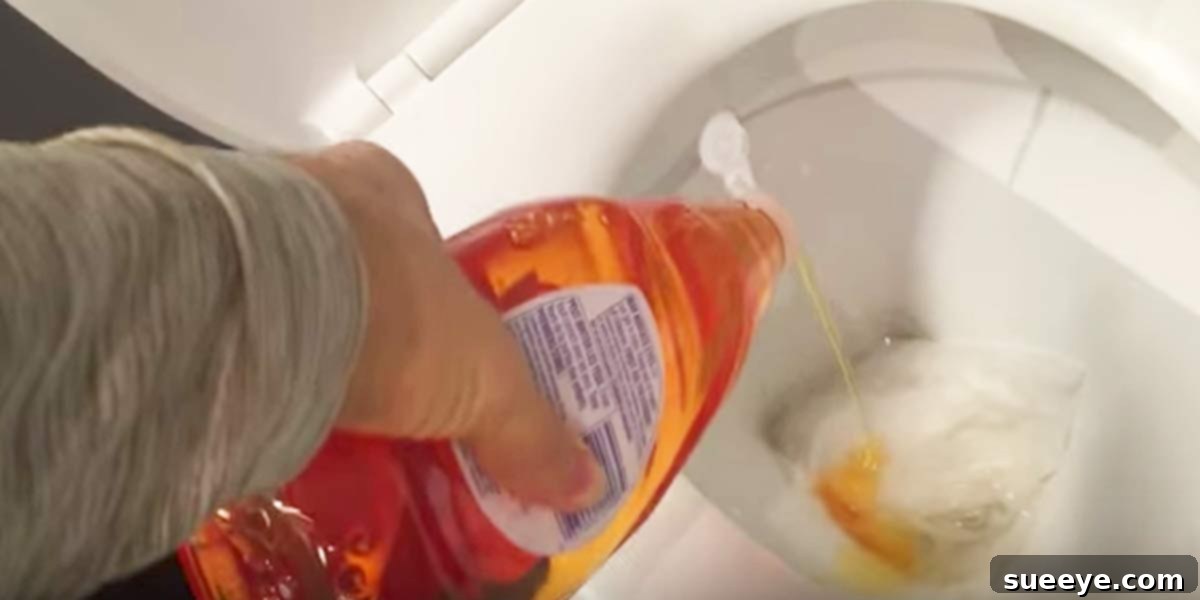
- Pour in the Dish Soap: Carefully pour about 1/4 to 1/2 cup of dish soap directly into the toilet bowl. Aim for it to settle into the water, ideally near the drain opening. Allow the soap to sit for at least 15 to 30 minutes. This gives the soap ample time to work its way down to the clog and begin lubricating it. For tougher clogs, you can let it sit for up to an hour.
- Prepare Hot Water: While the soap is working, heat a bucket of water. It should be hot, like very hot tap water, but NOT boiling. Boiling water can potentially crack porcelain or damage PVC pipes, especially if they are old or weakened. Aim for water that is hot to the touch but not scalding.
- Pour the Hot Water: After the waiting period, pour the bucket of hot water into the toilet bowl. For best results, pour it from waist height (or about 2-3 feet above the bowl). This adds a bit of kinetic energy and force behind the water, helping to push the lubricated clog. Pour the water quickly but carefully to avoid splashing.
- Wait for Results: Give the method some time to work its magic. Often, you’ll see the water level gradually recede, indicating the clog is clearing. You might need to wait another 15-30 minutes. If the water drains, the clog is gone!
- Flush to Confirm: Once the water level has dropped significantly, gently flush the toilet to confirm the clog has cleared. If the water continues to drain normally, congratulations, you’ve successfully unclogged your toilet! If not, you may need to repeat the process or consider other methods.
When This Method Shines (and When to Call a Pro)
The dish soap and hot water trick is incredibly effective for common clogs caused by organic matter, such as excessive toilet paper, minor waste blockages, or small foreign objects that can be lubricated and pushed through. It’s particularly appreciated for its clean application, eliminating the splashes and mess often associated with plungers. This makes it an ideal first-line defense before resorting to more aggressive methods or professional help.
However, it’s important to recognize its limitations. This method might not be sufficient for:
- Hard Obstructions: If a solid object like a toy, toothbrush, or air freshener has been flushed, dish soap and hot water likely won’t dislodge it.
- Deep-Seated Clogs: Blockages located deep within the plumbing system or in the main sewer line require more robust solutions, like a toilet auger or professional intervention.
- Persistent Clogs: If you’ve tried the method a couple of times without success, it’s a sign that the clog is more stubborn than anticipated.
- Multiple Fixture Clogs: If your toilet, sink, and shower are all experiencing drainage issues, it points to a main sewer line problem, which is definitely a job for a plumber.
Knowing when to call a professional plumber can save you time, further frustration, and potentially costly damage to your plumbing system. Don’t hesitate to seek expert help when DIY methods fall short.
Beyond Dish Soap: Other Effective DIY Unclogging Methods
While the dish soap trick is fantastic, it’s good to have a few other strategies in your arsenal for those more challenging clogs. Each method has its ideal application:
- The Plunger (Used Correctly): For many, the traditional plunger remains a reliable tool. The key is proper technique:
- Ensure a good seal around the drain opening.
- Push down slowly to expel air, then pull up sharply to create suction.
- Repeat this vigorous plunging action 15-20 times.
- Break the seal only after the final pull to check if the water drains.
A flange plunger (with an extension sleeve) is ideal for toilets, as it provides a better seal.
- Baking Soda and Vinegar: This natural duo can work wonders on minor clogs by creating a chemical reaction that helps break down organic matter. Pour one cup of baking soda into the toilet bowl, followed by two cups of white vinegar. Let it fizz and work for at least 30 minutes, or even overnight, before flushing with hot water. This method is particularly good for dissolving grease and softening toilet paper.
- Toilet Auger (Closet Auger/Snake): For clogs that are just beyond the reach of a plunger, a toilet auger is an excellent investment. This specialized tool features a long, flexible cable with a corkscrew tip that can be maneuvered through the toilet trap without scratching the porcelain. It’s designed to either break up the clog or retrieve the offending object.
- Wet/Dry Vacuum: In extreme cases where water won’t drain and a plunger isn’t working, a wet/dry vac can be a powerful solution. First, remove all water from the bowl. Then, use the vacuum hose to create a tight seal over the drain opening and turn it on to suck out the clog. Exercise caution and ensure you’re using a wet/dry model, not a standard household vacuum.
Prevention is Key: Keeping Your Toilet Clog-Free
The best way to deal with a clogged toilet is to prevent it from happening in the first place. Adopting good toilet habits and performing regular maintenance can significantly reduce your chances of encountering a blockage:
- Flush Only What’s Meant to Be Flushed: This is the golden rule. Toilets are designed to handle human waste and toilet paper – and only toilet paper. Never flush:
- Wet wipes (even “flushable” ones, which often aren’t).
- Feminine hygiene products.
- Paper towels, tissues, or napkins.
- Cotton balls or Q-tips.
- Dental floss.
- Hair.
- Food scraps, grease, or coffee grounds.
- Medications or chemicals.
- Use Less Toilet Paper: Encourage household members to use reasonable amounts of toilet paper. If using a lot, flush in stages rather than all at once.
- Regular Cleaning and Maintenance: A clean toilet is often a healthy toilet. Regular brushing and occasional enzyme-based drain cleaners (specifically for septic safe systems if applicable) can help keep pipes clear.
- Educate Your Household: Ensure everyone in your home, especially children and guests, understands what can and cannot be flushed.
- Consider Your Toilet Model: Older, low-flow toilets might struggle with proper flushing power. If you constantly experience clogs, upgrading to a more efficient model could be a long-term solution.
- Watch for Early Signs: If your toilet starts flushing slowly or gurgling, it might be an early warning sign of a developing clog. Address these issues promptly before they become full-blown blockages.
Conclusion: Empowering You with Smart Home Solutions
Discovering simple, effective home care tricks can truly make life easier and less stressful. The dish soap and hot water method for unclogging a toilet is a shining example of such a solution. It’s a testament to the power of basic physics and common household items to solve common problems, saving you time, frustration, and the often-unpleasant task of using a traditional plunger. While this clever trick won’t solve every plumbing predicament, it’s an indispensable first line of defense that every homeowner should know.
By understanding why it works, how to apply it, and when to consider other options or professional help, you can maintain a smoothly running home. Embrace these smart DIY solutions, practice preventative maintenance, and enjoy the peace of mind that comes with knowing you’re prepared for whatever minor household challenges come your way.